Is Basal Cell Carcinoma Serious? 2025 Risks & Treatment Guide
Understand the seriousness of basal cell carcinoma, its risks if untreated, and why early detection leads to excellent outcomes.
Basal cell carcinoma (BCC) is the most common form of skin cancer, accounting for the majority of non-melanoma skin cancers diagnosed annually. While it is rarely fatal, basal cell carcinoma can become serious if left untreated, leading to local tissue destruction, disfigurement, and in extremely rare cases, metastasis. Early detection and prompt treatment result in cure rates exceeding 95%, making regular skin checks essential.
What Is Basal Cell Carcinoma?
Basal cell carcinoma originates in the basal cells of the epidermis, the skin’s outermost layer. These cells constantly divide to replace dead skin cells on the surface. BCC typically develops on sun-exposed areas like the face, ears, neck, scalp, chest, shoulders, and back due to cumulative ultraviolet (UV) radiation damage from the sun or tanning beds.
Risk factors include fair skin, a history of sunburns, older age, and genetic conditions like basal cell nevus syndrome. BCC grows slowly and seldom spreads to other parts of the body, but it aggressively invades nearby tissues, earning it the nickname “rodent ulcer” for its ability to erode surrounding structures like bone and cartilage.
Symptoms of Basal Cell Carcinoma
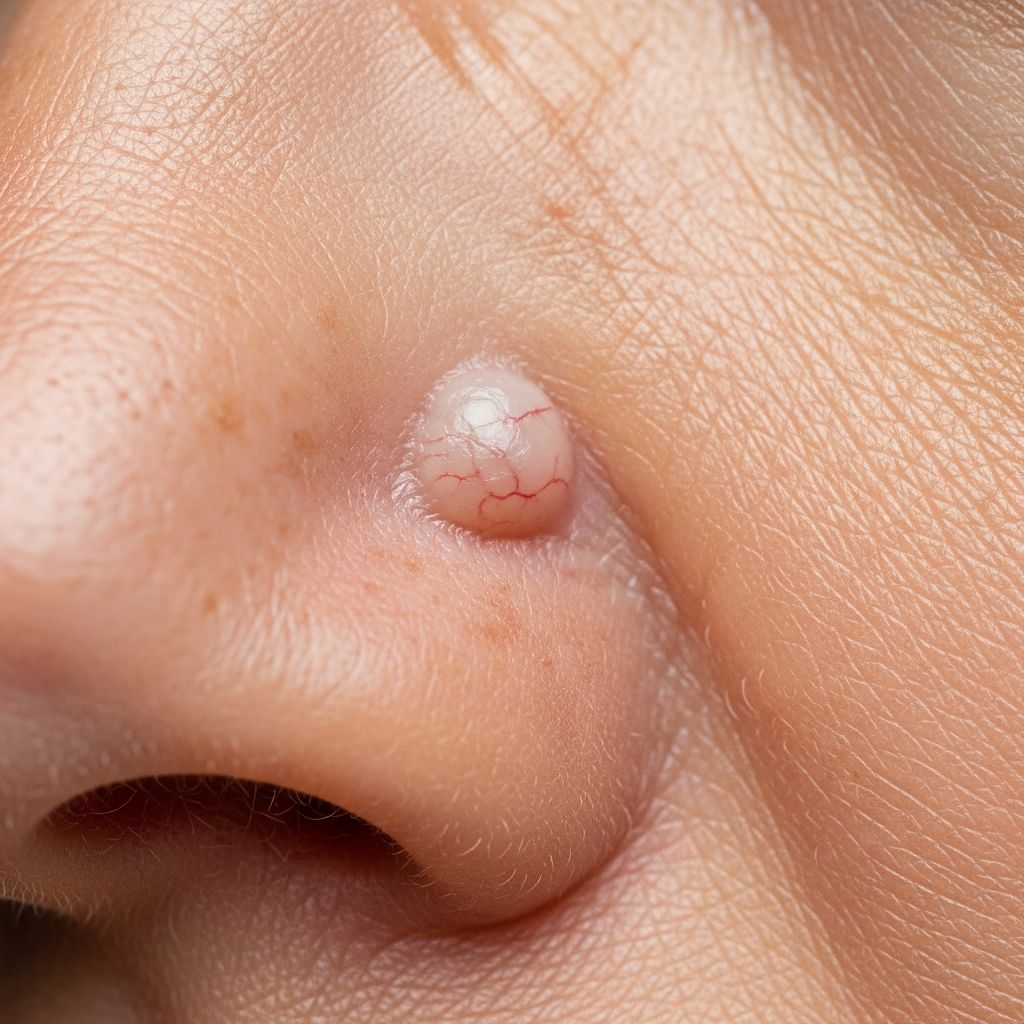
BCC often appears as a pearly or waxy bump, a flat flesh-colored or brown scar-like lesion, or a pink growth with a slightly elevated rolled border and a crusted center. Common symptoms include:
- A sore that bleeds, oozes, or crusts and refuses to heal after several weeks.
- A shiny, translucent nodule, sometimes with visible blood vessels.
- A reddish, irritated patch, often mistaken for eczema or psoriasis.
- A scar-like area that is white, yellow, or waxy, often with poorly defined borders.
In advanced stages, untreated BCC may cause pain, tenderness, ulceration, or noticeable disfigurement, particularly on the face. Early recognition is crucial, as these lesions can mimic benign conditions like pimples or bug bites, delaying diagnosis.
Is Basal Cell Carcinoma Dangerous If Untreated?
Yes, basal cell carcinoma can be dangerous if ignored. While it metastasizes in less than 0.1% of cases, untreated BCC relentlessly grows, destroying skin, cartilage, and bone in its path. Over two years without treatment, it may ulcerate, cause nerve damage, and lead to significant cosmetic and functional impairment.
Complications include:
- Local invasion: Erosion into deeper tissues, potentially affecting eyes, nose, or ears if on the face.
- Recurrence risk: Up to 50% chance of new BCCs developing elsewhere.
- Increased other cancers: Higher likelihood of squamous cell carcinoma or melanoma.
- Rare metastasis: Spread to lymph nodes, lungs, or bones in neglected, aggressive subtypes.
Statistics underscore the importance of intervention: therapies cure 85-95% of lesions on first treatment, but delays enlarge tumors, complicating removal and raising costs.
Basal Cell Carcinoma Survival Rate
The survival rate for basal cell carcinoma is excellent, approaching 100% with early detection. Mortality from non-melanoma skin cancers like BCC has declined steadily, thanks to effective treatments. Prognosis hinges on early diagnosis; recurrent BCCs remain highly treatable.
Related Stories



| Stage | Cure Rate | Key Factors |
|---|---|---|
| Early/Superficial | 95-99% | Outpatient procedures, minimal scarring |
| Locally Advanced | 85-95% | Mohs surgery preferred; higher recurrence if delayed |
| Metastatic (Rare) | <50% | Systemic therapies like sonidegib |
Even after treatment, vigilance is needed, as BCC history elevates risks for future skin cancers.
Treatment Options for Basal Cell Carcinoma
Treatment selection depends on tumor size, location, subtype, and patient health. Most early BCCs are cured outpatient with local anesthesia.
Surgical Options
- Mohs Micrographic Surgery: Gold standard for high-risk areas (face, ears). Removes layers sequentially, examining each under microscope; 99% cure rate for primary BCCs.
- Excisional Surgery: Cuts out tumor with margins; suitable for low-risk sites.
- Curettage and Electrodesiccation: Scrapes and burns lesion; for small, low-risk BCCs.
Non-Surgical Options
- Topical Medications: Imiquimod or 5-FU creams stimulate immune response or kill cells; ideal for superficial BCCs.
- Cryotherapy: Freezes small lesions with liquid nitrogen.
- Radiation Therapy: For inoperable tumors or elderly patients; lower cure rate than surgery.
- Systemic Therapy: Oral hedgehog inhibitors (vismodegib, sonidegib) for advanced or metastatic BCC.
For advanced cases involving lymph nodes, surgery plus radiation may be required in a hospital setting. Post-treatment, scars form, but risks like infection are low.
Prevention of Basal Cell Carcinoma
Preventing BCC focuses on UV protection:
- Seek shade, especially 10 AM-4 PM.
- Wear UPF clothing, broad-brim hats, UV sunglasses.
- Apply broad-spectrum SPF 30+ sunscreen daily, reapplying every 2 hours.
- Avoid tanning beds.
- Perform monthly skin self-exams; see a dermatologist annually.
Those with a BCC history need lifelong monitoring.
When to See a Doctor
Consult a dermatologist for any persistent skin change: non-healing sores, changing moles, or new growths. Biopsy confirms diagnosis. Early action prevents escalation. Shared decision-making guides treatment.
Frequently Asked Questions (FAQs)
Is basal cell carcinoma curable?
Yes, over 95% cure rate with early treatment like Mohs surgery.
Does basal cell carcinoma spread?
Rarely; less than 0.1% metastasize, but it invades locally if untreated.
How fast does basal cell carcinoma grow?
Slowly, over months to years, but neglect leads to damage.
Can basal cell carcinoma return?
Yes, risk of recurrence or new lesions; regular check-ups advised.
Is basal cell carcinoma painful?
Usually not early on; advanced cases cause pain from invasion.
Conclusion
Basal cell carcinoma is serious enough to warrant prompt attention but not typically life-threatening when addressed early. Its high curability underscores the value of sun protection and vigilance. By recognizing symptoms and seeking expert care, outcomes remain outstanding.
References
- Basal Cell Carcinoma Survival Rate — Moffitt Cancer Center. 2023. https://www.moffitt.org/cancers/basal-cell-carcinoma/survival-rate/
- Basal Cell Carcinoma Untreated for 2 Years: What You Need to Know — Dermatology Seattle. 2024. https://dermatologyseattle.com/basal-cell-carcinoma-untreated-for-2-years-what-you-need-to-know/
- Basal Cell Carcinoma Treatment Options — Skin Cancer Foundation. 2024. https://www.skincancer.org/skin-cancer-information/basal-cell-carcinoma/bcc-treatment-options/
- Basal Cell Carcinoma — StatPearls, NCBI Bookshelf, NIH. 2023-10-01. https://www.ncbi.nlm.nih.gov/books/NBK482439/
- Basal Cell Carcinoma – Symptoms & Causes — Mayo Clinic. 2024. https://www.mayoclinic.org/diseases-conditions/basal-cell-carcinoma/symptoms-causes/syc-20354187
- Basal Cell Carcinoma: From Symptoms to Treatments — American Academy of Dermatology (AAD). 2024. https://www.aad.org/public/diseases/skin-cancer/basal-cell-carcinoma
- Basal Cell Carcinoma: What It Is, Symptoms & Treatment — Cleveland Clinic. 2024. https://my.clevelandclinic.org/health/diseases/4581-basal-cell-carcinoma
Similar Articles








Read full bio of Sneha Tete