Is Christmas Music Good or Bad for Your Mental Health?
Unpacking the festive tunes: how Christmas music can boost joy, trigger stress, and impact wellbeing this holiday season.
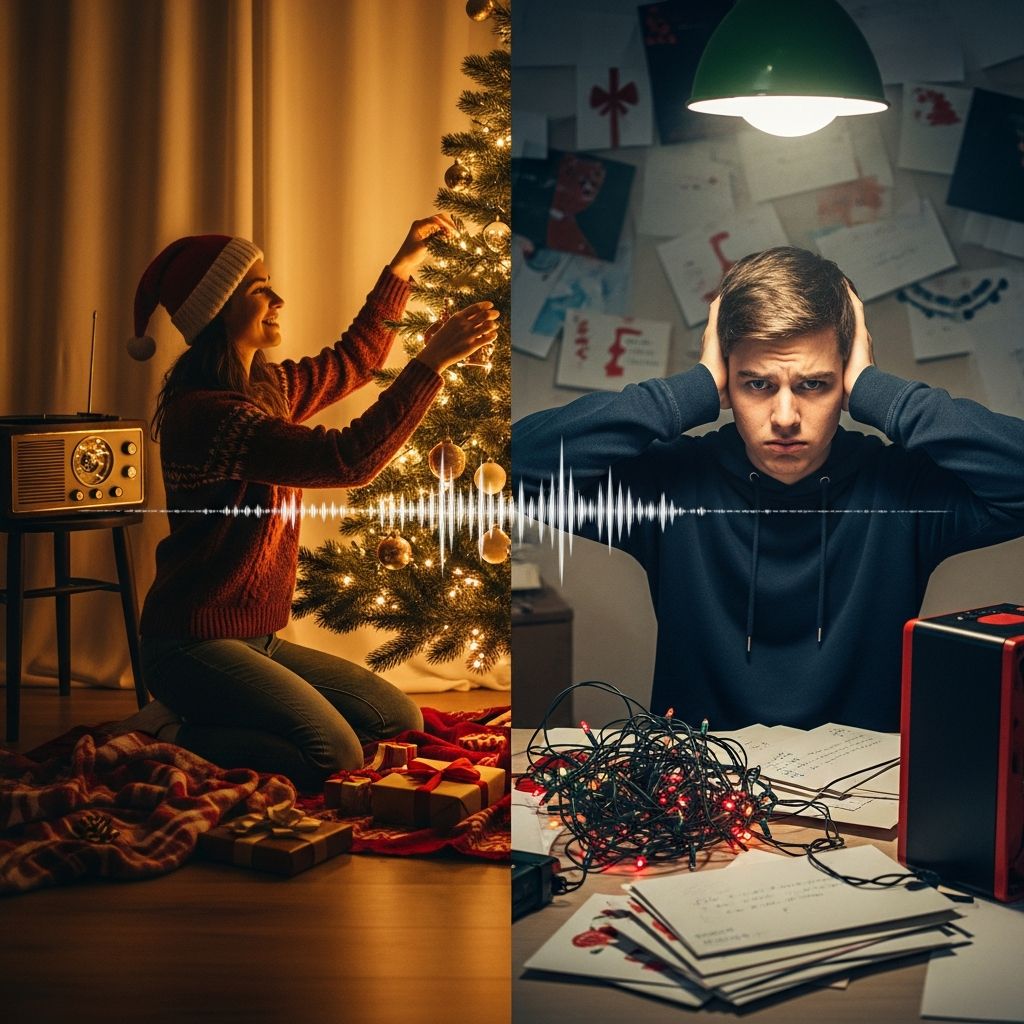
Every shop, café, and supermarket blasts Christmas tunes from early November. Mariah Carey’s All I Want for Christmas Is You loops endlessly alongside Wham! and Slade. For some, it’s the sound of joy; for others, pure irritation. But beyond preferences, does Christmas music truly affect mental health—for better or worse?
Why Christmas Music Gets Everywhere So Early
Retailers start piping holiday hits before Advent to trigger nostalgia and spending. Festive melodies create emotional warmth, encouraging impulse buys on gifts and decorations. Yet this early saturation—sometimes from October—can lead to
festive fatigue
. Constant repetition dulls the magic, turning cheer into annoyance by December 25th.Psychologically, overexposure exploits the mere-exposure effect: familiarity breeds liking, but excess reverses it, sparking irritation. Shop workers report heightened anxiety from 24/7 playlists, with one study noting music as a top workplace stressor during holidays.
The Good: How Christmas Music Can Lift Your Spirits
Despite gripes, holiday tunes offer real mental health perks, rooted in nostalgia, social bonding, and neurochemistry.
Nostalgia and Emotional Comfort
Christmas carols often tie to childhood memories, acting as emotional anchors. Early-life songs regulate stress, calming the nervous system amid holiday chaos. Research shows childhood-exposed music lowers cortisol more effectively than newer tracks.
Mood Boost from Active Listening and Singing
Passive listening helps, but
singing along
amplifies benefits. Group singing releases dopamine and serotonin, enhancing mood, focus, and motivation. It synchronizes breathing, cuts cortisol, and boosts oxytocin for connection.- Singing improves mood pre- to post-session, outperforming mere listening.
- Joint singing fosters social bonding via coordination and empathy.
- Enhances immune markers like secretory immunoglobulin A, vital in winter flu season.
Health Applications
Group singing treats depression, anxiety, and neurodegeneration with moderate-to-large effects on wellbeing, belonging, and confidence. Clinical interventions use carols for mental health gains.
The Bad: When Christmas Music Triggers Stress
Not all jingle bells ring positive. Repetition and context can harm mental health.
Overload and Irritability
Endless loops cause
cognitive overload
, fraying nerves. Retail staff endure 200+ plays daily of hits like Last Christmas, linking to burnout. A Cardiff University study found piped music raises stress hormones in unwilling listeners.Emotional Triggers for Vulnerability
For those grieving, lonely, or anxious, festive songs evoke painful memories. Holiday music can worsen depression if Christmas symbolizes loss. The iso-principle warns: matching sad moods with somber tunes risks prolongation.
| Positive Effects | Negative Effects |
|---|---|
| Mood elevation via dopamine/serotonin | Stress from repetition and overload |
| Social bonding and empathy boost | Triggers grief or anxiety |
| Immune and pain relief | Cognitive fatigue in passive settings |
Related Stories



Singing Christmas Carols: A Recommended Activity
Science endorses belting out carols under the tree. Unlike passive play, active singing delivers joy, connection, and health gains. Everyone knows hits like Silent Night, making it accessible. Group sessions break ice faster than other activities, building inclusion.
Altruism bonus: singing heightens empathy and compassion, aiding charity during the ‘feast of charity’.
Tips for Enjoying Christmas Music Without the Stress
Balance exposure with intention:
- Curate playlists: Mix classics with new tracks; limit repeats.
- Sing actively: Host carol sessions for mood and bonding boosts.
- Use the iso-principle: Start with current mood music, shift to uplifting.
- Take breaks: Earplugs or silence pods for retail workers.
- Mindful listening: Pair with walks or decorating for positive association.
- Seek alternatives: Instrumental versions or genre fusions if lyrics trigger.
Frequently Asked Questions (FAQs)
Does Christmas music really improve mental health?
Yes, especially through active singing, which boosts mood, immunity, and social bonds per peer-reviewed studies.
Why does holiday music annoy some people?
Early, repetitive exposure causes fatigue; unwilling listening spikes stress.
Is singing carols good for depression?
Group singing reduces depressive symptoms with moderate effect sizes, enhancing wellbeing and confidence.
Can Christmas songs trigger bad memories?
Absolutely—for those with loss or trauma, tunes act as emotional cues worsening anxiety.
How to cope with too much Christmas music at work?
Wear noise-cancelling headphones, advocate for variety, or focus on breathing exercises.
Broader Holiday Mental Health Context
Christmas music is one piece of seasonal stress. Combine with budgeting, boundary-setting, and self-care for balanced festivities.
In diverse traditions, music unites: Hanukkah’s Ma’oz Tzur, Kwanzaa drumming, Puerto Rican Parrandas. Mind painful associations too.
References
- Is Singing Under the Christmas Tree Psychologically Recommended? A Scientific Evaluation — Philipp Kanske, Winfried Rief. 2022-12-22. https://pmc.ncbi.nlm.nih.gov/articles/PMC9881124/
- How to avoid stress over Christmas and the New Year — Patient.info. Recent access 2026. https://patient.info/features/mental-health/how-to-avoid-burnout-over-christmas-and-the-new-year
- How Music Affects Your Mind, Mood and Body — The Menninger Hospital. Recent. https://www.tmh.org/healthy-living/blogs/healthy-living/how-music-affects-your-mind-mood-and-body
- Claim Christmas music can negatively affect mental health is Half True — The Ferret. Recent. https://www.theferret.scot/claim-christmas-music-mental-health-half-true/
Similar Articles








Read full bio of Sneha Tete