Is Colon Cancer Hereditary? Key Insights Into Genetic Risk
Understand the hereditary risks of colon cancer, key genetic syndromes, screening guidelines, and steps for family risk assessment.
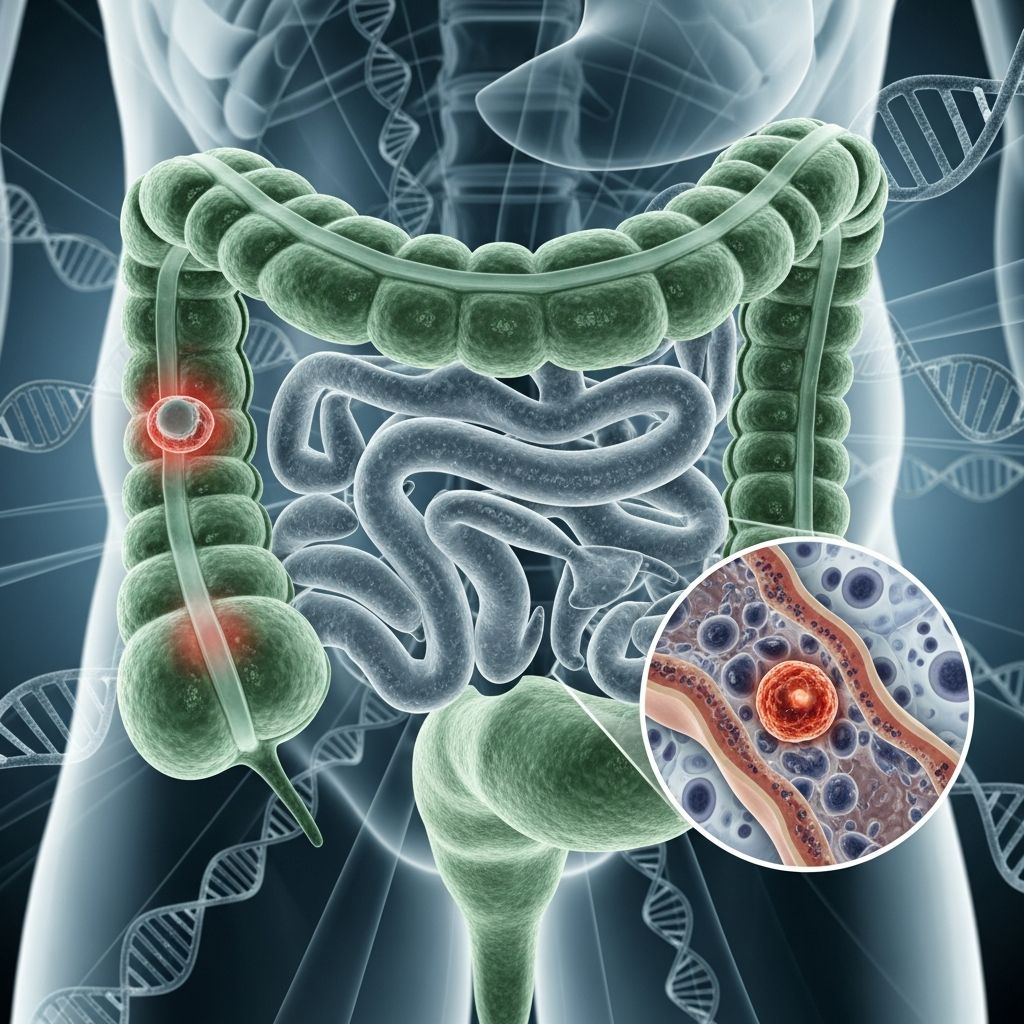
Colon cancer, also known as colorectal cancer (CRC), is hereditary in approximately 5% to 10% of cases, primarily due to inherited germline mutations in specific cancer predisposition genes. While most CRC cases (about 75%) are sporadic with no clear hereditary link, a significant family history can indicate either hereditary syndromes like Lynch syndrome or familial adenomatous polyposis (FAP), or multifactorial familial risks from shared genetics and environment. Identifying these risks through family history and genetic testing enables earlier screening and prevention, potentially reducing lifetime CRC incidence by up to 80% in high-risk groups.
What Percentage of Colon Cancers Are Hereditary?
Hereditary colorectal cancer accounts for 5% to 10% of all cases, with Lynch syndrome representing 2% to 4% and FAP including its attenuated form (AFAP) making up another portion. Familial colorectal cancer, which is not strictly hereditary but involves increased risk from multiple first-degree relatives affected, comprises 10% to 30% of cases and stems from combined genetic susceptibility and shared environmental factors. Sporadic cases, lacking family history, dominate at 70-75%.
- Hereditary (5-10%): Single germline pathogenic variants in high-penetrance genes like APC, MLH1, or MSH2.
- Familial (10-30%): Multifactorial; twice the risk if one first-degree relative is affected.
- Sporadic (70-75%): De novo mutations, lifestyle factors dominant.
Hereditary vs. Familial Colon Cancer: Key Differences
Hereditary colon cancer arises from identifiable germline mutations passed autosomal dominantly (one mutated allele from a parent suffices), leading to high-penetrance syndromes with early-onset, multiple cancers, and often polyps. Familial colon cancer lacks a single identifiable mutation but shows clustering due to polygenic risks and environment, warranting intensified screening without syndrome-specific interventions.
| Aspect | Hereditary | Familial |
|---|---|---|
| Prevalence | 5-10% | 10-30% |
| Cause | Germline mutation (e.g., APC) | Multifactorial (genetics + environment) |
| Inheritance | Autosomal dominant (50% risk per child) | Polygenic, variable |
| Features | Polyps, early onset (<50), extracolonic cancers | Standard-age onset, CRC clustering |
| Screening | Colonoscopy from teens/20s | FIT biennially or colonoscopy q5y |
Common Hereditary Colon Cancer Syndromes
Lynch Syndrome (Hereditary Nonpolyposis Colorectal Cancer – HNPCC)
The most prevalent hereditary CRC syndrome, Lynch syndrome affects 2-4% of cases and results from germline defects in DNA mismatch repair (MMR) genes: MLH1, MSH2, MSH6, PMS2, or EPCAM. Lifetime CRC risk reaches 50-80%, with onset averaging 45 years; associated cancers include endometrial (40-60%), ovarian, gastric, and others. Tumors show microsatellite instability (MSI-high) and lack MMR protein expression on immunohistochemistry.
Familial Adenomatous Polyposis (FAP) and Attenuated FAP (AFAP)
Classic FAP, caused by APC germline mutations, leads to hundreds to thousands of colorectal adenomas by teens, with near-100% CRC risk by age 40 absent colectomy. AFAP involves fewer polyps (<100), later onset (CRC ~50-55 years), and 70% lifetime risk, often from specific APC variants like I1307K in Ashkenazi Jews.
Other Polyposis Syndromes
- MUTYH-Associated Polyposis (MAP): Autosomal recessive (MUTYH biallelic variants); 10-100 adenomas, CRC onset ~46 years.
- Juvenile Polyposis Syndrome: BMPR1A/SMAD4 mutations; hamartomatous polyps, CRC risk elevated.
- POLE Syndrome: Proofreading polymerase mutations; multiple adenomas, high CRC risk.
Signs Your Colon Cancer Risk May Be Hereditary
Suspect hereditary risk if:
Related Stories



- CRC or advanced polyps in ≥2 first-degree relatives, any age.
- CRC in one first-degree relative <50 years.
- Multiple primary CRCs or CRC + endometrial/other Lynch-associated cancers.
- ≥10-20 cumulative adenomas at young age.
- MSI-high or MMR-deficient tumors.
Amsterdam II or Bethesda criteria guide evaluation; multigene panel testing (MGPT) confirms.
Family History and Colon Cancer Risk
One first-degree relative with CRC doubles risk; two doubles it again (4x overall). Shared risks like diet, smoking amplify this. BC Cancer guidelines recommend biennial fecal immunochemical testing (FIT) for average familial risk, colonoscopy q5 years for higher.
Genetic Testing for Hereditary Colon Cancer
Testing starts with tumor analysis (MSI/IHC), followed by germline MGPT for at-risk individuals. Positive results trigger cascade testing in relatives (50% inheritance risk). Guidelines from NCCN and NCI endorse testing for meeting revised Bethesda or NCCN criteria.
Screening and Prevention for High-Risk Families
High-risk protocols:
- Lynch: Colonoscopy q1-2y from 20-25 years; endometrial screening.
- FAP: Colonoscopy from 10-12 years; colectomy by 20s-30s.
- AFAP: Colonoscopy q1-2y from 18-20 years.
- Familial (1 FDR): Colonoscopy at 60 or 10y before relative’s age.
Aspirin chemoprevention reduces adenomas in FAP/Lynch; lifestyle (no smoking, exercise, high-fiber) aids all.
Recent Research on Hereditary Colon Cancer
Studies highlight POLE/POLD1 ultramutated phenotypes and BRCA2 CRC links, expanding panels. Population screening via tumor sequencing identifies 10-15% actionable germline findings.
Frequently Asked Questions (FAQs)
What is the most common hereditary colon cancer syndrome?
Lynch syndrome, caused by MMR gene mutations, accounts for 2-4% of CRCs with 50-80% lifetime risk.
Should I get genetic testing if a parent had colon cancer?
Yes, if diagnosed <50, multiple relatives affected, or polyps; consult NCCN criteria.
At what age should high-risk screening start?
FAP: 10-12y; Lynch: 20-25y; familial: 40 or 10y pre-relative’s diagnosis.
Can lifestyle prevent hereditary colon cancer?
Not fully, but reduces risk: avoid tobacco/alcohol, eat fiber-rich, exercise.
How accurate is genetic testing for CRC risk?
MGPT detects 95%+ pathogenic variants; negative doesn’t eliminate multifactorial risk.
References
- Familial and hereditary colorectal cancer — BCMJ. 2023. https://bcmj.org/articles/familial-and-hereditary-colorectal-cancer
- Hereditary Colorectal Risk Factors — American Cancer Society. 2025-01-10. https://www.cancer.org/cancer/types/colon-rectal-cancer/causes-risks-prevention/risk-factors.html
- Genetics of Colorectal Cancer (PDQ®) — National Cancer Institute. 2025-09-18. https://www.cancer.gov/types/colorectal/hp/colorectal-genetics-pdq
- A Review of Hereditary Colorectal Cancers — StatPearls, NCBI/NIH. 2024-04-20. https://www.ncbi.nlm.nih.gov/books/NBK538195/
- Colorectal Cancer — MedlinePlus, NIH. 2025. https://medlineplus.gov/colorectalcancer.html
Similar Articles








Read full bio of medha deb