Is Frozen Yogurt Healthier Than Ice Cream?
Uncover the nutritional truth: Is frozen yogurt really a healthier choice than classic ice cream? We break down calories, sugar, fat, and more.
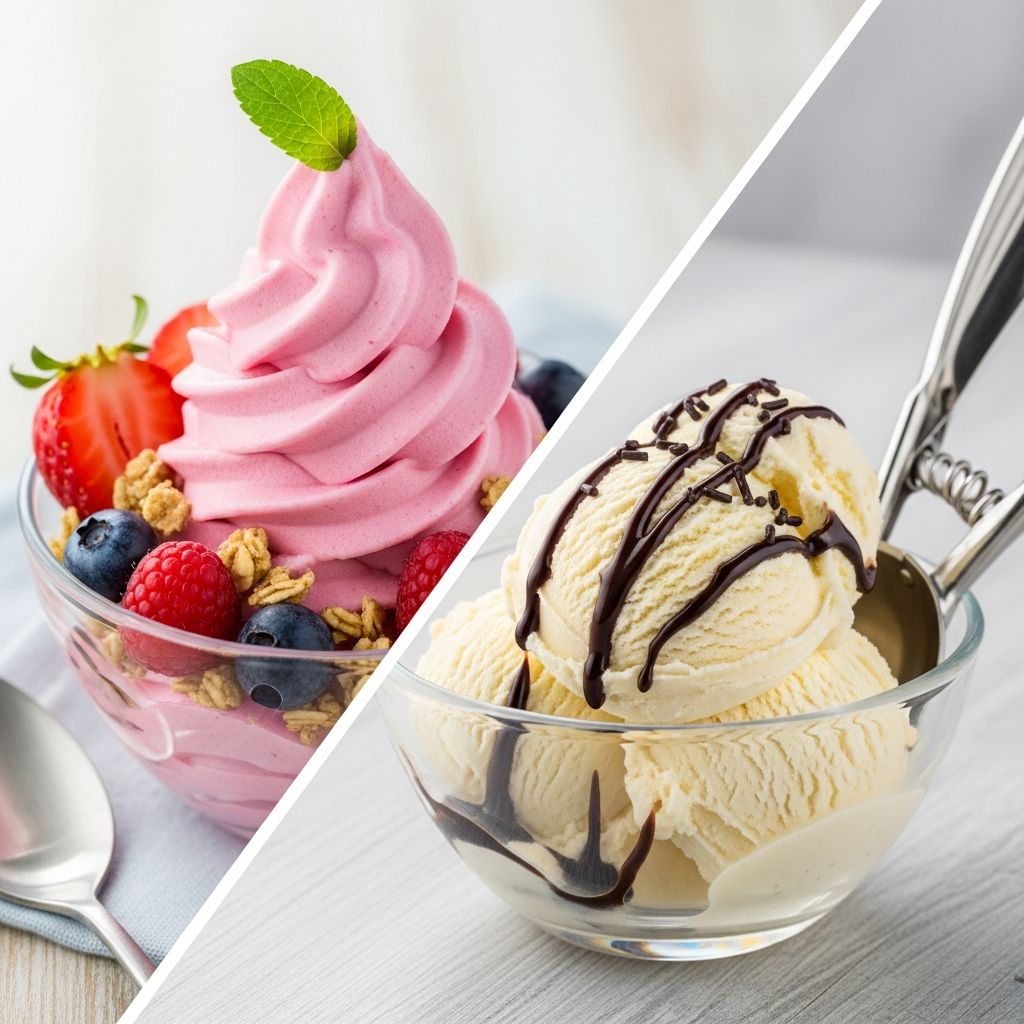
Frozen yogurt is often marketed as a lighter, gut-friendly alternative to ice cream, but the reality is more nuanced. While it typically contains less fat and calories, it can pack more added sugar, and probiotic benefits vary widely by brand. The healthiest choice depends on specific ingredients, portion control, and toppings.
What Is Frozen Yogurt—and How Does It Compare Nutritionally to Ice Cream?
Frozen yogurt (froyo) and ice cream share core ingredients like dairy and sugar but differ in their base and processing. Ice cream uses cream or a milk-cream blend, resulting in higher fat content, while frozen yogurt starts with cultured milk (like yogurt), which is fermented before freezing. This gives froyo its signature tanginess.
Nutritionally, a standard 2/3-cup (about 67-87g) serving reveals key differences:
| Vanilla Ice Cream (67g) | Frozen Yogurt (87g) | |
|---|---|---|
| Calories | 140 | 111 |
| Total Fat | 7g | 3g |
| Carbohydrates | 16g | 19g |
| Added Sugars | ~14g | ~17g |
| Protein | 2g | 3g |
| Calcium | 8% DV | 7% DV |
Data averaged from major brands; values vary. Ice cream’s higher fat comes from cream, making it richer and more satiating. Frozen yogurt compensates for its tartness with extra sugar, potentially exceeding daily limits faster. Both provide calcium for bone health (essential per NIH guidelines), but neither offers fiber for gut regularity.
Low-fat Greek frozen yogurt can improve the profile: ~100 calories, 6g protein, 1g fat per half-cup, boosting satiety. Dairy-free versions (soy, coconut) exist but may add sugars or lack calcium unless fortified.
Frozen Yogurt Ingredients vs. Ice Cream Ingredients
Both treats rely on dairy, sweeteners, and stabilizers, but formulations differ:
- Ice Cream: Cream, milk, sugar, egg yolks (premium), emulsifiers, air (overrun) for fluffiness. Fat content: 10-22%.
- Frozen Yogurt: Cultured milk, sugar (often more to mask tang), thickeners like guar gum, sometimes live cultures. Fat: 0-10%.
Premium ice creams use fewer additives; soft-serve froyo may include more stabilizers. Always scan labels—’natural’ doesn’t guarantee healthiness. Added sugars in both exceed American Heart Association limits (25g women, 36g men daily) in one serving.
Probiotics in Frozen Yogurt: Do They Survive Freezing?
Froyo’s big claim: probiotics from live cultures like Lactobacillus bulgaricus and Streptococcus thermophilus, which support gut health, immunity, and potentially lower blood pressure. However, freezing kills most bacteria. Studies show frozen yogurt has far fewer colony-forming units (CFUs) than fresh yogurt—often negligible.
Look for the ‘Live and Active Cultures’ (LAC) seal from the National Yogurt Association, indicating minimum 100 million CFUs per gram post-thaw. Even then, benefits pale compared to refrigerated yogurt. Ice cream lacks probiotics entirely.
Lactose Content: Which Is Easier to Digest?
Fermentation in frozen yogurt converts some lactose to lactic acid, reducing it by 20-30% versus ice cream’s full milk/cream lactose load. This makes froyo more tolerable for mild lactose intolerance (affecting 65% globally per NIH). However, high sugar can still cause bloating. Lactose-free ice creams exist, leveling the field.
Related Stories



Texture and Taste: Why Frozen Yogurt Feels Different
Ice cream’s churning incorporates 30-50% air (overrun), yielding a creamy, fluffy scoop. Frozen yogurt is denser, icier, and tangier due to lower fat and cultured milk—soft-serve versions are smoother. Sweeteners mask froyo’s yogurt bite, but it rarely matches ice cream’s decadence.
Which Has More Calories and Sugar?
Froyo edges out on calories (111 vs 140 per serving) thanks to less fat, but sugars flip: froyo ~19g carbs (mostly added) vs ice cream’s 16g. A full cup amplifies this—froyo: 221 cal, 37g sugar; ice cream: 273 cal, 28g sugar. Toppings (granola, chocolate) add 100+ calories quickly.
High-sugar diets link to obesity, diabetes, and heart disease per Dietary Guidelines. Opt for no-sugar-added or Greek varieties.
Health Benefits of Frozen Yogurt and Ice Cream
- Calcium & Phosphorus: Both hit 6-8% DV per serving, aiding bones/muscles.
- Protein: Modest 2-6g, more in Greek froyo.
- Probiotics (froyo only): Limited, but LAC-sealed may help gut microbiome.
Compared to candy, both beat empty calories—but they’re treats, not health foods.
Downsides of Frozen Yogurt and Ice Cream
High added sugars risk metabolic issues; fats in ice cream add saturated fat (limit to 13g daily per AHA). Large portions (common at self-serve bars) balloon intake. Dairy allergies/intolerances affect 2-3%. Artificial flavors/colors in some brands raise concerns.
Is Frozen Yogurt or Ice Cream Better for Weight Loss?
Neither excels—calories count. Froyo’s lower calories/fat suit deficits if sugar-controlled; ice cream’s fat may satisfy sooner, curbing overeating. Track via apps like MyFitnessPal. Pair with fruit for fiber.
How to Choose the Healthiest Frozen Treat
- Check labels: <15g sugar, <5g fat per serving.
- Seek LAC seal for probiotics.
- Portion: 1/2 cup max.
- Top smart: Berries, nuts (<2 tbsp).
- DIY: Blend yogurt, fruit, freeze for control.
Brands like Yoplait or Chobani offer better profiles.
Frequently Asked Questions (FAQs)
Generally yes for fat/calories, but no for sugar. Choose LAC froyo with fresh toppings.
Does frozen yogurt have probiotics?
Some do if labeled ‘Live and Active Cultures’; freezing reduces viability.
Is frozen yogurt lower in lactose?
Yes, fermentation lowers it slightly, aiding mild intolerance.
Which has more sugar: froyo or ice cream?
Froyo often does, to balance tang.
Can I eat frozen yogurt daily?
In moderation (small portions), yes—as part of balanced diet.
Bottom Line
No clear winner: ice cream richer in fat, froyo in sugar. Prioritize labels, moderation, and nutrient-dense toppings. Enjoy as occasional delight, not staple. For probiotics, eat fresh yogurt.
References
- Frozen Yogurt vs. Ice Cream: Is One Healthier? — Healthline. 2023-05-15. https://www.healthline.com/nutrition/frozen-yogurt-vs-ice-cream
- Frozen Yogurt vs Ice Cream: What are the Differences? — Venchi US. 2024-02-20. https://us.venchi.com/blog/frozen-yogurt-vs-ice-cream
- Frozen Yogurt Health Benefits — WebMD. 2024-07-10. https://www.webmd.com/food-recipes/health-benefits-frozen-yogurt
- Frozen Yogurt or Ice Cream: Which One is Better? — EatWellGuru. 2023-11-05. https://www.eatwellguru.com/post/frozen-yogurt-or-ice-cream-which-one-is-better
- Dietary Guidelines for Americans, 2020-2025 — USDA.gov. 2020-12-01. https://www.dietaryguidelines.gov/sites/default/files/2020-12/Dietary_Guidelines_for_Americans_2020-2025.pdf
Similar Articles








Read full bio of Sneha Tete