Is Organic Sugar Healthier Than Regular Sugar?
Unpacking the nutritional differences, myths, and realities of organic versus regular sugar for smarter sweet choices.
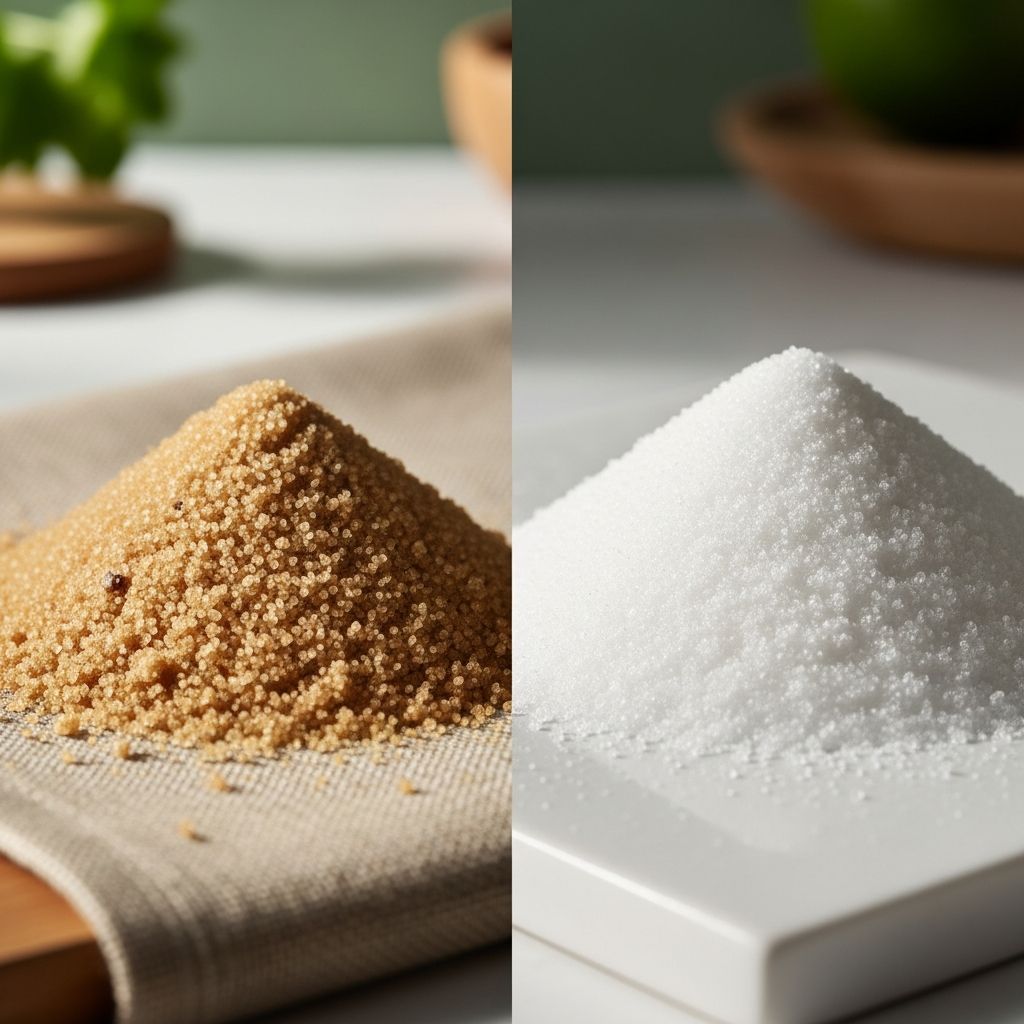
Organic sugar and regular refined sugar both provide sweetness, but they differ in processing, nutrient retention, and potential health implications. While organic sugar retains trace minerals, vitamins, and a lower glycemic index due to minimal refining, the nutritional differences are minimal and do not make it a health food—moderation remains key for both.
What Is Organic Sugar?
Organic sugar, often labeled as organic cane sugar, comes from sugarcane grown without synthetic pesticides, herbicides, or fertilizers, following strict organic farming standards. It undergoes minimal processing: the cane juice is extracted, clarified, and evaporated into crystals without heavy refining, preserving natural molasses for a light brown color and subtle flavor.
- Grown organically: Uses crop rotation and natural pest control to maintain soil health and reduce chemical residues.
- Minimal processing: Retains grainier texture, blonde hue, and mild molasses notes compared to white refined sugar.
- Nutrient profile: Contains trace amounts of 17 amino acids (e.g., pipecolic acid, tryptophan, arginine, methionine), 11 minerals (calcium, potassium, magnesium, iron, manganese, zinc, copper, chromium, selenium), and 6 vitamins (B vitamins, vitamin E).
These nutrients arise from the unstripped molasses, giving organic sugar a slight edge over fully refined versions, though quantities are small—Americans consume about 22 teaspoons of sugar daily, potentially accumulating benefits from organic forms.
How Is Regular Sugar Made?
Regular sugar, or refined white table sugar, starts as sugarcane or sugar beets but undergoes extensive processing. The juice is extracted, impurities removed via chemicals like phosphoric acid or lime, then bleached, centrifuged, and dried into pure sucrose crystals.
- Heavy refining: Strips away molasses, resulting in pure white sucrose with no color, flavor variation, or trace nutrients.
- Chemical aids: May involve sulfur dioxide for bleaching or bone char for filtration (though not always in vegan-certified options).
- Outcome: Uniform sweetness, longer shelf life, but zero vitamins, minerals, or antioxidants beyond basic carbohydrates.
This process prioritizes purity and shelf stability but eliminates any plant-derived compounds present in less-processed sugars.
Organic Sugar vs. Regular Sugar: A Nutritional Comparison
Both sugars are primarily sucrose (disaccharide of glucose and fructose), delivering 4 calories per gram with no significant difference in sweetness or calorie density. However, organic sugar’s minimal processing preserves bioactive compounds absent in refined sugar.
| Aspect | Organic Cane Sugar | Regular Refined Sugar |
|---|---|---|
| Calories (per tsp) | 16 | 16 |
| Nutrients | Trace minerals (Fe, Mg, K, Ca), vitamins (B, E), amino acids, polyphenols, antioxidants | None (pure sucrose) |
| Glycemic Index (GI) | 30-40 (slower blood sugar rise) | ~65 (faster spike) |
| Processing | Minimal, unbleached | Heavy refining, bleaching |
| Flavor/Texture | Subtle molasses, grainy | Neutral, fine crystals |
Organic sugar’s antioxidants (flavonoids, phenolic acids, polyphenols) may combat oxidative stress, while amino acids like tryptophan support serotonin production and muscle/fat metabolism. Refined sugar lacks these, potentially exacerbating issues like insulin resistance when overconsumed.
Related Stories



Potential Health Benefits of Organic Sugar
While not a superfood, organic sugar offers marginal advantages backed by preliminary research.
- Lower GI for blood sugar control: GI of 30-40 vs. 65 means steadier energy without sharp spikes, beneficial for diabetes management. A study noted higher chromium levels (blood sugar regulator) in diabetics using sugarcane juice over refined sugar.
- Antioxidant support: Polyphenols and flavonoids fight free radicals linked to diabetes, heart disease, and cancer. Sugarcane compounds like tannins aid digestion and weight control.
- Trace nutrients accumulate: With high U.S. intake (77g/day added sugar), organic forms provide insubstantial but additive minerals/vitamins.
- Environmental perks: Organic farming reduces pesticide runoff, improves soil health via rotation—better for long-term planetary and personal health.
Traditional uses include sugarcane juice for inflammation, jaundice, and urinary issues in Southeast Asian medicine, hinting at broader benefits.
Does Organic Sugar Help You Lose Weight?
No evidence suggests organic sugar promotes weight loss; both types contribute empty calories. Its lower GI may reduce cravings from blood sugar crashes, indirectly aiding portion control. Amino acids (e.g., methionine, arginine) support muscle growth and fat burning in theory, but you’d need unrealistic amounts for impact.
Excess sugar—organic or not—links to obesity, diabetes, and heart disease. Focus on total intake over type.
Is Organic Sugar Better for the Environment?
Yes, organic production avoids synthetic chemicals harmful to ecosystems and human health. Crop rotation enhances biodiversity, soil fertility, and pest resistance without fertilizers that pollute waterways. Fewer residues mean lower dietary exposure to pesticides linked to endocrine disruption.
Refined sugar often relies on monoculture and chemicals, contributing to soil degradation and biodiversity loss.
The Bottom Line: Should You Switch to Organic Sugar?
Organic sugar is marginally healthier due to retained nutrients, lower GI, and cleaner production, but differences are trace—neither is ‘healthy’ in excess. Switch if you value flavor, ethics, or environment, but prioritize reducing overall added sugars.
- Best uses: Baking, coffee, or occasional treats for nuanced taste.
- Limitations: Still ~16 cal/tsp; micronutrients too low for daily needs.
Healthier swaps: Fruits, stevia, or monk fruit for natural sweetness without calories.
Frequently Asked Questions (FAQs)
What is the main difference between organic and regular sugar?
Organic sugar is minimally processed from organically grown cane, retaining molasses, nutrients, and flavor; regular sugar is heavily refined to pure sucrose.
Is organic sugar lower in calories?
No, both have identical calories (16 per tsp), but organic’s fiber-like molasses may slow absorption.
Can organic sugar help with diabetes?
Its lower GI (30-40) causes slower blood sugar rises than refined (65), and chromium content may aid regulation, per small studies.
Is organic sugar vegan?
Often yes, but check labels—some refining uses bone char. Organic typically avoids it.
How much sugar is safe daily?
AHA: Women ≤6 tsp (25g), men ≤9 tsp (38g) added sugar. WHO: <5-10% total calories.
References
- Surprising Benefits of Organic Sugar Cane — Big Country. 2023. https://enjoybigcountry.com/blogs/blog/surprising-health-benefits-of-organic-sugar-cane-why-it-s-the-better-option
- Organic Cane Sugar: Taste and Benefits — JuneShine. 2023. https://juneshine.com/blogs/news/organic-cane-sugar-taste-and-benefits
- Whole Cane Sugar Benefits vs Other Types of Sugar — Bobo’s Oat Bars. 2023. https://eatbobos.com/blogs/health-nutrition/whole-cane-sugar-benefits-vs-other-types-of-sugar
- Cane Sugar: Are There Health Benefits? — WebMD. 2024-01-27. https://www.webmd.com/diet/health-benefits-cane-sugar
- Replacement of refined sugar by natural sweeteners — PubMed Central (PMC). 2022-09-21. https://pmc.ncbi.nlm.nih.gov/articles/PMC9519493/
- Unrefined vs. Raw vs. Refined Cane Sugar — WhatSugar. 2023. https://www.whatsugar.com/post/unrefined-vs-raw-vs-refined-cane-sugar
Similar Articles








Read full bio of medha deb