Is Social Media Making Us Depressed? 5 Key Mechanisms
Exploring the complex link between social media use and depression, backed by research on adolescents and young adults.
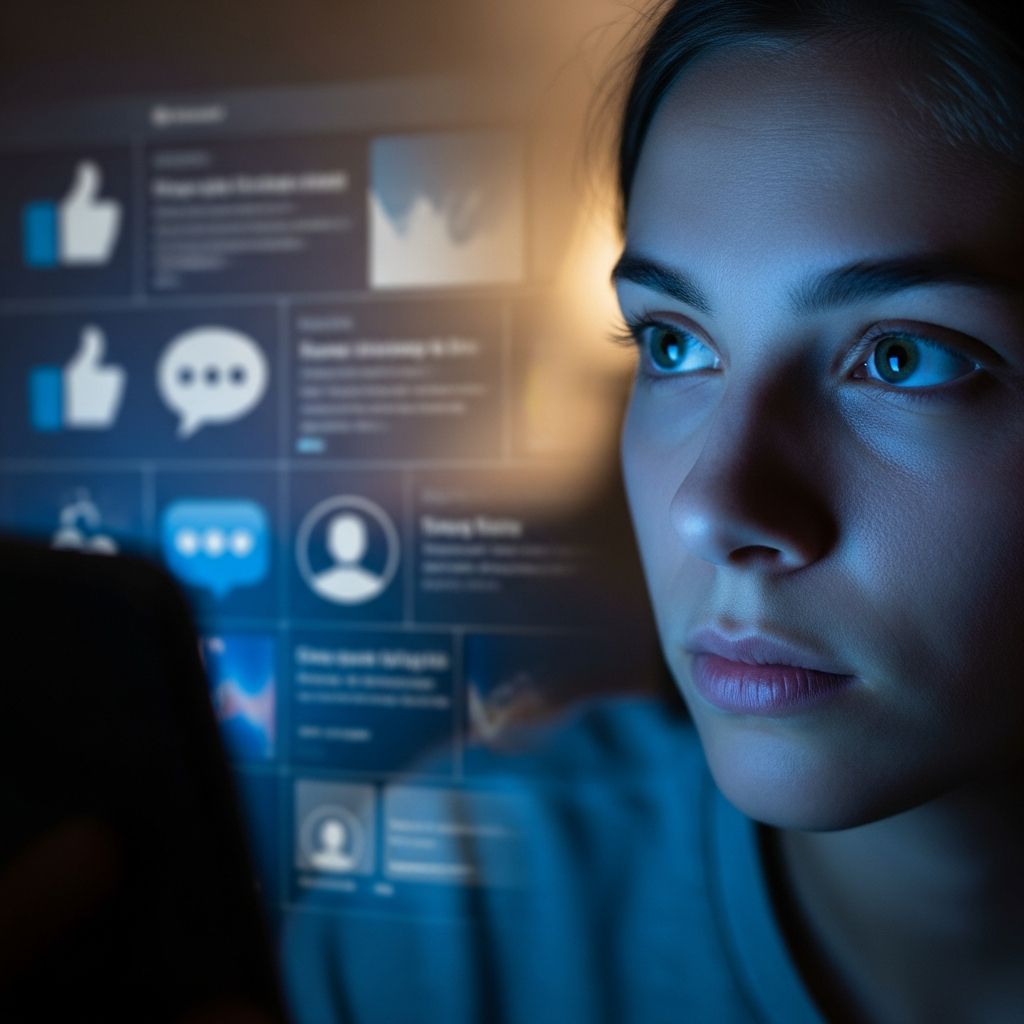
Social media platforms like Instagram, Facebook, and Twitter have become integral to daily life, especially for adolescents and young adults. However, emerging research indicates a significant association between social media use and depressive symptoms, particularly in youth. Longitudinal studies show that heavy or problematic use can predict later depression, though the relationship is bidirectional and influenced by usage patterns.
How much time are we spending on social media?
Adolescents and young adults spend substantial time on social media, often exceeding 4 hours daily. A nationally representative U.S. study of young adults found a linear association between time spent on platforms like Facebook, YouTube, and Snapchat and depression risk, with those using social media over 2 hours daily showing higher odds. In early adolescents aged 9-12, increases in social media time predicted subsequent depressive symptoms over multiple years in the ABCD cohort study. Problematic use, rather than mere time, correlates more strongly with depression, anxiety, and stress.
Does social media cause depression?
The evidence suggests social media does not directly “cause” depression but contributes as a risk factor, especially through quantity and quality of use. A scoping review of adolescents confirmed associations between social media quantity (e.g., >4 hours/day) and depression, with longitudinal data showing reciprocal links: baseline Instagram browsing predicted depressed mood six months later, and vice versa. U.S. young adults exhibited strong associations across platforms, though cross-sectional data limits causality; longitudinal designs clarify that increased use precedes symptoms.
Among undergraduates, overuse and addiction (measured by adapted scales like the Bergen Facebook Addiction Scale) significantly related to depressive symptoms, stronger for Twitter users than Facebook or Instagram. A meta-analysis reinforced that problematic social media use predicts depression more than time spent.
What mechanisms explain the link?
Several mechanisms underpin this association:
- Passive vs. Active Use: Passive scrolling (e.g., browsing Instagram) predicts depressive symptoms, while active engagement (e.g., posting, connecting) can yield social support benefits, particularly for girls.
- Social Comparison: Viewing curated highlight reels fosters upward comparisons, envy, and low self-esteem, exacerbating mood dysregulation.
- Cyberbullying and Victimization: A review of 36 studies linked cyberbullying via social media to depression in children and adolescents; it’s bidirectional, with depressive symptoms increasing victimization risk.
- Displacement and Isolation: Excessive use displaces sleep, exercise, and face-to-face interactions, leading to loneliness and rumination.
- Addiction and FOMO: Problematic use drives anxiety, stress, and fear of missing out (FOMO), with meta-analytic evidence showing strongest ties to anxiety.
Who is most at risk?
Adolescents and young adults, especially females, show heightened vulnerability. Early adolescence (ages 9-12) marks a critical window where social media ramps up, coinciding with depressive symptom onset. Depressed youth may post more negative content or suicidal ideation, though not explicitly referencing depression. Undergraduates preferring certain platforms (e.g., Twitter) face elevated risks. The U.S. Surgeon General’s advisory highlights youth as particularly susceptible due to brain development stages.
Positive aspects of social media
Not all effects are negative. Active use for connection or positive content (e.g., humor, entertainment) can buffer depression, as seen in qualitative studies of clinically depressed adolescents who shifted to healthier patterns during treatment. Social media boosts perceived support and self-esteem in some cases. Interventions promoting mindful use—prioritizing supportive interactions—can mitigate harms.
Related Stories



Signs that social media is affecting your mental health
Watch for these indicators:
- Increased irritability, anxiety, or low mood after use.
- Compulsive checking or addiction-like behaviors.
- Sleep disturbances from late-night scrolling.
- Feelings of inadequacy from comparisons.
- Withdrawal from real-life relationships.
- Cyberbullying exposure or self-denigrating posts.
Depressed individuals may ruminate online for validation, perpetuating cycles.
What can you do to protect your mental health?
Adopt these evidence-based strategies:
- Limit Time: Cap use at under 2 hours daily; use app timers.
- Prioritize Active Use: Engage meaningfully rather than passively scroll.
- Curate Feeds: Follow positive, supportive accounts; unfollow triggers.
- Set Boundaries: No screens 1 hour before bed; designate phone-free zones.
- Build Real Connections: Balance with in-person interactions.
- Seek Help: If symptoms persist, consult professionals; track mood via apps.
Adolescents in treatment successfully reduced stress-posting and used platforms intentionally.
Frequently Asked Questions (FAQs)
Is there a direct causal link between social media and depression?
No definitive causality, but longitudinal studies show social media use increases precede depressive symptoms, suggesting contribution alongside other factors.
Does all social media use harm mental health?
No; active, purposeful use can provide support, while passive or problematic use heightens risks.
How much social media is too much?
Over 2-4 hours daily correlates with higher depression odds; problematic patterns matter more than time alone.
Can social media help with depression?
Yes, for connection and positive content, but monitor for negative shifts; use as a supplemental mood-tracking tool.
What role does cyberbullying play?
It’s strongly linked to depression bidirectionally across 36 studies; report and block aggressors.
Table: Key Studies on Social Media and Depression
| Study | Population | Key Finding | Source |
|---|---|---|---|
| Scoping Review (2020) | Adolescents | Reciprocal link; passive use predicts depression | PMC |
| U.S. Young Adults (2016) | Young Adults | Linear association across platforms | PMC |
| ABCD Cohort (2024) | Ages 9-12 | Increased use → later symptoms | JAMA |
| Meta-Analysis (2022) | Youth | Problematic use tied to depression/anxiety | JMIR |
References
- Social media use and depression in adolescents: a scoping review — PMC. 2020-07-14. https://pmc.ncbi.nlm.nih.gov/articles/PMC7392374/
- The association between social media use and the incidence of depression among undergraduate students — Current Pediatrics. 2023. https://www.currentpediatrics.com/articles/the-association-between-social-media-use-and-the-incidence-of-depression-among-undergraduate-students-an-integrative-review-21259.html
- Association between Social Media Use and Depression among U.S. Young Adults — PMC. 2016-04-27. https://pmc.ncbi.nlm.nih.gov/articles/PMC4853817/
- Social Media Use and Depressive Symptoms During Early Adolescence — JAMA Network Open. 2024. https://jamanetwork.com/journals/jamanetworkopen/fullarticle/2834349
- Problematic Social Media Use in Adolescents and Young Adults — JMIR Mental Health. 2022-04-21. https://mental.jmir.org/2022/4/e33450/
- Social Media and Youth Mental Health — U.S. Department of Health and Human Services. 2023-05. https://www.hhs.gov/sites/default/files/sg-youth-mental-health-social-media-advisory.pdf
Similar Articles








Read full bio of Sneha Tete