Is Social Media Making Us Depressed? Research-Backed Guide
Exploring the complex relationship between social media use and depression in today's digital age.
Is Social Media Making Us Depressed?
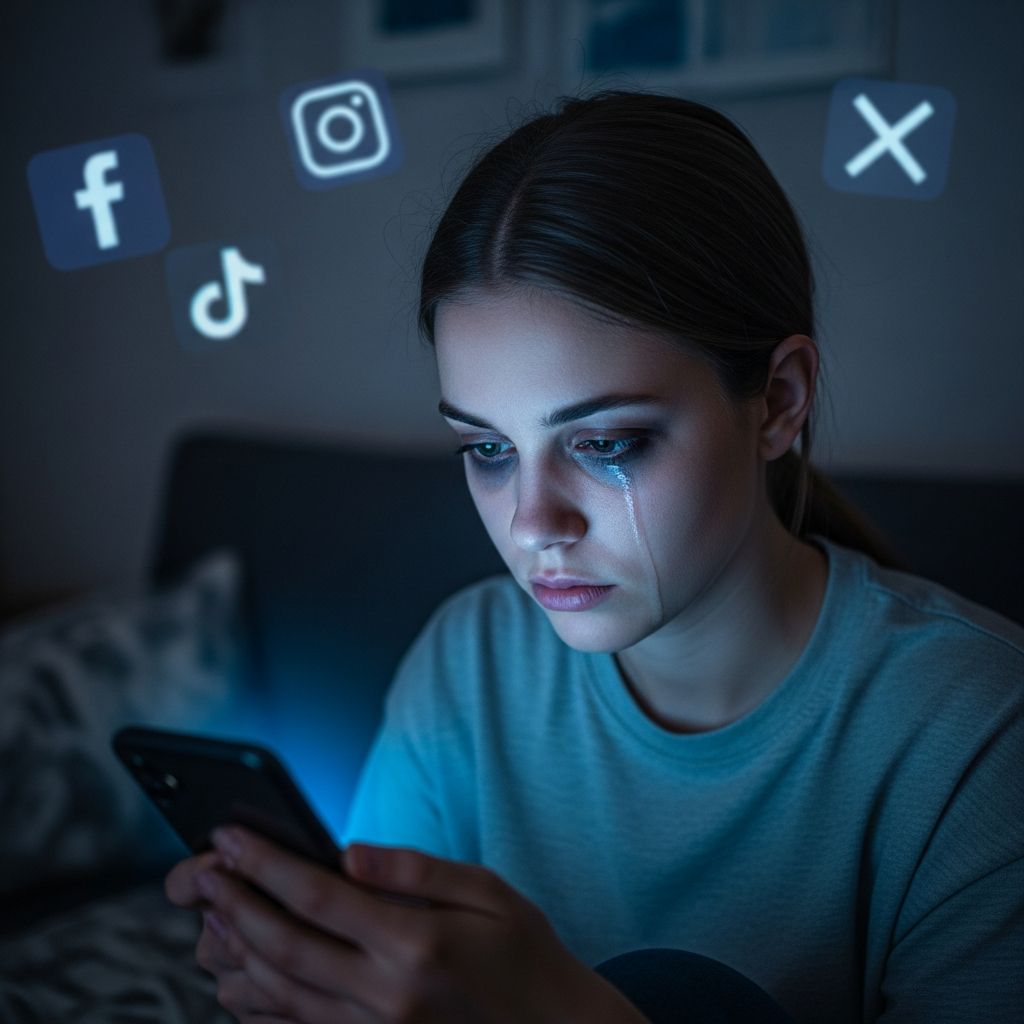
In today’s hyper-connected world, social media has become an integral part of daily life for billions of people. Platforms like Facebook, Instagram, Twitter, and TikTok promise connection, entertainment, and community. Yet increasingly, mental health professionals and researchers are asking whether these platforms might actually be harming our psychological well-being. The relationship between social media use and depression has become a critical public health concern, particularly among younger populations.
Understanding the Connection Between Social Media and Depression
Research has consistently demonstrated a strong association between social media use and depressive symptoms. A nationally-representative study of U.S. young adults found a linear relationship between social media use and depression across multiple platforms. However, the nature of this connection is more complex than simple cause-and-effect.
The relationship between social media use and depression appears to be bidirectional. This means individuals with depression may be more inclined to use social media excessively, while excessive social media use may also contribute to the development or worsening of depressive symptoms. Some depressed individuals turn to social media seeking validation and social connection, potentially creating a reinforcing cycle of increased usage and worsening mood.
How Social Media Affects Mental Health
Social media can negatively impact mental well-being through several mechanisms:
- Increased stress and anxiety: Constant connectivity and the pressure to maintain an online presence create ongoing psychological strain
- Social isolation: Despite promises of connection, passive consumption of social media can paradoxically increase feelings of loneliness
- Low self-esteem: Comparison with others’ curated highlights can diminish self-worth
- Fear of Missing Out (FOMO): Awareness of others’ activities and experiences triggers anxiety and dissatisfaction
- Cyberbullying: Targeted harassment on social platforms creates significant mental health risks
Quantity vs. Quality of Social Media Use
Research distinguishes between the amount of time spent on social media and the type of engagement. Not all social media use affects mental health equally.
Passive vs. Active Use: Studies reveal that passive consumption of social media content—simply scrolling and viewing others’ posts—is associated with negative outcomes including depressed mood and increased loneliness. In contrast, active engagement, such as direct communication with friends or meaningful content creation, tends to produce positive mental health outcomes and perceived social support.
Among girls specifically, passive Instagram and Facebook use predicted increased depressive symptoms, while active participation yielded protective effects. A longitudinal study found that passive social media use at baseline predicted depressive symptoms seven months later, establishing a temporal relationship that suggests a causal connection.
Heavy Use and Duration Effects
Related Stories



The amount of time spent on social media matters significantly. Heavy internet use exceeding four hours daily for social networking and gaming predicted depressive symptoms a year later. Additionally, frequency of social media browsing at baseline predicted depressed mood six months later, suggesting that spending excessive time on these platforms carries genuine risk.
However, research has found that time spent on social media alone may not be the strongest predictor of depression. Instead, problematic social media use—characterized by compulsive checking, inability to control usage, and continued use despite negative consequences—emerges as a more robust predictor of depressive symptoms than hours spent alone.
Age-Related Vulnerabilities
Early adolescence represents a particularly vulnerable period for social media’s mental health effects. A longitudinal cohort study of children and adolescents aged 9 to 12 years found that increases in social media use were associated with subsequent depressive symptoms at the individual level. These findings provide initial evidence that social media use may be a contributing factor to adolescent depression rather than merely reflecting existing symptoms.
Importantly, most prior research focused on young adults or older adolescents, leaving a research gap regarding younger adolescents. Recent longitudinal studies addressing this gap suggest that the developing adolescent brain may be particularly susceptible to social media’s negative effects.
Cyberbullying and Online Harassment
One of the most harmful aspects of social media is the potential for cyberbullying and victimization. A 12-month longitudinal study found that cybervictimization predicted later depressive symptoms. The relationship is bidirectional: depressive symptoms also serve as a risk factor for experiencing cyberbullying on social platforms.
A review of 36 studies documented a consistent relationship between cyberbullying via social media and depression among children and adolescents. The anonymity and permanence of online harassment create unique psychological burdens that traditional bullying does not entail.
Platform Differences
Not all social media platforms carry equal mental health risks. Research has identified platform-specific patterns: depression was significantly higher among students who preferred Twitter compared to those favoring Facebook and Instagram. This variation likely reflects differences in platform design, user engagement patterns, and content types prevalent on each service.
Positive Aspects of Social Media for Mental Health
Despite the documented risks, social media is not uniformly harmful. When used intentionally and mindfully, social media can provide genuine mental health benefits:
- Social connection: Direct communication with friends and family creates meaningful bonds
- Community support: Individuals with depression report using social media to search for positive content, entertainment, and humour
- Creative expression: Content creation allows self-expression and can boost self-esteem when approached positively
- Mental health resources: Social media can facilitate discussions about mental health and reduce stigma
- Increased social capital: Some studies indicate potential increases in perceived social support
Behavioral Shifts with Treatment
Importantly, research shows that social media use patterns are not fixed. Adolescents with clinical depression demonstrated the capacity to shift from maladaptive to positive social media patterns during treatment. When individuals become aware of how social media affects their mood, many adjust their behaviors by reducing stress-related posting, avoiding triggering content, and using platforms more intentionally to connect with supportive peers.
Can Social Media Be Used to Screen for Depression?
A surprising finding emerged when researchers examined whether depressed adolescents published more explicit references to depression on social media platforms. Depressed adolescents were not significantly more likely than healthy peers to openly discuss depression online. However, some depressed adolescents did post more negative feelings, anhedonia, and suicidal ideation.
This suggests that screening for depression through social media analysis alone may not be reliable as a standalone diagnostic tool. However, social media may serve as a supplemental tool for tracking mood changes over time and initiating conversations about mental health.
What Does the Research Tell Us?
Current evidence demonstrates several key findings:
- A strong and significant association exists between social media use and depression in young adults
- The relationship is bidirectional, with causation potentially flowing in both directions
- Passive use carries greater risks than active, purposeful engagement
- Problematic use patterns may be more predictive than time spent alone
- Early adolescence represents a vulnerable developmental period
- Cyberbullying on social platforms significantly increases depression risk
- The quality and intentionality of use matters substantially
Recommendations for Healthier Social Media Use
Based on research evidence, several strategies can help protect mental health while using social media:
- Monitor your usage patterns: Be aware of how much time you spend and what types of activities you engage in
- Prioritize active over passive use: Focus on genuine communication rather than mindless scrolling
- Curate your feed intentionally: Follow accounts that inspire and support you; unfollow or mute those that trigger negative feelings
- Set boundaries: Establish screen-free times and designated non-usage periods
- Use social media purposefully: Engage with platforms to strengthen genuine relationships rather than accumulate followers
- Take regular breaks: Step away from social media periodically to assess its impact on your mood
- Seek support: If you notice depressive symptoms developing, speak with a mental health professional
- Report harmful behavior: Address cyberbullying and harassment through platform reporting mechanisms
Frequently Asked Questions
Q: Is all social media use harmful to mental health?
A: No. Active, purposeful use focused on genuine connection can provide mental health benefits. The risks primarily stem from passive consumption, excessive use, and problematic usage patterns characterized by compulsion and loss of control.
Q: How much social media use is considered excessive?
A: Research suggests that more than four hours daily of internet use for social networking and gaming is associated with depressive symptoms. However, the quality of engagement matters more than absolute time spent.
Q: Can social media actually cause depression?
A: Research indicates a strong association between social media use and depression, with evidence suggesting that increased use can contribute to depressive symptoms. However, the relationship is bidirectional—depression may also lead to increased social media use.
Q: Are some platforms worse than others?
A: Yes, research shows platform differences. For example, Twitter use has been associated with higher depression rates compared to Facebook and Instagram, likely due to differences in platform design and content types.
Q: What about young children and social media?
A: Early adolescents (ages 9-12) appear particularly vulnerable to social media’s negative effects on mental health. Longitudinal research shows that increased social media use during this developmental period is associated with subsequent depressive symptoms.
Q: Can people with depression benefit from social media?
A: Yes, when used intentionally. People with depression can benefit from using social media to seek positive content, connect with supportive communities, and express creativity. The key is shifting from passive to active, purposeful engagement.
Q: What should I do if social media is affecting my mental health?
A: Consider taking a break, adjusting your usage patterns to favor active engagement over passive scrolling, setting boundaries around screen time, and seeking support from a mental health professional if depressive symptoms develop.
References
- Social media use and depression in adolescents: a scoping review — National Center for Biotechnology Information (NCBI). 2020. https://pmc.ncbi.nlm.nih.gov/articles/PMC7392374/
- The association between social media use and the incidence of depression among undergraduate students: an integrative review — Current Pediatrics. 2023. https://www.currentpediatrics.com/articles/the-association-between-social-media-use-and-the-incidence-of-depression-among-undergraduate-students-an-integrative-review-21259.html
- Association between Social Media Use and Depression among U.S. Young Adults — National Center for Biotechnology Information (NCBI). 2017. https://pmc.ncbi.nlm.nih.gov/articles/PMC4853817/
- Social Media Use and Depressive Symptoms During Early Adolescence — JAMA Network Open. 2023. https://jamanetwork.com/journals/jamanetworkopen/fullarticle/2834349
- Problematic Social Media Use in Adolescents and Young Adults — JMIR Mental Health. 2022. https://mental.jmir.org/2022/4/e33450/
- Social Media and Youth Mental Health – Advisory — U.S. Department of Health and Human Services. 2023. https://www.hhs.gov/sites/default/files/sg-youth-mental-health-social-media-advisory.pdf
Similar Articles








Read full bio of Sneha Tete