Is Social Media Making Us Depressed? 5 Signs And Solutions
Exploring the complex link between social media use and rising depression rates, especially among young people, with evidence from recent studies.
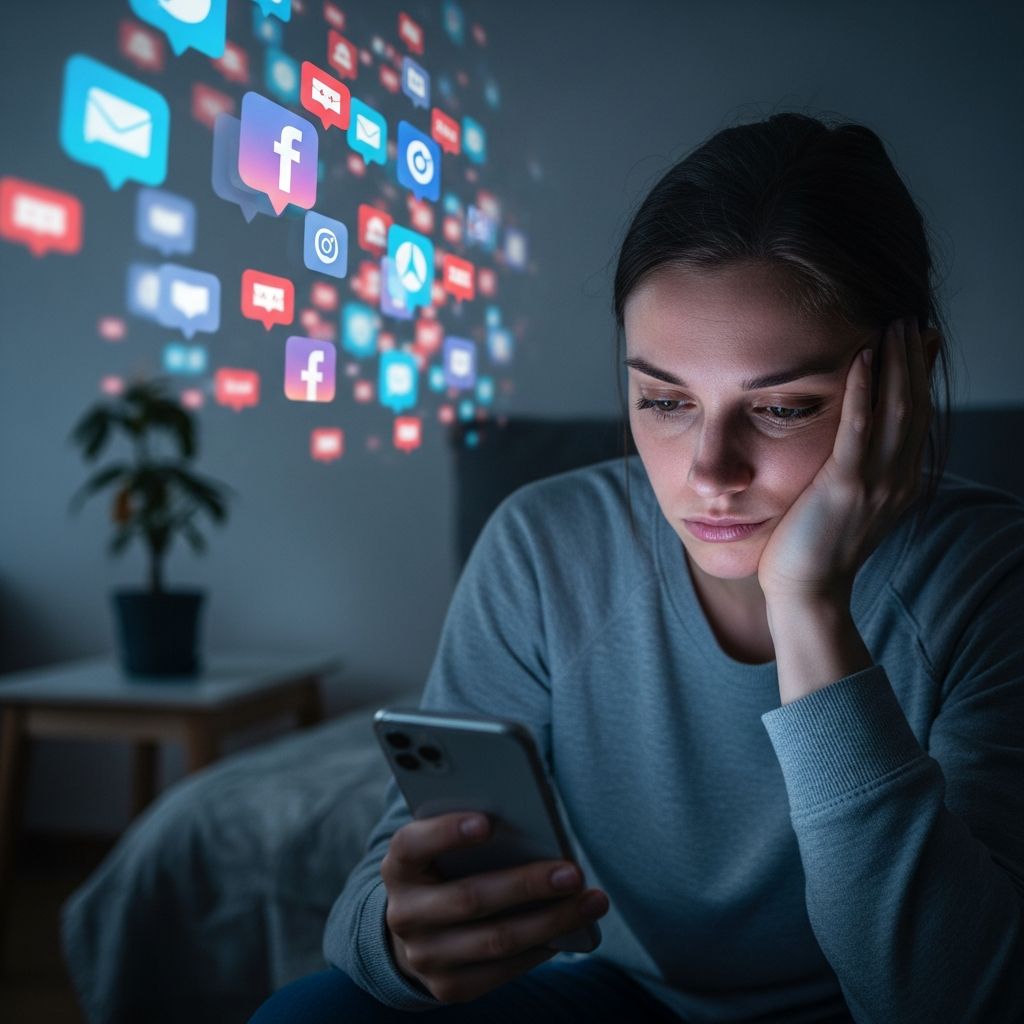
Social media platforms have become integral to daily life, connecting billions worldwide, but mounting evidence suggests they may contribute to depression, particularly among adolescents and young adults. Longitudinal studies indicate a bidirectional relationship where heavy use predicts depressive symptoms, and depression can drive increased usage.
How much time are we spending on social media?
Young people spend substantial time on social media, with U.S. adolescents averaging 4.8 hours daily on entertainment screen time, much of it on platforms like Instagram, TikTok, and Snapchat. A nationally representative study of U.S. young adults found linear associations between time spent (30+ minutes daily across platforms) and depression risk, with odds ratios increasing from 1.66 for 30 minutes to 2.80 for 3+ hours. In early adolescence (ages 9-12), increases in social media use over time were linked to subsequent depressive symptoms in a large cohort.
- Average daily use exceeds 3 hours for many teens, correlating with higher depression scores.
- Problematic use—characterized by addiction-like behaviors—shows stronger ties to mental health issues than time alone.
- Platforms like Twitter may pose higher risks for some users compared to others.
Does social media cause depression?
Research shows associations but not strict causation due to cross-sectional limitations; however, longitudinal data supports social media as a contributing factor. A scoping review of adolescents found reciprocal links: baseline Instagram browsing predicted depressed mood six months later, and vice versa. Heavy internet use for social networking (>4 hours/day) predicted symptoms a year later. In young adults, more time on platforms correlated with depression independently of other factors.
Mechanisms include:
- Displacement of real-life interactions: Passive consumption reduces bonding social capital and increases loneliness.
- Rumination: Depressed individuals seek validation online, perpetuating cycles of low self-worth.
- Upward social comparison: Viewing curated highlight reels fosters envy and inadequacy.
Social media and adolescents
Adolescents are particularly vulnerable. The ABCD Study cohort (ages 9-12) revealed within-person associations: rises in social media use preceded depressive symptoms over years, suggesting temporal precedence. A meta-analysis confirmed problematic use strongly predicts depression, anxiety, and stress in youth, with the highest correlation for anxiety.
| Age Group | Key Finding | Source |
|---|---|---|
| 9-12 years | Increased use → later depressive symptoms (unidirectional) | |
| Adolescents | Passive use predicts depression; active use may buffer | |
| Young adults | Linear risk increase with time spent |
Cyberbullying via social media consistently links to depression in reviews of 36 studies.
Passive vs active use
Quality matters more than quantity. Passive use (browsing, lurking) among girls led to depressed mood, while active use (posting, interacting) boosted social support. Flemish adolescents showed passive Facebook use at baseline predicting symptoms seven months later. Depressed youth in treatment shifted from negative (risky sharing, bullying) to positive use (humor, connections).
- Passive: Negative outcomes like envy, FOMO, loneliness.
- Active: Potential positives like support, but risky if involving comparisons.
Cyberbullying and social media
Cyberbullying is a key mediator. A 12-month study found it predicts later depressive symptoms; depression also raises victimization risk, indicating bidirectionality. Reviews confirm consistent links between social media cyberbullying and depression in children. Depressed teens post more negative content but not explicitly about depression, limiting screening utility.
Related Stories



Is there a link between social media and self-harm or suicide?
Evidence ties heavy use to self-harm and suicidality. Problematic use correlates with depressive symptoms that elevate these risks. Cyber-victimization exacerbates this pathway. The U.S. Surgeon General’s advisory highlights social media’s role in youth mental health crises, including suicidality.
What does the science say?
Meta-analyses and cohorts affirm risks:
- Problematic use outperforms time spent as a depression predictor.
- U.S. young adults: Strong association across platforms.
- Undergrads: Overuse and addiction linked to symptoms; Twitter users at higher risk.
Conflicting findings exist—some report benefits like support—but negatives dominate, especially for passive/heavy use.
Signs that social media is affecting your mental health
Watch for:
- Increased anxiety or low mood after scrolling.
- Compulsive checking or FOMO.
- Sleep disruption from late-night use.
- Self-comparisons leading to low self-esteem.
- Withdrawal from real-life relationships.
Depressed individuals may ruminate online for validation, worsening symptoms.
What can you do?
Mindful strategies help:
- Limit time: Use built-in tools for 30-60 min/day caps.
- Prioritize active engagement: Comment, connect meaningfully.
- Avoid triggers: Curate feeds, mute comparisons.
- Take breaks: Digital detoxes reduce symptoms.
- Seek support: Therapy can shift usage patterns positively.
Interventions promoting purposeful use mitigate risks.
Frequently Asked Questions (FAQs)
Q: Does all social media use cause depression?
A: No, active use can provide support, but passive, heavy, or problematic use is linked to higher depression risk, especially in youth.
Q: Is the link causal?
A: Longitudinal studies show social media use precedes symptoms, suggesting contribution, though bidirectionality exists.
Q: How much is too much?
A: Over 2-3 hours daily raises risks linearly; problematic patterns matter more.
Q: Can social media help with depression?
A: Yes, for positive content and connections, but depressed users often shift to healthier patterns with awareness.
Q: What about cyberbullying?
A: Strongly associated with depression; block/report and seek help.
References
- Social media use and depression in adolescents: a scoping review — PMC. 2020-07-14. https://pmc.ncbi.nlm.nih.gov/articles/PMC7392374/
- The association between social media use and the incidence of depression among undergraduate students: an integrative review — Current Pediatrics. 2023. https://www.currentpediatrics.com/articles/the-association-between-social-media-use-and-the-incidence-of-depression-among-undergraduate-students-an-integrative-review-21259.html
- Association between Social Media Use and Depression among U.S. Young Adults — PMC. 2016-04-27. https://pmc.ncbi.nlm.nih.gov/articles/PMC4853817/
- Social Media Use and Depressive Symptoms During Early Adolescence — JAMA Network Open. 2024. https://jamanetwork.com/journals/jamanetworkopen/fullarticle/2834349
- Problematic Social Media Use in Adolescents and Young Adults — JMIR Mental Health. 2022-04-21. https://mental.jmir.org/2022/4/e33450/
- Social Media and Youth Mental Health — U.S. Department of Health and Human Services. 2023-05. https://www.hhs.gov/sites/default/files/sg-youth-mental-health-social-media-advisory.pdf
Similar Articles








Read full bio of Sneha Tete