Is Subway Healthy? 2025 Guide To Healthier Orders
Uncover the truth about Subway's nutrition: Can customizable subs deliver healthy fast food, or are hidden pitfalls undermining the health halo?
Subway has long marketed itself as the healthy alternative in the fast-food world, emphasizing fresh vegetables, customizable sandwiches, and lighter options compared to burgers and fries. But does the reality match the reputation? While Subway offers more nutritious choices than many competitors, popular orders often pack excessive calories, sodium, and processed ingredients that can undermine health goals. This analysis breaks down the nutrition facts, compares Subway to other chains, and provides actionable tips for healthier eating.
Subway’s Health Halo: Marketing vs. Reality
Subway’s branding revolves around ‘Eat Fresh’ slogans, promoting footlong subs loaded with veggies as guilt-free meals. This positioning has helped it capture health-conscious consumers seeking fast food without the full caloric burden of traditional options. However, research reveals a more nuanced picture. A landmark UCLA study found that adolescent meals at Subway averaged 955 calories—nearly identical to McDonald’s 1,038 calories—with no statistically significant difference, suggesting both contribute to overeating and obesity risks.
The Institute of Medicine recommends school lunches cap at 850 calories, yet typical Subway purchases exceed this, often due to large subs, cheese, sauces, and sides. Sandwiches alone averaged 784 calories at Subway versus 572 at McDonald’s, highlighting how portion sizes inflate totals. Sugary drinks added fewer calories at Subway (61 vs. 151), but sides like chips brought minimal difference after accounting for fries elsewhere.
Nutrient profiles show Subway edging ahead in protein (41g vs. 32g) and lower carbs (102g vs. 128g) and sugar (36g vs. 54g), but sodium skyrockets to 2,149mg—over three times the recommended daily limit for lunches and linked to processed meats associated with cardiovascular disease, obesity, and cancer.
Nutritional Breakdown: What’s Really in Your Sub?
Subway’s strength lies in customization, allowing control over bread, proteins, cheeses, veggies, sauces, and toppings. A basic 6-inch turkey breast on wheat with veggies can stay under 300 calories, but upgrades quickly escalate. Here’s a detailed look:
- Calories: 6-inch subs range from 200-500 calories base; footlongs double to 400-1,000+. Add cheese (+50-100 cal), double meat (+150-300 cal), and mayo (+100 cal per tablespoon).
- Sodium: Major red flag—meats like salami or pepperoni push 1,000-2,000mg per footlong. Even ‘healthy’ turkey hits 800-1,200mg. Daily limit: 2,300mg.
- Fats: Varies widely; avocado or oil adds healthy unsaturated fats, but bacon or full-fat dressings load saturated fats.
- Protein: Strong suit—20-40g per 6-inch from lean meats, eggs, or plant-based options like Beyond Meat.
- Carbs & Fiber: Multigrain bread offers more fiber (5-6g) than white (2-3g); load veggies for 5-10g fiber to aid digestion and satiety.
| Nutrient | Typical 6-inch Veggie Delite | Typical Footlong Italian BMT | Daily Recommended (Adult) |
|---|---|---|---|
| Calories | 200 | 1,060 | 2,000-2,500 |
| Sodium (mg) | 310 | 2,460 | <2,300 |
| Protein (g) | 8 | 47 | 46-56 |
| Fiber (g) | 5 | 10 | 25-38 |
Data synthesized from Subway’s nutrition calculator and studies.
Healthier Subway Orders: Customization Guide
To optimize nutrition, prioritize these strategies:
- Choose 6-inch over footlong—halves calories without hunger if paired with soup or salad.
- Opt for whole grain or flatbread (lower cal, higher fiber).
- Load veggies: lettuce, tomatoes, cucumbers, spinach, peppers—zero cal, high volume.
- Select lean proteins: turkey, chicken, ham, roast beef, or plant-based over salami/steak.
- Skip or lighten cheese; choose mustard, vinegar, or light mayo over ranch/oil.
- Avoid sugary sodas—pick water, unsweetened tea, or diet options.
- Ditch chips/cookies for apple slices or yogurt.
Related Stories



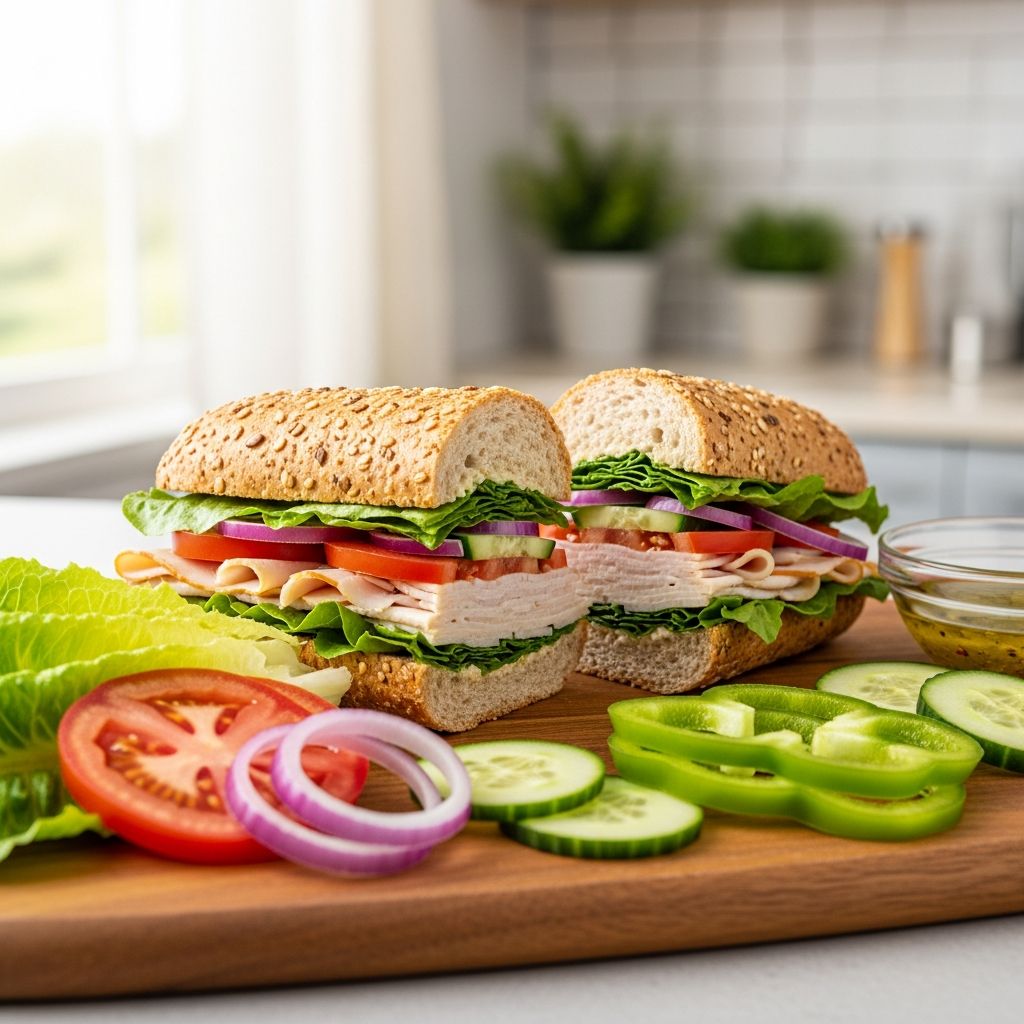
Example healthy meal: 6-inch oven-roasted turkey on 9-grain wheat, double veggies, mustard (280 cal, 1,000mg sodium, 20g protein).
New Menu Innovations: Fresh Fit Returns
Subway addresses criticisms with updates like the reintroduced Fresh Fit menu (Sept 2025), featuring four 6-inch sandwiches under 500 calories, 20g+ protein, and full veggie servings on multigrain bread.
- Grilled Chicken & Avocado: 35g protein, smashed avocado, Baja Chipotle sauce.
- Ham & Turkey Stacker: 20g protein, yellow mustard.
- Seasoned Steak & Avocado: 35g protein.
- Turkey & Ranch Delite: 26g protein, Peppercorn Ranch.
These respond to consumer demands for convenient, macro-friendly options amid busy lifestyles where two-thirds prioritize speed over nutrition.
Subway vs. Competitors: How Does It Stack Up?
Compared to McDonald’s, Subway offers marginally better profiles but similar caloric loads in practice. Versus Chipotle or Panera, Subway lags in whole-food emphasis but wins on speed and price. Fast-food averages hit 836 calories per meal, often underestimated by 175 calories—Subway included.
| Chain | Avg Meal Calories | Sodium (mg) | Protein (g) |
|---|---|---|---|
| Subway | 955 | 2,149 | 41 |
| McDonald’s | 1,038 | 1,829 | 32 |
| Typical Fast Food | 836 | Varies | 25-35 |
Potential Health Risks of Frequent Subway Consumption
Regular intake risks sodium overload (hypertension), processed meat nitrates (cancer links), and calorie surplus (weight gain). Balance with home-cooked meals, portion control, and diverse nutrients. Adolescents face heightened obesity risks from unchecked portions.
Who Benefits Most from Subway?
Ideal for occasional meals when customized wisely. Suits athletes needing protein, busy professionals craving veggies, or dieters tracking macros. Not optimal for sodium-sensitive individuals or daily reliance.
Frequently Asked Questions (FAQs)
Is Subway healthier than McDonald’s?
Slightly in protein and lower fries calories, but comparable total calories (955 vs 1,038) and higher sodium make it a wash for adolescents.
What’s the healthiest Subway sandwich?
6-inch Veggie Delite or turkey on wheat with extra veggies—under 300 calories, high fiber.
Are Subway’s meats processed?
Yes, contributing to high sodium and health risks like cancer; opt for fewer meats.
Can I eat Subway every day?
Not recommended due to sodium and limited variety; use sparingly with customization.
How many calories in a footlong sub?
400-1,200+, depending on toppings—often exceeding daily needs in one sitting.
References
- For adolescents, Subway food may not be much healthier than McDonald’s — UCLA Health. 2013-05-06. https://www.uclahealth.org/news/release/subway-food-may-not-be-much-healthier-than-mcdonalds
- For adolescents, Subway food may not be much healthier than McDonald’s, study finds — ScienceDaily (UCLA Health Sciences). 2013-05-10. https://www.sciencedaily.com/releases/2013/05/130507195438.htm
- Subway® Reintroduces Fresh Fit® Menu with Four Protein-Packed Sandwiches Under 500 Calories — PRNewswire (Subway). 2025-09-10. https://www.prnewswire.com/news-releases/subway-reintroduces-fresh-fit-menu-with-four-protein-packed-sandwiches-under-500-calories-and-a-full-serving-of-vegetables-302551422.html
- Fast-food menu offerings vary in dietary quality, but are consistently poor in sodium and fat content — PMC (Peer-reviewed). 2014. https://pmc.ncbi.nlm.nih.gov/articles/PMC3883949/
- Healthy Fast Food Options: Find the Healthiest Fast Food — HelpGuide.org. Recent access 2026. https://www.helpguide.org/wellness/nutrition/healthier-fast-food
Similar Articles








Read full bio of medha deb