Is the Vagus Nerve Key to Mental Health?
Discover how the vagus nerve influences mental health, from stress reduction to treating depression and PTSD through stimulation techniques.
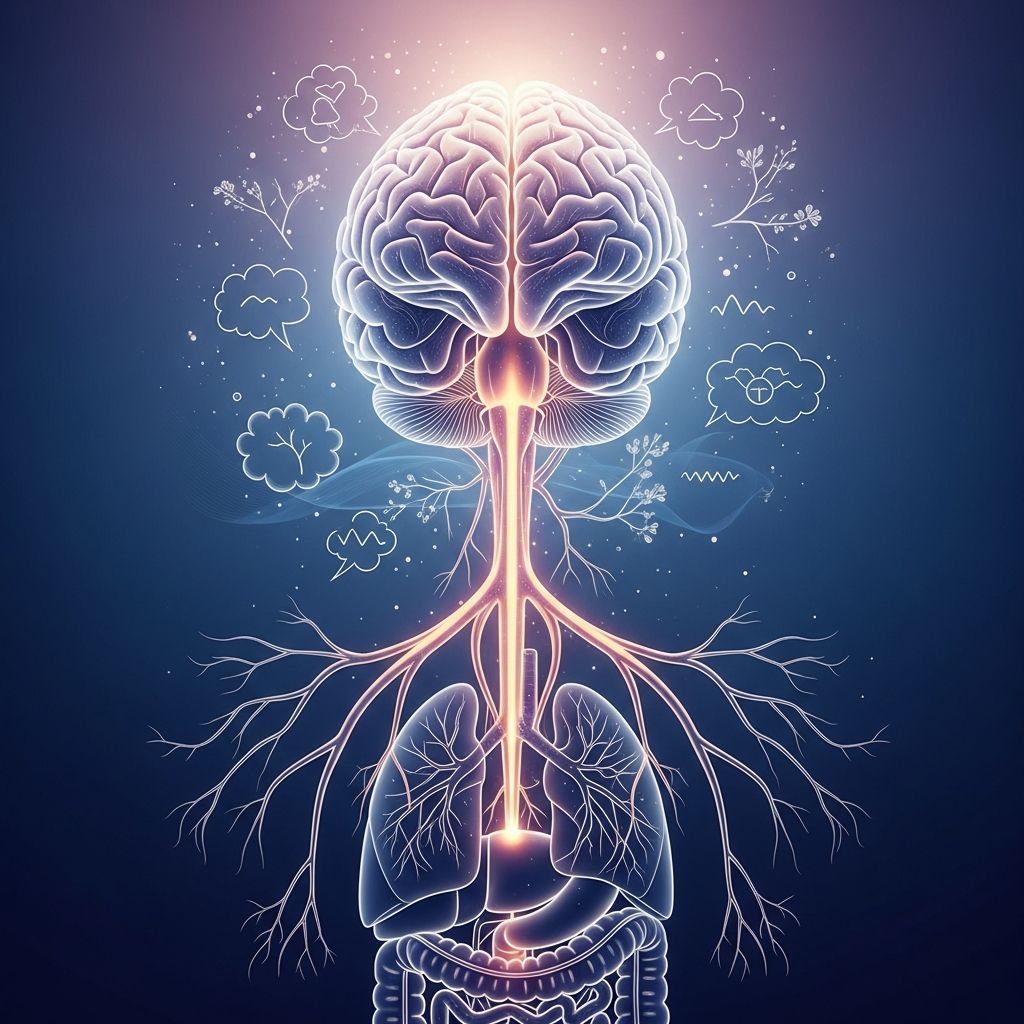
The vagus nerve, often called the ‘wandering nerve’ due to its extensive path from the brainstem through the neck, chest, and abdomen, serves as a vital communication highway between the brain and major organs. This cranial nerve X plays a central role in the parasympathetic nervous system (PNS), promoting ‘rest and digest’ functions that counterbalance the ‘fight or flight’ response of the sympathetic nervous system (SNS). Emerging research highlights its profound influence on mental health, linking vagal activity to mood regulation, stress resilience, and emotional stability.
**Vagal tone**, a measure of vagus nerve activity often assessed via heart rate variability (HRV), reflects the body’s ability to adapt to stressors. Higher vagal tone correlates with better mental health outcomes, including reduced anxiety and improved cognitive performance under pressure. Low vagal tone, conversely, is associated with chronic stress, depression, and inflammation, conditions that impair daily functioning.
What is the Vagus Nerve?
The vagus nerve comprises both sensory and motor fibers, transmitting signals bidirectionally. Approximately 80% of its fibers are afferent, carrying information from organs like the heart, lungs, and gut to the brain, influencing the gut-brain axis—a bidirectional pathway central to emotional regulation. Efferent fibers regulate heart rate, digestion, and immune responses by releasing acetylcholine, which dampens inflammation.
In mental health contexts, the vagus nerve modulates the hypothalamic-pituitary-adrenal (HPA) axis, the body’s primary stress response system. Chronic activation of the SNS without adequate vagal braking can lead to elevated cortisol levels, contributing to anxiety disorders and major depressive disorder (MDD). Studies using functional MRI show that higher HRV—indicative of strong vagal tone—enhances prefrontal cortex recruitment during executive tasks, fostering better decision-making and emotional control.
How Does the Vagus Nerve Affect Mental Health?
The vagus nerve’s impact on mental health operates through multiple pathways:
- Stress and Anxiety: High vagal tone activates the PNS, accelerating heart rate recovery post-stress and reducing symptoms like rapid heartbeat and tension. This promotes relaxation and resilience.
- Depression: Reduced vagal activity correlates with SNS dominance, exacerbating fatigue, sleep issues, and GI disturbances common in depression. Vagus nerve stimulation (VNS) influences mood-regulating brain regions and neurotransmitters like serotonin and norepinephrine.
- Cognitive Function: Vagal modulation supports attention, memory, and self-regulation. Interventions boosting vagal tone improve performance in high-stress scenarios.
- Inflammation and Mood: Via the cholinergic anti-inflammatory pathway, the vagus nerve curbs cytokine release, linking low tone to ‘sickness behavior’ mimicking depression.
Research from Mass General underscores vagal tone’s role in the gut-brain axis, where gut microbiota influence vagal signaling, potentially explaining why probiotics or diet changes alleviate mood disorders.
Vagus Nerve Stimulation for Depression
For treatment-resistant depression (TRD), implantable VNS devices deliver electrical pulses to the left vagus nerve, targeting mood centers like the locus coeruleus and nucleus tractus solitarius. A landmark multicenter trial (RECOVER) involving 493 participants with severe TRD—many unable to work after failing 13 prior treatments—demonstrated significant benefits. After one year, those with active VNS showed improved depressive symptoms, quality of life, and daily functioning per multiple validated scales, including clinician-rated and self-reported tools.
Related Stories



Improvements were sustained, with patients reporting life-changing shifts from bedbound states to productivity. Unlike antidepressants, VNS effects often persist long-term, as evidenced by prior studies. Mayo Clinic notes VNS FDA approval for TRD since 2005, typically after exhausting medications and therapies. Participants continued standard care, highlighting VNS as an adjunct rather than standalone treatment.
Vagus Nerve Stimulation for PTSD
Post-traumatic stress disorder (PTSD) benefits from paired VNS with prolonged exposure therapy (PE). A Phase 1 trial at UT Dallas and Baylor involved nine treatment-resistant patients receiving neck-implanted VNS during 12 PE sessions. Bursts of stimulation enhanced fear extinction, rendering all symptom-free for up to six months post-therapy.
Traditional PE achieves 40% remission but 20% dropout; VNS could boost efficacy for non-responders. Lead researcher noted: “VNS has changed my work dramatically,” signaling a paradigm shift. Mechanisms involve amplified neural plasticity, strengthening therapeutic memory consolidation.
Non-Invasive Ways to Stimulate the Vagus Nerve
Beyond surgical VNS, lifestyle interventions enhance vagal tone naturally:
- Deep Breathing: Slow diaphragmatic breaths (4-6 per minute) at resonance frequency increase HRV, reducing anxiety in weeks.
- Cold Exposure: Cold showers or face immersion triggers the diving reflex, boosting vagal activity.
- Exercise: Aerobic activity and yoga elevate HRV; post-exercise taVNS (transcutaneous auricular VNS) cuts fatigue and pain.
- Singing/Humming: Vocalization vibrates throat muscles, stimulating vagal branches.
- Meditation/HRV Biofeedback: 15-minute sessions sharpen attention; six weeks reduce trait anxiety.
- Probiotics/Omega-3s: Support gut-brain signaling.
Cedars-Sinai reports even healthy individuals gain cognitive boosts from these methods.
Stimulating the Vagus Nerve: Pros and Cons
| Pros | Cons |
|---|---|
| Sustained symptom relief in TRD/PTSD | Invasive surgery risks (infection, hoarseness) |
| Improves QoL/function | Delayed onset (months) |
| Non-invasive options accessible | Costly devices; not first-line |
| Enhances therapy efficacy | Limited access; insurance variability |
VNS suits severe cases post-failed treatments, while natural methods suit prevention/well-being.
Frequently Asked Questions (FAQs)
What is the vagus nerve?
The vagus nerve is the longest cranial nerve, connecting brain to organs, regulating heart rate, digestion, and stress via PNS.
Can stimulating the vagus nerve cure depression?
No cure, but VNS significantly improves severe, resistant depression symptoms and function, per RECOVER trial.
Is vagus nerve stimulation safe?
Implantable VNS is FDA-approved with side effects like voice changes; non-invasive methods are low-risk.
How do I improve my vagal tone naturally?
Practice deep breathing, exercise, cold exposure, meditation, and humming daily.
Does low vagal tone cause mental illness?
It’s linked to higher risk of depression/anxiety via SNS imbalance, but multifactorial.
Who benefits most from VNS therapy?
Patients with treatment-resistant depression or PTSD failing standard therapies.
References
- Vagus nerve stimulation relieves severe depression — Washington University School of Medicine. 2024-12-18. https://medicine.washu.edu/news/vagus-nerve-stimulation-relieves-severe-depression/
- The Vagus Nerve: A Key Player in Your Health and Well-Being — Massachusetts General Hospital. 2025. https://www.massgeneral.org/news/article/vagus-nerve
- The vagus nerve: a cornerstone for mental health and performance — Frontiers in Psychology. 2025. https://www.frontiersin.org/journals/psychology/articles/10.3389/fpsyg.2025.1639866/full
- Study: PTSD Patients Show Long-Term Benefits with Vagus Nerve Stimulation — UT Dallas News. 2025-03-15. https://news.utdallas.edu/health-medicine/study-ptsd-vagus-nerve-stimulation-2025/
- Vagus Nerve Stimulation — Mental Health America. 2025. https://mhanational.org/treatment-options/vagus-nerve-stimulation/
- Vagus nerve stimulation — Mayo Clinic. 2025. https://www.mayoclinic.org/tests-procedures/vagus-nerve-stimulation/about/pac-20384565
- Bolster Your Brain by Stimulating the Vagus Nerve — Cedars-Sinai. 2025. https://www.cedars-sinai.org/stories-and-insights/healthy-living/stimulating-the-vagus-nerve
Similar Articles








Read full bio of Sneha Tete