Is Type 1 Diabetes Genetic? A Comprehensive Guide
Unraveling the genetic puzzle of type 1 diabetes: Understand hereditary risks, key genes like HLA, and the vital role of environmental triggers.
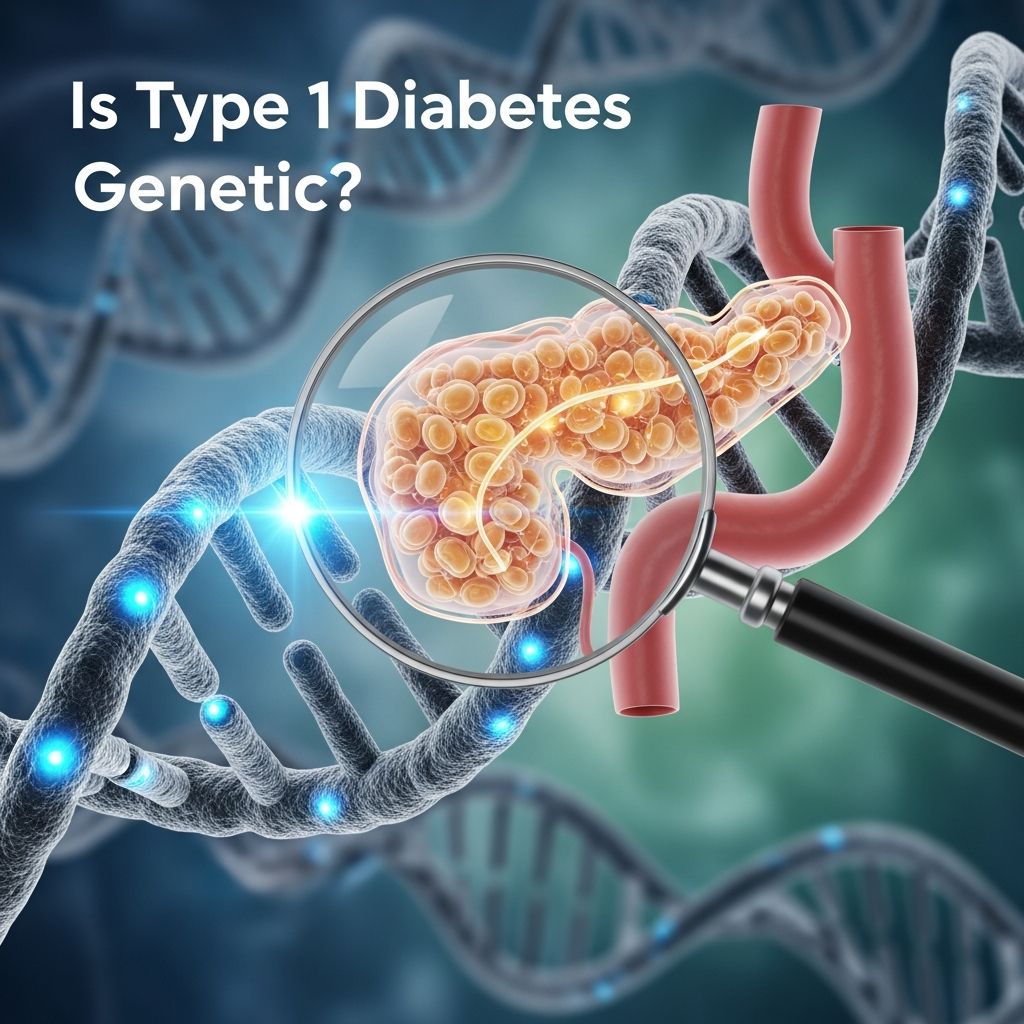
Type 1 diabetes is not directly inherited like some single-gene disorders but arises from a complex interplay of genetic susceptibility and environmental triggers, with genetics accounting for approximately 50% of the overall risk.
This autoimmune condition occurs when the immune system attacks insulin-producing beta cells in the pancreas, leading to lifelong insulin dependence. While no single gene causes type 1 diabetes, specific genetic variations, particularly in the human leukocyte antigen (HLA) region, significantly elevate risk. Family members of affected individuals face higher chances, but absolute risks remain low compared to the general population.
What Is Type 1 Diabetes?
Type 1 diabetes is a chronic autoimmune disease characterized by the destruction of pancreatic beta cells, resulting in little to no insulin production. Symptoms typically emerge in childhood or adolescence, including excessive thirst, frequent urination, unexplained weight loss, and fatigue. Without insulin therapy, it can lead to life-threatening complications like diabetic ketoacidosis.
Unlike type 2 diabetes, which involves insulin resistance, type 1 is purely due to beta cell loss. It affects about 1 in 250 people in the general population, with incidence rising globally, particularly in developed nations.
Genetics of Type 1 Diabetes
Genetic factors contribute roughly 50% to type 1 diabetes risk, as evidenced by twin studies showing 30-70% concordance in identical twins versus much lower rates in fraternal twins. The human major histocompatibility complex (MHC), housing HLA genes on chromosome 6p21, explains about half of this genetic risk.
HLA class II genes—HLA-DRB1, HLA-DQA1, and HLA-DQB1—are the strongest predictors. High-risk haplotypes include HLA-DR3-DQ2 and HLA-DR4-DQ8, common in European ancestries. The heterozygous combination DR3/DR4-DQ8 confers the highest risk, especially for early-onset cases.
Non-HLA genes contribute the rest, including INS (insulin gene), PTPN22, CTLA4, and over 50 others with smaller effects (odds ratios ≤1.3). These influence immune regulation and beta cell function.
Family Risk of Type 1 Diabetes
If a parent has type 1 diabetes, their child’s risk is 1-9%; for siblings, it’s 6-7%; and for identical twins, 30-70%. These figures starkly contrast the general population risk of ~0.4%.
| Relationship to Person with Type 1 Diabetes | Risk of Developing Type 1 Diabetes |
|---|---|
| General population | 1 in 250 (~0.4%) |
| Child of affected parent | 1-9% |
| Sibling | 6-7% |
| Identical twin | 30-70% |
This table illustrates familial aggregation, underscoring genetics’ role without implying direct inheritance.
Is Type 1 Diabetes Hereditary?
Type 1 diabetes is not hereditary in the Mendelian sense—it’s polygenic and multifactorial. Identical twins’ imperfect concordance (50% average) proves environmental triggers are essential. Inheritance requires multiple risk alleles plus external factors like viral infections or early diet.
Offspring risk varies by parental diagnosis age: lower if parent developed diabetes later. No single ‘diabetes gene’ exists; risk polygenicity demands cumulative variants.
Environmental Triggers for Type 1 Diabetes
Genetics load the gun, but environment pulls the trigger. Key suspects include:
- Viral infections (e.g., enteroviruses, coxsackievirus) initiating autoimmunity.
- Early cow’s milk or gluten exposure accelerating beta cell attack.
- Low vitamin D levels impairing immune tolerance.
- Gut microbiome dysbiosis from antibiotics or cesarean births.
- Geographic latitude correlations, higher in northern regions.
These interact with HLA-risk genotypes, explaining discordant twins.
Genes Involved in Type 1 Diabetes
Beyond HLA (40-50% genetic risk), notable genes include:
- INS: Insulin gene variants affect promoter activity, increasing beta cell stress.
- PTPN22: Impairs T-cell regulation.
- IL2RA, CTLA4: Modulate T-cell activation.
- IFIH1: Antiviral sensor; mutations heighten autoimmunity risk.
Genome-wide studies identify 270+ loci, mostly noncoding regulatory variants.
Can Type 1 Diabetes Be Predicted Genetically?
Genetic screening identifies high-risk infants via HLA typing and autoantibody tests (e.g., GAD, IA-2). Programs like TEDDY track at-risk children for early intervention trials. Prediction accuracy reaches 70-80% in high-risk groups, but low positive predictive value limits population screening.
Polygenic risk scores are emerging, combining HLA and non-HLA variants for better stratification.
Preventing Type 1 Diabetes in High-Risk Individuals
Primary prevention targets preclinical stages:
- Teplizumab: FDA-approved monoclonal antibody delays onset by 2-3 years in stage 2 (autoantibody-positive) individuals.
- Vitamin D supplementation shows promise in trials.
- Dietary interventions (e.g., early probiotics) under study.
- Screening first-degree relatives for autoantibodies enables monitoring.
No cure exists, but delaying onset preserves beta cells.
Recent Research on Type 1 Diabetes Genetics
2023-2024 studies emphasize ancestry-specific risks: HLA-DR4-DQ8 dominates in Europeans, but Asian cohorts highlight DR9. Epigenetics (DNA methylation) and single-cell RNA-seq reveal beta cell heterogeneity in susceptibility. CRISPR-edited models test causal variants.
Large cohorts like TEDDY link gut viruses to HLA-risk interactions.
Frequently Asked Questions (FAQs)
Is type 1 diabetes passed directly from parent to child?
No, it’s not directly inherited. Genetic risk exists, but environmental factors are required.
What is the risk if my child has type 1 diabetes?
Siblings have 6-7% risk; monitor via screening.
Can genetic testing predict type 1 diabetes?
HLA and autoantibody tests identify high-risk cases, but not perfectly.
Does type 2 diabetes run in families the same way?
No, type 2 has stronger heritability (~80%) via different genes like TCF7L2.
Can lifestyle prevent type 1 diabetes?
Not fully, but breastfeeding and vitamin D may lower risk in predisposed kids.
References
- Type 1 diabetes — Wikipedia. 2024. https://en.wikipedia.org/wiki/Type_1_diabetes
- A review of the genetics of type I diabetes — Exploration of Immunology. 2024-10-15. https://www.explorationpub.com/Journals/ei/Article/1003160
- Genetics of Type 1 Diabetes — NCBI Bookshelf / NIH. 2023. https://www.ncbi.nlm.nih.gov/books/NBK597411/
- An insight into the genetics of type 1 Diabetes — Elsevier / Inmunología. 2009. https://www.elsevier.es/es-revista-inmunologia-322-articulo-an-insight-into-genetics-type-S021396260970040X
- Identification of gene mutations associated with type 1… — Frontiers in Genetics. 2024. https://www.frontiersin.org/journals/genetics/articles/10.3389/fgene.2023.1292073/full
- Type 1 diabetes – Genetics — MedlinePlus / NIH. 2024. https://medlineplus.gov/genetics/condition/type-1-diabetes/
Similar Articles








Read full bio of Sneha Tete