Food Thermometer Accuracy: 4 Tests And Calibration Tips
Learn essential methods to test and calibrate your food thermometer for safe cooking and prevent foodborne illness risks.
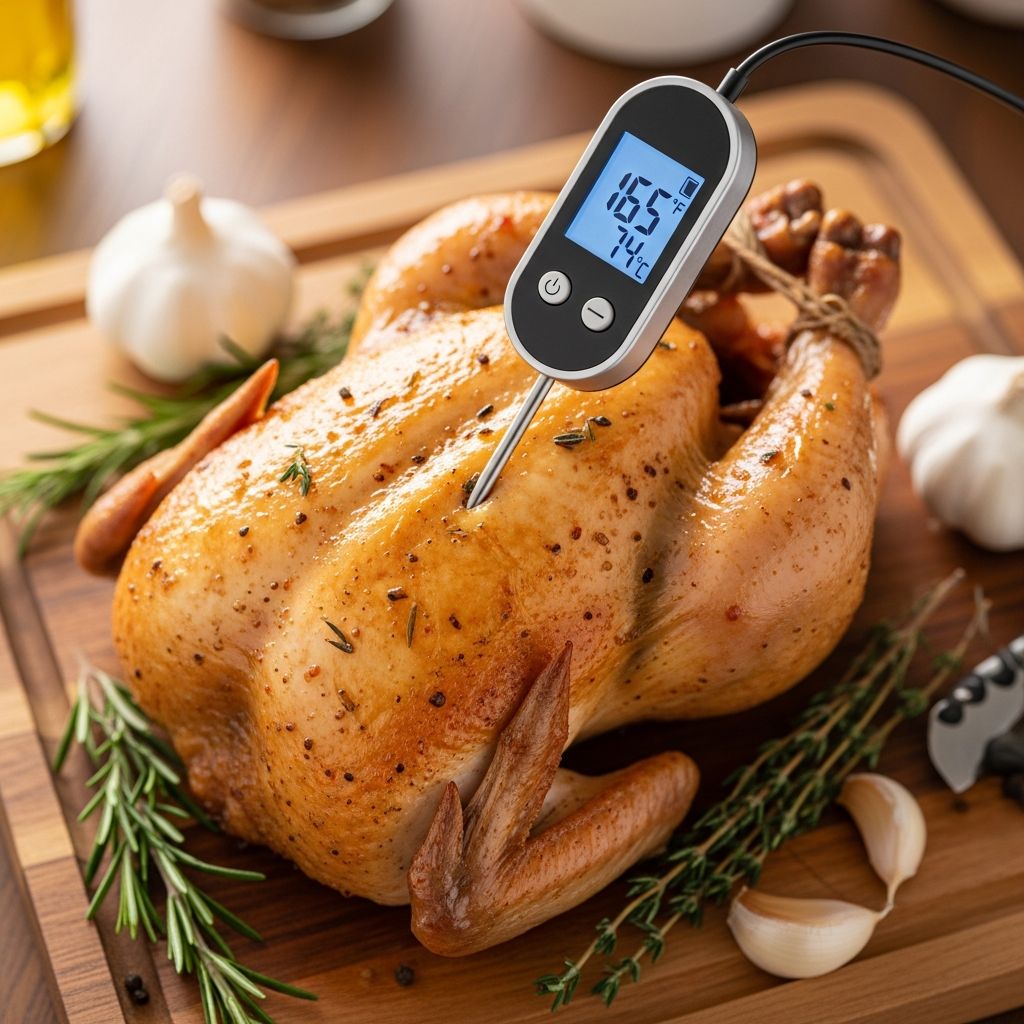
Food thermometers are vital tools in every kitchen, helping ensure meats, poultry, and other dishes reach safe internal temperatures to kill harmful bacteria. An inaccurate thermometer can lead to undercooked food, risking foodborne illnesses like salmonella or E. coli. Regularly testing and calibrating your thermometer maintains precision, typically within ±2°F, which is crucial for food safety guidelines from health authorities.
Whether you use a dial, digital instant-read, or probe thermometer, accuracy degrades over time due to drops, exposure to extreme temperatures, or regular use. This article covers why accuracy matters, how to test using proven methods like the ice bath and boiling water tests, calibration steps for different types, and maintenance tips. By following these practices, you protect your family from illness while achieving perfectly cooked meals every time.
Why Thermometer Accuracy Matters
Precise temperature readings prevent serving undercooked proteins that harbor pathogens. For instance, poultry must reach 165°F, ground beef 160°F, and whole cuts like pork or beef 145°F with a 3-minute rest, per USDA standards. A thermometer off by even 5°F could mean the difference between safe eating and serious health risks.
Inaccurate devices also cause overcooking, leading to dry, tough food. Home cooks often blame recipes, but faulty thermometers are common culprits. Testing new thermometers upon purchase and annually—or after any damage—ensures reliability. Professional kitchens calibrate regularly to avoid violations; home users should adopt similar habits for safety.
Common Types of Food Thermometers
Understanding your thermometer type is key to proper testing and calibration:
- Dial (Bimetallic) Thermometers: Feature a coiled spring and needle gauge; sturdy for ovens or grills but slower response time. Accuracy spec often ±2°F.
- Digital Instant-Read: Probe-style with LCD display; fast readings in seconds, ideal for thin cuts. High-end models like ThermoWorks achieve ±0.5°F.
- Leave-In Probe Thermometers: Wired to a base unit for monitoring roasts; some integrate with appliances like Ninja Foodi.
- Infrared Thermometers: Non-contact for surfaces; less reliable for internal food temps, not recommended for safety checks.
Each type requires specific calibration techniques, detailed below.
How to Test Thermometer Accuracy: Ice Bath Method
The ice bath test verifies accuracy at 32°F (0°C), the freezing point of water—independent of altitude. It’s simple, requires household items, and suits cold-food checks.
Materials Needed:
- Tall glass or insulated tumbler
- Ice cubes (refrigerator ice works best)
- Pre-chilled water
- Spoon for stirring
Step-by-Step Instructions:
- Fill glass nearly to top with ice cubes.
- Add chilled water until just below ice level.
- Stir 15-30 seconds to stabilize at 32°F; avoid mineral-heavy water which can alter by ±4.5°F.
- Insert thermometer probe 2 inches into center, surrounded by ice; stir gently 15 seconds.
- Read after stabilization; accurate thermometer shows 32°F. Avoid touching sides/bottom for false lows/highs.
Related Stories



Results within ±2°F are acceptable; larger deviations need calibration or replacement.
Boiling Water Test for Higher Temperatures
This method checks accuracy near cooking temps (around 212°F at sea level), ideal for hot-food validation. Account for altitude and pressure, as boiling point drops 1°F per 500 feet elevation.
Preparation: Use an online boiling point calculator for your location (e.g., 210.5°F at moderate elevation).
Steps:
- Boil 4 inches water in short, wide pot (tall pots raise boiling point ~1°F).
- Insert probe 2 inches into vigorous boil; stir 10 seconds.
- Compare to calculated boiling point. High-quality units: ±0.5°F digital, ±2°F dial.
Hard water adds 1-2°F; repeat tests for consistency. Combine with ice bath for two-point validation, mimicking critical safety zones below 41°F and above 135°F.
Calibrating Your Thermometer
If tests show inaccuracy beyond ±2°F, calibrate. Not all models are adjustable; check manuals.
Dial Thermometers
Turn upside down, use pliers on hex nut behind dial to twist gauge to correct temp (e.g., 32°F in ice bath). Retest; replace if unadjustable.
Digital Thermometers
Many auto-calibrate or have reset buttons (hold power + probe in ice bath). Consult instructions; non-adjustable ones need replacement.
Probe Thermometers
For integrated probes (e.g., Ninja Foodi), test in ice bath; adjust appliance settings if readings off.
Calibration Table:
| Type | Adjustment Method | Tolerance |
|---|---|---|
| Dial | Twist nut on back | ±2°F |
| Digital Instant-Read | Reset button or replace | ±1°F |
| Leave-In Probe | Appliance software/user offset | ±2°F |
When to Test and Replace Your Thermometer
Test upon purchase, yearly, post-damage, or if readings seem inconsistent. Replace if calibration fails, damaged, or over 5 years old. Invest in NIST-traceable standards for pros, like liquid-in-glass thermometers for field checks.
For two-point validation: Compare test thermometer to standard in hot/cold tap water tumblers—quick, TDS-independent.
Tips for Accurate Readings and Maintenance
- Insert probe into thickest meat part, avoiding bone/fat for true internal temp.
- Wait for stabilization: 10-15 sec digital, 30 sec dial.
- Clean after use; store dry.
- Use oven-safe types for roasts.
- For grills/smokers, shield from direct flame.
Combine with time-temperature logs for best safety.
Frequently Asked Questions (FAQs)
What is an acceptable accuracy for food thermometers?
±2°F for most models; high-end digitals ±0.5°F.
How often should I calibrate my thermometer?
New, annually, after drops, or inconsistent readings.
Can I use the ice bath at high altitude?
Yes, ice point remains 32°F regardless of elevation.
What if my digital thermometer won’t calibrate?
Replace it to avoid safety risks.
Is hard water a problem for tests?
Yes, raises boiling by 1-2°F; use soft or filtered.
Mastering thermometer accuracy empowers confident cooking. Implement these tests today for safer, tastier meals.
References
- Checking Field Thermometer Accuracy — Food Safety Magazine. Accessed 2026. https://www.food-safety.com/articles/3984-checking-field-thermometer-accuracy
- Testing Thermometers For Accuracy: Ice Bath Test & Boiling Water Test — Virtual Weber Bullet. Accessed 2026. https://www.virtualweberbullet.com/testing-thermometers-accuracy/
- How to Calibrate a Food Thermometer — State Food Safety. Accessed 2026. https://www.statefoodsafety.com/Resources/Resources/november-cartoon-how-to-calibrate-a-food-thermometer
- Quick Test for Kitchen Thermometer Accuracy — The Salted Pepper (YouTube). 2021-04-16. https://www.youtube.com/watch?v=Q_EvqZy9GNc
- How to Calibrate a Meat Thermometer — SDSU Extension. Accessed 2026. https://extension.sdstate.edu/how-calibrate-meat-thermometer
Similar Articles








Read full bio of Sneha Tete