Is Your Skincare Increasing Your Risk of Sunburn?
Discover how common skincare ingredients like retinoids and acids can heighten sunburn risk and learn essential sun protection strategies.
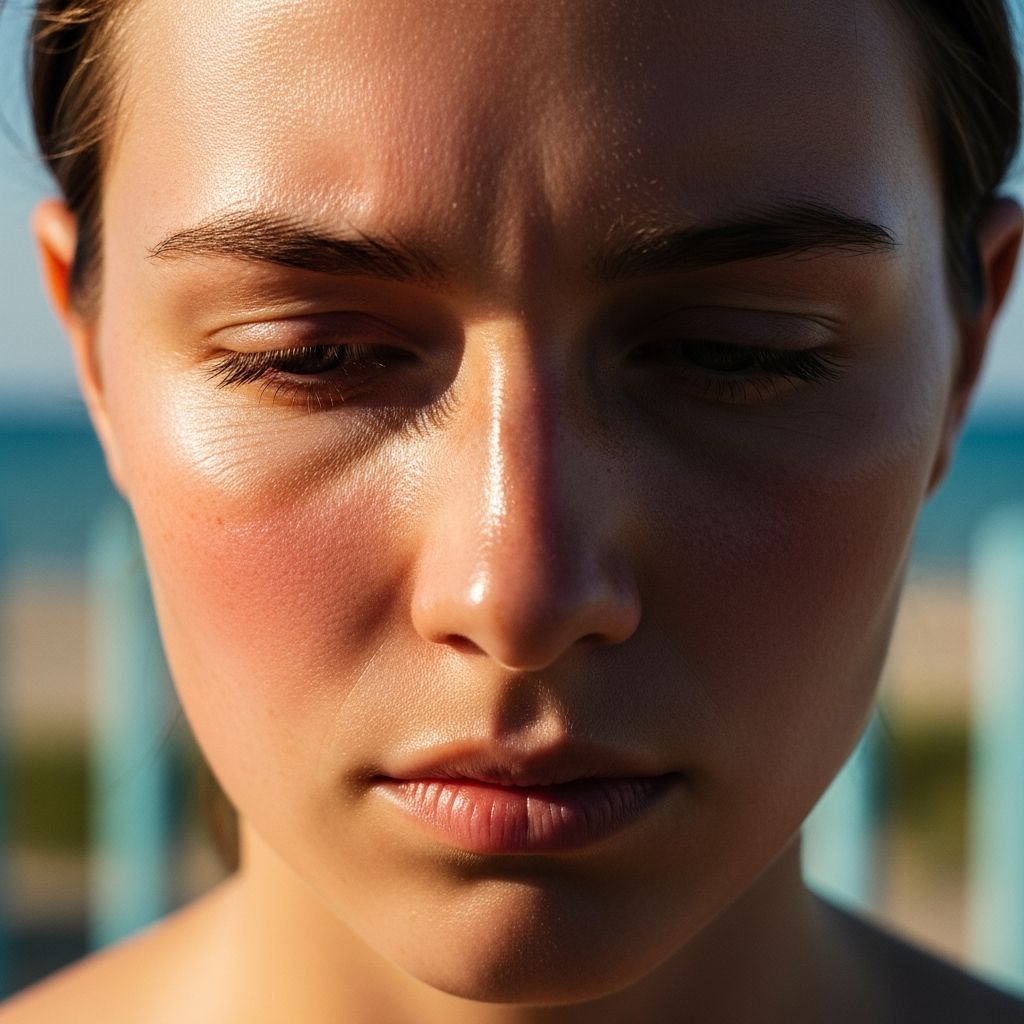
Sunburn significantly raises skin cancer risk and causes premature aging like wrinkles and age spots. Surprisingly, common skincare ingredients can lower your skin’s burning threshold, making you more vulnerable to UV damage despite your routine. Dermatologists Dr. Derrick Phillips from the British Skin Foundation and Dr. Ophelia Veraitch from Cranley Clinic highlight how retinoids, acids, and lightening agents in popular products exfoliate or alter skin, exposing tender layers to sunlight.
This article covers sunscreen strength needs, photosensitizing ingredients, protection strategies, vitamin benefits, and sunscreen selection to keep your skin safe while maintaining your glow.
How strong does sunscreen need to be?
The cornerstone of any skincare regimen is robust sun protection, especially for fair-skinned individuals prone to burning. Experts recommend at least
SPF 30
with5 UVA stars
for comprehensive defense against UVB (burning rays) and UVA (aging and cancer-linked rays).SPF 30 blocks about 97% of UVB rays, while higher factors like SPF 50 offer marginally more but require proper application—2mg per square centimeter, roughly a teaspoon for the face. High UVA protection, indicated by 4-5 stars, prevents deeper damage. The Skin Cancer Foundation echoes this, stressing broad-spectrum formulas to mitigate inflammation and long-term risks.
Reapply every two hours, or after swimming/sweating, as no sunscreen provides 100% immunity—tanning signals damage. For children, opt for
SPF 50
liberally.Which skincare products make skin sensitive to the sun?
Many anti-aging and brightening staples accelerate cell turnover, thinning the stratum corneum (outer skin layer) and heightening UV sensitivity. Use caution with these, particularly in sunlight.
Retinoids
Retinoids (retinol, tretinoin) boost collagen and renewal but render new skin UV-vulnerable. Prescription-strength versions amplify risks; start low-strength over-the-counter options to minimize irritation. NCBI notes UV exposure exacerbates retinoid-induced inflammation.
Acids
Alpha hydroxy acids (AHAs like glycolic, lactic) and beta hydroxy acids (BHAs like salicylic) exfoliate dead cells for smoother texture but expose sensitive layers, dropping burn threshold. They fade hyperpigmentation yet demand vigilant SPF use.
Lightening agents
Hydroquinone treats melasma and dark spots by inhibiting melanin, blocking natural tanning and inviting burns. Dermatologist supervision is essential; avoid summers or pre-holiday.
- Key takeaway: Nighttime application allows repair without UV interference.
- Fair skin, history of sunburns, or conditions like polymorphic light eruption (PMLE) heighten risks.
How to protect your skin from the sun
Counteract sensitizing products with diligent habits. Apply
broad-spectrum SPF 30+
mornings and reapply often; pair with UPF clothing, hats, and sunglasses.Dr. Veraitch advises high-factor SPF for retinol users, reapplied daily. Limit peak sun (10am-4pm); seek shade.
Which sunscreen is best for acne?
Acne-prone skin benefits from
non-comedogenic, oil-free
formulas preventing pore clogging. Gel-based or mattifying sunscreens suit oily types without greasiness.| Skin Type | Recommended Sunscreen | Why? |
|---|---|---|
| Oily/Acne-Prone | Gel, Oil-Free, Non-Comedogenic | Prevents breakouts, mattifies |
| Dry | Cream with Moisturizers | Hydrates without irritation |
| Sensitive | Mineral (Zinc/Titanium) | Gentle, less chemical irritation |
| Children | SPF 50 Water-Resistant | High protection, fun application |
Related Stories



Patient.info warns sunscreens aren’t foolproof—combine with shade and clothing.
How vitamins help protect your skin from the sun
Antioxidant vitamins neutralize free radicals from UV exposure, bolstering internal defense.
- Vitamin C: Topical serum (10-20%) scavenges radicals, boosts collagen, enhances SPF efficacy. Oral intake supports.
- Vitamin E: Pairs with C for stability; creams with it soothe PMLE.
- Beta-carotene: Carotenoid tablets may harden skin against rashes.
- Vitamin D: Topical analogs aid some eruptions, but sunlight balances deficiency risks.
StatPearls recommends antioxidants alongside sunscreen. Sunshine aids vitamin D, but excess risks sunburn—strike balance.
How to choose the right sunscreen
Scan labels for:
- Broad-spectrum (UVA/UVB).
- **SPF 30+** (50+ ideal).
- **5 UVA stars**.
- Water-resistant for activity.
- Skin-matched texture (e.g., matte for oiliness).
Avoid sprays for even coverage; lotions/creams best. Fragrance-free for sensitivity. British Skin Foundation stresses daily use, even cloudy days—UV penetrates clouds.
Frequently Asked Questions (FAQs)
Q: Can I use retinoids during the day?
A: No, apply at night to avoid photosensitivity; always follow with SPF 30+ in mornings.
Q: Is SPF 50 much better than SPF 30?
A: SPF 50 blocks 98% UVB vs. 97% for 30, but reapplication matters more. Use 50 for high exposure.
Q: Do I need sunscreen indoors?
A: UVA through windows warrants daily SPF, especially near glass.
Q: How much sunscreen per application?
A: Teaspoon for face/neck; full shot glass for body.
Q: Are mineral sunscreens safer?
A: Yes for sensitive skin—physical blockers reflect UV without absorption.
Q: Does vitamin C replace sunscreen?
A: No, it complements; never skip SPF.
Safe sunning safeguards skin health long-term, preventing cancer and aging.
References
- Are skincare products putting you at risk of sunburn? — Patient.info. 2021-09-05. https://patient.info/features/skin-conditions/is-your-skincare-increasing-your-risk-of-sunburn
- Sunburn — Skin Cancer Foundation. 2024. https://www.skincancer.org/risk-factors/sunburn/
- Sun and Sunburn: Risks, Treatment, and Protection — Patient.info. 2024. https://patient.info/skin-conditions/sun-and-sunburn
- Sunburn — Patient.info Doctor. 2024. https://patient.info/doctor/dermatology/sunburn
- Polymorphic Light Eruption (PMLE) — Patient.info. 2024. https://patient.info/skin-conditions/sun-and-sunburn/polymorphic-light-eruption
- Sunburn – StatPearls — NCBI Bookshelf. 2023. https://www.ncbi.nlm.nih.gov/books/NBK534837/
Similar Articles








Read full bio of medha deb