Ischemic Optic Neuropathy: Understanding Vision Loss
Learn about ION, its causes, symptoms, and treatment options for sudden vision loss.
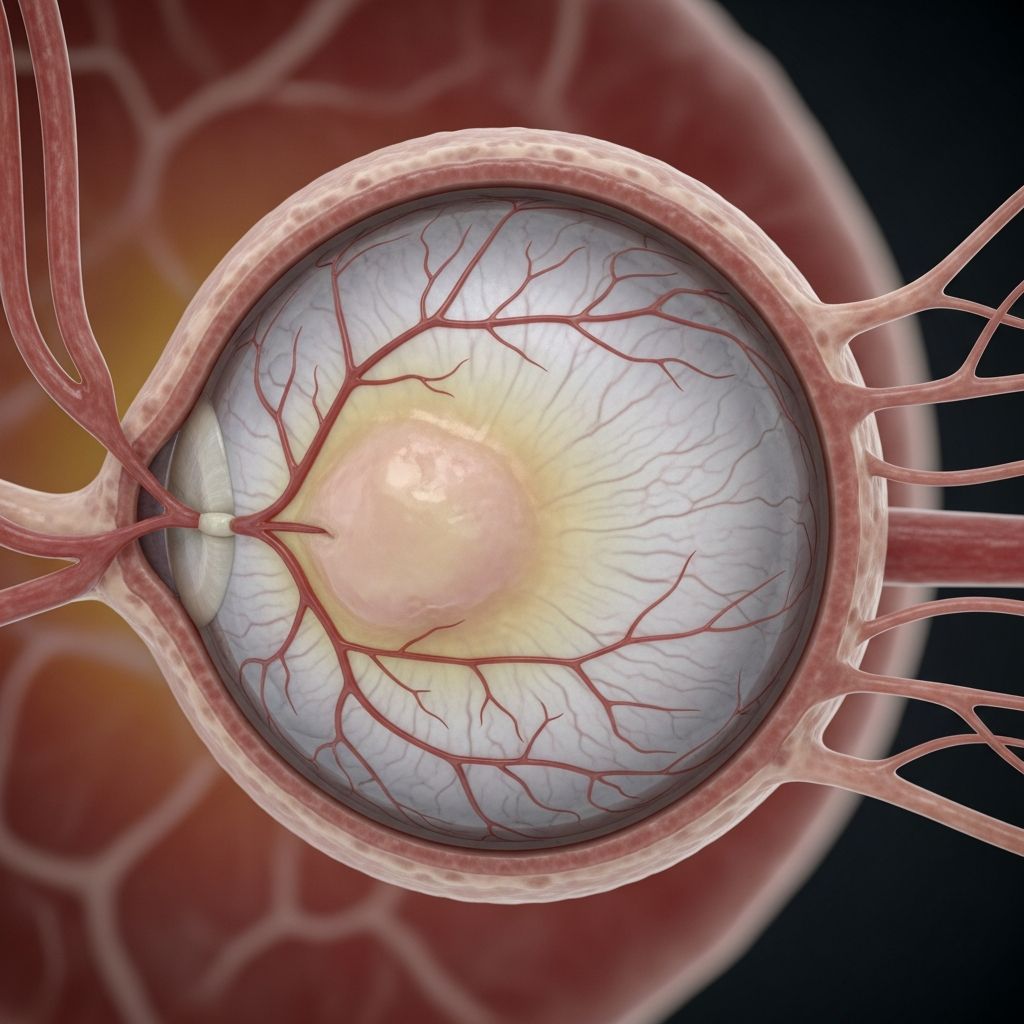
The optic nerve serves as the critical pathway between your eyes and brain, enabling your visual system to transmit images and process what you see. When blood flow to this vital structure becomes compromised, serious vision problems can develop rapidly. Ischemic optic neuropathy (ION) represents a condition where insufficient blood supply damages the optic nerve, potentially leading to permanent vision loss if not promptly addressed.
What Happens When Your Optic Nerve Loses Blood Supply
The optic nerve depends on a network of small blood vessels to deliver oxygen and essential nutrients. When circulation to the optic nerve becomes blocked or severely reduced, nerve cells begin to deteriorate within hours. This cellular damage occurs because the nerve tissue cannot function without adequate oxygen delivery. The consequences vary depending on which section of the optic nerve is affected and how much blood flow is compromised.
The condition manifests in different ways based on location and cause. When the front portion of the optic nerve loses blood supply, physicians classify it as anterior ischemic optic neuropathy (AION). When the back section is affected, it becomes posterior ischemic optic neuropathy (PION). Understanding these distinctions helps guide appropriate treatment strategies.
Two Primary Categories: Arteritic and Nonarteritic Forms
Medical professionals recognize two main types of ION, each with distinct causes and treatment implications.
Arteritic Ischemic Optic Neuropathy
Arteritic ION occurs when inflammation damages blood vessel walls, typically caused by giant cell arteritis (GCA), an inflammatory condition primarily affecting people over 50. This form represents a medical emergency. The inflammation can rapidly damage multiple blood vessels, threatening vision in both eyes. Patients often experience additional symptoms beyond vision loss, including temporal headaches, jaw pain while eating, scalp tenderness, and general malaise.
The critical factor with arteritic ION is timing. Without immediate treatment, the second eye faces extremely high risk of vision loss, with approximately 90% of untreated patients experiencing bilateral involvement. This urgent nature demands rapid diagnosis and intervention to preserve remaining vision.
Nonarteritic Ischemic Optic Neuropathy
Nonarteritic ION (NAION) develops without underlying arteritis and represents the more common form of the condition. This type occurs when multiple circulatory and metabolic factors collectively disrupt normal blood flow regulation in the optic nerve. Rather than inflammation of vessel walls, NAION involves impaired autoregulation—the eye’s natural ability to maintain consistent blood flow despite fluctuations in blood pressure.
Several vascular factors typically combine to trigger NAION. These include nocturnal blood pressure drops, anatomical nerve variations, small vessel disease, and systemic conditions affecting circulation. The condition usually affects one eye initially, though subsequent episodes in the other eye remain possible.
Related Stories



Recognizing Symptoms and Warning Signs
ION typically announces itself through sudden, painless vision changes. Unlike gradual vision loss that develops over weeks or months, ION causes rapid deterioration that occurs within hours or even minutes.
Primary Vision Symptoms
- Sudden vision loss or blurring affecting part of the visual field, commonly the lower half
- Darkening or dimming of vision in the affected eye
- Loss of color perception (dyschromatopsia), where colors appear washed out or desaturated
- Partial field loss that creates gaps in peripheral vision
- No pain or discomfort during the acute episode, distinguishing it from other eye conditions
Associated Symptoms in Arteritic Cases
When giant cell arteritis causes ION, patients frequently report additional systemic symptoms days or weeks before vision loss occurs. These warning signs include temporal headaches, pain or tenderness in the scalp, jaw claudication (pain while chewing), muscle aches, fever, and unexplained weight loss. Recognizing these preliminary symptoms enables earlier diagnosis and prevention of vision loss.
Understanding Risk Factors and Causes
While researchers continue investigating the complete mechanisms of ION, several well-established risk factors significantly increase vulnerability to this condition.
| Risk Category | Specific Factors | Relevance to ION |
|---|---|---|
| Age-Related | Age over 50 for arteritic; over 40 for nonarteritic | ION becomes increasingly common in older populations |
| Cardiovascular | Hypertension, high cholesterol, diabetes | These conditions impair blood vessel function and autoregulation |
| Behavioral | Smoking, poor sleep quality | Smoking damages vessel walls; sleep apnea causes nocturnal hypotension |
| Ophthalmic | Glaucoma, anatomical disc variations | Small optic disc size and crowded disc architecture increase ION risk |
| Medical History | Migraine disorders, inflammatory conditions | Vascular instability increases circulation vulnerability |
Nocturnal arterial hypotension—drops in blood pressure during sleep—emerges as a particularly important precipitating factor in nonarteritic cases. Patients with sleep apnea or those taking blood pressure medications that lower nighttime pressure face elevated risk.
Diagnosis: From Clinical Examination to Confirmation
Diagnosing ION requires systematic clinical evaluation combined with appropriate testing. The diagnostic process varies slightly depending on suspected type.
Initial Clinical Assessment
Eye care specialists begin with comprehensive history taking, focusing on the exact timing of symptom onset and character of vision loss. Visual acuity testing measures how well the eye focuses, while visual field testing maps areas of vision loss. Examination of the optic disc provides crucial information—in early nonarteritic cases, the optic nerve head may appear swollen, while in some cases initial appearance remains normal.
Confirmatory Testing for Arteritic Cases
When giant cell arteritis is suspected, rapid blood testing becomes essential. Specific tests include:
- Erythrocyte sedimentation rate (ESR)—indicates systemic inflammation levels
- C-reactive protein (CRP)—another inflammatory marker often elevated in GCA
- Platelet count—typically elevated during arteritis
- Temporal artery biopsy—definitive confirmation showing arteritis presence
The temporal artery biopsy, while invasive, provides conclusive diagnosis and guides treatment intensity. Given the emergency nature of arteritic ION, many specialists initiate treatment based on clinical suspicion rather than awaiting biopsy confirmation.
Imaging and Additional Studies
Optical coherence tomography (OCT) measures optic nerve swelling and monitors changes over time. Fluorescein angiography may be performed to assess blood flow patterns in the optic nerve head. These imaging studies help differentiate ION from other optic nerve conditions with similar presentations.
Treatment Approaches Based on ION Type
The fundamental principle guiding ION management is that treatment effectiveness depends heavily on how quickly intervention begins. The window of opportunity for preserving vision in at-risk eyes is narrow.
Emergency Treatment for Arteritic ION
Arteritic ischemic optic neuropathy demands immediate high-dose corticosteroid therapy. Prednisone, typically started at 40-80 mg daily, rapidly suppresses the inflammatory response destroying blood vessel walls. Treatment usually begins as soon as arteritis is suspected, often before biopsy confirmation.
Recently, tocilizumab—an immune-suppressing medication that blocks inflammation—has demonstrated effectiveness when combined with corticosteroids. This addition allows some patients to use lower steroid doses while achieving better outcomes. Long-term management typically requires months to years of treatment, with gradual dose reduction as inflammation improves.
While corticosteroids cannot restore vision already lost in the affected eye, they dramatically reduce the risk of the second eye becoming affected. This prevention benefit makes aggressive treatment essential despite the significant side effects steroids can produce with extended use.
Management Strategy for Nonarteritic ION
Unfortunately, no confirmed effective medication specifically restores vision loss from nonarteritic ION. Corticosteroids, while beneficial in arteritic cases, are generally not recommended for nonarteritic disease when inflammation is absent. Some research suggested early corticosteroid use might help, but results remain inconsistent and controversial.
The management focus instead emphasizes preventing the second eye from developing ION. This prevention strategy includes:
- Aggressive blood pressure management, particularly ensuring adequate nighttime pressure
- Tight diabetes control through medication and lifestyle modifications
- Cholesterol management with statin therapy
- Smoking cessation to prevent further vessel damage
- Sleep apnea screening and treatment to eliminate nocturnal hypotension episodes
- Medication review to adjust blood pressure drugs that excessively lower nighttime pressure
This comprehensive vascular risk factor approach protects remaining vision while managing symptoms in the affected eye.
Investigational and Emerging Treatments
Researchers continue exploring potential therapies for nonarteritic ION. Some studies have examined intravitreal injections of anti-vascular endothelial growth factor medications or corticosteroids delivered directly into the eye, though results remain preliminary and these approaches carry risks including elevated intraocular pressure.
What to Expect: Prognosis and Recovery
Vision recovery in ION varies significantly. In arteritic cases treated promptly, the goal focuses on preventing further loss rather than restoring prior vision. Vision already lost from arteritis typically does not improve despite treatment.
In nonarteritic cases, natural recovery occurs for some patients. Studies show that visual acuity and visual fields continue improving naturally for approximately six months following onset, with minimal additional improvement thereafter. Some eyes stabilize at reasonable vision levels, while others experience more substantial permanent loss. The variable nature of recovery makes individual prognosis unpredictable.
Prevention Strategies for Long-Term Vision Protection
Since ION represents a potentially preventable condition, risk reduction deserves serious attention, particularly in vulnerable populations.
- Maintain blood pressure within recommended ranges, with attention to nocturnal readings
- Control diabetes aggressively to prevent microvascular complications
- Manage cholesterol levels through diet and medication if needed
- Eliminate tobacco use completely
- Seek treatment for sleep apnea and other sleep disorders
- Exercise regularly to support cardiovascular health
- Maintain healthy body weight
- Attend regular eye examinations, especially after age 50
Frequently Asked Questions
Can ION affect both eyes simultaneously?
While ION typically begins in one eye, untreated arteritic ION carries high risk of affecting the second eye. Nonarteritic ION usually spares the opposite eye initially, though the second eye may develop the condition at a future time if vascular risk factors remain uncontrolled.
Is vision loss from ION permanent?
Vision loss depends on several factors. In arteritic ION, loss in the affected eye is typically permanent, though treatment prevents progression to the other eye. In nonarteritic ION, some natural recovery occurs in the first six months, though many patients retain some permanent loss.
How quickly does ION develop?
ION develops suddenly, typically over hours or sometimes minutes. This rapid onset distinguishes it from gradual vision loss conditions and represents an ophthalmologic emergency requiring immediate medical evaluation.
Can ION be prevented?
While ION cannot be completely prevented, controlling vascular risk factors—particularly blood pressure, diabetes, and cholesterol—significantly reduces risk. Managing sleep disorders and smoking cessation also offer substantial protection.
References
- Ischemic Optic Neuropathy: What It Is, Symptoms & Treatment — Cleveland Clinic. 2024. https://my.clevelandclinic.org/health/diseases/ischemic-optic-neuropathy
- Management of ischemic optic neuropathies — National Center for Biotechnology Information, National Institutes of Health. 2011. https://pmc.ncbi.nlm.nih.gov/articles/PMC3116541/
- Ischemic Optic Neuropathy – Eye Disorders — Merck Manuals. 2024. https://www.merckmanuals.com/home/eye-disorders/optic-nerve-disorders/ischemic-optic-neuropathy
- What You Need to Know About Ischemic Optic Neuropathy — Focal Pointe Eye Care. 2024. https://www.focalpointeeyecare.com/blog/sudden-painless-vision-loss-what-you-need-to-know-about-ischemic-optic-neuropathy
- Ischemic Optic Neuropathy — Highland Retina Specialists. 2024. https://www.highlandretina.com/services/conditions-we-treat/ischemic-optic-neuropathy/
- Anterior Ischemic Optic Neuropathy (AION) Treatment in Louisville — Eye Centers of Kentucky. 2024. https://www.eyecenters.com/eye-care-services/retina-and-vitreous/anterior-ischemic-optic-neuropathy-aion/
Similar Articles








Read full bio of Sneha Tete