Isotretinoin Gel For Acne: How It Works, Side Effects, And Care
Effective topical treatment for mild-to-moderate acne: unblocks pores, reduces inflammation, and prevents spots from returning.
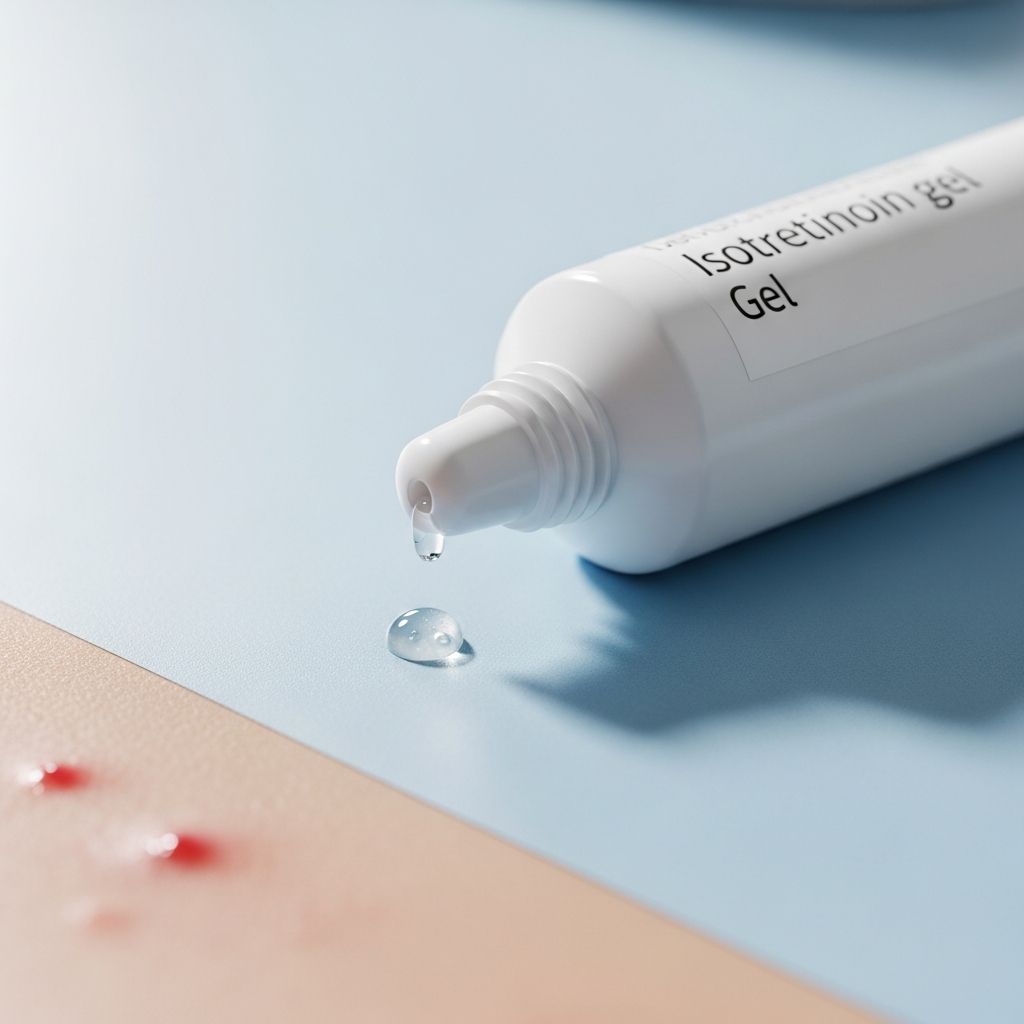
Isotretinoin gel is a highly effective topical treatment specifically designed for mild-to-moderate acne. It works by unblocking skin pores, treating blackheads and whiteheads, and reducing inflammation to promote clearer skin.
Apply the gel once or twice daily as directed by your doctor. Your skin may become more sensitive to sunlight, so avoid strong sunlight and sunbeds. Importantly, avoid pregnancy during use and consult your doctor on contraception options.
About isotretinoin gel
| Type of medicine | A rub-on (topical) retinoid |
|---|---|
| Used for | Mild-to-moderate acne |
| Also called | Isotrex® (discontinued); Isotrexin® (discontinued; contains isotretinoin + erythromycin) |
| Available as | Gel |
Isotretinoin gel belongs to the class of topical retinoids, derivatives of vitamin A that normalize skin cell turnover. When applied to acne-affected areas, it effectively unblocks pores, eliminates blackheads and whiteheads, and mildly reduces inflammation. For inflamed spots, doctors may prescribe Isotrexin®, which combines isotretinoin with erythromycin, an antibacterial agent, to tackle both clogged pores and bacterial growth.
Unlike oral isotretinoin capsules reserved for severe, treatment-resistant acne, the gel targets milder cases and is suitable for initial therapy. Oral forms, such as Roaccutane®, are prescribed by dermatologists for nodulo-cystic or scarring acne after topical failures. Topical isotretinoin offers a safer profile with fewer systemic effects, making it ideal for broader use.
Acne affects up to 95% of adolescents and many adults, stemming from excess sebum, clogged pores, bacteria, and inflammation. Retinoids like isotretinoin address multiple causes by promoting exfoliation and regulating oil production.
How to use isotretinoin gel
Before starting, carefully read the manufacturer’s printed leaflet inside the pack. It details usage, precautions, and a complete list of potential side effects.
Follow your doctor’s exact instructions. Wash and gently pat dry the affected skin areas before application. Apply a thin layer to the entire acne-prone region—not just individual spots—for comprehensive coverage. Typically, use once or twice daily initially; your doctor may reduce frequency as skin improves.
Always wash hands thoroughly after application to prevent accidental spread to eyes, mouth, or nostrils.
- If you’ve used peeling acne products recently (e.g., benzoyl peroxide), allow skin recovery for a few days before starting isotretinoin.
- Avoid applying to sunburnt, sore, or sensitive areas like around eyes, nostrils, mouth, or skin folds to prevent irritation.
- For dry skin, use fragrance-free, water-based moisturizers (avoid oil-rich or ointments that clog pores).
- Make-up and moisturizers are allowed, but apply them separately from the gel. Skip exfoliating or drying products.
Sun protection
Isotretinoin increases photosensitivity, making skin prone to sunburn. Use broad-spectrum sunscreen (SPF 30+), wear protective clothing, and avoid sunbeds even on cloudy days.
How long to use it for
Noticeable improvement often takes several weeks. Do not stop early assuming failure—the most common reason treatments fail is premature discontinuation. If no progress after 8 weeks, consult your doctor for alternatives like antibiotics or other topicals.
Once clear, continue maintenance therapy at a lower dose (e.g., 1-2 times weekly) to prevent relapse, which is common without it. Long-term use over years may be needed.
Getting the most out of your treatment
- Avoid picking spots to prevent scarring.
- Use non-comedogenic (non-pore-clogging) cleansers and products.
- Combine with gentle skincare routines for optimal results.
Related Stories



Pregnancy and contraception
Avoid pregnancy during treatment due to teratogenic risks (potential harm to fetus). Use reliable contraception and consult your doctor for personalized advice.
Possible side effects
Side effects are mostly local and dose-related. Skin may initially worsen (purging) before improving.
| Common side effects | What can I do if I experience this? |
|---|---|
| Skin irritation, redness, burning, dry or peeling skin | Reduce frequency for a few days. If severe, see your doctor. Use moisturizer. |
| Increased sun sensitivity | Use sunscreen, avoid sun exposure. |
| Mild stinging or itching | Apply less gel; persists? Consult pharmacist. |
Rare systemic effects if over-applied. Report unusual symptoms like severe rash or eye irritation to your doctor.
Frequently Asked Questions (FAQs)
Q: How quickly does isotretinoin gel work?
Improvement typically starts after 4-8 weeks, but full effects may take 12 weeks. Initial worsening is common.
Q: Can I use isotretinoin gel while pregnant?
No, avoid pregnancy due to birth defect risks. Use contraception and inform your doctor if planning pregnancy.
Q: What if my acne doesn’t improve?
After 8 weeks, see your doctor. Alternatives include oral antibiotics, other topicals, or referral for oral isotretinoin.
Q: Does acne return after stopping?
Often yes, without maintenance. Use lower-dose gel long-term to prevent flares.
Q: Is isotretinoin gel suitable for sensitive skin?
Start low frequency; moisturize. If intolerable, alternatives like adapalene may be tried.
Q: Difference between gel and capsules?
Gel for mild-moderate topical use; capsules for severe oral therapy after topicals fail.
This article draws from clinical guidelines and patient resources to provide comprehensive guidance. Always consult healthcare professionals for personalized advice.
References
- Isotretinoin gel for acne — Patient.info. 2023. https://patient.info/medicine/isotretinoin-gel-for-acne
- Acne Vulgaris (Acne): Symptoms and Treatment — Patient.info (Doctor). 2024-01-10. https://patient.info/doctor/dermatology/acne-vulgaris
- Isotretinoin capsules for acne — Patient.info. 2023. https://patient.info/medicine/isotretinoin-capsules-for-acne-roaccutane-2
- Isotretinoin (oral route) – Description — Mayo Clinic. 2025-06-01. https://www.mayoclinic.org/drugs-supplements/isotretinoin-oral-route/description/drg-20068178
- Treating acne with isotretinoin — Society for Pediatric Dermatology. 2015. https://pedsderm.net/site/assets/files/1028/5_spd_isotretinoin_web_final.pdf
- Advice following Isotretinoin treatment — Royal United Hospitals Bath NHS. 2023. https://www.ruh.nhs.uk/patients/patient_information/DER016_Advice_following_Isotretinoin_treatment.pdf
Similar Articles








Read full bio of Sneha Tete