IUD Insertion: What To Expect, Pain Relief, And Risks 2025
What to expect during IUD insertion, including pain management options, procedure steps, and recovery tips for effective contraception.
Intrauterine devices (IUDs) are highly effective, long-acting reversible contraceptives offering over 99% efficacy in preventing pregnancy for 3 to 10 years. Inserted into the uterus by a healthcare provider, IUDs provide reliable birth control without daily user compliance, though they do not protect against sexually transmitted infections (STIs).
What Is an IUD?
An
IUD
is a small, T-shaped plastic device placed in the uterus to prevent pregnancy. There are two main types: hormonal IUDs, which release progestin to thicken cervical mucus and thin the uterine lining, and copper IUDs, which create a spermicidal environment. Hormonal versions like Mirena or Kyleena last 3-8 years and often reduce menstrual bleeding and cramping by up to 90%. Copper IUDs, such as Paragard, last up to 10-12 years but may increase bleeding initially.IUDs surpass other methods like the pill (93% effective with typical use) due to no risk of user error. Beyond contraception, hormonal IUDs treat heavy menstrual bleeding and dysmenorrhea, even in sterilized patients.
Types of IUDs
- Hormonal IUDs: Release levonorgestrel (e.g., Mirena: 52mg, 5-8 years; Liletta: similar; Skyla/Kyleena: lower dose, 3-5 years). Benefits include lighter periods and reduced pain.
- Copper IUD: Hormone-free, up to 12 years effective. Suitable for those avoiding hormones but may worsen cramps initially.
Who Can Get an IUD?
Most people with a uterus aged 13+ qualify, including nulliparous individuals, postpartum (6 weeks+), or breastfeeding women. Contraindications include current pregnancy, pelvic infection, unexplained bleeding, cervical/uterine cancer, or copper allergy (for copper IUDs). Discuss STI risk beforehand; testing may be advised.
Preparation for IUD Insertion
Schedule during or just after menstruation for easier cervical access, though possible anytime if not pregnant. Discuss medical history, allergies, and preferences with your provider. Recent guidelines stress
shared decision-making
for pain management. Take ibuprofen (600-800mg) 1-2 hours prior if approved. Arrange transport and a support person, as cramping may occur.The IUD Insertion Procedure
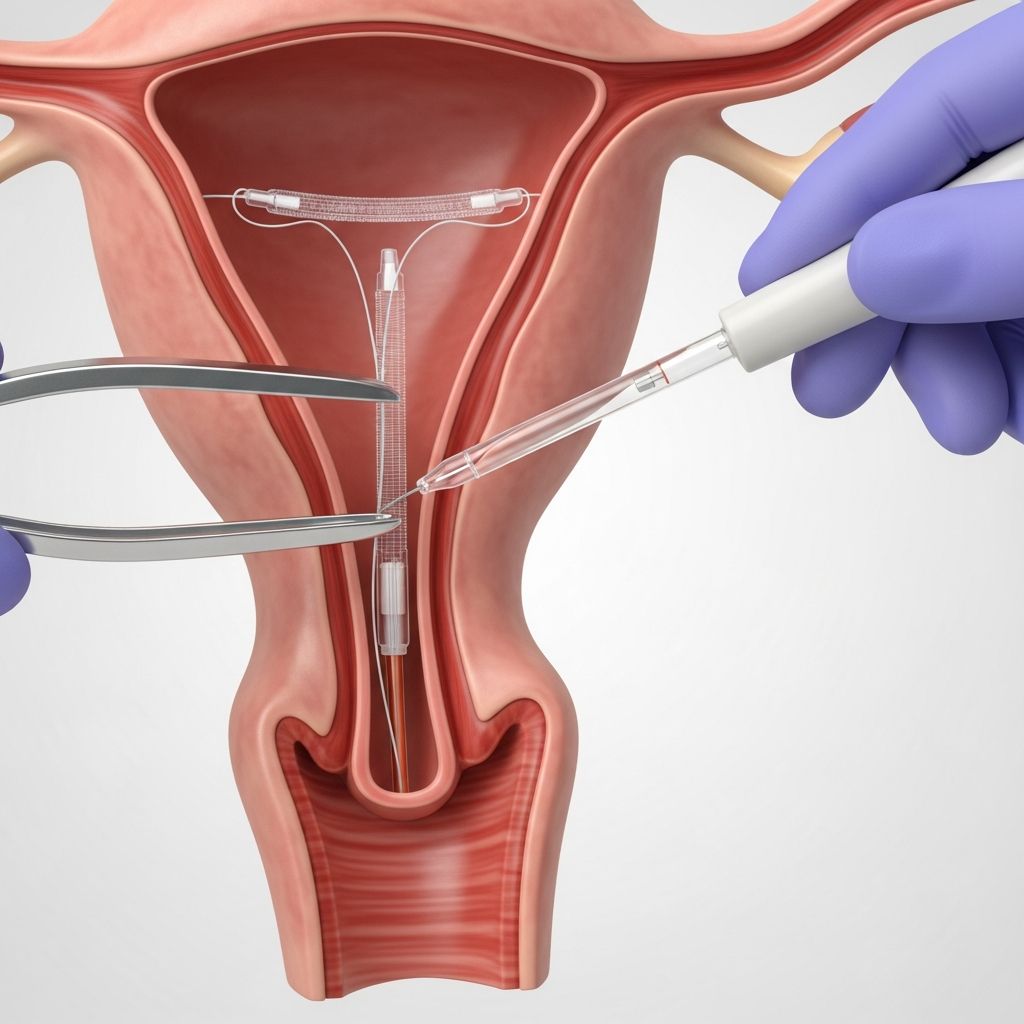
The outpatient procedure lasts 5-10 minutes in an exam room. Steps include:
- Speculum insertion: Visualizes cervix; may cause discomfort.
- Cervix cleaning: Antiseptic swab.
- Tenaculum placement: Stabilizes cervix; sharp pinch sensation.
- Uterine sounding: Measures depth.
- IUD insertion: Loaded device through cervix into uterus; arms deploy.
- Strings trimming: Left for removal/checks.
Pain peaks during tenaculum and insertion, likened to intense cramps. New tools like Carevix reduce tenaculum pain via suction.
Pain Management During IUD Insertion
Pain varies; providers often underestimate it. 2025 ACOG guidelines recommend
lidocaine
(cream, spray, injectable paracervical block) as most effective for IUD placement. Ibuprofen or nitrous oxide alone insufficient. Studies show analgesia and cervical priming reduce pain vs. placebo.- Local anesthetics: Lidocaine gel lowers scores by 2-3 cm (VAS scale).
- Other options: Oral NSAIDs pre-procedure; misoprostol ineffective or worsens cramps.
- Innovations: Ultrasound guidance (2.6 cm pain reduction), smaller insertion tubes, balloon dilation.
Risk factors for higher pain: nulliparity, dysmenorrhea, anxiety, post-cesarean, insertion timing. Counseling dispels social media myths (e.g., TikTok videos).
What to Expect After IUD Insertion
Immediate effects: Cramping, spotting (1-2 days); heavier with copper IUDs. Rest, hydrate, use heating pads/ibuprofen.
| Time Post-Insertion | Common Symptoms | Management |
|---|---|---|
| Day 1-3 | Cramping, light bleeding | NSAIDs, rest |
| Week 1 | Spotting, breast tenderness (hormonal) | Monitor strings |
| Months 1-3 | Irregular bleeding; may lighten later | Follow-up check |
Check strings monthly; avoid tampons/intercourse 24-48 hours or until bleeding stops to prevent infection.
Related Stories



Recovery and Side Effects
Most resume normal activities same/next day. Side effects: cramping (90% less with hormonal), bleeding changes. Rare: expulsion (2-10%, first year), embedment, perforation (1/1000). Benefits outweigh risks for most; effectiveness >99%.
Risks and Complications
- Expulsion: 2-5%; higher in younger/nulliparous.
- Infection: <1%; first 20 days.
- Perforation: Rare; may require surgery.
- Ectopic pregnancy: Low risk if failure occurs.
Monitor for fever, severe pain, heavy bleeding, absent strings—seek care immediately.
When to Call Your Doctor
- Severe abdominal pain/pelvic pressure.
- Heavy bleeding soaking >2 pads/hour.
- Fever >100.4°F or chills.
- No strings felt or partner feels hard plastic.
- Signs of infection (odor, pus).
IUD Removal
Simple pull on strings; done anytime. Fertility returns immediately. Pain milder; local anesthetic if needed.
Cost and Insurance
Often $0-$1300; Affordable Care Act mandates no-cost contraception for most insured. Check coverage.
Frequently Asked Questions (FAQs)
Does IUD insertion hurt?
Pain is subjective, like strong cramps; lidocaine significantly reduces it per ACOG and NIH studies.
How long does IUD insertion take?
5-10 minutes.
Can I get an IUD if I’ve never given birth?
Yes, safe and effective for nulliparous people.
Will IUD affect my periods?
Hormonal: lighter/less painful; Copper: heavier initially.
How soon can I have sex after insertion?
Wait 7 days for full effectiveness; use backup initially.
Can I exercise after IUD insertion?
Light activity yes; avoid heavy lifting 24-48 hours.
More FAQs
Is the procedure safe during breastfeeding?
Yes, progestin-only IUDs approved immediately postpartum.
What if the IUD falls out?
Contact provider; use backup contraception.
References
- Addressing pain in women’s health: New guidelines for IUD insertions — WUFT. 2025-07-03. https://www.wuft.org/healthscience/2025-07-03/addressing-pain-in-womens-health-new-guidelines-for-iud-insertions
- Interventions for the prevention of pain associated with the intrauterine contraception placement — National Institutes of Health (PMC). 2019-11-25. https://pmc.ncbi.nlm.nih.gov/articles/PMC6900125/
- IUD Insertion Is Often Painful—Can a New Tool Help — Aspivix/Health.com feature. 2023. https://www.aspivix.com/iud-insertion-is-often-painful-can-a-new-tool-help-feature-on-health-com/
- Clinical Consensus No. 3: Pain Management for Gynecologic Procedures — American College of Obstetricians and Gynecologists (ACOG). 2025-05. https://www.acog.org/clinical/clinical-guidance/clinical-consensus/articles/2025/05/pain-management-for-gynecologic-procedures
- Long-Acting Reversible Contraception: Implants and Intrauterine Devices — Centers for Disease Control and Prevention (CDC). 2024. https://www.cdc.gov/contraception/hcp/usmec/intrauterine-contraception.html
Similar Articles








Read full bio of Sneha Tete