IVF (In Vitro Fertilization): Procedure & How It Works
Complete guide to IVF procedure: steps, medications, success rates, and what to expect.
What Is IVF (In Vitro Fertilization)?
In vitro fertilization (IVF) is a complex assisted reproductive technology that involves retrieving eggs from the ovaries and manually combining them with sperm in a laboratory setting for fertilization. The term “in vitro” means “in glass,” referring to the laboratory dish where fertilization occurs outside the body. IVF represents one of the most effective fertility treatments available today, offering hope to millions of couples struggling with infertility.
Since its introduction in 1978, IVF has revolutionized fertility treatment. More than 8 million babies have been born through IVF worldwide, making it a well-established and trusted procedure. Approximately 5% of couples with infertility choose to pursue IVF treatment, reflecting its significance in modern reproductive medicine.
Who Is IVF Right For?
IVF may be recommended for various infertility conditions affecting either partner. Your healthcare provider might suggest IVF if you or your partner experiences:
– Blocked or damaged fallopian tubes- Male factor infertility, including low sperm count or poor sperm mobility- Endometriosis- Polycystic ovary syndrome (PCOS)- Unexplained infertility after other treatments have failed- Diminished ovarian reserve- Previous unsuccessful fertility treatments- Same-sex couples or single individuals seeking biological children
Before determining if IVF is appropriate for your situation, your healthcare provider will conduct a thorough medical history and recommend fertility tests and analysis for both you and your partner.
The IVF Timeline: What to Expect
The complete IVF process is a multi-step journey that requires patience and commitment. On average, you can expect the entire process to last four to six weeks. This timeline includes the preparation phase before egg retrieval, when you take fertility medications, through the testing for pregnancy confirmation. Understanding each phase helps you prepare mentally and physically for the treatment ahead.
Step-by-Step IVF Procedure
Phase 1: Pre-Treatment Preparation
Before beginning your IVF cycle, your healthcare provider may prescribe birth control pills or estrogen supplements. This initial step serves multiple important purposes: it stops the development of ovarian cysts and helps control the timing of your menstrual cycle. By regulating your cycle, your healthcare provider can optimize your treatment plan and maximize the number of mature eggs available during the egg retrieval procedure. Some patients receive combination birth control pills containing both estrogen and progesterone, while others may be prescribed estrogen alone, depending on individual circumstances.
Phase 2: Ovarian Stimulation
During this critical phase, you’ll take injectable hormone medications designed to encourage your entire group of eggs to mature simultaneously and completely. Unlike a natural cycle where typically only one egg matures, IVF stimulation allows multiple eggs to develop, significantly increasing your chances of successful fertilization and pregnancy.
The type, dosage, and frequency of medications will be carefully tailored to your individual needs based on:
– Your age- Medical history- AMH (anti-mullerian hormone) level- Your response to ovarian stimulation in previous cycles (if applicable)
You can expect to inject fertility medication for approximately 8 to 14 days during this phase. Your healthcare provider will monitor your progress through regular ultrasound appointments and blood tests to measure hormone levels, ensuring your ovaries are responding appropriately to the medications.
Related Stories



Phase 3: Egg Retrieval
Once your eggs have reached optimal maturity, your healthcare provider will schedule the egg retrieval procedure. This minimally invasive surgical procedure typically uses ultrasound guidance to locate and retrieve the mature eggs from your ovaries. Most patients receive sedation during this procedure to ensure comfort. The retrieved eggs are immediately placed in a laboratory culture dish with special nutrient-rich medium.
Phase 4: Fertilization Process
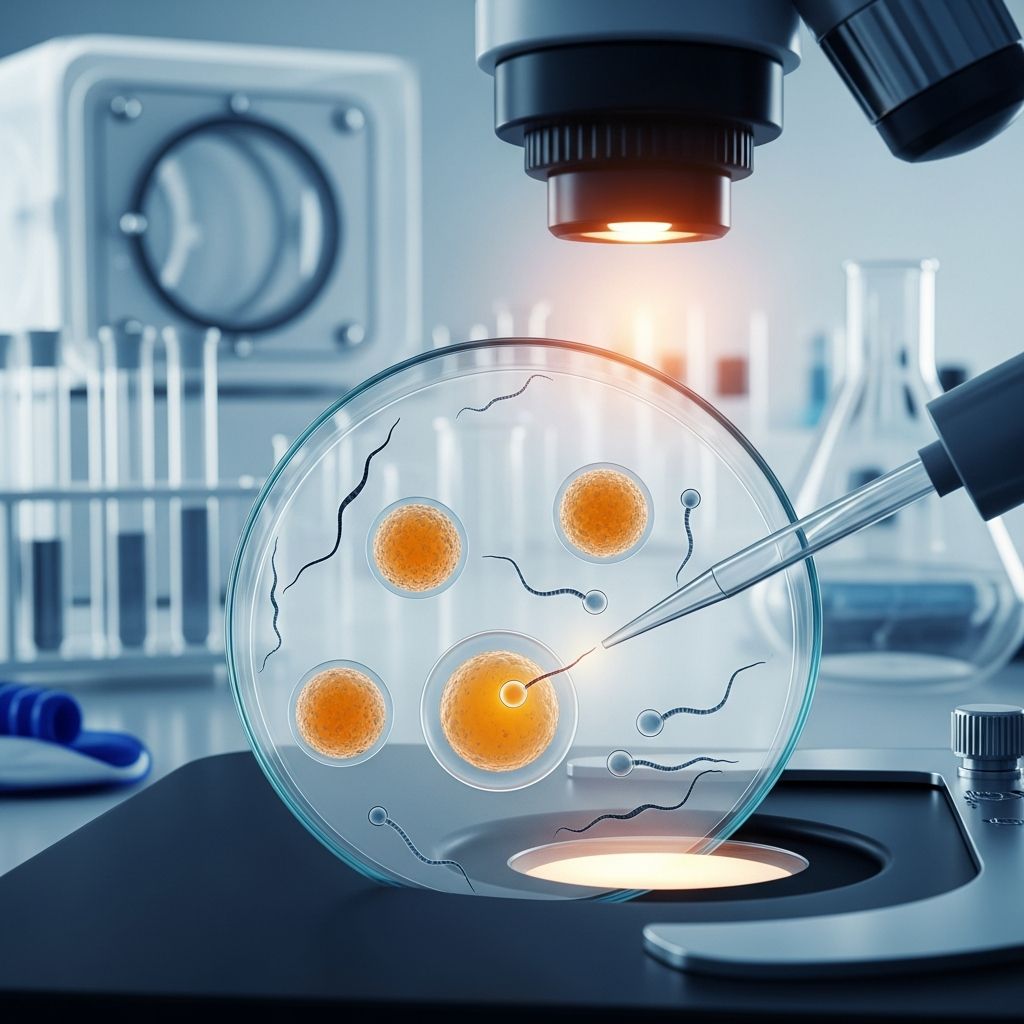
The afternoon after your egg retrieval, the embryologist will attempt to fertilize all mature eggs. In most cases, intracytoplasmic sperm injection (ICSI) is used, which involves injecting a single sperm directly into each mature egg. This technique is particularly effective for male factor infertility.
Immature eggs cannot have ICSI performed on them. Instead, these immature eggs are placed in a dish with sperm and nutrients in hopes they will complete maturation. While most immature eggs do not finish maturing in the laboratory dish, those that do can potentially be fertilized by the surrounding sperm.
Phase 5: Embryo Development and Assessment
After fertilization, your embryos are monitored carefully in the laboratory for signs of proper development. Within 5 to 6 days, healthy fertilized eggs should divide into multiple cells, forming a blastocyst. Your healthcare provider evaluates each blastocyst’s size, cell mass, and morphology to determine which embryos are most likely to result in a successful pregnancy. This assessment helps guide decisions about which embryos to transfer and which to freeze for future use.
Phase 6: Uterine Preparation for Embryo Transfer
While your embryos develop in the laboratory, your uterus is being prepared to receive them. You’ll take oral, injectable, vaginal, or transdermal hormones to prepare your uterine lining for implantation. This preparation typically involves 14 to 21 days of oral medication followed by 6 days of injections.
During this time, you’ll have two to three appointments to monitor your uterine readiness. Your healthcare provider uses ultrasound to assess the thickness and appearance of your uterine lining and performs blood tests to measure hormone levels. When your uterus reaches optimal readiness, your embryo transfer procedure is scheduled.
Phase 7: Embryo Transfer
The embryo transfer is a relatively simple procedure requiring no anesthesia. It feels similar to a palpic exam or Pap smear. Your healthcare provider will place a speculum in your vagina and insert a thin catheter through your cervix into your uterus. A syringe containing one or more embryos is attached to the catheter. The embryos are gently injected into your uterus through the catheter.
The entire procedure typically takes less than 10 minutes. You can usually return to normal activities immediately afterward, though many fertility specialists recommend taking it easy for the remainder of the day. The timing of embryo transfer differs based on whether you’re using fresh or frozen embryos. Fresh embryo transfers occur 3 to 5 days after egg retrieval, while frozen embryo transfers are scheduled after your uterus has been properly prepared with hormones.
Medications Used During IVF
Several different medications are used throughout your IVF cycle, each serving a specific purpose in optimizing your treatment outcome. Your healthcare provider will outline the exact dosage and timing for your personalized treatment plan.
Injectable Hormones
During the ovarian stimulation phase, you’ll receive injectable hormone medications including gonadotropins to stimulate egg development. These medications encourage your ovaries to produce multiple mature eggs rather than the single egg released during a natural cycle.
Oral and Topical Medications
Beyond injections, you may receive medications taken orally, absorbed through your skin (transdermal), or placed in your vagina. These options provide flexibility and convenience while delivering necessary hormonal support.
Estrogen and Progesterone Support
Most patients receive estrogen supplements before and after embryo transfer. Estrogen helps thicken the uterine lining, creating an optimal environment for embryo implantation. Progesterone is also added to improve the chances of successful embryo implantation and pregnancy development. Most patients continue progesterone supplementation throughout their first trimester to support early pregnancy.
Sex Selection During IVF
Yes, it is possible to select the sex of your baby during IVF through a process called preimplantation genetic testing (PGT). Before your embryo is implanted into your uterus, your embryo’s cells can be studied to identify either male or female chromosomes. Couples can choose to implant only the desired sex and discard other embryos with different chromosomal profiles.
However, this service is not universally available. It is illegal in many countries outside the United States. Even within the United States, not all fertility practices or doctors offer this service. Discuss this option with your healthcare provider to determine if it’s available at your clinic and if it aligns with your personal values and goals.
Selecting Your Fertility Clinic
Choosing the right fertility clinic is a crucial decision that can significantly impact your IVF experience and outcomes. Consider asking your potential clinic these important questions:
– What are your clinic’s specific IVF success rates for patients in my age group?- How many cycles does your clinic perform annually?- What is the experience level and training of your embryologists?- What laboratory equipment and technology do you use?- How do you handle complications or failed cycles?- What support services do you offer, including counseling or support groups?- How is your clinic accredited and regulated?- What are the total costs and what is covered by insurance?- How do you communicate results and support patients throughout the process?
Frequently Asked Questions About IVF
Q: How long does the entire IVF process take?
A: The complete IVF cycle typically takes 4 to 6 weeks from start to finish, including the preparation phase, ovarian stimulation, egg retrieval, fertilization, embryo development, uterine preparation, and embryo transfer.
Q: How many injections will I need during IVF?
A: You can expect to inject fertility medications for approximately 8 to 14 days during the ovarian stimulation phase. Your healthcare provider will determine the exact number and frequency based on your individual response to treatment.
Q: Is embryo transfer painful?
A: No, embryo transfer is not painful. The procedure feels similar to a Pap smear or pelvic exam. Most patients do not require anesthesia, and the procedure typically takes less than 10 minutes.
Q: What happens to extra embryos?
A: Extra embryos can be frozen and stored for future use if your current cycle is unsuccessful or if you wish to have additional children later. Your fertility clinic will discuss embryo storage options and associated costs with you.
Q: When can I take a pregnancy test after embryo transfer?
A: Your healthcare provider will advise you on when to take a pregnancy test, typically 10 to 14 days after embryo transfer. Taking a test too early may result in a false negative, so following your doctor’s timing recommendations is important.
Q: What are my chances of success with IVF?
A: IVF success rates vary significantly based on factors including age, the clinic’s experience, egg quality, sperm quality, and uterine health. While success rates continue to improve with advancing technology, patient age remains the strongest predictor of success. Your healthcare provider can discuss personalized success estimates based on your specific circumstances.
Q: Can I work during my IVF cycle?
A: Most patients can continue working during most of their IVF cycle. However, you may want to take time off during egg retrieval and the day of embryo transfer. Discuss work accommodations with your healthcare provider and employer.
Q: What are the side effects of IVF medications?
A: Common side effects of fertility medications include bloating, mild abdominal discomfort, headaches, mood changes, and injection site reactions. Serious complications are rare but can include ovarian hyperstimulation syndrome (OHSS). Report any concerning symptoms to your healthcare provider immediately.
References
- IVF (In Vitro Fertilization): Procedure & How It Works — Cleveland Clinic. 2024. https://my.clevelandclinic.org/health/treatments/22457-ivf
- Intracytoplasmic Sperm Injection (ICSI) — Cleveland Clinic. 2024. https://my.clevelandclinic.org/health/treatments/22463-intracytoplasmic-sperm-injection
- IVF & Fertility Lab Information — Cleveland Clinic. 2024. https://my.clevelandclinic.org/departments/fertility/lab/about
- Society for Assisted Reproductive Technology (SART) Data — SART. https://www.sartcorsonline.com
- Fertility Medical Center — Cleveland Clinic. 2024. https://my.clevelandclinic.org/departments/fertility
Similar Articles








Read full bio of Sneha Tete