Jackson-Pratt Drain: Purpose, Care, and Recovery
Complete guide to Jackson-Pratt drains: what they are, how they work, and proper care.
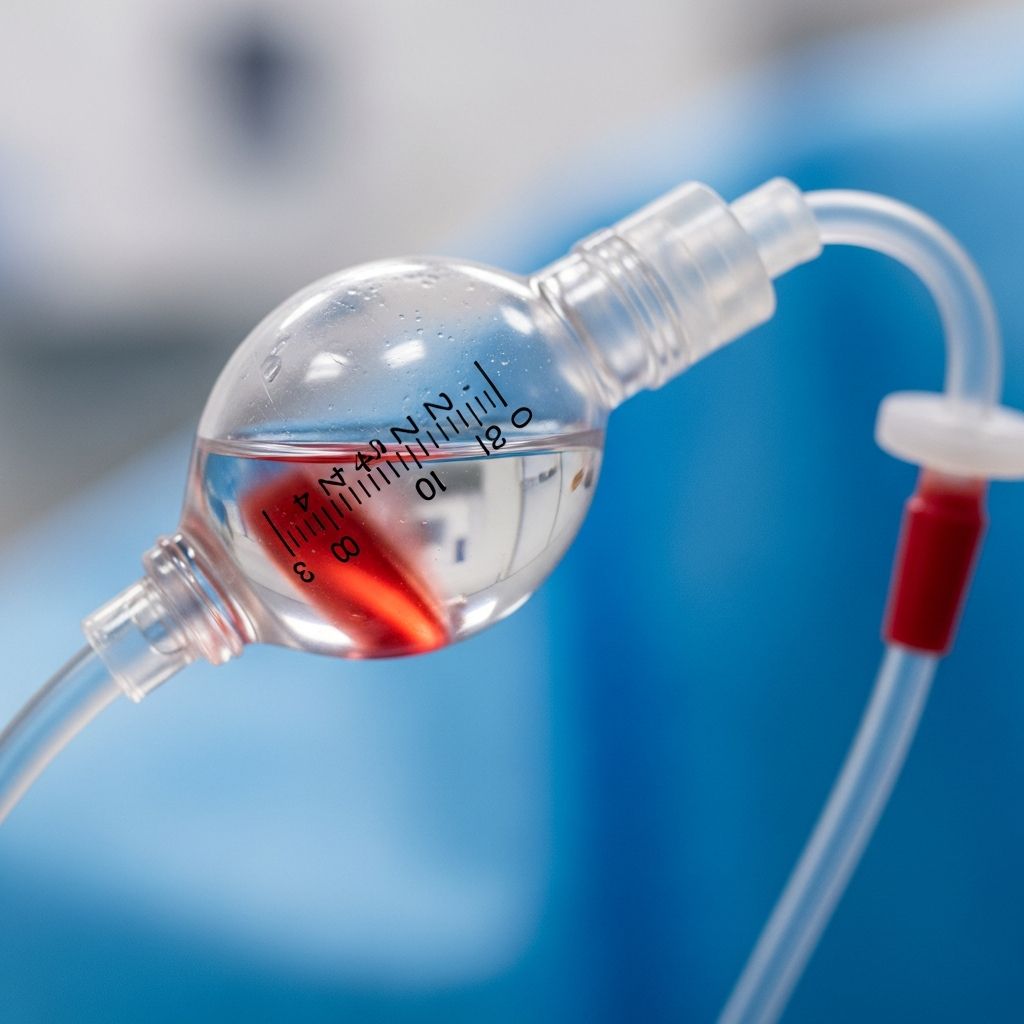
A Jackson-Pratt drain, commonly referred to as a JP drain, is a closed-suction medical device that surgeons frequently place during surgical procedures to help manage fluid accumulation at the surgical site. This temporary drainage system plays a crucial role in the post-operative healing process by preventing complications that could otherwise delay recovery or require additional intervention. Understanding how this device works and how to properly care for it can significantly improve your post-operative experience and promote optimal healing.
What Is a Jackson-Pratt Drain?
A Jackson-Pratt drain is a specialized medical device designed to collect bodily fluids that accumulate following surgery. The device consists of several key components working together as an integrated system. The drain includes a thin, flexible rubber tube that is placed beneath your skin in the area surrounding or near your surgical incision. This tube connects to a collection reservoir, commonly known as a squeeze bulb, which is typically egg-shaped or grenade-shaped in appearance. The bulb serves as the external collection chamber where fluid accumulates and can be monitored and measured.
The closed-suction design of the Jackson-Pratt drain means that fluids are collected within a completely sealed system that does not require connection to an external suction machine. This self-contained design makes it portable and convenient for patients recovering at home, as it requires no electrical connection or additional equipment beyond the drain system itself.
Why Your Surgeon Uses a Jackson-Pratt Drain
During surgery, your surgeon creates an incision to access the area requiring treatment. Even after the surgical work is complete and the incision is closed, fluids such as blood, lymphatic fluid, and other bodily fluids can accumulate in the spaces beneath the skin or within body cavities. This fluid buildup, sometimes called a seroma or hematoma, can create several complications if left unmanaged.
The primary purpose of a Jackson-Pratt drain is to prevent this fluid accumulation, which serves multiple important functions in your recovery:
- Prevents swelling and pressure at the surgical site
- Reduces the risk of infection by removing fluid that could harbor bacteria
- Minimizes strain on the incision and sutures
- Promotes proper wound healing by keeping excess pressure off the incision
- Decreases drainage that would otherwise soak through surgical bandages
Without proper drainage, fluid accumulation can disrupt the normal healing process or potentially become an infected abscess, either of which might require additional surgical intervention and another trip to the operating room. The drain essentially prevents these complications by actively removing unwanted fluids during the critical early healing phase.
How a Jackson-Pratt Drain Works
Understanding the mechanism of your Jackson-Pratt drain helps you use it correctly and recognize when it is functioning properly. The drain operates on a simple but effective principle of negative pressure or suction.
When your surgeon places the drain during surgery, the tube is positioned with one end beneath your skin at the surgical site and the other end connected to the collection bulb on the outside of your body. The surgeon typically secures the drain with stitches at the point where it exits your skin to ensure it remains stable and does not shift or migrate.
Related Stories



To create the suction that pulls fluid from your body, you must actively maintain negative pressure within the system. This is accomplished by regularly squeezing the bulb to remove all air from its interior. When you compress the bulb completely and then release it, the bulb naturally attempts to re-expand to its original shape. However, because the tube is sealed and contains fluid, the bulb cannot fully expand, creating a partial vacuum or negative pressure within the system. This pressure differential gently pulls additional fluids from the surgical site through the tube and into the bulb for collection.
The collected fluid typically appears bright red immediately after surgery, gradually changing to a more orange or straw color as the healing process progresses. The color change reflects the composition of the fluid, as fresh blood is gradually replaced by other bodily fluids as healing occurs.
Caring for Your Jackson-Pratt Drain
Proper care and maintenance of your Jackson-Pratt drain is essential for ensuring it functions effectively throughout your recovery. Your healthcare team will provide specific instructions tailored to your situation, but understanding the general principles of drain care helps you maintain this important device.
Daily Drain Maintenance
Most patients need to empty their JP drain twice daily, though your surgeon may provide different instructions based on the volume of drainage and the type of surgery performed. To properly empty and maintain suction in your drain, follow these steps:
- Wash your hands thoroughly before touching the drain
- Locate the plug or stopper on the bulb
- Open the plug carefully to avoid spilling collected fluid
- Pour the fluid into a measuring cup to record the volume
- Write down the amount and time of drainage as instructed
- Completely compress or squeeze the bulb to remove all air
- While holding the bulb compressed, close the plug securely
- Release the bulb, which will now create suction as it attempts to re-expand
It is best to empty drains before they become more than half full to avoid the discomfort of excess weight pulling on the internal tubing through your skin and tissues.
Maintaining Drain Patency
Maintaining proper function of your drain requires attention to ensure the tubing does not become clogged with clots or other solid matter. A technique called stripping or milking the drain can help keep fluid moving through the tubing into the bulb. To perform this technique:
- Using your fingers, gently compress the tubing closest to where the drain exits your body
- Maintain this compression while slowly moving your fingers along the length of the tube toward the bulb
- This motion pushes any clots or debris toward the collection bulb
- Perform this procedure regularly as instructed by your healthcare provider
Some patients may require subcutaneous injections of low-molecular-weight heparin while the drain remains in place to reduce the risk of clotting within the drainage system. Your doctor will determine if this preventive measure is necessary for your specific situation.
Dressing Changes and Site Care
The area where the drain exits your skin requires regular care and monitoring. Your healthcare provider will instruct you on how frequently to change the dressing around the drain site and what supplies to use. Generally, it is important to keep this area clean and dry to prevent infection.
Common Surgical Procedures Using Jackson-Pratt Drains
Jackson-Pratt drains are used across a wide range of surgical specialties due to their effectiveness and ease of use. Common procedures that typically involve placement of a JP drain include:
- Abdominal surgeries, including bowel resection and hernia repair
- Breast surgery, including mastectomy, breast reconstruction, and reduction
- Craniotomy and other neurosurgical procedures
- Thoracic or chest surgery
- Joint replacement and arthroplasty procedures
- Abdominoplasty (tummy tuck) procedures
- Lymph node dissection
The versatility of the Jackson-Pratt drain across these different surgical types reflects its proven efficacy in managing post-operative fluid drainage.
When to Contact Your Healthcare Provider
While most patients manage their drains without complications, certain signs and symptoms warrant immediate medical attention. Contact your surgeon or healthcare provider if you experience any of the following:
- A fever of 100.4 degrees Fahrenheit or higher
- Increased pain or tenderness around the drain site
- Redness, swelling, warmth, or pus around the area where the drain exits your skin
- Cloudy or foul-smelling fluid draining from the bulb
- Sudden increase in bright red drainage
- Visible holes, cracks, or leaks in the tubing or bulb
- The drain bulb fails to hold suction when compressed
- The drain tube partially or completely comes out of your body
- Stitches holding the drain in place become loose or fall out
- Sudden decrease or complete cessation of drainage
- New or increased leaking around the tubing where it exits your skin
- Soaked bandages with blood or other fluid
These signs may indicate infection, improper drain function, or other complications that require professional evaluation and treatment. Do not hesitate to contact your healthcare provider if you have any concerns about your drain or your recovery.
When Your Jackson-Pratt Drain Will Be Removed
The Jackson-Pratt drain is a temporary device, not a permanent implant. Your surgeon will determine the appropriate time for removal based on several factors, including the type of surgery performed, the amount of fluid being drained, and how quickly your body is healing.
Generally, drains are removed when the drainage volume decreases to approximately 30 cubic centimeters (cc) or less per drain for each of two consecutive days. This threshold indicates that fluid accumulation has significantly decreased and the drain is no longer necessary for preventing complications.
Drain removal is a quick procedure that typically takes only a few seconds and is generally not painful. Your surgeon or a home care nurse can perform the removal either in an office setting or during a home visit. After removal, your healthcare provider will provide instructions on how to care for the small wound where the drain was located and what signs to monitor during final healing.
Historical Background
The Jackson-Pratt drain was named after its inventors, Doctors Fredrick E. Jackson and Richard A. Pratt, both of whom worked at Naval Hospital in Camp Pendleton, California. The device was first described in medical literature in 1971-1972 and has since become the standard closed-suction drain system used in hospitals worldwide. The longevity and widespread adoption of this design reflects its effectiveness and the practical improvements it offers over alternative drainage methods.
Frequently Asked Questions
Q: How often should I empty my Jackson-Pratt drain?
A: Most patients need to empty their drains twice daily, typically in the morning and evening. However, your surgeon may provide different instructions based on your specific situation and the volume of drainage you are experiencing.
Q: Is it normal to see blood clots in the drainage?
A: Yes, small clots in the drainage fluid are expected and normal, as long as they do not block the tubing and prevent proper drainage. However, if you notice that drainage has suddenly stopped or significantly decreased, contact your healthcare provider immediately.
Q: How do I know if my drain is working properly?
A: A properly functioning drain should produce continued drainage for several days after surgery, gradually decreasing in volume. The bulb should maintain suction after being squeezed, and fluid should flow easily into the bulb when you strip or milk the tubing.
Q: What should I do if the drain comes out?
A: Do not attempt to reinsert the drain yourself. Contact your surgeon or healthcare provider immediately, as the drain is sutured in place and should not come out accidentally. Your provider will assess whether reinsertion is necessary.
Q: Can I shower with my Jackson-Pratt drain?
A: Ask your surgeon for specific instructions about bathing or showering with your drain. Generally, you can shower, but you should keep the drain site dry and protected with an appropriate dressing or covering as recommended by your healthcare provider.
Q: How long does the drain typically remain in place?
A: The duration varies depending on the type of surgery performed and how quickly you heal. Most drains remain in place for 1-3 weeks, but your surgeon will determine the appropriate timeline based on your drainage volume and healing progress.
Q: Will drain removal be painful?
A: No, removal of a Jackson-Pratt drain is typically quick and painless, taking only a few seconds. Some patients report mild discomfort, but significant pain is unusual and should be reported to your healthcare provider.
References
- Jackson-Pratt drain — Wikipedia. Accessed December 2025. https://en.wikipedia.org/wiki/Jackson-Pratt_drain
- Jackson Pratt (JP) Drain — Saint John’s Cancer Institute. Accessed December 2025. https://www.saintjohnscancer.org/melanoma/patient-resources/jackson-pratt-jp-drain/
- Jackson-Pratt (JP) Drainage Tube: After Hospital Care — Northwestern Medicine. Accessed December 2025. https://www.nm.org/-/media/northwestern/resources/patients-and-visitors/patient-education/gastrointestinal/northwestern-medicine-jackson-pratt-drainage-tube.pdf
- Jackson-Pratt (JP) Surgical Drain — OncoLink. Accessed December 2025. https://www.oncolink.org/cancer-treatment/hospital-helpers/jackson-pratt-jp-surgical-drain
- Closed suction drain with bulb — MedlinePlus Medical Encyclopedia. Accessed December 2025. https://medlineplus.gov/ency/patientinstructions/000039.htm
- Jackson Pratt (or Blake) Drain Care — Rutgers Cancer Institute. Accessed December 2025. https://cinj.org/sites/cinj/files/documents/Jackson-Pratt-or-Blake-Drain-Care-2022.pdf
- Surgical drains 101: What to know about their use, care and removal — MD Anderson Cancer Center. Accessed December 2025. https://www.mdanderson.org/cancerwise/surgical-drains-101–what-to-know-about-their-use–care-and-removal.h00-159774867.html
Similar Articles








Read full bio of medha deb