JIA Beyond The Joints: What Parents Need To Know In 2025
Discover how juvenile idiopathic arthritis affects more than joints, including common comorbidities and management strategies for better child health.
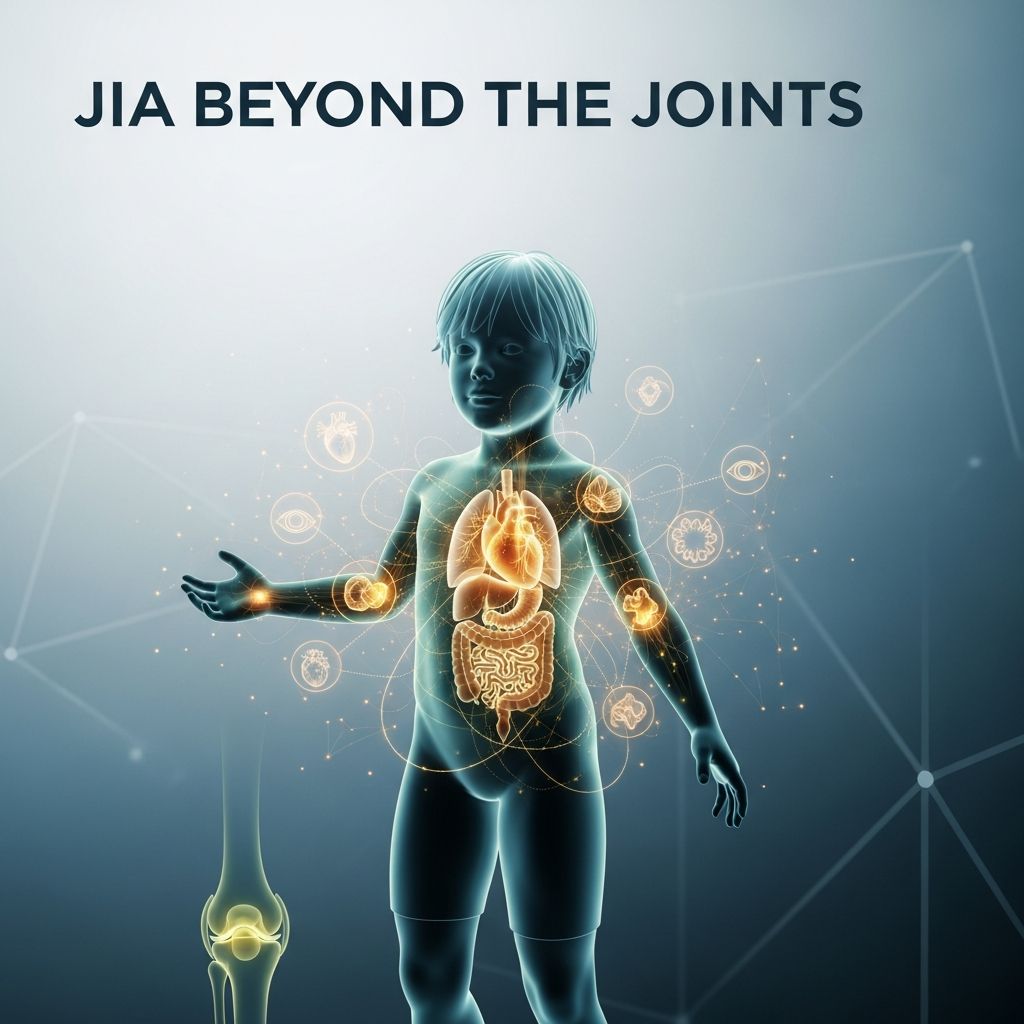
Juvenile idiopathic arthritis (JIA) is the most common form of arthritis in children, affecting about 300,000 kids in the U.S. While hot, swollen joints often signal the diagnosis, JIA impacts far more than mobility. Studies indicate that up to one in five children with JIA experience comorbidities—additional conditions co-occurring with their arthritis. These can range from silent eye inflammation to growth disturbances and organ involvement, complicating care and long-term health. Understanding these extraskeletal effects is crucial for parents and caregivers to advocate effectively and prevent irreversible damage.
By Mary Anne Dunkin | Reviewed April 29, 2022 (Updated with recent insights as of 2025)
Eye Inflammation (Uveitis)
**Uveitis** is one of the most critical non-joint complications of JIA, particularly in oligoarticular and polyarticular subtypes. This silent inflammation of the eye’s middle layer (uvea) affects 10-20% of children with JIA, often without pain or redness, making regular screening essential. Untreated, it can lead to cataracts, glaucoma, band keratopathy, synechiae (adhesions), macular edema, and vision loss—even blindness in severe cases.
- Who’s at Risk? Young girls with positive antinuclear antibody (ANA) tests and few affected joints (oligoarticular JIA) face the highest risk. It can develop anytime, even before joint symptoms or after remission.
- Symptoms: Blurred vision, light sensitivity, red eyes, headaches, or ‘wandering’ eye. Many cases are asymptomatic.
- Screening: Pediatric rheumatologists recommend slit-lamp exams by an ophthalmologist every 3-4 months for high-risk kids, less often for others. Frequency adjusts based on inflammation levels.
Early detection via consistent screenings prevents complications. Treatments include steroid eye drops, dilating drops, methotrexate, biologics like adalimumab or infliximab, and sometimes surgery.
Growth and Development Issues
Chronic inflammation in JIA disrupts normal growth, affecting overall height, limb length, and jaw development. Cytokines like IL-6 drive this, while treatments like corticosteroids exacerbate risks.
- Leg Length Discrepancy: Inflammation in one knee or ankle can stunt growth on that side, causing uneven legs (up to several inches difference). Shoe lifts or epiphysiodesis (growth plate surgery) may be needed.
- Short Stature: Systemic JIA (SJIA) often causes poor overall growth due to disease activity and steroid use. Growth hormone therapy helps some children catch up.
- Micrognathia: Jaw joint (TMJ) inflammation leads to a small chin, underbite, and feeding/speech issues. Custom splints, surgery, or orthodontics correct this.
Monitoring growth charts and minimizing steroids with biologics like anakinra or tocilizumab preserve height. Nutrition, physical therapy, and exercise support development.
Systemic Juvenile Idiopathic Arthritis (SJIA)
SJIA, or Still’s disease, comprises 10-20% of JIA cases and is autoinflammatory, not autoimmune. It spikes fevers daily (quotidian pattern), evanescent salmon-pink rash, lymphadenopathy, hepatosplenomegaly, and serositis.
- Beyond Joints: Arthritis may lag systemic symptoms by weeks/months. Affects liver, lungs, heart; rare pericarditis or pleuritis.
- Macrophage Activation Syndrome (MAS): Life-threatening hyperinflammation in ~10% of SJIA cases (80% of pediatric MAS). Triggers: infections, flares. Symptoms: persistent fever, falling platelets, liver dysfunction. High ferritin levels diagnose it.
Treatment shifted to IL-1 (anakinra) or IL-6 (tocilizumab) blockers first-line, reducing steroid reliance.
Related Stories



Heart and Lung Involvement
Rare but serious, JIA inflammation can extend to the heart (pericarditis, myocarditis) and lungs (pleuritis, interstitial lung disease in SJIA). Polyarticular JIA risks anemia, enlarged organs. Echocardiograms and chest imaging monitor these.
Musculoskeletal Complications
Untreated JIA erodes cartilage/bone, causing deformities, fusions (cervical spine, TMJ), osteoporosis from steroids/inactivity. NSAIDs, DMARDs (methotrexate), biologics prevent damage.
| Subtype | % of JIA | Main Joints | Key Comorbidities |
|---|---|---|---|
| Oligoarticular | 50% | ≤4 large joints (knees) | Uveitis (high risk) |
| Polyarticular | 30-40% | ≥5 joints | Growth issues, anemia |
| Systemic (SJIA) | 10-20% | Variable + systemic | MAS, growth failure, rash/fever |
Other Autoimmune Diseases
JIA raises risks for type 1 diabetes (2018 Journal of Pediatrics study), autoimmune thyroiditis, celiac disease. Aggressive DMARD/biologic control may mitigate. Screen with blood tests if symptoms arise.
Psychosocial Impact
Chronic pain, flares, hospitalizations affect mental health, school, peers. Counseling, support groups (Arthritis Foundation), pain management strategies help.
Management Strategies
Multidisciplinary Care: Rheumatologist, ophthalmologist, PT/OT, psychologist, nutritionist.
- Medications: NSAIDs, steroids (short-term), methotrexate, biologics (etanercept, adalimumab).
- Therapies: PT for strength/mobility, splints, exercise.
- Lifestyle: Healthy diet, sleep, sun protection (med sensitivity).
Regular monitoring catches issues early. Transition to adult care post-16 preserves outcomes.
Frequently Asked Questions (FAQs)
Q: How common are comorbidities in JIA?
A: Up to 20% of children with JIA have additional conditions like uveitis or growth issues.
Q: Can JIA affect eye sight permanently?
A: Yes, untreated uveitis risks blindness; regular screenings prevent this.
Q: What is the most serious SJIA complication?
A: Macrophage activation syndrome (MAS), a cytokine storm treatable with urgent biologics.
Q: Does JIA stop growth?
A: Inflammation and steroids can stunt growth; biologics and monitoring help.
Q: Are there cures for JIA comorbidities?
A: No cures, but early intervention controls symptoms and prevents damage.
References
- Systemic Juvenile Idiopathic Arthritis — Arthritis Foundation. 2022. https://www.arthritis.org/diseases/systemic-juvenile-idiopathic-arthritis
- JIA Beyond the Joints — Arthritis Foundation. 2022-04-29. https://www.arthritis.org/health-wellness/about-arthritis/related-conditions/other-diseases/jia-beyond-the-joints
- Juvenile Idiopathic Arthritis — Pediatrics In Review, AAP. 2023-10. https://publications.aap.org/pediatricsinreview/article/44/10/565/194012/Juvenile-Idiopathic-Arthritis
- Childhood Arthritis — CDC. 2024. https://www.cdc.gov/arthritis/childhood-arthritis/index.html
- Juvenile Idiopathic Arthritis — Shriners Children’s. 2024. https://www.shrinerschildrens.org/en/pediatric-care/juvenile-idiopathic-arthritis
Similar Articles








Read full bio of medha deb