JIA Causes and the Role of the Immune System
Unraveling the immune system's pivotal role in juvenile idiopathic arthritis causes and progression across subtypes.
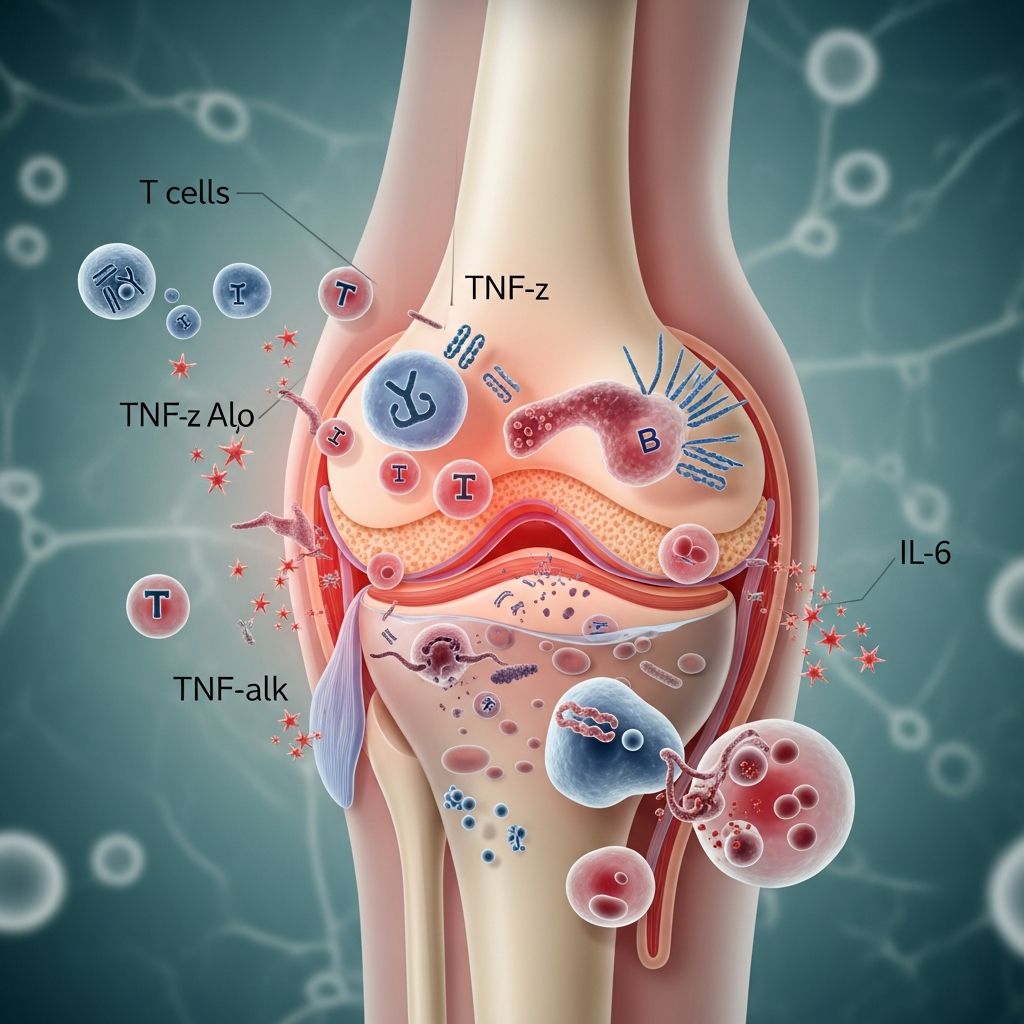
Juvenile idiopathic arthritis (JIA) affects thousands of children worldwide, causing joint pain, swelling, and potential long-term damage. Although the exact cause remains unknown, research clearly implicates the immune system as a central player. Doctors recognize that immune dysregulation leads to chronic inflammation targeting joints and sometimes other organs. This article delves into the immune mechanisms behind JIA, distinguishing between autoimmune and autoinflammatory theories, genetic predispositions, environmental triggers, and emerging therapies.
What Is the Role of the Immune System in JIA?
The immune system, designed to protect against infections and injuries, malfunctions in JIA. Normally, it distinguishes self from non-self tissues. In JIA, this balance fails, resulting in persistent inflammation marked by pain, swelling, warmth, and stiffness in joints. Inflammation can erode cartilage, bone, and affect growth if untreated.
Researchers investigate how innate and adaptive immune arms contribute differently across JIA subtypes. The innate system responds immediately to threats from birth, while the adaptive system learns over time, producing antibodies and memory cells. Dysfunctions in either can drive disease.
The Two Main Immune Theories of JIA
Two primary theories explain JIA’s immune pathology: autoimmune and autoinflammatory. Evidence suggests some subtypes align more with one than the other, and overlaps may exist.
JIA as an Autoimmune Disease
In autoimmune JIA, the adaptive immune system errs, mistaking joint tissues for invaders. T cells and B cells activate inappropriately, producing autoantibodies that bind to synovium—the joint lining—triggering attacks. This chiefly affects oligoarticular and polyarticular JIA.
High levels of pro-inflammatory cytokines like TNF-α, IFN-γ, IL-17, and IL-10 are elevated in JIA sera, correlating with disease activity. Circulating immune complexes (CICs) rise, indicating B-cell hyperactivity. Complement activation and thymocytotoxic activity in synovial fluid further amplify damage.
JIA as an Autoinflammatory Disease
Autoinflammatory JIA involves innate immune overactivation without autoantibodies. Systemic JIA (sJIA) exemplifies this, with errors in innate sensors like NLRP3 inflammasome leading to IL-1 and IL-6 surges. Fevers, rashes, and organ inflammation precede joint issues.
Macrophage activation syndrome (MAS), a severe sJIA complication in 10% of cases (subclinical in 30-40%), links to natural killer (NK) cell dysfunction. Impaired cytotoxicity fails to regulate inflammation. Infections or stress prompt excessive IL-6, fueling flares.
JIA Causes and Triggers
No single cause exists; JIA arises from gene-environment interactions. Over a dozen genes, including HLA-DR4, heighten susceptibility. Environmental triggers like viruses may initiate immune dysregulation in genetically prone children.
- Genetic Factors: HLA antigens and cytokine genes (e.g., IL-6, TNF-α) increase risk. Family history raises odds.
- Environmental Triggers: Infections, toxins, or trauma may activate dormant genes.
- Subtype-Specific Risks: sJIA affects boys and girls equally, peaking at age 2; others favor girls.
Related Stories



Key Cytokines in JIA Pathogenesis
Cytokines orchestrate inflammation. Here’s a breakdown:
| Cytokine | Role in JIA | Targeted Therapies |
|---|---|---|
| IL-1 | Drives sJIA fever and MAS | Anakinra (IL-1 blocker) |
| IL-6 | Systemic inflammation, joint damage | Tocilizumab (anti-IL-6 receptor) |
| TNF-α | Synovial inflammation in polyarticular JIA | Etanercept (TNF inhibitor) |
| IL-17 | Th17-mediated autoimmunity | Emerging blockers |
IL-1/IL-6 inhibitors excel in sJIA; TNF blockers suit autoimmune forms.
Immune Cells in JIA
T Cells and Regulatory T Cells
T cells, especially Th17, promote IL-17 production, worsening autoimmunity. Treg cells (Foxp3+) suppress responses but decline in JIA, reducing IL-10 and tolerance.
B Cells and Antibodies
B cells form CICs and rheumatoid factor cross-reactive idiotypes, linking to complement depletion.
Innate Cells: Macrophages and NK Cells
Macrophages release cytokines; NK impairment in MAS allows unchecked inflammation.
Diagnosis and Monitoring Immune Activity
No single test confirms JIA; diagnosis relies on symptoms persisting 6+ weeks before age 16. Blood tests show elevated ESR/CRP, anemia, and cytokines. Synovial fluid analysis reveals immune complexes.
Treatment Targeting the Immune System
Therapies modulate immunity:
- DMARDs: Methotrexate curbs T/B cell activity.
- Biologics: Block IL-1, IL-6, TNF-α specifically.
- JAK Inhibitors: Disrupt cytokine signaling.
- NSAIDs/Steroids: Symptom relief.
Early intervention prevents damage; 70% achieve remission with biologics.
Future Directions in JIA Research
Ongoing studies explore HSP responses, NK restoration, and gene therapies. Personalized medicine based on subtype immune profiles promises better outcomes.
Frequently Asked Questions (FAQs)
What causes JIA?
JIA results from immune system errors attacking joints, influenced by genes and triggers like infections. Exact causes vary by subtype.
Is JIA autoimmune or autoinflammatory?
Autoimmune in most subtypes (adaptive immunity); autoinflammatory in sJIA (innate immunity).
Can JIA be prevented?
Not yet, but early detection and genetic screening may help high-risk families.
How does the immune system attack joints in JIA?
Cytokines inflame synovium, causing swelling and erosion.
What is MAS in sJIA?
A life-threatening complication with NK cell failure, causing organ inflammation.
References
- Investigations of cellular immunity in juvenile idiopathic arthritis — PMC/NCBI. 2019-05-01. https://pmc.ncbi.nlm.nih.gov/articles/PMC6526591/
- What Is the Role of the Immune System in JIA? — Arthritis Foundation. 2023-01-01. https://www.arthritis.org/health-wellness/about-arthritis/understanding-arthritis/jia-causes-and-the-role-of-the-immune-system
- Juvenile Idiopathic Arthritis — NIAMS/NIH. 2024-01-01. https://www.niams.nih.gov/health-topics/juvenile-arthritis
- Juvenile Idiopathic Arthritis (JIA) — Cleveland Clinic. 2024-06-12. https://my.clevelandclinic.org/health/diseases/10370-juvenile-idiopathic-arthritis
- Juvenile Idiopathic Arthritis — Yale Medicine. 2023-01-01. https://www.yalemedicine.org/conditions/juvenile-idiopathic-arthritis
Similar Articles








Read full bio of medha deb