Johns Hopkins Maternal-Fetal Medicine Fellowship
Advanced training in maternal-fetal medicine: Clinical excellence, research, and specialized obstetric care.
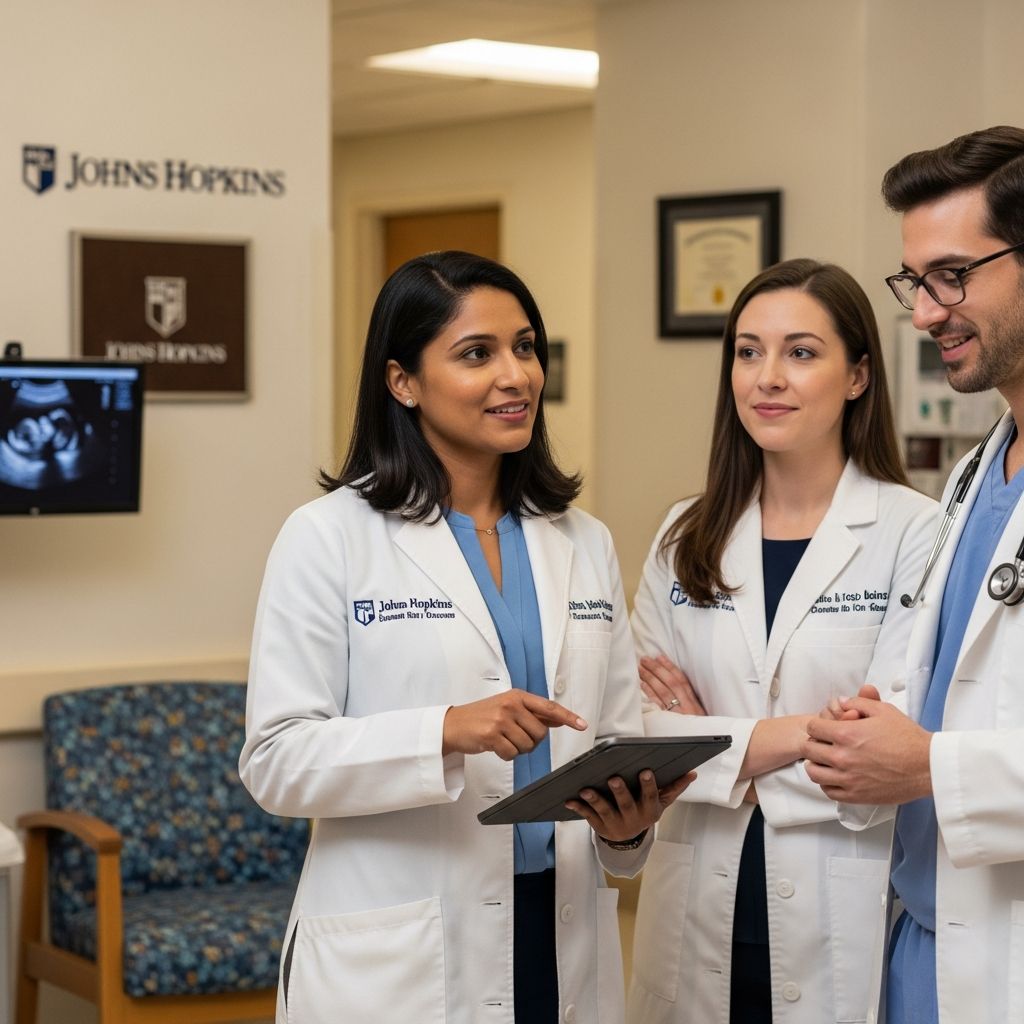
Johns Hopkins Maternal-Fetal Medicine Fellowship Program
The Maternal-Fetal Medicine Fellowship Training Program at Johns Hopkins University School of Medicine represents one of the most prestigious and comprehensive training opportunities in obstetrics and gynecology. With a legacy spanning over 120 years since Dr. John Whitridge Williams became the first Professor of Obstetrics in 1899, the Johns Hopkins Maternal-Fetal Medicine Division has consistently maintained its position as a world-renowned center for clinical excellence, advanced research, and exceptional medical education. The program is specifically designed to prepare physicians to become independent consultants capable of managing the most complex maternal and fetal conditions with expertise and compassion.
Program Overview and Structure
The Johns Hopkins Maternal-Fetal Medicine Fellowship is an ACGME-accredited program that provides a structured and comprehensive curriculum combining clinical training with research opportunities. The fellowship is designed to develop highly skilled maternal-fetal medicine specialists who can address the multifaceted challenges presented by high-risk pregnancies. Fellows who complete this program emerge as thought leaders in their field, equipped with the knowledge and skills to advance maternal and fetal health in their future careers.
The program accepts a limited number of fellows annually, ensuring that each trainee receives personalized mentorship from world-class faculty members. This selective approach allows for intensive training and mentoring that shapes the next generation of maternal-fetal medicine consultants. The Johns Hopkins division is recognized for its commitment to excellence in all aspects of training, from clinical skill development to research innovation.
Clinical Training Components
The clinical portion of the fellowship provides fellows with comprehensive exposure to all aspects of maternal-fetal medicine practice. Fellows develop expertise in managing obstetrical complications, fetal abnormalities, medical conditions during pregnancy, and surgical emergencies. The clinical training is delivered through a combination of inpatient antepartum management, labor and delivery experiences, outpatient consultations, and operative procedures.
Key Clinical Areas of Focus:
– Management of high-risk pregnancy populations across diverse socioeconomic backgrounds- Complex obstetric surgery including cerclage placement and cesarean hysterectomy- Advanced prenatal diagnostic procedures and fetal intervention techniques- Maternal critical care and management of severe pregnancy complications- Multifetal gestation management and complicated delivery scenarios- Integration of evidence-based medicine with patient-centered care delivery
Fellows rotate through various clinical settings within Johns Hopkins, gaining exposure to diverse patient populations and pathologies. This breadth of clinical experience ensures that graduates are prepared to manage virtually any maternal-fetal medicine emergency or consultation that they may encounter in their future practice.
Prenatal Diagnosis and Ultrasound Training
A cornerstone of the Johns Hopkins maternal-fetal medicine curriculum is extensive training in prenatal diagnosis and advanced ultrasound techniques. Fellows develop proficiency in detailed fetal anatomy scanning, three-dimensional ultrasound imaging, and Doppler studies for fetal assessment. The program emphasizes both diagnostic capabilities and therapeutic ultrasound-guided procedures.
Training in invasive prenatal diagnostic procedures is a critical component of the curriculum. Fellows learn to perform amniocentesis, chorionic villus sampling (CVS), cordocentesis, and other fetal interventions under the guidance of experienced faculty mentors. The program also provides specialized training in perinatal genetics consultation, allowing fellows to counsel families regarding fetal abnormalities and genetic conditions detected during pregnancy.
Related Stories



Research and Scholarly Activities
Johns Hopkins Maternal-Fetal Medicine Fellowship places significant emphasis on research and scholarly productivity. The program integrates protected research time into the curriculum, allowing fellows to pursue investigative projects that advance the field. Fellows have opportunities to engage in both basic science research and clinical investigation, depending on their career interests and goals.
Research Opportunities Include:
– Access to well-equipped laboratory facilities for basic science investigations- Participation in NIH-funded and industry-sponsored clinical trials- Collaboration with the Perinatal Translational Research Laboratory- Mentorship from accomplished reproductive researchers and epidemiologists- Training in biostatistics and research methodology- Opportunities for multicenter collaborative research projects
The division maintains strong partnerships with the Johns Hopkins Bloomberg School of Public Health, providing fellows with additional training in reproductive epidemiology and biostatistics. These research experiences typically result in multiple peer-reviewed publications for each fellow, establishing them as scientists and scholars within the maternal-fetal medicine community.
Educational Curriculum and Didactic Training
Beyond clinical and research activities, the Johns Hopkins program provides a robust didactic curriculum designed to ensure fellows master all essential knowledge in maternal-fetal medicine. The educational program focuses on pathophysiology, evidence-based clinical management, multidisciplinary case conferences, and quality improvement initiatives.
Educational Components:
– Regular faculty-led lectures covering core maternal-fetal medicine topics- Multidisciplinary case conferences integrating obstetrics, neonatology, and maternal medicine perspectives- Journal clubs and literature review sessions- Morbidity and mortality conferences- Fetal imaging and diagnosis conferences- Perinatal genetics seminars- Perinatal epidemiology and outcomes research discussions
The program also develops fellows’ teaching skills through active participation in resident education and medical school teaching activities. This emphasis on education ensures that graduates are prepared to contribute as educators and mentors in their own careers, perpetuating the Johns Hopkins tradition of academic excellence.
Faculty Expertise and Mentorship
The Johns Hopkins Maternal-Fetal Medicine Division comprises a distinguished faculty with extensive expertise across all subspecialty areas. The program is led by accomplished clinicians and researchers who are dedicated to mentoring the next generation of maternal-fetal medicine specialists. Faculty members bring diverse clinical interests including prenatal diagnosis, fetal intervention, maternal-fetal surgery, perinatal infection, and quality improvement initiatives.
Each fellow is assigned faculty mentors who provide individualized guidance throughout their training. This mentorship relationship extends beyond clinical oversight to include career planning, research development, and professional growth. The faculty at Johns Hopkins are committed to fostering independent thinkers and leaders who will shape the future of maternal-fetal medicine.
Specialized Training Tracks and Electives
Recognizing that fellows have diverse career interests and goals, the Johns Hopkins program offers flexibility through elective rotations and specialized training tracks. Fellows may pursue additional training in areas such as fetal surgery, maternal-fetal imaging, advanced genetics, or global maternal health, depending on their aspirations.
Elective opportunities may include rotations at affiliated institutions, international training experiences, and specialized consultations with other medical specialties. This flexibility allows fellows to tailor their training to align with their long-term career objectives while maintaining the core competencies expected of all maternal-fetal medicine specialists.
Admission Requirements and Application Process
Applicants to the Johns Hopkins Maternal-Fetal Medicine Fellowship must have successfully completed an ACGME-accredited residency in Obstetrics and Gynecology and be eligible for board certification by the American Board of Obstetrics and Gynecology. In addition, applicants must meet the requirements for medical licensure in Maryland and other relevant jurisdictions.
Application Materials Required:
– ERAS (Electronic Residency Application Service) application- Curriculum vitae- Personal statement outlining research and career interests- Letters of recommendation (typically three to four)- Verification of board eligibility- Evidence of academic productivity (publications, presentations)
The selection process is highly competitive, and the program seeks candidates who demonstrate exceptional clinical ability, scholarly potential, and commitment to advancing maternal-fetal medicine through both clinical excellence and research innovation. Interviews are typically conducted on a rolling basis, and candidates are encouraged to apply early in the application cycle.
Program Timeline and Schedule
The Johns Hopkins Maternal-Fetal Medicine Fellowship follows the Society for Maternal-Fetal Medicine (SMFM) common program dates, ensuring coordination with other leading programs nationally. The program typically begins in July and concludes three years later, allowing fellows adequate time to develop expertise and complete research projects before graduation.
Throughout the training period, fellows progress through a carefully designed curriculum that gradually increases clinical responsibility and autonomy. Early years focus on foundational knowledge and supervised clinical practice, while later years emphasize independent decision-making, teaching responsibilities, and research completion.
Career Support and Professional Development
Johns Hopkins is committed to supporting fellows’ career development beyond clinical and research training. The program provides career counseling, mentorship in academic advancement, and support for fellows pursuing academic careers in maternal-fetal medicine. The strong reputation of Johns Hopkins graduates in the academic medicine community has led to exceptional placement outcomes in leadership positions at academic medical centers across the country.
Fellows are encouraged to present their research at national conferences, including the annual meeting of the Society for Maternal-Fetal Medicine. The program provides financial support for conference attendance and professional development activities, recognizing that these experiences are essential for establishing fellows as emerging leaders in the field.
Impact and Legacy
Over more than 120 years, the Johns Hopkins Maternal-Fetal Medicine fellowship has trained hundreds of physicians who have become leaders in academic medicine, clinical practice, and research. Alumni of the program hold leadership positions at major academic medical centers, serve on national committees and guideline committees, and have made significant contributions to the scientific literature in maternal-fetal medicine.
The program’s commitment to excellence in clinical care, rigorous research training, and comprehensive education has established it as a benchmark for maternal-fetal medicine fellowship programs nationally. Johns Hopkins graduates are recognized for their expertise in complex cases, their scholarly contributions, and their dedication to advancing maternal and fetal health.
Frequently Asked Questions
Q: What is the duration of the Johns Hopkins Maternal-Fetal Medicine Fellowship?
A: The fellowship is a three-year ACGME-accredited program that combines clinical training with protected research time, following the SMFM common program dates beginning in July.
Q: Are research opportunities available during the fellowship?
A: Yes, the program includes dedicated protected research time for fellows to pursue basic science or clinical research projects with mentorship from accomplished faculty members and access to institutional resources.
Q: What types of clinical rotations are included in the training?
A: Fellows receive comprehensive training in prenatal diagnosis, maternal-fetal surgery, maternal critical care, obstetric emergencies, outpatient consultation, and advanced ultrasound-guided procedures.
Q: What qualifications must I have to apply for the fellowship?
A: Applicants must have completed an ACGME-accredited OB/GYN residency, be eligible for ABOG board certification, and meet medical licensure requirements in Maryland.
Q: Does the program offer elective opportunities?
A: Yes, fellows may pursue elective rotations in specialized areas such as fetal surgery, advanced imaging, maternal-fetal genetics, or other areas aligned with their career interests.
Q: What is the competitive nature of admission?
A: The Johns Hopkins program is highly selective, accepting a limited number of fellows annually to ensure personalized mentorship and intensive training from world-class faculty.
References
- Maternal-Fetal Medicine Fellowship | Robert Wood Johnson Medical School — Rutgers University. Accessed 2025. https://rwjms.rutgers.edu/department/obstetrics-gynecology-reproductive-sciences/maternal-fetal-medicine-fellowship
- Maternal-Fetal Medicine Fellowship Program | UC Davis School of Medicine — UC Davis Health. Accessed 2025. https://health.ucdavis.edu/obgyn/academic-programs/fellowship/maternal-fetal-medicine/
- Maternal Fetal Medicine Division | Johns Hopkins — Johns Hopkins University School of Medicine. Accessed 2025. https://publichealth.jhu.edu/departments/population-family-and-reproductive-health/research-and-practice/maternal-fetal-and-perinatal-health
- Training & Education – Maternal Fetal Medicine Division — Keck School of Medicine of USC. Accessed 2025. https://keck.usc.edu/maternal-fetal-medicine-division/training-education/
- Evaluation of Maternal-Fetal Medicine Fellowship Program Websites — National Center for Biotechnology Information (NCBI). 2024. https://pmc.ncbi.nlm.nih.gov/articles/PMC11178946/
- ACGME Program Requirements for Graduate Medical Education in Maternal-Fetal Medicine — Accreditation Council for Graduate Medical Education. 2024. https://www.acgme.org/
Similar Articles








Read full bio of Sneha Tete