Joint Aspiration: Procedure, Benefits, and What to Expect
Understanding joint aspiration: A minimally invasive procedure for diagnosis and pain relief.
Understanding Joint Aspiration
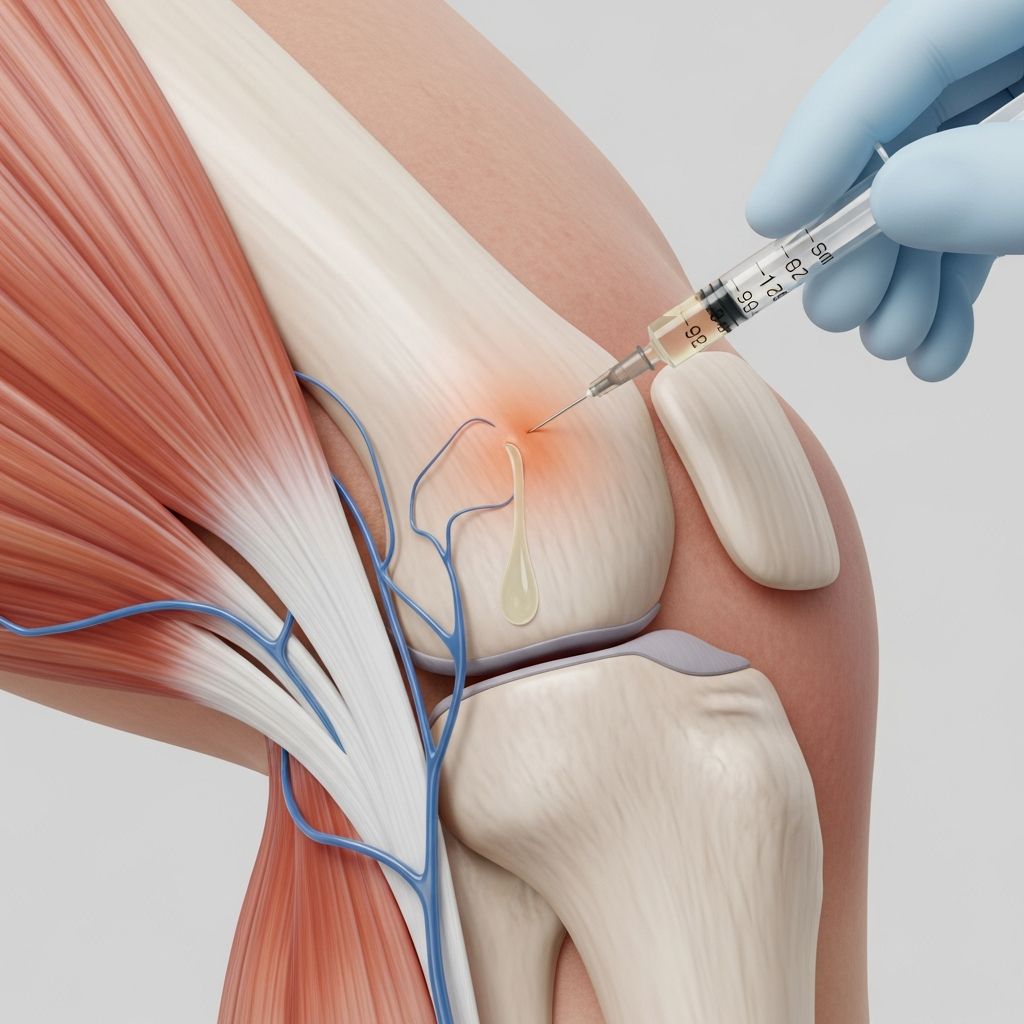
Joint aspiration, also known as arthrocentesis, is a minimally invasive medical procedure designed to remove fluid from the space surrounding a joint using a hollow needle and syringe. This procedure serves dual purposes: it can provide relief from painful swelling caused by excess fluid accumulation, and it allows healthcare providers to collect fluid samples for laboratory analysis to diagnose various joint conditions. Whether performed in a physician’s office or as an outpatient hospital procedure, joint aspiration is a relatively quick and safe intervention that many patients can undergo without requiring overnight hospitalization.
What Is Joint Aspiration?
Joint aspiration refers to the placement of a needle into a joint cavity to withdraw fluid for diagnostic testing or therapeutic purposes. The procedure can be performed on virtually any joint in the body, including the knee, hip, shoulder, elbow, ankle, wrist, and smaller joints in the hands and feet. The term “arthrocentesis” derives from Greek roots: “arthro-” meaning joint and “-centesis” meaning to puncture with a needle to draw fluid.
When a joint becomes inflamed due to infection, arthritis, or injury, excess synovial fluid accumulates within the joint space, causing swelling, pain, and restricted movement. By drawing out this excess fluid, physicians can simultaneously relieve pressure on the joint and obtain a diagnostic sample for laboratory analysis.
Why You Might Need Joint Aspiration
Healthcare providers recommend joint aspiration for both diagnostic and therapeutic reasons. Understanding why your doctor might recommend this procedure can help you prepare mentally and physically.
Diagnostic Purposes
One of the primary reasons for performing joint aspiration is to diagnose the underlying cause of joint swelling and pain. By analyzing the fluid obtained during aspiration, laboratory technicians can identify:
- Gout and other crystal-induced arthropathies
- Rheumatoid arthritis and other autoimmune joint conditions
- Bacterial or viral joint infections (septic arthritis)
- Osteoarthritis and degenerative joint disease
- Other inflammatory or infectious conditions affecting the joint
The synovial fluid analysis provides crucial information that guides treatment decisions and helps distinguish between different types of arthritis and other joint disorders.
Therapeutic Purposes
Beyond diagnosis, joint aspiration offers immediate therapeutic benefits. Removing excess fluid from an inflamed joint reduces internal pressure, providing substantial pain relief and improving the joint’s range of motion. This is particularly beneficial for patients with:
- Chronic osteoarthritis with fluid accumulation
- Rheumatoid arthritis flare-ups
- Bursitis or tendinitis with associated fluid buildup
- Post-traumatic joint swelling from injury
How Joint Aspiration Is Performed
Understanding the step-by-step process of joint aspiration can help alleviate anxiety and allow you to know what to expect during your procedure.
Preparation Phase
Before the procedure begins, your healthcare provider will review your medical history, current medications, and any allergies. You’ll typically be positioned on an examination table or bed in a way that allows optimal access to the affected joint. For knee aspiration, for example, you may be asked to lie supine with the knee extended or slightly flexed.
Related Stories



Your doctor will explain the procedure in detail and answer any questions you may have. Most joint aspirations require no special preparation, though you should continue taking your regular medications unless instructed otherwise.
Sterilization and Anesthesia
Your healthcare provider will clean the skin over the joint with an antibacterial or antiseptic solution to prevent infection. The cleaned area will be allowed to dry completely. While the skin can be numbed with a local anesthetic, this injection of numbing medicine often produces more discomfort than the actual needle insertion into the joint. Some patients choose to proceed without local anesthesia, while others prefer the additional comfort it provides. If you’re anxious about the procedure, your doctor may offer sedation to help you relax.
Needle Insertion and Fluid Withdrawal
Once the site is prepared, your healthcare provider will carefully insert a hollow needle through the skin into the joint cavity. You may feel pressure or mild discomfort as the needle enters the joint, but this should not be painful if anesthesia has been applied. For smaller joints or those that are difficult to access, ultrasound or X-ray guidance may be used to ensure accurate needle placement.
When the needle is properly positioned within the joint space, your doctor will attach a syringe and gently withdraw fluid by pulling the plunger. The amount of fluid removed depends on the clinical goal—a small sample may suffice for diagnostic purposes, while therapeutic aspiration removes larger quantities to relieve swelling.
Medication Injection (If Applicable)
Without requiring an additional needle puncture, your doctor can remove the syringe containing fluid and attach a new syringe containing therapeutic medication. Anti-inflammatory corticosteroids are the most commonly injected medications, as they reduce inflammation, decrease swelling, relieve pain, and improve joint mobility. The medication is injected slowly into the joint space, and if resistance is encountered, the needle position may be adjusted slightly to ensure proper placement within the joint capsule.
Procedure Completion
Once the procedure is complete, the needle is withdrawn and a sterile bandage or dressing is applied to the puncture site. The entire procedure typically takes only 10 minutes, though additional time may be needed if imaging guidance is used or if you require anesthesia to take effect.
Benefits and Advantages of Joint Aspiration
Joint aspiration offers numerous benefits that make it an attractive option for both diagnosis and treatment of joint conditions.
Pain Relief
Inflammation causes joints to swell with excess fluid, which creates internal pressure and is often the primary source of joint pain. By drawing out this excess fluid, the procedure immediately reduces swelling and relieves pressure on surrounding tissues and nerves, providing substantial pain reduction.
Improved Mobility
With reduced swelling and pain, patients typically experience improved range of motion and flexibility in the affected joint. This allows patients to resume normal activities and exercise more comfortably.
Accurate Diagnosis
The synovial fluid obtained during aspiration can be analyzed to identify the specific cause of joint inflammation, enabling healthcare providers to prescribe targeted, effective treatment. This diagnostic capability is invaluable in distinguishing between different types of arthritis and identifying infections.
Preparation for Injection Therapy
By removing excess fluid from the joint, aspiration creates space for therapeutic injections of corticosteroids or other medications that treat arthritis and related conditions. This combination approach maximizes the effectiveness of both procedures.
Minimally Invasive Nature
Joint aspiration is far less invasive than surgical alternatives like arthroscopy. There are no large incisions, minimal tissue trauma, and no requirement for general anesthesia, making it an ideal option for patients who need quick relief without the risks and recovery time associated with surgery.
Joints That Can Be Aspirated
Joint aspiration can be performed on numerous joints throughout the body. The most common sites include:
- Knee joint
- Hip joint
- Shoulder joint
- Ankle joint
- Elbow joint
- Wrist joint
- Joints in the hands and feet
For larger, more accessible joints like the knee or shoulder, aspiration is straightforward and typically requires no imaging guidance. For smaller joints or those that are deeper within the body, such as the hip joint, ultrasound or X-ray imaging helps guide the needle to ensure accurate placement.
Recovery and Aftercare
Recovery from joint aspiration is typically rapid and uncomplicated, with most patients resuming normal activities shortly after the procedure.
Immediate Aftercare
After the needle is removed, remain seated for a few minutes to prevent dizziness. Your healthcare provider will apply a sterile bandage to the puncture site. Most patients experience immediate relief from pressure and swelling, though full pain relief may take a few hours as any residual inflammation subsides.
Activity Restrictions
Your doctor may recommend resting the affected joint for a period of time, depending on your individual condition and the reason for the aspiration. This typically ranges from a few hours to a few days. Avoid strenuous activities and heavy lifting involving the aspirated joint during this recovery period.
Bandage and Wound Care
Keep the bandage clean and dry for the first 24 hours. You may shower normally, but avoid soaking the puncture site. If the bandage becomes wet or soiled, replace it with a clean, sterile dressing. The puncture site is typically small and requires minimal wound care beyond keeping it clean.
Follow-Up Results
If your doctor sent the fluid sample to a laboratory for analysis, you’ll receive the results within a few days to a week, depending on which tests were ordered. Your healthcare provider will contact you with results and discuss next steps in your treatment plan based on the findings.
Possible Risks and Complications
While joint aspiration and injection are relatively safe procedures, as with any medical intervention, certain complications can occasionally occur.
- Infection at the puncture site or within the joint
- Bleeding or hematoma (collection of blood) in or around the joint
- Nerve or blood vessel injury
- Allergic reaction to anesthetic or injected medication
- Temporary increase in pain or swelling (usually resolves within 24-48 hours)
- Incomplete fluid removal if the needle is not properly positioned
To minimize these risks, ensure that your procedure is performed by an experienced healthcare provider in a sterile, clinical setting. Report any signs of infection, such as increased pain, redness, warmth, or drainage from the puncture site, to your healthcare provider immediately.
What to Expect Before and During the Procedure
Knowing what to expect can help you feel more prepared and confident as you undergo joint aspiration.
Before the Procedure
Wear comfortable, loose-fitting clothing that allows easy access to the affected joint. You may eat and drink normally before joint aspiration unless your doctor instructs otherwise. Bring a list of your current medications and any relevant medical records. Plan for someone to drive you home if sedation is used, though you can typically drive yourself if only local anesthesia is administered.
During the Procedure
You will remain awake and alert throughout joint aspiration if local anesthesia is used, though you may receive mild sedation to help you relax. You’ll feel the needle insertion as slight pressure, and you may hear or feel a small “pop” as the needle enters the joint capsule. The procedure is generally well-tolerated with minimal discomfort.
Frequently Asked Questions
Q: Is joint aspiration painful?
A: Joint aspiration is typically not painful, though you may feel pressure or mild discomfort. Local anesthesia numbs the area, and the procedure is quick. The injection of numbing medicine itself may cause brief stinging, but this is usually minimal.
Q: How long does joint aspiration take?
A: The procedure typically takes about 10 minutes, though additional time may be needed if imaging is used to guide the needle or if you require time for anesthesia to take effect.
Q: Can I drive home after joint aspiration?
A: If only local anesthesia is used, you can typically drive home immediately. However, if sedation is administered, arrange for someone to drive you home.
Q: When will I get my test results?
A: Laboratory results typically come back within a few days to one week, depending on the specific tests ordered. Your healthcare provider will contact you with results and discuss their implications for your treatment.
Q: Can joint aspiration be performed on any joint?
A: Yes, joint aspiration can be performed on virtually any joint in the body. Larger joints like the knee and shoulder are straightforward, while smaller or deeper joints may require ultrasound or X-ray guidance.
Q: How often can I have joint aspiration performed?
A: Most doctors recommend spacing aspirations and injections at least three to four months apart to minimize the risk of complications. Your healthcare provider will recommend an appropriate schedule based on your condition.
Q: What should I do if I experience increased pain after the procedure?
A: Some temporary increase in pain or swelling can occur within 24-48 hours after the procedure as the joint adjusts. Apply ice and rest the joint. However, if pain is severe or accompanied by signs of infection, contact your healthcare provider immediately.
References
- Joint Aspiration and Injection — American Academy of Family Physicians. 2002-10-15. https://www.aafp.org/pubs/afp/issues/2002/1015/p1511.html
- Arthrocentesis (Joint Aspiration): What It Is & Procedure — Cleveland Clinic. 2024. https://my.clevelandclinic.org/health/treatments/14512-arthrocentesis-joint-aspiration
- Joint Aspiration & Synovial Fluid Analysis: Procedure, Risks, Recovery — WebMD. 2024. https://www.webmd.com/pain-management/knee-pain/knee-pain-joint-aspiration
- Joint Aspiration — University of Rochester Medical Center. 2024. https://www.urmc.rochester.edu/encyclopedia/Content?contentTypeID=92&ContentID=P07680
- Arthrocentesis (Joint Aspiration) — Nemours KidsHealth. 2024. https://kidshealth.org/en/parents/arthrocentesis.html
- Knee Joint Aspiration and Injection – OSCE Guide — Geeky Medics. 2024. https://geekymedics.com/knee-joint-aspiration-and-injection-osce-guide/
Similar Articles








Read full bio of Sneha Tete