Journaling For Eczema: 5 Prompts To Ease Stress
Discover how daily journaling can break the stress-eczema cycle, offering practical tips to calm your mind and soothe your skin effectively.
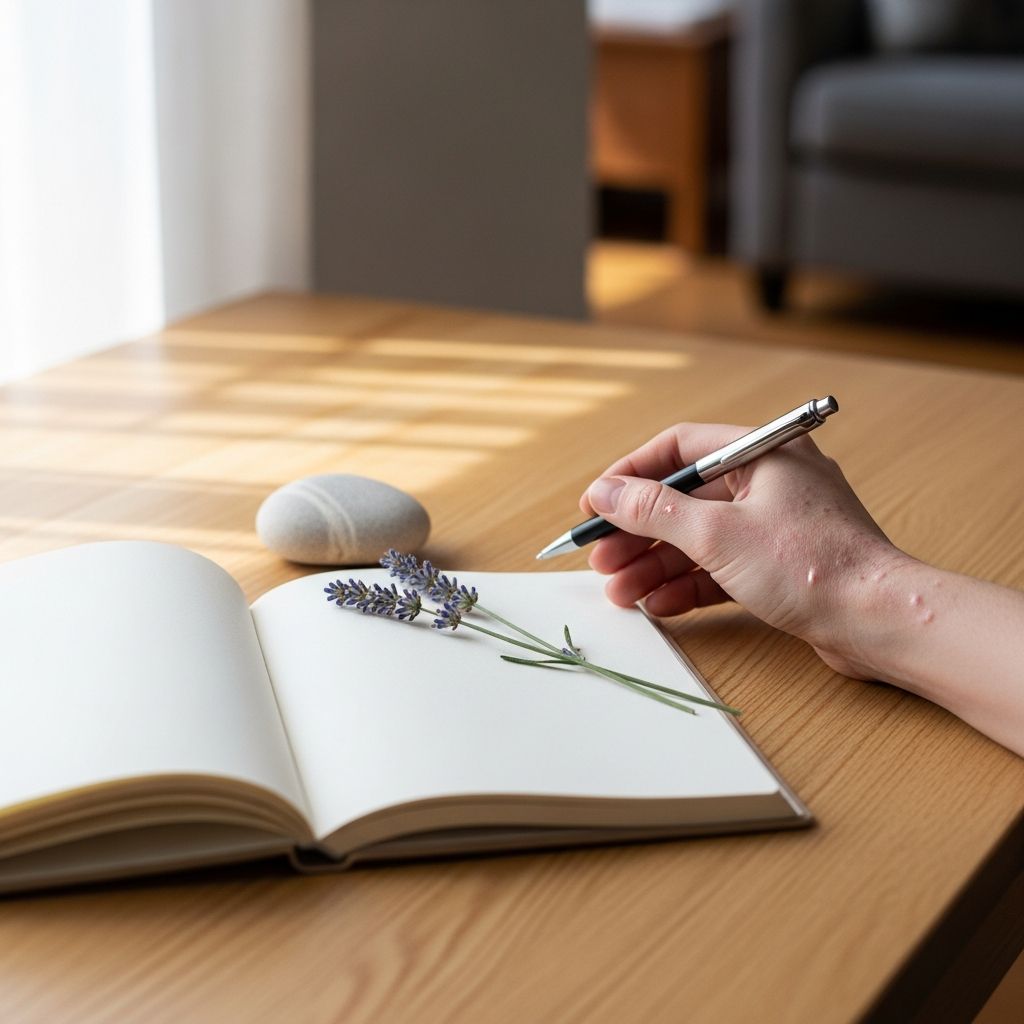
Journaling serves as a powerful, accessible tool to manage stress, which often exacerbates eczema symptoms. By putting thoughts on paper, individuals can interrupt the cycle where anxiety triggers flares and itching heightens emotional distress.
The Stress-Eczema Connection
Stress activates the body’s fight-or-flight response, releasing hormones like cortisol that inflame the skin and worsen eczema. Research shows psychotherapeutic approaches, including stress reduction, improve both physical symptoms and psychological well-being in eczema patients. For instance, techniques targeting mental relaxation reduce itch intensity and emotional burden.
Mind-body practices help counteract this. Studies confirm that stress management lowers flare frequency by addressing the reciprocal worsening between tension and skin irritation. Daily habits like reflective writing allow processing of emotions without physical strain, making it ideal for those with sensitive skin.
Why Journaling Works for Skin Conditions
Writing therapeutically unloads mental clutter, fostering clarity and resilience. Unlike exercise, which might irritate sweaty skin, journaling requires no movement, fitting seamlessly into bedtime routines disrupted by itchiness. It promotes mindfulness, correlating negatively with itch catastrophizing—a common eczema challenge.
- Mindful expression: Articulating feelings diminishes their power over the body.
- Pattern recognition: Tracking triggers reveals stress-eczema links.
- Gratitude focus: Shifting to positives builds emotional reserves.
Evidence from systematic reviews supports such interventions alongside medical care, outperforming treatments alone. Primary sources like the National Eczema Association emphasize journaling in relaxation strategies.
Getting Started with a Journaling Practice
Begin with 10 minutes daily, using a dedicated notebook or app. Choose a quiet space, perhaps post-moisturizing bath when skin feels calm. Consistency matters more than volume—short sessions yield benefits over time.
Combine with deep breathing: Inhale for four counts, exhale while writing. This pairs physical calm with mental release, recommended by dermatology experts.
Effective Journaling Prompts for Eczema
Tailor entries to your experience. These prompts target stress and skin health:
- What stressed me today, and how did my skin react?
- Three things I’m grateful for, despite discomfort.
- One small win in managing my symptoms.
- Future vision: My skin healthy and stress-free.
- Emotions tied to itching—name and release them.
Visualize relief: Describe cool, smooth skin in detail. Such imagery aids hypnotherapy-like effects, reducing perceived itch.
Journaling Types to Try
| Type | Description | Eczema Benefit |
|---|---|---|
| Free Writing | Stream-of-consciousness for 5-10 minutes | Clears racing thoughts that amplify flares |
| Gratitude Log | List daily positives | Boosts mood, counters depression from chronic itch |
| Trigger Tracker | Log stress events and skin changes | Identifies patterns for proactive management |
| Mindfulness Notes | Describe present sensations non-judgmentally | Reduces itch catastrophizing |
| Affirmation Journal | Repeat empowering statements | Builds resilience against emotional triggers |
Experiment to find fits. For hand eczema, voice-to-text apps avoid friction.
Integrating Journaling with Other Stress Tools
Enhance effects by combining methods. Post-yoga or meditation, journal insights. Pair with progressive muscle relaxation: Tense-release muscles, then note sensations.
Evening routines amplify gains: Bath, moisturize, journal, sleep. Sound sleep prevents overnight flares, crucial as poor rest heightens stress.
- Pre-bed: Reflect on day, plan tomorrow’s calm.
- During flares: Write to distract from scratching urge.
- Weekly review: Assess progress, adjust habits.
Real-Life Success Stories
Many report fewer flares after adopting journaling. One approach: Cooling with ice packs during stress peaks, followed by writing. Another: Oatmeal baths plus gratitude logs for dual soothing.
Related Stories



Support groups reinforce this—sharing journal excerpts builds community. Therapists specializing in eczema guide personalized practices.
Overcoming Common Challenges
Feeling stuck? Start with bullet points, not essays. If privacy concerns arise, use coded language. During severe flares, dictate entries.
Motivation dips? Set reminders or link to enjoyable rituals like tea time. Track skin improvements to sustain momentum.
Scientific Backing and Expert Insights
Peer-reviewed studies validate psychotherapies like stress reduction for eczema. Autogenic training, involving self-suggestions of calm skin, mirrors journaling’s autosuggestive power.
The National Eczema Association lists journaling among top relaxation techniques. Dermatology sites advocate it for hand eczema, where stress hits hard.
Building a Sustainable Routine
Aim for integration, not overhaul. Morning pages clear overnight worries; evening winds down. Apps with eczema-specific prompts streamline tracking.
Nutrition supports: Balanced diets lower stress hormones. Hydration, exercise (post-shower), and sleep hygiene complete the toolkit.
Frequently Asked Questions
Can journaling replace medical treatment?
No—it’s complementary. Use alongside topicals and emollients.
How soon do I see results?
Benefits emerge in weeks with consistency, per stress studies.
What if I hate writing?
Try drawing, voice notes, or bullet journaling.
Does it help children with eczema?
Yes, adapted prompts and drawings aid emotional processing.
Any risks?
Rare; if writing heightens anxiety, consult a therapist.
Journaling empowers eczema management by tackling root stress. Start today for calmer skin and mind.
References
- Treating Stress Related-Eczema on Hands — Riverchase Dermatology. 2023. https://www.riverchasedermatology.com/blog/treating-stress-related-eczema-on-hands/
- Hidden Impacts: How Living with Eczema Affects Mental Health — ID Tidewater. 2024. https://www.idtidewater.com/blog/hidden-impacts-how-living-with-eczema-affects-mental-health
- The Role Stress Plays in Eczema — Pierre Fabre Eczema Foundation. 2023. https://www.pierrefabreeczemafoundation.org/en/support/useful-advice/atopic-eczema-and-stress
- Alternative Psychotherapeutic Approaches to the Treatment of Eczema — PMC (PubMed Central). 2022-12-01. https://pmc.ncbi.nlm.nih.gov/articles/PMC9760032/
- Stress and Eczema | Eczema and Mental Health — National Eczema Association. 2025. https://nationaleczema.org/eczema-management/stress/
Similar Articles








Read full bio of medha deb