Jugular Vein: Anatomy, Function, and Clinical Significance
Complete guide to jugular vein anatomy, function, and its critical role in blood circulation.
Understanding the Jugular Vein: Anatomy and Function
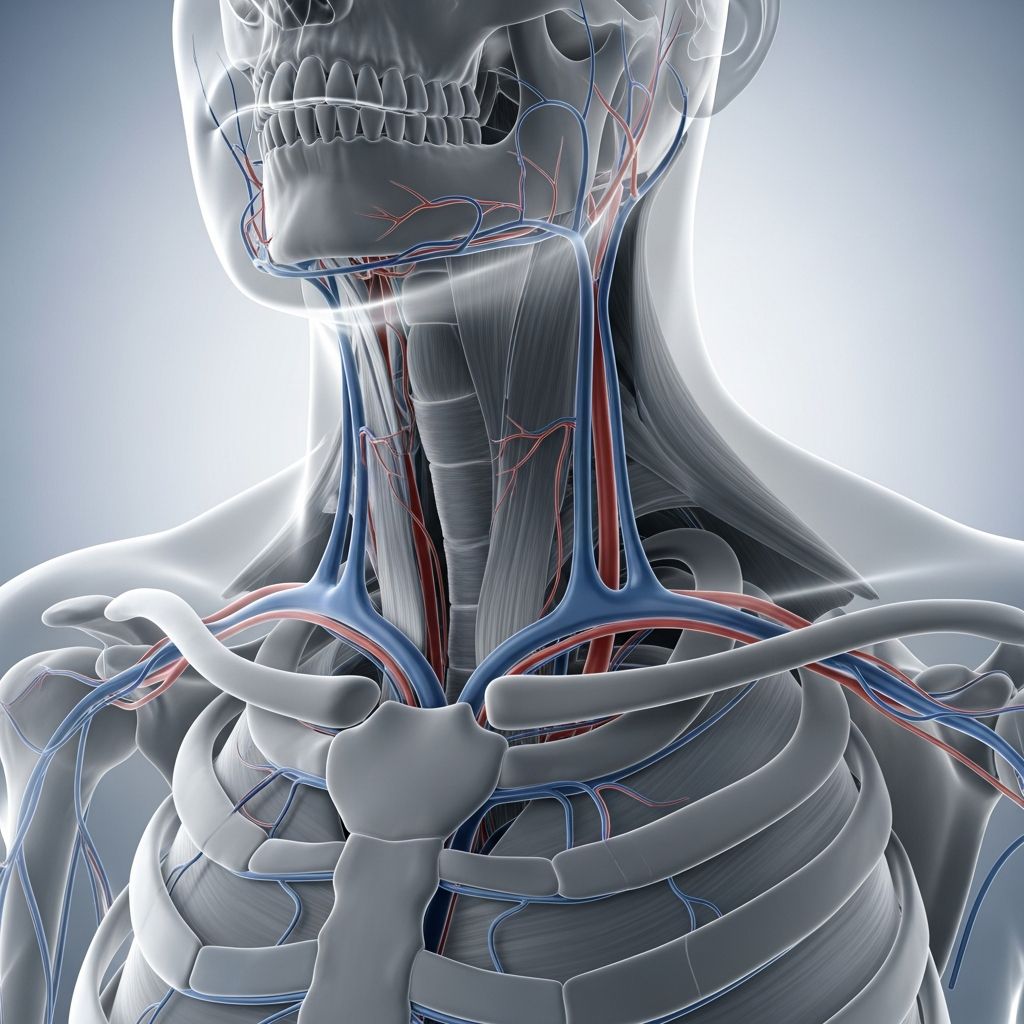
The jugular veins are essential components of your circulatory system, responsible for collecting oxygen-poor blood from your head, brain, face, and neck before returning it to your heart. These major veins run from your head down through your neck and into your upper chest, where they connect with other significant vessels to form the superior vena cava—the largest vein in your body. Understanding the anatomy and function of the jugular veins is important for recognizing potential health concerns and appreciating how your body maintains proper blood circulation.
What Are the Jugular Veins?
The jugular veins are a pair of major venous structures found on both sides of your neck. There are two main types: the internal jugular veins and the external jugular veins. These veins play a crucial role in your body’s venous return system, which is the process by which oxygen-depleted blood travels back to your heart for reoxygenation. The jugular veins are among the largest and most prominent veins in your body, and they serve as vital pathways for blood drainage from the cranial region.
Anatomy of the Internal Jugular Vein
Origin and Course
The internal jugular vein is a paired venous structure that originates as a continuation of the sigmoid sinus, a major venous channel within the brain. It arises in the posterior cranial fossa and exits the cranium through the jugular foramen, an opening located at the base of the skull. Once it emerges from the skull, the internal jugular vein begins its descent along the lateral side of your neck. As it travels downward, it maintains a position just lateral and anterior to the internal and common carotid arteries, the major arteries that supply blood to your brain and head.
Path Through the Neck
As the internal jugular vein runs down the lateral neck, it is contained within the carotid sheath, a protective fibrous covering that also encompasses the vagus nerve and the common carotid artery. During its course through the neck, the vein drains several important tributaries, including branches from the facial, retromandibular, and lingual veins, which contribute oxygen-poor blood from various regions of the face and oral cavity. This collection of blood from multiple tributaries allows the internal jugular vein to serve as a major drainage pathway for the entire head and neck region.
Junction with Other Veins
At the junction of the neck and thorax, the internal jugular vein combines with the subclavian vein to form the brachiocephalic vein, also called the innominate vein. The left internal jugular vein is slightly smaller than the right internal jugular vein, and importantly, both veins contain valves located just a few centimeters before the vessels drain into the subclavian vein. These valves help prevent backward flow of blood and ensure unidirectional movement toward the heart.
Blood Collection and Drainage Functions
Primary Drainage Territory
The function of the internal jugular vein is to collect blood from the skull, brain, superficial parts of the face, and the majority of the neck. This vein serves as the primary venous drainage pathway for these critical regions of your body. The tributaries of the internal jugular vein include numerous important vessels: the inferior petrosal sinus, facial vein, lingual vein, pharyngeal vein, superior thyroid vein, middle thyroid vein, and occasionally the occipital vein. This network of tributaries ensures comprehensive drainage of blood from diverse anatomical regions.
Related Stories



Venous Return Pathway
The blood collected from all these vessels then drains into the brachiocephalic vein and ultimately into the right atrium of your heart. This coordinated venous return system is essential for maintaining proper circulation and ensuring that oxygen-depleted blood reaches the lungs for reoxygenation before being distributed throughout the body once again.
Associated Anatomical Structures
Lymphatic Drainage
Deep cervical lymph nodes lie along the internal jugular vein, primarily on its superficial surface. At the confluence where the left subclavian and internal jugular veins meet, lymphatics drain via the left thoracic duct. The thoracic duct is responsible for draining lymph from below the diaphragm and the left half of the upper body, making this junction an important lymphatic drainage point.
Surrounding Muscles
Several muscles lie posteriorly to the internal jugular vein, including the rectus capitis lateralis, levator scapulae, scalenus medius, and scalenus anterior. The sternocleidomastoid muscle overlaps the internal jugular vein superficially, and the vein is also crossed over by the posterior belly of the digastric muscle and the superior belly of the omohyoid muscle. Additionally, the sternocleidomastoid and infrahyoid muscles cover the internal jugular vein as it passes under the clavicle, providing anatomical protection for this important vein.
External Jugular Vein
While the internal jugular vein handles the majority of blood drainage from the head and neck, the external jugular vein serves as an additional drainage pathway. The external jugular vein is more superficial and visible on the surface of the neck. Both the internal and external jugular veins are important for maintaining proper venous return from the head and neck region, and both can be affected by various medical conditions.
Embryological Development
During fetal development, the earliest vessels of the cranium form a primordial hindbrain channel that drains into the precardial vein. The cranial portion of the precardial vein eventually develops into the internal jugular vein during normal embryological progression. Understanding this developmental process helps clinicians recognize congenital variations in jugular vein anatomy that some individuals may have from birth.
Anatomical Variations
Like many veins in the body, the internal jugular vein can have significant anatomical variations among different individuals. Some of the more clinically significant variations include a vein that is notably smaller than expected or even absent altogether. These variations are important for medical professionals to recognize, particularly when planning surgical procedures or attempting to place central venous catheters. Healthcare providers use advanced imaging techniques to identify these variations before performing invasive procedures.
Clinical Applications and Medical Procedures
Central Venous Catheter Placement
The internal jugular vein is a preferred initial access site for central venous catheter placement due to its large diameter, superficial location, and relatively consistent anatomical course. Ultrasound guidance is typically used for assessing cervical anatomy, confirming vessel patency, detecting the presence of any blood clots (thrombi) in the lumen, and evaluating the relationship between the internal jugular vein and the common carotid artery. The right internal jugular vein is often preferred because it has a relatively straight course into the subclavian vein and right atrium, making catheter placement technically more straightforward.
Catheter Insertion Technique
The process of inserting a central venous catheter involves several careful steps. First, a guidewire is advanced through a needle into the vessel. Subsequently, dilators are advanced over the wire to create a subcutaneous tract that can accommodate the catheter. The dilator is then removed, allowing the central venous catheter to advance over the guidewire. Once proper positioning is confirmed, the guidewire is withdrawn. Each port of the catheter should be aspirated to confirm adequate blood return and then flushed with sterile saline. The catheter is subsequently sutured to the skin surface and dressed in a sterile fashion, and a chest X-ray is performed to verify appropriate placement at the junction between the atrium and superior vena cava and to ensure there is no pneumothorax (collapsed lung).
Cannulation Purposes
The internal jugular vein is used for cannulation to accomplish several important clinical objectives. These include monitoring jugular venous pressure to assess heart function, administering fluids and medications directly into the bloodstream, delivering nutritional support through total parenteral nutrition, and providing emergency resuscitation during critical care situations. The versatility of this access point makes it invaluable in intensive care and emergency medicine settings.
Complications and Management
While the internal jugular vein is generally a safe location for central venous catheter placement, complications can occasionally occur. If injury to the internal jugular vein occurs, surgical exploration may be necessary. Whenever possible, the internal jugular vein should be repaired with careful attention taken to prevent narrowing of the vessel. In severe cases where repair is not feasible, the internal jugular vein may require ligation (tying off). During any surgical exploration, clinicians must also carefully assess other nearby structures such as the vagus nerve, carotid artery, and aerodigestive structures to ensure they have not been inadvertently damaged.
Connection to the Superior Vena Cava
Once the internal jugular vein combines with the subclavian vein to form the brachiocephalic vein, this vessel continues its journey toward the heart. The brachiocephalic veins from both the right and left sides eventually merge to form the superior vena cava, the largest vein in your body. The superior vena cava then delivers this oxygen-depleted blood directly into the right atrium at the top of your heart, completing the venous return pathway from your head and neck.
Clinical Significance of Jugular Vein Distention
Jugular vein distention, characterized by the bulging of major veins in your neck, can occur when there is backup of blood in the superior vena cava or in your heart itself. This condition indicates unusually high pressure in the right atrium and superior vena cava, which can result from several health conditions affecting heart function and circulation. When jugular vein distention occurs along with low blood pressure, it may indicate life-threatening conditions requiring immediate medical attention.
Frequently Asked Questions
Q: What is the primary function of the internal jugular vein?
A: The internal jugular vein collects oxygen-poor blood from the brain, skull, superficial parts of the face, and majority of the neck, then delivers this blood back to the heart through the superior vena cava.
Q: Why is the internal jugular vein preferred for central venous catheters?
A: The internal jugular vein is preferred because it is large in diameter, superficial in location, has a relatively consistent anatomical course, and provides relatively straight access to the heart, making catheter placement more reliable and technically feasible.
Q: What are the main tributaries that drain into the internal jugular vein?
A: The main tributaries include the inferior petrosal sinus, facial vein, lingual vein, pharyngeal vein, superior thyroid vein, middle thyroid vein, and occasionally the occipital vein.
Q: Are there anatomical differences between the left and right internal jugular veins?
A: Yes, the left internal jugular vein is slightly smaller than the right internal jugular vein, and the right vein has a more favorable straight course into the subclavian vein and heart.
Q: What imaging techniques are used to evaluate the jugular veins before catheter placement?
A: Ultrasound guidance is typically used to assess cervical anatomy, confirm vessel patency, detect blood clots, and evaluate the relationship between the internal jugular vein and the common carotid artery.
Q: What conditions can cause jugular vein distention?
A: Jugular vein distention can result from backup of blood in the superior vena cava or heart itself, which can be caused by various heart and circulatory problems.
Conclusion
The jugular veins, particularly the internal jugular vein, are vital structures in your circulatory system that ensure efficient return of oxygen-poor blood from your head and neck back to your heart. Their large size, superficial location, and relatively consistent anatomy make them important not only for normal physiological function but also for various medical procedures. Understanding the anatomy and function of these vessels is essential for both healthcare professionals and patients in recognizing potential complications and maintaining optimal cardiovascular health. Whether serving their primary role in venous return or functioning as access points for critical medical interventions, the jugular veins remain among the most important vascular structures in the human body.
References
- Anatomy, Head and Neck: Internal Jugular Vein — National Center for Biotechnology Information (NCBI). 2024. https://www.ncbi.nlm.nih.gov/books/NBK513258/
- Jugular Vein Distention: Symptoms and Causes — Cleveland Clinic. 2024. https://my.clevelandclinic.org/health/symptoms/23149-jugular-vein-distention
Similar Articles








Read full bio of Sneha Tete