Juice Vs Smoothie: Expert Guide To Which Is Healthier
Discover the nutritional differences between juices and smoothies to choose the best option for your health goals and daily routine.
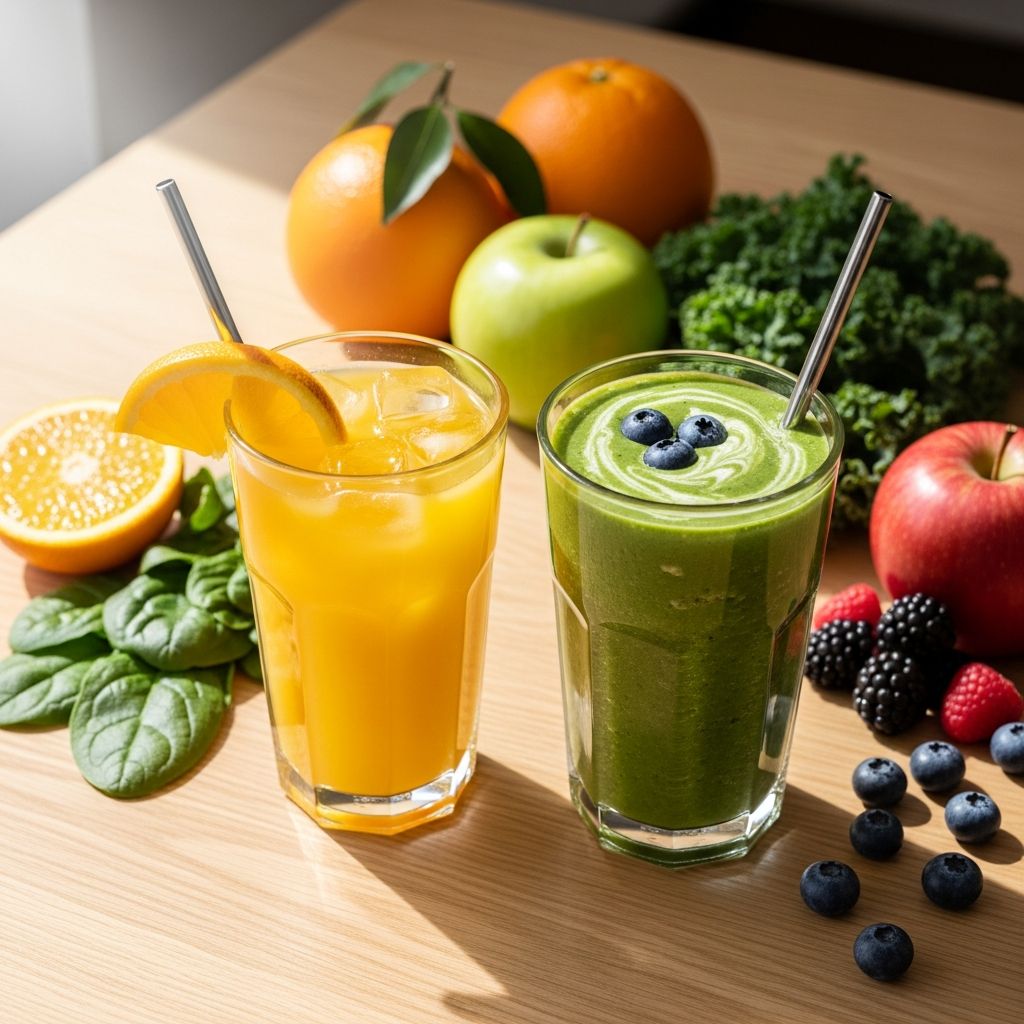
Both juices and smoothies offer convenient ways to boost fruit and vegetable intake, but they differ significantly in nutrition, digestion, and health impacts. Smoothies retain fiber for better satiety and blood sugar control, while juices provide rapid nutrient absorption with concentrated vitamins but higher sugar density.
What Is Juice?
Juice is made by extracting liquid from fruits and vegetables using a juicer, which separates the pulp and fiber, leaving a smooth, concentrated beverage rich in vitamins, minerals, and antioxidants. This process allows quick absorption since fiber is removed, making it ideal for rapid hydration and nutrient delivery.
Common ingredients include oranges, apples, carrots, beets, and leafy greens. A typical serving packs nutrients from multiple produce items into one glass, often low in calories but high in natural sugars.
What Is a Smoothie?
A smoothie is created by blending whole fruits, vegetables, and often add-ins like yogurt, milk, protein powder, or nuts, preserving all fiber, pulp, and nutrients in a thick, filling drink. This method supports sustained energy release and digestive health due to the intact fiber.
Smoothies allow endless customization, from green detox blends to berry protein-packed meals, making them versatile for breakfast, snacks, or post-workout recovery.
Juice vs. Smoothie: Nutrition Comparison
Smoothies generally outperform juices in fiber and satiety, while juices excel in concentrated micronutrients. Here’s a detailed breakdown based on typical 100g servings of orange juice and strawberry-banana smoothie.
Calories and Macronutrients
Juice has higher calories (54 per 100g vs. 37 in smoothies) due to concentrated carbs from removed fiber. One cup (240-250g) of juice provides about 134 calories, compared to 91 in smoothies.
| Nutrient (per 100g) | Juice | Smoothie | Difference |
|---|---|---|---|
| Calories | 54 | 37 | Juice +46% |
| Carbs | 13.2g | 8.1g | Juice +64% |
| Protein | Low | Higher (+510% in some blends) | Smoothie superior |
| Fiber | 0.2g (soluble) | 2-5g+ (soluble + insoluble) | Smoothie 10x more |
Vitamins and Minerals
Smoothies lead in
vitamin C
(24.5mg vs. 15mg),vitamin B12
(0.24mg),vitamin A
(9x more), calcium, and sodium. Juice offers morevitamin B6
(32% higher),B3
(6x), copper (3.5x), and potassium (2x). Both are excellent vitamin C sources, but processing can reduce some heat-sensitive vitamins.- Juice strengths: B-vitamins (B1, B2, B5, folate), potassium, copper for energy metabolism and heart health.
- Smoothie strengths: Fiber-bound vitamins A, C, B12, calcium for immunity, bones, and vision.
Health Benefits of Juice
Juices deliver antioxidants like polyphenols and carotenoids from orange juice, offering anti-inflammatory effects and immune support. Their lack of fiber enables fast absorption, ideal for hydration post-exercise or quick energy boosts.
- Supports
hydration
with high water content and electrolytes. - Concentrated
vitamins
for detoxification and alkalizing the body. - May
lower LDL cholesterol
with daily 500ml intake. - Easy way to consume greens without chewing.
Drawbacks include potential blood sugar spikes from rapid sugar absorption and less satiety, leading to overconsumption.
Health Benefits of Smoothies
Smoothies shine in
gut health
thanks to fiber, which fosters microbiome diversity, prevents constipation, and slows sugar absorption for stable blood sugar. They promote fullness, aiding weight management, and reduce risks of heart disease, obesity, and mental decline.Related Stories



- High
fiber
lowers LDL cholesterol and supports digestion. - Balanced macros with protein/fat add-ins for meal replacement.
- Antioxidants and nutrients combat inflammation and chronic diseases.
- Sustained energy without crashes, great for workouts.
Smoothies can be calorie-dense if overfilled with high-sugar fruits or sweeteners.
Juice vs. Smoothie: Digestion and Blood Sugar
Juice digests quickly due to soluble fiber only, spiking blood sugar but providing instant energy. Smoothies’ insoluble fiber slows digestion, stabilizing glucose and enhancing satiety—key for diabetes management or weight loss.
For gut health, smoothies foster beneficial bacteria; juices may cause laxative effects if overconsumed.
Which Has More Sugar?
Juice often has more sugar per serving (70-90% of carbs are sugars, concentrated without fiber). Smoothies dilute sugars with fiber and volume, reducing glycemic impact despite similar total carbs. Opt for low-glycemic ingredients in both.
Juice vs. Smoothie Calories
Juices are lower-calorie for hydration (86% water), but smoothies’ fiber makes them more filling per calorie, preventing hunger. Add proteins to smoothies for balanced macros.
Juicing vs. Blending: Pros and Cons
| Aspect | Juice (Pros) | Juice (Cons) | Smoothie (Pros) | Smoothie (Cons) |
|---|---|---|---|---|
| Fiber | Soluble fiber aids gut | Lacks insoluble fiber | Full spectrum fiber | Can cause bloating if excessive |
| Absorption | Rapid nutrient uptake | Sugar spikes | Sustained release | Slower energy |
| Prep | Quick for many servings | Wasteful pulp | No waste, versatile | Requires blender |
| Cost | Juicers pricey | High yield waste | Blender affordable | Can be calorie-heavy |
Is It Better to Juice or Blend Fruits and Veggies?
Neither is universally better—blend for fiber and meals, juice for quick nutrition. Combine both: juice for mornings, smoothies for sustained energy.
Juice or Smoothie for Weight Loss?
Smoothies win for weight loss due to fiber-induced fullness and protein potential, curbing snacking. Juices hydrate but may not satisfy hunger.
Can I Drink a Smoothie Instead of Eating Breakfast?
Yes, nutrient-dense smoothies with protein, fats, and fiber make excellent breakfast replacements, providing balanced energy until lunch.
Juice and Smoothie Recipes
Green Juice Recipe
- 4 kale leaves, 2 apples, 1 cucumber, 1 lemon, ginger knob. Juice and serve chilled.
Berry Protein Smoothie
- 1 cup berries, 1 banana, 1 cup spinach, 1 scoop protein, almond milk. Blend until smooth.
Frequently Asked Questions (FAQs)
Are smoothies healthier than juices?
Smoothies are often healthier due to higher fiber, promoting better digestion and blood sugar control, though juices offer quick nutrient hits.
Do juices have fiber?
Juices contain soluble fiber but lack insoluble fiber from pulp, unlike fiber-rich smoothies.
Which is better for detox: juice or smoothie?
Juices for quick detox via rapid absorption; smoothies for sustained gut cleanse with fiber.
Can smoothies replace meals?
Yes, with balanced ingredients for macros and fiber.
Do juices spike blood sugar more?
Yes, due to no fiber slowing absorption.
References
- Smoothie vs. Juice — Nutrition and Health Impact Comparison — FoodStruct. 2023. https://foodstruct.com/nutrition-comparison-text/smoothie-vs-juice
- The Ultimate Guide to Juices vs. Smoothies — ProMixx. 2024. https://www.promixx.com/blogs/academy/juices-vs-smoothies
- Smoothies vs juicing – which is better for you? — Kencko. 2023. https://www.kencko.com/blog/the-goods/smoothies-vs-juicing-which-is-better-for-you
- Juices vs. Smoothies: Key Differences Explained — Kuvings USA. 2024. https://www.kuvingsusa.com/blogs/stories/juices-vs-smoothies
- Cold-Pressed Juice vs. Smoothie — Arden’s Garden. 2023. https://www.ardensgarden.com/blogs/news/juice-vs-smoothie
Similar Articles








Read full bio of medha deb