Junctional Epidermolysis Bullosa: Symptoms, Causes, Care 2025
Rare genetic skin disorder causing fragile skin and severe blistering from birth due to faulty adhesion between skin layers.
Reviewed and updated February 2025 by DermNet New Zealand
What is junctional epidermolysis bullosa?
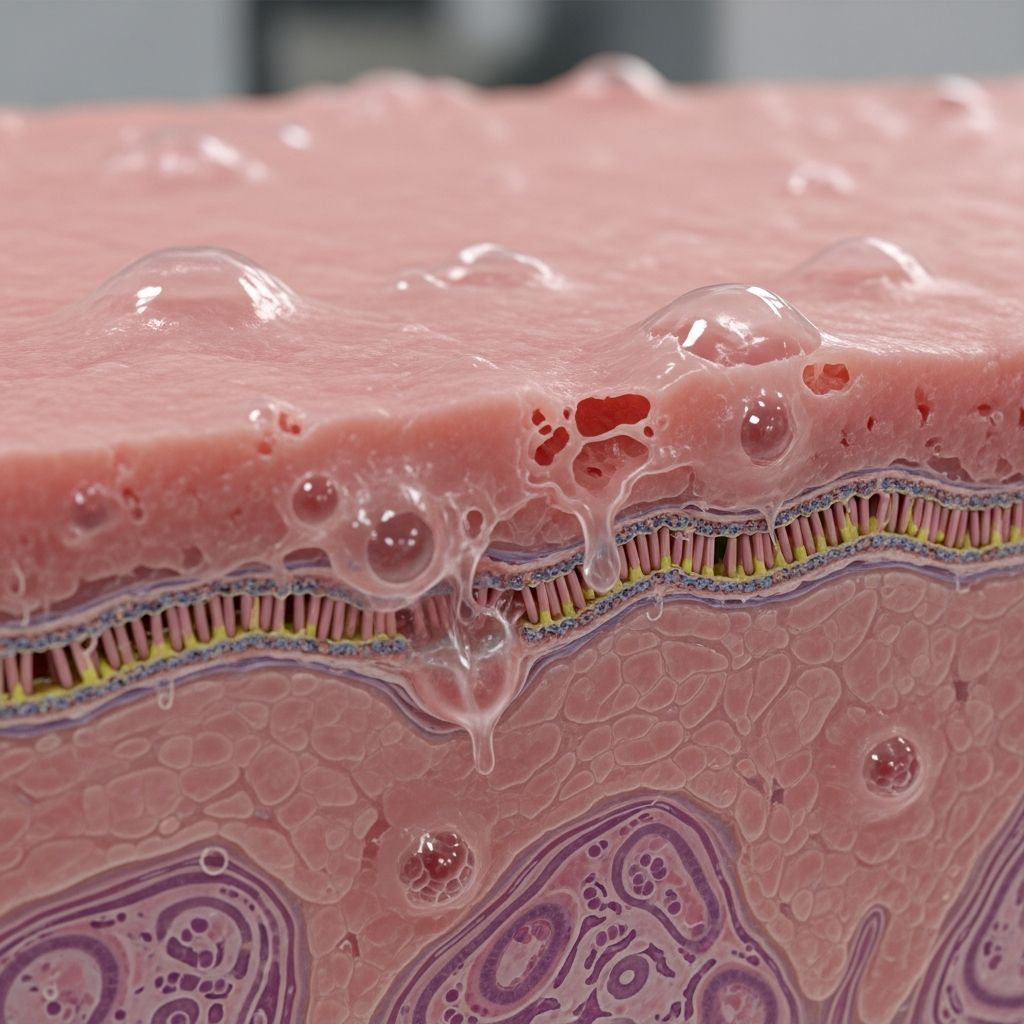
Junctional epidermolysis bullosa (JEB) is a rare, inherited skin disorder classified under the epidermolysis bullosa (EB) group of genodermatoses. It features extreme skin fragility due to mutations affecting proteins that anchor the epidermis to the dermis at the dermo-epidermal junction. Blisters form within the lamina lucida of the basement membrane zone upon minimal friction or trauma.
JEB accounts for approximately 5% of all EB cases and follows an autosomal recessive inheritance pattern. Symptoms manifest at birth, ranging from mild localised blistering to severe, life-threatening forms with widespread erosions, granulation tissue, and extracutaneous involvement.
Who gets junctional epidermolysis bullosa?
JEB affects individuals worldwide without ethnic or gender predilection. Incidence is estimated at 1 in 500,000 to 1 in 1,000,000 live births, though underdiagnosis may occur in milder cases. Consanguinity increases risk due to recessive genetics.
What causes junctional epidermolysis bullosa?
JEB arises from biallelic mutations in seven genes encoding proteins critical for hemidesmosome-anchoring filament complexes: LAMA3, LAMB3, LAMC2 (laminin-332 subunits), COL17A1 (collagen XVII), ITGA6, ITGB4 (α6β4 integrin), and rarely ITGA3. LAMB3 mutations cause ~70% of cases.
- Laminin-332 mutations disrupt anchoring filaments, preventing keratinocyte adhesion and migration.
- Collagen XVII defects weaken hemidesmosome stability.
- Integrin defects impair initial attachment at the lamina lucida.
Pathogenic variants lead to absent or dysfunctional proteins, causing cleavage within the lamina lucida on electron microscopy.
What are the clinical features of junctional epidermolysis bullosa?
Neonates present with widespread erosions, denuded skin, and blisters at birth sites (e.g., nail folds, mouth). Severity varies by subtype.
Generalised Severe JEB (Herlitz JEB)
Most severe form (LAMB3/LAMA3/LAMC2 mutations). Features profuse blistering, healing with vegetating granulation tissue (periorificial, neck, trunk). Hoarse cry from laryngeal involvement, failure to thrive, anaemia, sepsis risk. Mortality often <1 year from infection or respiratory failure.
Generalised Intermediate JEB (Non-Herlitz)
Milder (COL17A1, some laminin mutations). Blisters on limbs/extremities improve post-infancy. Nail dystrophy, enamel hypoplasia, alopecia, corneal erosions. Lifespan near-normal with care.
Other Subtypes
- JEB with Pyloric Atresia (ITGA6/ITGB4): Gastric outlet obstruction, urinary tract issues.
- Inversa JEB: Predominantly flexural erosions.
- Localised JEB: Feet/hands only.
- Laryngo-Onycho-Cutaneous (LOCS): Granulation in mouth/eyes, nail/eyelash loss (LAMA3).
- Late-Onset/Inversa: Adult presentation rare.
Extracutaneous Features
| System | Manifestations |
|---|---|
| Mucosal | Oral blisters, dental enamel defects, oesophageal strictures, urethral stenosis. |
| Ocular | Corneal erosions, symblepharon, blindness risk. |
| Respiratory | Hoarse cry, airway granulation, respiratory failure (severe JEB). |
| GI | Pyloric atresia (subtype), protein-losing enteropathy, malnutrition. |
| Renal | Obstructive uropathy, nephrotic syndrome (rare). |
Diagnosis of junctional epidermolysis bullosa
Clinical suspicion prompts biopsy from perilesional skin for:
- Transmission Electron Microscopy (TEM): Level of split in lamina lucida.
- Immunofluorescence Antigen Mapping (IFM): Reduced/absent staining for laminin-332, collagen XVII, integrins.
- Genetic Testing: Confirms mutations via next-generation sequencing.
Differential includes EB simplex, dystrophic EB, staphylococcal scalded skin syndrome.
Management of junctional epidermolysis bullosa
Multidisciplinary: dermatology, wound care, nutrition, ophthalmology, dentistry, psychology. No cure; supportive.
Related Stories



- Wound Care: Non-adherent dressings (e.g., Mepitel, silicone), topical antiseptics, pain control.
- Nutrition: High-calorie feeds (NG tube if needed), anaemia correction (iron, EPO).
- Infection Prevention: Prophylactic antibiotics, hygiene.
- Mucosal: Lubricants, dental monitoring.
- Surgery: Oesophageal dilation, corneal protection.
Emerging Therapies
- Bone marrow transplant (limited success in severe JEB).
- Cell therapy: Fibroblast injections restore laminin-332.
- Gene therapy: Exon skipping, nonsense suppression (preclinical).
- Topical therapies: Diacerein 3% ointment for granulation (EB recode trial).
What is the outlook for junctional epidermolysis bullosa?
Severe JEB: Poor prognosis, <1 year survival. Intermediate: Improved with age, normal lifespan possible but with chronic wounds, disability.
Prevention of complications
- Daily emollients, padding.
- Trauma avoidance: padded environments, careful handling.
- Vaccinations, infection surveillance.
- Multidisciplinary clinics (e.g., DEBRA centres).
Frequently Asked Questions (FAQs)
What genes cause JEB?
Primarily LAMA3, LAMB3, LAMC2 (70% LAMB3), COL17A1, ITGA6/ITGB4.
Is JEB curable?
No cure currently; supportive care and experimental therapies offer hope.
How is JEB inherited?
Autosomal recessive: Both parents carriers, 25% risk per pregnancy.
Can JEB improve with age?
Yes, in intermediate forms; blistering often lessens post-infancy.
What is the life expectancy?
Severe: Often <1 year; intermediate: near-normal with management.
References
- Junctional EB — DEBRA of America. 2023. https://www.debra.org/understanding-eb/junctional-eb
- Junctional epidermolysis bullosa — MedlinePlus Genetics (NIH). 2024-01-15. https://medlineplus.gov/genetics/condition/junctional-epidermolysis-bullosa/
- Epidermolysis Bullosa — StatPearls (NCBI Bookshelf). 2024-07-20. https://www.ncbi.nlm.nih.gov/books/NBK599531/
- Junctional Epidermolysis Bullosa: Allelic Heterogeneity — Frontiers in Medicine. 2018-12-11. https://www.frontiersin.org/journals/medicine/articles/10.3389/fmed.2018.00363/full
- Intermediate junctional epidermolysis bullosa — Great Ormond Street Hospital. 2023. https://www.gosh.nhs.uk/conditions-and-treatments/conditions-we-treat/intermediate-junctional-epidermolysis-bullosa/
Similar Articles








Read full bio of medha deb