Juvenile Dermatomyositis: What Parents Need To Know
Rare autoimmune disease causing muscle weakness and distinctive skin rashes in children, with insights into causes, symptoms, and management.
Juvenile dermatomyositis (JDM) is a rare
autoimmune disease
primarily affecting children, characterized by inflammation of the skin and muscles, leading to distinctive rashes and proximal muscle weakness. It involves small blood vessel inflammation (vasculopathy) in muscles and skin, distinguishing it from adult dermatomyositis.What is Juvenile Dermatomyositis?
JDM is the most common idiopathic inflammatory myopathy in children, with an incidence of approximately 2-4 cases per million children annually. It typically onset between ages 5 and 10, more frequently in girls. The condition arises when the immune system mistakenly attacks healthy tissues, causing
myositis
(muscle inflammation) anddermatitis
(skin inflammation).Unlike viral myositis, JDM is chronic and systemic, potentially involving joints, lungs, gastrointestinal tract, and heart. Early diagnosis and aggressive treatment can lead to remission in most cases, though some experience chronic symptoms or flares.
Who gets Juvenile Dermatomyositis (JDM)?
JDM affects children under 18, peaking at 7 years old. It is twice as common in females. Genetic predisposition plays a role, with certain HLA gene variants increasing susceptibility. Environmental triggers like UV light exposure, infections (e.g., parvovirus B19), or seasonal factors may initiate disease in genetically prone individuals.
- Age: Primarily 5-10 years, but can occur in infants or adolescents.
- Gender: Female predominance (2:1 ratio).
- Risk factors: Family history of autoimmune diseases, higher UV exposure latitudes.
Clinical Features
Skin Lesions
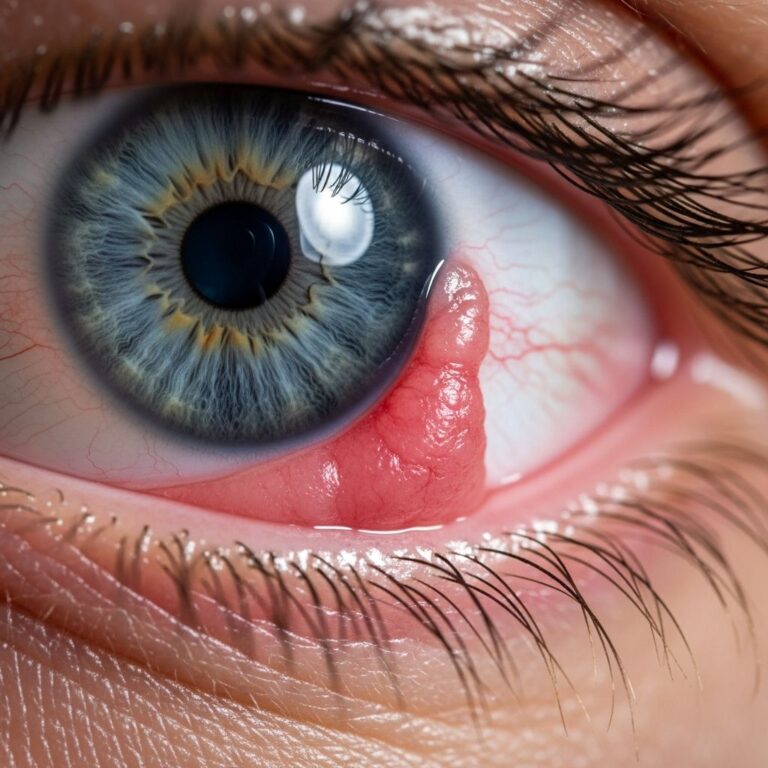
The hallmark of JDM is a photosensitive
rash
, often preceding muscle symptoms. Key features include:- Heliotrope rash: Violaceous (purple-red) erythema on eyelids, often with periorbital edema.
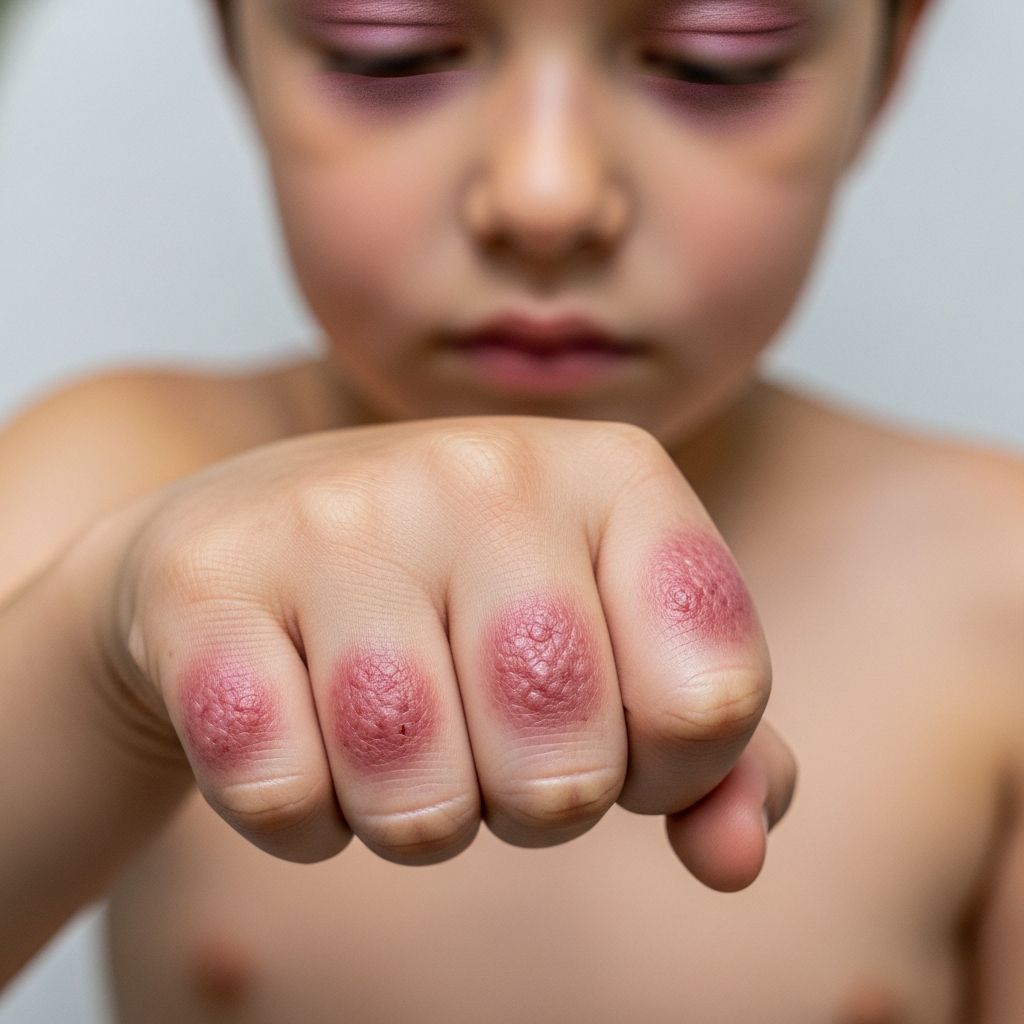
- Gottron’s papules: Erythematous, scaly plaques over knuckles (metacarpophalangeal and interphalangeal joints), elbows, knees.
- Malar erythema, shawl sign (upper chest/shoulders), and V-sign (anterior chest).
- Nailfold changes: Telangiectasias, cuticular overgrowth, loss of end-row capillaries indicating vasculopathy.
Rashes are persistent, itch, and worsen with sun exposure. Scalp inflammation may cause alopecia.
Muscle Involvement
Symmetrical
proximal muscle weakness
affects hip girdle (difficulty rising from chair/floor) and shoulder girdle (trouble lifting arms). Pain and tenderness occur in 25-50% of cases. Neck flexors and pharyngeal muscles may weaken, causing dysphagia.Systemic Features
- Constitutional: Fever, fatigue, weight loss, irritability.
- Joints: Arthralgia/arthritis in 70%, typically non-erosive.
- Calcinosis: Subcutaneous calcium deposits, more common in anti-NXP2 positive cases, associated with delayed treatment.
- Gastrointestinal: Dysphagia, ulcers from vasculopathy.
- Pulmonary: Interstitial lung disease in 10-30%, especially anti-MDA5 positive.
- Cardiac: Rare myocarditis.
Complications
Untreated JDM leads to muscle atrophy, contractures, scoliosis, and lipodystrophy. Calcinosis affects 20-30%, causing pain and infection risk. Osteoporosis from steroids and inflammation reduces bone density. Chronic rash may cause scarring alopecia. Rarely, severe vasculopathy leads to ulceration or perforation.
| Complication | Frequency | Risk Factors |
|---|---|---|
| Calcinosis | 20-30% | Young age, anti-NXP2, delayed Rx |
| Lipodystrophy | 10-20% | Prolonged disease |
| ILD | 10-30% | Anti-MDA5 |
| Osteoporosis | Common | Steroids, inactivity |
Diagnosis
Diagnosis uses Bohan and Peter criteria: cutaneous findings plus 3 of 4 (proximal weakness, elevated muscle enzymes, myopathic EMG, biopsy). Modern approach incorporates myositis-specific autoantibodies (MSAs):
- Anti-TIF1γ: Cutaneous predominance, cancer risk low in kids.
- Anti-NXP2: Calcinosis, younger age.
- Anti-MDA5: Mucocutaneous ulcers, ILD.
- Anti-MJ: Severe disease.
Investigations:
- Bloods: Elevated CK (normal in 10-20%), LDH, aldolase, AST/ALT; ANA positive 60-80%; ESR/CRP.
- MRI: Muscle edema.
- EMG: Myopathic changes.
- Muscle biopsy: Perifascicular atrophy, inflammation (gold standard but less used now).
- Nailfold capillaroscopy: Reduced capillaries.
- PFTs/ECHO for complications.
Treatment
Related Stories



No cure; goal is remission via immunosuppression. Multidisciplinary: rheumatology, dermatology, PT/OT.
First-line
- Corticosteroids: High-dose IV methylprednisolone (30 mg/kg/day x 3 days), then oral prednisone 1-2 mg/kg/day, taper over 2 years.
Second-line (within 1 month if severe)
- Methotrexate (15-25 mg/m²/week).
- Cyclosporine or azathioprine for refractory cases.
Other
- IVIG for resistant rash/muscle.
- Hydroxychloroquine for skin.
- Biologics: Rituximab, abatacept for refractory.
Supportive: Sun protection (UVA/UVB sunscreen, clothing), PT to prevent atrophy, calcium/vit D for bones, gastrostomy if dysphagia.
Prognosis and Disease Course
With treatment, 60-80% achieve remission in 2-3 years; 20-30% monocyclic, others polycyclic/chronic. Mortality <5% (from ILD, perforation). Poor prognostic factors: delayed Rx, profound weakness, calcinosis, MSA positivity. Long-term: monitor growth, bone health, fertility post-chemo.
Frequently Asked Questions (FAQs)
Is juvenile dermatomyositis curable?
No, but most children achieve remission with early aggressive treatment; some have chronic disease requiring long-term medication.
What causes the rash in JDM?
Vasculopathy leads to interface dermatitis; photosensitive, with Gottron papules and heliotrope rash as hallmarks.
Can JDM be fatal?
Rarely (<5%); mainly from respiratory failure or GI perforation if untreated.
How is JDM diagnosed?
Clinical rash + weakness, supported by enzymes, MRI, autoantibodies; biopsy if needed.
What diet helps with JDM?
Anti-inflammatory (Mediterranean), calcium-rich for bones; no specific diet cures it.
References
- Juvenile Dermatomyositis — Children’s Hospital of Philadelphia. 2023. https://www.chop.edu/conditions-diseases/juvenile-dermatomyositis
- Juvenile Dermatomyositis: New Clues to Diagnosis and Therapy — National Institutes of Health (PMC). 2021-07-28. https://pmc.ncbi.nlm.nih.gov/articles/PMC8336914/
- Juvenile Dermatomyositis (JDM) — Great Ormond Street Hospital. 2024. https://www.gosh.nhs.uk/conditions-and-treatments/conditions-we-treat/juvenile-dermatomyositis-jdm/
- Juvenile Dermatomyositis — CoxHealth. 2023. https://www.coxhealth.com/condition/juvenile-dermatomyositis/
- What is Juvenile Myositis? — Cure JM Foundation. 2024. https://www.curejm.org/what-is-juvenile-myositis/
- Juvenile Dermatomyositis (JDM) — Cincinnati Children’s Hospital. 2024. https://www.cincinnatichildrens.org/health/j/juvenile-dermatomyositis
- Juvenile Dermatomyositis — NCBI StatPearls. 2023-04-24. https://www.ncbi.nlm.nih.gov/books/NBK534236/
Similar Articles








Read full bio of medha deb