Juvenile Idiopathic Arthritis: Comprehensive Guide For Parents
Comprehensive guide to JIA: symptoms, causes, diagnosis, treatment, and management for children.
Author: Dermatology and Rheumatology Expert
Revised: January 2026
What is juvenile idiopathic arthritis?
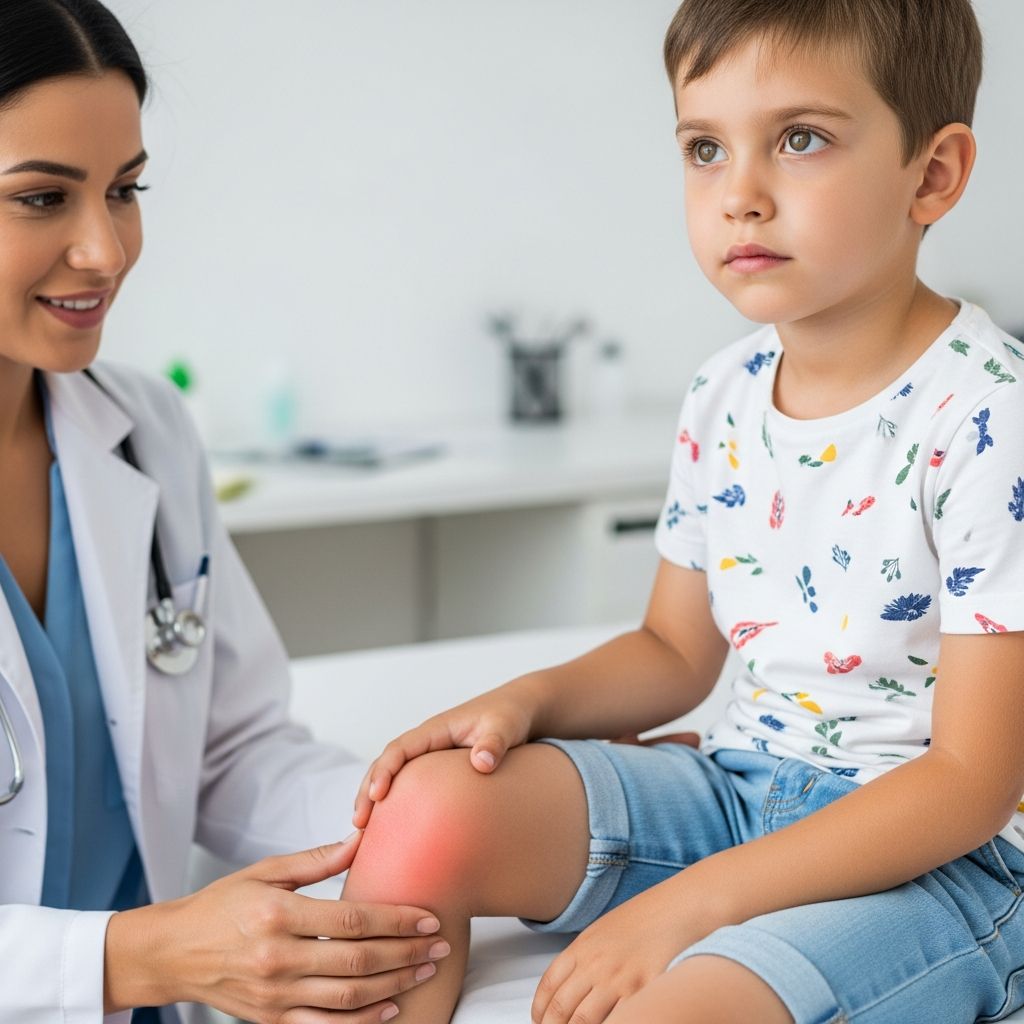
Juvenile idiopathic arthritis (JIA) represents a heterogeneous group of chronic arthritis disorders affecting children under 16 years of age, characterized by persistent joint inflammation without a known cause. It is the most common form of arthritis in children and teens, encompassing various subtypes based on the number of joints involved, systemic features, and clinical patterns. Unlike adult rheumatoid arthritis, JIA often allows for longer periods before permanent joint damage occurs, and many children may outgrow the condition.
The term “idiopathic” indicates the unknown etiology, though it involves autoimmune dysregulation where the immune system attacks joint synovium, leading to swelling, pain, and potential erosion of cartilage and bone if untreated. JIA affects children across all races and ethnicities equally, with onset typically before age 16.
Who gets juvenile idiopathic arthritis?
JIA impacts approximately 1 in 1,000 children worldwide, with girls more commonly affected in certain subtypes like oligoarticular JIA. Peak incidence occurs between ages 1-3 and 9-12 years. Risk factors include family history of autoimmune diseases, though genetics and environmental triggers play roles not fully understood.
- Oligoarticular JIA: Few joints (≤4), common in young girls.
- Polyarticular JIA: ≥5 joints, affects both genders.
- Systemic JIA (s-JIA): Arthritis with fever, rash; equal gender distribution.
- Enthesitis-related arthritis: Often in boys, involves tendon insertions.
- Psoriatic arthritis: Linked to psoriasis.
- Undifferentiated: Doesn’t fit other categories.
Classification follows International League of Associations for Rheumatology (ILAR) criteria, based on joint involvement and extra-articular features.
What causes juvenile idiopathic arthritis?
The precise cause remains unknown, but JIA arises from a combination of genetic predisposition and environmental factors triggering an aberrant immune response. In s-JIA, macrophage activation leads to cytokine storms involving IL-1, IL-6, and TNF-alpha. No single infectious or traumatic trigger is identified, distinguishing it from reactive arthritis.
What are the clinical features of juvenile idiopathic arthritis?
Symptoms vary by subtype but commonly include joint pain, swelling, warmth, stiffness (worse in mornings), limping, and reduced activity. Children may refuse to use affected limbs or struggle with fine motor tasks.
Systemic JIA: Daily spiking fevers (>39°C), evanescent salmon-colored rash, lymphadenopathy, hepatosplenomegaly, serositis (e.g., pericarditis). Arthritis may be minimal initially but progresses.
Oligoarticular: Knees, ankles affected; high uveitis risk requiring eye screening.
Stiffness improves with activity, unlike worsening with rest in some cases. Flares alternate with remissions.
How is juvenile idiopathic arthritis diagnosed?
Diagnosis is clinical, requiring arthritis in ≥1 joint lasting ≥6 weeks, exclusion of other causes (e.g., infection, malignancy), and age <16 at onset. No single lab test is diagnostic; elevated ESR/CRP, anemia, thrombocytosis support inflammation.
- History and exam: Joint count, fever patterns, rash.
- Imaging: Ultrasound/MRI for synovitis; X-rays for damage.
- Labs: RF negative in most; ANA positive in oligoarticular (uveitis risk).
- Eye exam: Slit-lamp for uveitis.
Related Stories



For s-JIA, ILAR criteria mandate fever ≥2 weeks with daily spikes ≥3 days, plus rash or organ involvement.
What is the treatment for juvenile idiopathic arthritis?
Treatment goals include controlling inflammation, relieving pain, preventing damage, preserving function, promoting growth, achieving remission, and enabling normal activities. A multimodal approach combines medications, therapy, and lifestyle.
Medications
NSAIDs: First-line for pain/inflammation (e.g., ibuprofen).
DMARDs: Methotrexate (oral/subcutaneous) to suppress immunity, prevent progression.
Biologics: TNF inhibitors (e.g., etanercept), IL-1/IL-6 blockers (e.g., anakinra, tocilizumab) for refractory cases; often combined with DMARDs.
Corticosteroids: Intra-articular injections for quick relief; systemic for s-JIA flares, tapered quickly due to side effects.
| Subtype | First-line Therapy | Escalation |
|---|---|---|
| Oligoarticular | NSAIDs + intra-articular steroids | MTX or biologics |
| Polyarticular | MTX ± biologics | Switch biologics |
| Systemic | NSAIDs/steroids, then IL-1/IL-6 inhibitors | Escalate biologics |
Physical and Occupational Therapy
Essential for pain relief, maintaining range of motion, strengthening muscles, and preventing deformities. Swimming recommended for low-impact exercise. Balance rest during flares with activity in remission.
Lifestyle and Support
Balanced diet, regular exercise, psychosocial support; monitor growth, eye health.
Complications of juvenile idiopathic arthritis
Untreated JIA risks joint destruction, contractures, leg-length discrepancies, osteoporosis. Uveitis (silent, blinding) in 20% oligoarticular cases. S-JIA: Macrophage activation syndrome (MAS, 20% mortality). Growth impairment, amyloidosis rare with modern therapy.
Prognosis for juvenile idiopathic arthritis
With early aggressive treatment, 50-80% achieve remission; s-JIA variable (40% monocyclic). Poor prognosticators: hip involvement, erosions, systemic symptoms needing steroids. Biologics improve long-term outcomes.
Frequently Asked Questions
Q: Can children with JIA lead normal lives?
A: Yes, with treatment, most engage in school, sports, and social activities.
Q: Is JIA curable?
A: Not always curative, but remission is achievable in many; some outgrow it.
Q: How often are eye exams needed?
A: Every 3-6 months for high-risk subtypes like oligoarticular.
Q: What exercise is best?
A: Swimming, low-impact activities to build strength without joint stress.
Q: Are biologics safe for kids?
A: Yes, when monitored; side effects managed by specialists.
References
- Juvenile Idiopathic Arthritis (JIA): Diagnosis, Treatment, and Steps to Take — NIAMS, NIH. 2023. https://www.niams.nih.gov/health-topics/juvenile-arthritis/diagnosis-treatment-and-steps-to-take
- Juvenile Idiopathic Arthritis: A-to-Z Guide from Diagnosis to Treatment — Dr. Greene. 2022. https://www.drgreene.com/articles/juvenile-idiopathic-arthritis
- Juvenile Idiopathic Arthritis Study Guide — Pediatric Orthopaedic Society of North America (POSNA). 2023. https://posna.org/physician-education/study-guide/juvenile-idiopathic-arthritis
- Physical Therapy Guide to Juvenile Idiopathic Arthritis — ChoosePT, American Physical Therapy Association. 2024. https://www.choosept.com/guide/physical-therapy-guide-juvenile-idiopathic-arthritis
- Juvenile Arthritis — American College of Rheumatology. 2025. https://rheumatology.org/patients/juvenile-arthritis
- JIA Treatment Guidelines — Arthritis Foundation. 2024. https://www.arthritis.org/health-wellness/treatment/treatment-plan/ja-medical-decisions/jia-guidelines
Similar Articles








Read full bio of medha deb