Juvenile Macular Degeneration: Symptoms, Diagnosis, Treatments
Understanding the genetic eye disorders affecting young vision, from causes to management strategies for lifelong eye care.
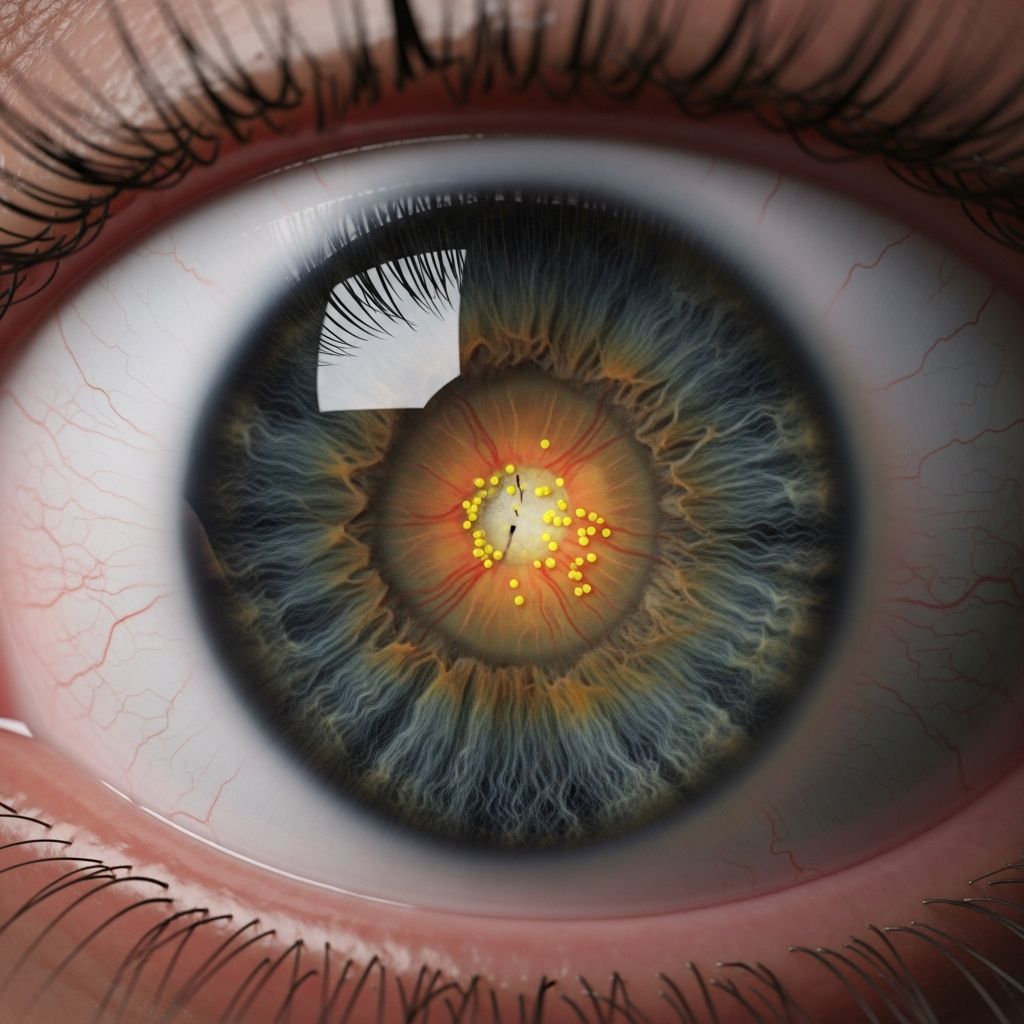
Juvenile macular degeneration refers to a group of rare, genetically inherited eye disorders that primarily affect the macula, the central part of the retina responsible for sharp, detailed vision. Unlike the more common age-related form, these conditions emerge in childhood, adolescence, or early adulthood, leading to gradual central vision loss while often sparing peripheral sight. This progressive deterioration can profoundly impact daily activities such as reading, recognizing faces, and navigating bright environments, necessitating early detection and specialized support.
The Macula’s Critical Role in Vision
The macula, a small area at the retina’s center, contains a high concentration of cone photoreceptor cells essential for color perception, fine detail, and central vision. Rod cells, abundant in the periphery, handle low-light and side vision. When juvenile macular degeneration disrupts the macula, individuals experience blurred or distorted central views, wavy lines, photophobia (light sensitivity), and sometimes night blindness, though peripheral vision typically remains intact.
Understanding this anatomy is key: the macula processes photopic (bright light) vision for tasks like driving or threading a needle. Damage here creates a ‘blind spot’ in the center of sight, making schoolwork, sports, or art challenging for affected youth.
Primary Types of Juvenile Macular Degeneration
Several distinct forms exist, each with unique genetic mechanisms and progression patterns. The most prevalent include Stargardt disease, Best disease, and juvenile retinoschisis.
Stargardt Disease: The Most Common Variant
Stargardt disease, accounting for the majority of cases, stems from mutations in the ABCA4 gene, following an autosomal recessive inheritance pattern. Both parents must carry a mutated gene copy for a child to develop it, with a 25% risk per pregnancy if both are carriers. Lipofuscin, a toxic byproduct, accumulates in retinal pigment epithelial cells, damaging the macula over time.
Symptoms often begin between ages 10 and 20, starting subtly with reading difficulties or face recognition issues, progressing to central scotomas (dark spots). Vision may stabilize at 20/100 or worse, but peripheral sight persists. Color vision fades in advanced stages, and rapid light shifts can be problematic.
Best Disease: The Egg Yolk Maculopathy
Best vitelliform macular dystrophy arises from mutations in the BEST1 gene, inherited autosomal dominantly—meaning a 50% chance of transmission from an affected parent. A characteristic yellow, egg-yolk-like lesion forms under the macula due to lipofuscin buildup, which later scrambles and atrophies.
Onset occurs in childhood or teens, with initial good vision giving way to distortion and central blur. Unlike Stargardt, it may affect one eye more, and progression is variable, sometimes allowing functional sight into adulthood.
Juvenile Retinoschisis: Layered Retina Separation
This X-linked condition predominantly impacts males, caused by RS1 gene mutations. The retina splits into inner and outer layers, forming schisis cavities that may fill with cysts, fluid, or blood vessels, risking hemorrhage or detachment.
Related Stories



Vision loss starts around ages 10-20, stabilizing until mid-life, reaching 20/60 to 20/120 centrally. Associated issues include strabismus (misaligned eyes), nystagmus (involuntary movements), and later peripheral vision decline in half of cases. Females are typically carriers without symptoms.
Genetic Foundations and Inheritance Patterns
All juvenile macular degenerations are hereditary, differing from age-related macular degeneration tied to environmental factors. Autosomal recessive (Stargardt) requires two mutated alleles; autosomal dominant (Best) needs one; X-linked (retinoschisis) affects males via maternal inheritance.
Genetic counseling is vital for families, as carriers may unknowingly pass risks. Prenatal testing or carrier screening can inform decisions, though ethical considerations apply.
Recognizing Early Warning Signs
- Blurry or distorted central vision, with straight lines appearing wavy.
- Difficulty with fine tasks like reading small print or recognizing faces.
- Dark or missing spots in the visual center.
- Photophobia or glare discomfort.
- Color desaturation or night vision challenges in later stages.
- Nystagmus or strabismus in retinoschisis.
These signs may be asymmetric between eyes and progress slowly, often delaying diagnosis. Parents and educators should monitor school performance dips or activity avoidance.
Diagnostic Approaches
Diagnosis combines clinical exams and advanced imaging. Key methods include:
| Test | Purpose | Findings in JMD |
|---|---|---|
| Visual Acuity Test | Measures sharpness | Central decline, e.g., 20/50 to 20/200 |
| Amsler Grid | Detects distortion | Wavy or missing grid lines |
| Fundus Photography | Images retina | Yellow flecks (Stargardt), yolk lesion (Best), schisis (retinoschisis) |
| Optical Coherence Tomography (OCT) | Cross-sectional retina scan | Macular thinning, cysts, or fluid |
| Electroretinography (ERG) | Assesses retinal function | Reduced cone responses |
| Fundus Autofluorescence | Detects lipofuscin | Dark atrophy zones (Stargardt) |
| Genetic Testing | Confirms mutations | ABCA4, BEST1, RS1 variants |
Early diagnosis via comprehensive pediatric ophthalmology exams is crucial.
Current Management and Treatment Landscape
No cures exist, as these are genetic; focus is on slowing progression, preserving vision, and enhancing quality of life. Strategies include:
- AREDS2 Supplements: Limited evidence for high-dose antioxidants/vitamins in Stargardt, but not standard.
- Light Protection: UV-blocking sunglasses reduce photostress.
- Lifestyle: Avoid smoking, manage diet for retinal health.
- Low Vision Rehabilitation: Magnifiers, screen readers, adaptive tech for school/work.
- Gene Therapy Trials: Emerging for Stargardt (e.g., ABCA4 delivery), showing promise in slowing lipofuscin buildup.
Multidisciplinary care involving ophthalmologists, low vision specialists, therapists, and counselors supports independence.
Impact on Daily Life and Psychosocial Support
Children face academic hurdles, social isolation, and emotional strain. Tailored education plans (IEPs), braille training, or mobility aids help. Family counseling addresses grief and adjustment. Teens may need vocational guidance for future careers avoiding fine vision demands.
Research Horizons and Future Therapies
Ongoing trials explore CRISPR gene editing, stem cell implants, and pharmacologic RPE support. Retina International and similar organizations track advancements, offering hope for disease-modifying treatments.
Frequently Asked Questions (FAQs)
Is juvenile macular degeneration preventable?
No, as it’s genetic, but early screening in at-risk families aids management.
Can children with JMD lead normal lives?
Yes, with adaptations; many maintain independence using aids and skills training.
How does it differ from adult macular degeneration?
JMD is hereditary and youth-onset; adult is age/environment-related.
Is vision loss always severe?
Varies; some retain usable vision lifelong, others progress to legal blindness.
Should family members get tested?
Genetic counseling recommended for relatives of diagnosed individuals.
References
- Juvenile Macular Degeneration – Low Vision Of Arizona — Low Vision of Arizona. 2023. https://www.lowvisionarizona.com/low-vision-optometrist/low-vision-eye-diseases/juvenile-macular-degeneration/
- What is Juvenile Macular Degeneration? — Retina International. 2024. https://retina-international.org/retinal-health-2/rare-conditions/what-is-juvenile-macular-degeneration/
- Juvenile Macular Degeneration & Low Vision — Eye Doctor Wendy. 2023. https://www.eyedoctorwendy.com/eye-care-services/low-vision-optometrist/juvenile-macular-degeneration-los-angeles-low-vision/
- Juvenile Macular Degeneration: Low Vision in Children — Nebraska Low Vision Doctor. 2024. https://nebraskalowvisiondoctor.com/juvenile-macular-degeneration-a-key-cause-of-low-vision-in-children/
- Juvenile Macular Degeneration. What is it? What causes it? — ICR Cat. 2023. https://icrcat.com/en/eye-conditions/juvenile-macular-degeneration-icr/
- Juvenile Macular Degeneration: Stargardt’s and Best Disease — WebMD. 2024-02-23. https://www.webmd.com/eye-health/macular-degeneration/juvenile-macular-degeneration-stargardts
- Juvenile Macular Degeneration Care — IALVS. 2023. https://ialvs.com/ways-we-can-help/what-is-a-low-vision-exam/low-vision-eye-diseases/juvenile-macular-degeneration/
Similar Articles








Read full bio of medha deb