Kaposi Sarcoma: Types, Causes, Symptoms, and Treatment
Comprehensive guide to understanding Kaposi sarcoma, its causes, symptoms, diagnosis, and treatment options.
What is Kaposi Sarcoma?
Kaposi sarcoma (KS) is a type of cancer that develops from the cells lining blood vessels and lymph vessels. This disease causes abnormal cell growth that typically manifests as visible lesions or tumors on the skin, though it can also affect internal organs and mucosal tissues. The condition represents a significant health concern, particularly in individuals with compromised immune systems, including those living with HIV/AIDS and transplant recipients who require long-term immunosuppressive therapy.
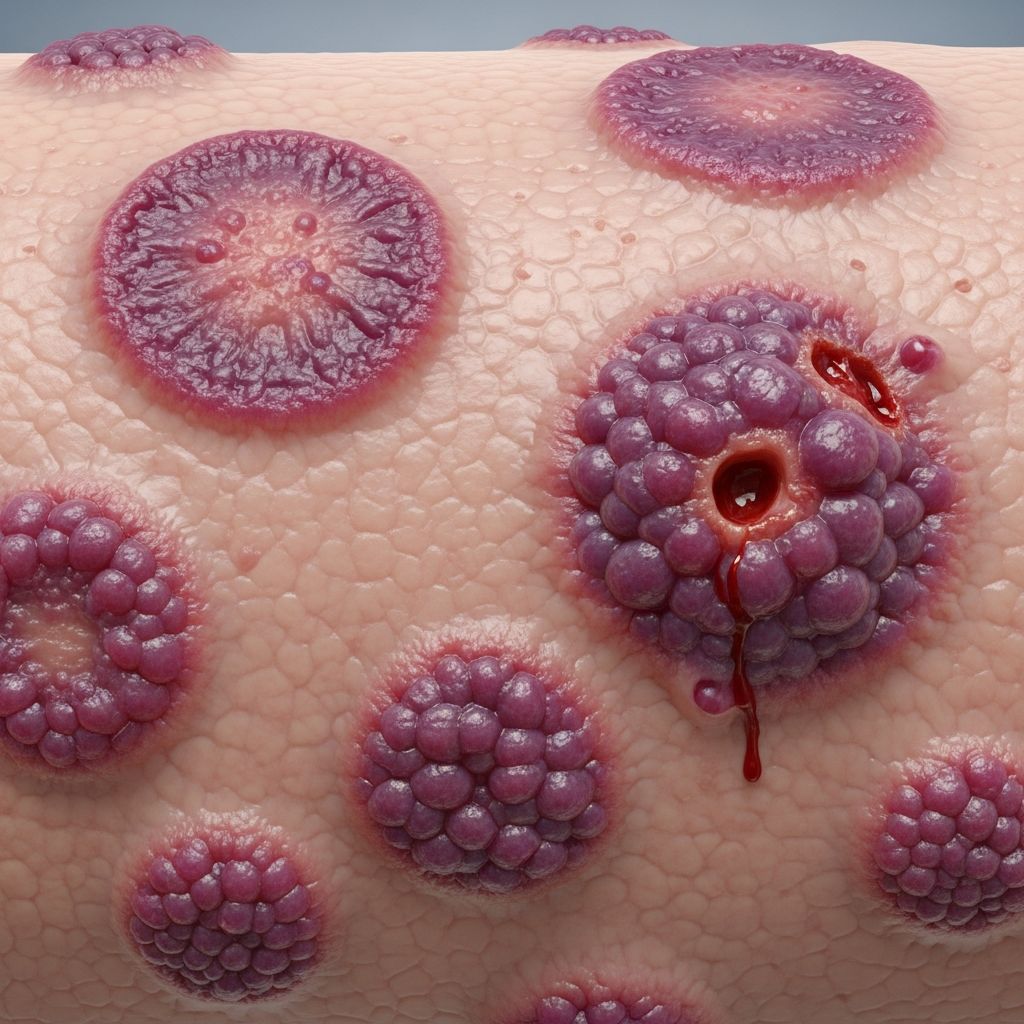
The disease is characterized by the development of multiple lesions that can range from small, flat spots to raised bumps or nodules. These lesions often appear in shades of purple, brown, or red and can gradually spread across different body areas. Understanding this condition is essential for early detection and appropriate management.
Types of Kaposi Sarcoma
Kaposi sarcoma presents in several distinct clinical forms, each with unique characteristics, progression patterns, and prognostic implications. Healthcare providers classify KS based on the patient’s immune status and the context in which the disease develops.
Classic Kaposi Sarcoma
Classic KS typically affects older individuals, particularly those of Mediterranean, Eastern European, or Jewish descent. This form generally runs a relatively benign and indolent course, often progressing slowly over 10 to 15 years or more. The disease characteristically begins with slow enlargement of original tumors and gradual development of additional lesions, usually on the lower extremities. Patients with classic KS frequently experience venous stasis and lymphedema of the involved lower extremity as complications. In long-standing cases, systemic lesions may develop along the gastrointestinal tract, in lymph nodes, and in other organs. Interestingly, visceral lesions are generally asymptomatic and often discovered only at autopsy, though gastrointestinal bleeding can occur clinically. Approximately 33% of patients with classic KS develop a second primary malignancy, most commonly non-Hodgkin lymphoma.
Endemic Kaposi Sarcoma
Endemic KS, also called African KS, typically affects younger individuals under 40 years of age and can advance rapidly. This form is more aggressive than classic KS and represents a significant health burden in certain geographic regions, particularly in sub-Saharan Africa.
AIDS-Associated Kaposi Sarcoma
AIDS-associated KS emerged as a major clinical problem during the early stages of the HIV/AIDS epidemic. This form frequently involves multiple organ systems and can progress rapidly in severely immunocompromised patients. The disease often begins with mucocutaneous lesions affecting the skin, oral mucosa, and lymph nodes, progressing to more numerous lesions and generalized skin disease involving visceral organs such as the gastrointestinal tract, lungs, liver, and spleen. Most patients with HIV disease presenting with mucocutaneous KS lesions feel relatively healthy and are typically free of systemic symptoms, particularly when compared with HIV patients who develop opportunistic infections. However, the advent of antiretroviral therapy (ART) has dramatically reduced KS incidence, with anti-HIV drugs lowering the rate of KS cases by 80%-90% since the early 1980s.
Transplant-Related Kaposi Sarcoma
Transplant-related KS, also called iatrogenic KS, occurs in patients who are therapeutically immunosuppressed following organ transplantation. Solid-organ transplant recipients are remarkably more likely to develop KS than the general population—approximately 200 times higher risk. Risk factors include male sex, older age, higher levels of immune suppression, and living in human herpesvirus 8 (HHV-8)-endemic areas. This form typically responds well to reduction or modification of immunosuppressive therapy.
Causes and Risk Factors
Kaposi sarcoma is caused by infection with human herpesvirus 8 (HHV-8), also known as Kaposi sarcoma-associated herpesvirus (KSHV). This gamma herpesvirus is the etiologic agent of all clinical variants of KS and is also responsible for multicentric Castleman disease and primary effusion lymphoma.
Related Stories



Virus Transmission
HHV-8 spreads primarily through saliva, including during sexual contact or in interactions between caregivers and children. The virus can remain latent in individuals with healthy immune systems without causing any problems or symptoms. However, in people with weakened immune systems, HHV-8 can trigger the development of Kaposi sarcoma.
Immunocompromised Populations
The primary risk factor for developing KS is immune system impairment. Several populations face elevated risk, including individuals with advanced HIV disease (particularly those with CD4 counts below 200 cells/mm³), organ transplant recipients requiring chronic immunosuppressive therapy, individuals with other conditions causing immunosuppression, and elderly persons whose immune function naturally declines with age.
Signs and Symptoms
Kaposi sarcoma presents with various clinical manifestations depending on the extent and location of disease involvement. Recognition of these symptoms is crucial for timely diagnosis and treatment initiation.
Skin Lesions
The most common presentation involves lesions on the skin. These typically appear as:
- Flat spots or patches on the skin
- Raised bumps or nodules
- Purple, red, or brown discoloration
- Lesions that gradually spread and increase in number
- New spots that may appear weekly in some patients
- Lesions that may merge together to form larger areas
Mucosal Involvement
KS lesions can form inside the mouth and throat, potentially causing difficulty with eating or swallowing. Lesions may also appear on the eyes and under the eyelids, causing visual discomfort or obstruction.
Lymphatic Complications
When lesions block the flow of lymphatic fluid around the body, they can lead to severe swelling in the arms, legs, face, or scrotum. This lymphedema can become a significant source of morbidity and physical disability.
Respiratory Involvement
Lesions inside the lungs may cause serious complications including persistent coughing and shortness of breath. In rare cases, pulmonary KS can cause airway obstruction, representing a medical emergency.
Digestive Tract Disease
Lesions in the stomach and intestines can lead to bleeding and blockages, resulting in:
- Upset stomach and abdominal pain
- Vomiting
- Diarrhea
- Bloody or black stool
- Low red blood cell counts (anemia)
Diagnosis and Evaluation
Diagnosing Kaposi sarcoma typically involves clinical examination and tissue confirmation. Healthcare providers assess the extent of disease involvement to guide treatment planning and prognostic assessment.
Clinical Assessment
Diagnosis often begins with visual inspection of characteristic lesions. A thorough physical examination evaluates the distribution and extent of mucocutaneous disease. Healthcare providers assess for systemic involvement by examining lymph nodes, checking for respiratory symptoms, and evaluating for gastrointestinal involvement.
Tissue Biopsy
Definitive diagnosis requires histopathologic confirmation through biopsy. The biopsy reveals a multicentric angioproliferative tumor with spindle-shaped tumor cells, aberrant proliferation of blood vessels, and extravasated red blood cells. Immunohistochemical staining for HHV-8 can support the diagnosis.
Staging and Prognostic Assessment
For AIDS-associated KS, prognostic assessment considers three main variables: tumor burden (T), immune system status (I), and systemic illness (S). Multivariate analysis has demonstrated that immune system impairment is the most important single predictor of survival. Performance status, presence of opportunistic infections or oral thrush, and other HIV-related illnesses significantly impact prognosis.
Treatment Options
Treatment of Kaposi sarcoma varies based on the disease type, extent of involvement, immune status, and individual patient factors. Several therapeutic approaches can effectively control disease.
Local Therapies
For localized disease, several local treatment options are available:
- Intralesional chemotherapy injections directly into lesions
- Radiation therapy targeting specific lesions or areas
- Topical treatments applied directly to skin lesions
- Cryotherapy using extreme cold to destroy lesions
Systemic Chemotherapy
When KS has spread extensively or involves multiple organ systems, systemic chemotherapy is employed. Chemotherapy drugs used for KS include liposomal doxorubicin and paclitaxel, which circulate throughout the body to target cancer cells. These medications can effectively reduce tumor burden and improve symptoms related to extensive skin disease or visceral involvement.
Immunomodulatory and Biologic Therapy
Biologic therapy works by boosting the immune system to fight cancer. Interferon alfa (Intron A) may be prescribed if CD4 cell count exceeds 200 and the patient maintains a fairly healthy immune system. Agents that modulate the immune system, such as imide drugs and interferon alfa-2b, have demonstrated efficacy in both classic and AIDS-associated KS.
Immunotherapy
Immune checkpoint inhibitor therapy has been tested in classic KS with promising results. Pembrolizumab monotherapy represents a newer therapeutic approach showing potential in select patient populations.
Transplant-Related KS Management
Transplant-related Kaposi sarcoma is often effectively managed through reduction in immunosuppression alone, without requiring systemic chemotherapy. Transitioning immunosuppression therapy to an mTOR inhibitor such as sirolimus has demonstrated efficacy in small studies and can be considered as an alternative approach.
Antiretroviral Therapy
In AIDS-associated KS, antiretroviral therapy for HIV can treat KS, especially in early stages. Restoration of immune function through effective antiretroviral therapy often leads to KS regression without additional cancer-specific treatments.
Management of Complications
Kaposi sarcoma-associated immune reconstitution inflammatory syndrome (KS-IRIS) can occur when initiating antiretroviral therapy in severely immunocompromised patients. This complication typically presents with increased swelling and tenderness of lesions, new or worsening edema, and visceral or pulmonary involvement. Management generally includes continuing antiretroviral therapy while initiating systemic treatment such as liposomal doxorubicin or paclitaxel for KS. While evidence for using chemotherapy to prevent KS-IRIS is mixed, it can be considered on an individual basis. Glucocorticoids should be avoided due to the risk of dramatic worsening of KS. Thalidomide has also been used successfully for steroid-refractory IRIS.
Prognosis and Survival
Prognosis for Kaposi sarcoma has improved significantly with modern treatment approaches. Treatment can usually keep KS under control for many years, with lesions potentially shrinking and fading, though they may not completely resolve. Overall, approximately 75% of people with KS live at least 5 years after diagnosis. When cancer has not spread, approximately 81% of patients survive at least 5 years. In people whose cancer has spread to nearby areas, the 5-year survival rate is 65%, declining to 47% if cancer has spread to distant sites.
Frequently Asked Questions
Q: How is Kaposi sarcoma transmitted?
A: Kaposi sarcoma is caused by HHV-8 infection, which spreads primarily through saliva, including during sexual contact or between caregivers and children. The virus itself is not directly contagious in people with healthy immune systems, but infection can lead to KS development if immunity becomes compromised.
Q: Can people with healthy immune systems develop Kaposi sarcoma?
A: Rarely. While healthy individuals can carry HHV-8 without symptoms, Kaposi sarcoma develops almost exclusively in immunocompromised individuals, including those with HIV/AIDS, organ transplant recipients, and elderly persons with age-related immune decline.
Q: What is the difference between classic and AIDS-associated Kaposi sarcoma?
A: Classic KS typically progresses slowly over 10-15 years, primarily affecting older individuals and the lower extremities. AIDS-associated KS often involves multiple organ systems and progresses more rapidly in severely immunocompromised patients, though antiretroviral therapy has dramatically improved outcomes.
Q: Can Kaposi sarcoma be cured?
A: While Kaposi sarcoma cannot always be completely cured, it can be effectively controlled with appropriate treatment for many years. In transplant-related KS, disease often resolves with reduction of immunosuppressive therapy alone.
Q: What role does antiretroviral therapy play in treating AIDS-associated Kaposi sarcoma?
A: Antiretroviral therapy can treat AIDS-associated KS by restoring immune function. Anti-HIV drugs have reduced KS incidence by 80%-90% since the early 1980s, and many patients experience KS regression with immune reconstitution alone.
References
- Kaposi Sarcoma Treatment (PDQ®) — National Cancer Institute (NCI). 2024. https://www.cancer.gov/types/soft-tissue-sarcoma/hp/kaposi-treatment-pdq
- Kaposi’s Sarcoma – Symptoms and Causes — Mayo Clinic. 2024. https://www.mayoclinic.org/diseases-conditions/kaposis-sarcoma/symptoms-causes/syc-20577303
- Kaposi’s Sarcoma — Johns Hopkins HIV Guide. 2024. https://www.hopkinsguides.com/hopkins/view/Johns_Hopkins_HIV_Guide/545113/all/Kaposi’s_sarcoma
- Kaposi’s Sarcoma (KS): Types, Causes, Symptoms, Treatment — WebMD. 2024. https://www.webmd.com/hiv-aids/aids-hiv-opportunistic-infections-kaposis-sarcoma
- Kaposi Sarcoma – About the Disease — National Organization for Rare Disorders (GARD). 2024. https://rarediseases.info.nih.gov
Similar Articles








Read full bio of Sneha Tete