Kawasaki Disease Essentials: Symptoms, Diagnosis & Treatment
Understanding Kawasaki disease: symptoms, diagnosis, treatment, and long-term care for this rare childhood illness affecting blood vessels.
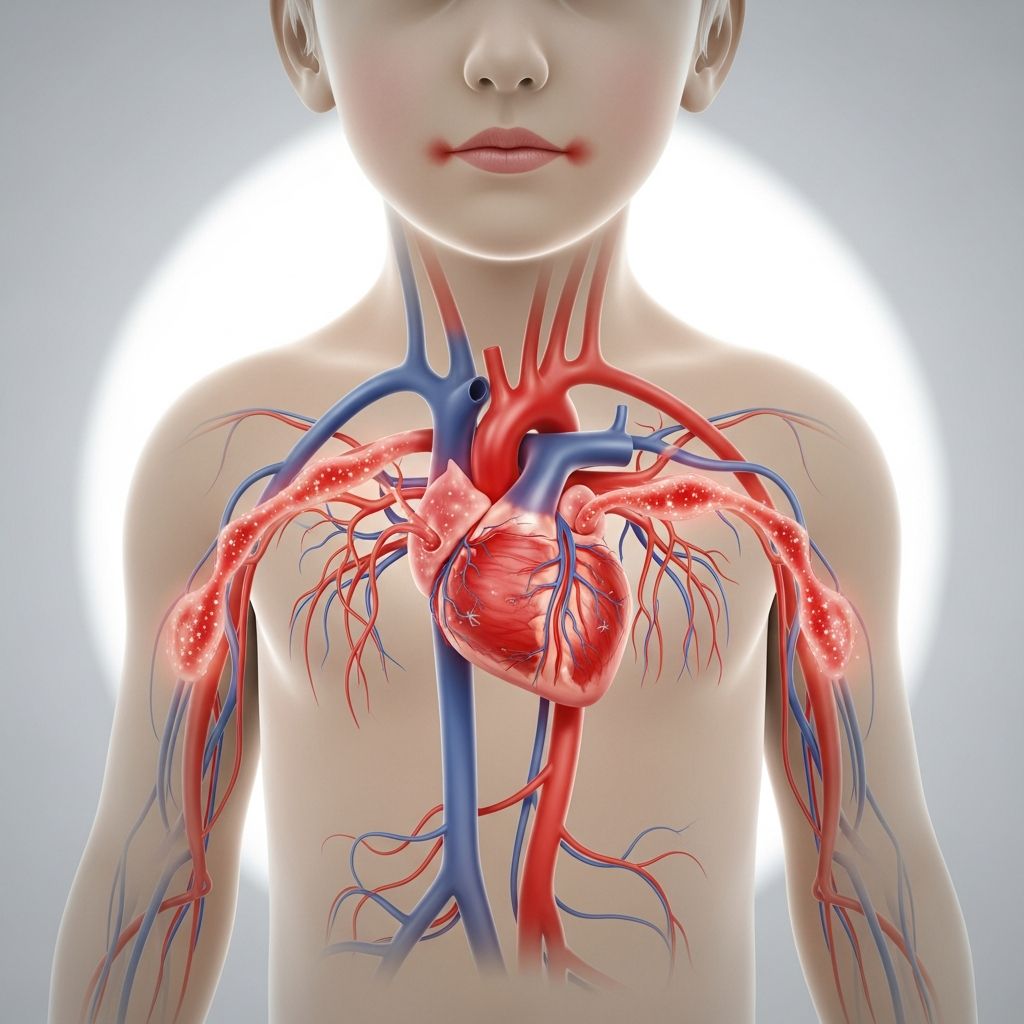
Kawasaki disease (KD), also known as mucocutaneous lymph node syndrome, is a rare but serious illness that primarily affects children under age 5. It triggers inflammation in medium-sized blood vessels throughout the body, with a particular risk to the coronary arteries supplying the heart. Prompt diagnosis and treatment are essential to reduce the approximately 25% risk of coronary artery aneurysms without intervention.
What Is Kawasaki Disease?
Kawasaki disease is an acute vasculitis of unknown etiology, first identified in Japan in 1967 by Dr. Tomisaku Kawasaki. It leads to systemic inflammation, potentially causing swelling and weakening of blood vessel walls. While most children recover fully with timely treatment, untreated cases can result in life-threatening heart complications. The disease is most prevalent in children of Asian descent, particularly Japanese, with incidence rates highest in East Asia.
The condition progresses through three phases: acute (fever and inflammation), subacute (peeling skin and risk of aneurysms), and convalescent (resolution of symptoms, up to 3 months). Globally, KD incidence has risen, affecting about 20 per 100,000 children in the U.S., with peaks in winter and spring.
Symptoms of Kawasaki Disease
Symptoms typically develop suddenly and sequentially over days. The hallmark is a high fever lasting at least 5 days, often unresponsive to typical antipyretics. Additional principal features include:
- Bilateral non-exudative conjunctivitis (red eyes without pus)
- Oral mucosal changes: red, cracked lips; strawberry tongue; injected pharynx
- Polymorphous rash, often on trunk, extremities, or groin
- Cervical lymphadenopathy (>1.5 cm, usually unilateral)
- Extremity changes: erythema, edema of hands/feet; periungual desquamation in subacute phase
Less common symptoms occur in 15-50% of cases: abdominal pain, vomiting, diarrhea, joint pain (especially weight-bearing joints), hepatitis, aseptic meningitis, or behavioral changes like irritability.
Incomplete KD presents with fever plus fewer than four principal criteria but requires evaluation if coronary abnormalities are found on echocardiogram.
Causes and Risk Factors
The exact cause of Kawasaki disease remains unknown, but evidence suggests an abnormal immune response triggered by an infectious agent in genetically susceptible children. No specific pathogen has been consistently identified, though associations with viruses or bacteria have been explored.
Risk factors include:
- Age: Peak at 6-24 months; rare over age 5
- Ethnicity: Highest in Asian/Pacific Islander children
- Geography: Elevated rates in Japan (up to 300 per 100,000)
- Male sex: Slightly higher incidence
- Family history: Recurrence risk in siblings ~2-3%
Recent genetic studies point to immune dysregulation, with variants in genes like ITPKC implicated in calcium signaling pathways.
Diagnosis of Kawasaki Disease
No single lab test confirms KD; diagnosis relies on clinical criteria plus supportive tests. Classic KD requires fever ≥5 days plus ≥4/5 principal features. For incomplete cases (fever + 2-3 features), use algorithms incorporating labs (e.g., elevated CRP ≥3 mg/dL, ESR ≥40 mm/hr) and echocardiography.[10]
Key diagnostic tests:
- Echocardiogram: Gold standard for detecting coronary artery abnormalities (Z-score ≥2.5)
- Blood tests: Leukocytosis, thrombocytosis (after week 1), anemia, elevated ALT, hypoalbuminemia
- Urinalysis: Sterile pyuria
- CBC, CRP, ESR for inflammation markers
Differential diagnosis includes scarlet fever, measles, Stevens-Johnson syndrome, or juvenile idiopathic arthritis. Early consultation with pediatric rheumatology or cardiology is recommended.
Related Stories



Treatment for Kawasaki Disease
Treatment must occur in hospital, ideally within 10 days of fever onset—best at days 4-5—to minimize coronary aneurysm risk from 25% to <5%.[10]
Standard first-line therapy:
| Medication | Dose/Regimen | Purpose |
|---|---|---|
| IVIG | 2 g/kg single infusion over 10-12 hours | Reduces inflammation, vasculitis; most effective early |
| Aspirin | High-dose: 80-100 mg/kg/day divided q6h (until afebrile 48h); then low-dose 3-5 mg/kg/day x6-8 weeks | Anti-inflammatory, anti-platelet to prevent clots |
IVIG non-responders (fever persists 36h post-infusion, ~10-20%) receive second IVIG dose or adjuncts like corticosteroids (e.g., methylprednisolone pulse).
Supportive care: IV fluids, fever management. Hospital stay: 2-5 days.
Complications
The primary concern is cardiovascular: coronary artery aneurysms (dilations) in 15-25% untreated, giant aneurysms (>8mm) in 1% with risk of thrombosis or rupture. Myocarditis, pericarditis, or valvular issues may occur acutely. Long-term, survivors with aneurysms need lifelong cardiology follow-up, possible anti-coagulants, or interventions like stenting.
Other complications: gallbladder hydrops, aseptic meningitis. Recurrence rate: 2-3%.
Recovery and Prognosis
With prompt treatment, >95% recover without cardiac sequelae. Fever resolves within 24-48h post-IVIG; full symptoms subside in 4-6 weeks. Periungual peeling is normal. Most resume normal activities post-discharge, but avoid live vaccines for 11 months post-IVIG.
Follow-up: Echocardiograms at 1-2 weeks, 6-8 weeks, then risk-stratified (yearly for small aneurysms).[10] Low-dose aspirin continues 6-8 weeks or longer if aneurysms present.
Prevention
No vaccine or preventive measures exist due to unknown cause. Parental awareness of symptoms enables early medical seeking. Clinicians should maintain high suspicion for prolonged fever in young children.
When to See a Doctor
Seek immediate care for fever ≥4 days, especially with rash, red eyes, swollen hands/feet, or lymph nodes. Do not delay—early treatment prevents heart damage.
Frequently Asked Questions (FAQs)
What causes Kawasaki disease?
The cause is unknown but likely involves genetic susceptibility and an environmental trigger like infection, leading to immune overreaction.
Is Kawasaki disease contagious?
No, it is not contagious or caused by a known pathogen.
How long does Kawasaki disease last?
Acute phase: 1-2 weeks; full recovery 4-8 weeks with treatment.
Can adults get Kawasaki disease?
Extremely rare; almost exclusively affects children under 5.
What is the success rate of IVIG treatment?
Reduces aneurysm risk to <5% if given early; 80-90% defervesce within 36 hours.[10]
Does Kawasaki disease cause permanent heart damage?
Possible in 2-3% with giant aneurysms, requiring lifelong monitoring.
References
- Kawasaki Disease — MedlinePlus, U.S. National Library of Medicine. 2023. https://medlineplus.gov/kawasakidisease.html
- Kawasaki Disease | Symptoms, Diagnosis & Treatment — Cincinnati Children’s Hospital Medical Center. 2024. https://www.cincinnatichildrens.org/health/k/kawasaki
- Kawasaki Disease — StatPearls, NCBI Bookshelf. 2023-10-01. https://www.ncbi.nlm.nih.gov/books/NBK537163/
- About Kawasaki Disease — Centers for Disease Control and Prevention (CDC). 2024. https://www.cdc.gov/kawasaki/about/index.html
- Treatment – Kawasaki disease — National Health Service (NHS), UK. 2023. https://www.nhs.uk/conditions/kawasaki-disease/treatment/
- Kawasaki Disease — Children’s Hospital of Philadelphia (CHOP). 2024. https://www.chop.edu/conditions-diseases/kawasaki-disease
Similar Articles








Read full bio of medha deb