Kawasaki Disease: 3 Phases, Symptoms, Treatment
Acute vasculitis in children causing fever, rash, and potential coronary artery complications requiring prompt IVIG treatment.
Kawasaki disease (KD), also known as mucocutaneous lymph node syndrome, is an acute, self-limited vasculitis that predominantly affects infants and young children. It is the leading cause of acquired heart disease in children in developed countries, primarily due to potential coronary artery aneurysms. First described in Japan in 1967 by Dr. Tomisaku Kawasaki, the disease involves medium-sized arteries, with the coronary arteries most commonly affected. Although the exact etiology remains unknown, it is thought to involve an excessive immune response triggered by an infectious agent in genetically susceptible individuals.
The disease typically occurs in children under 5 years old, with peak incidence between 1 and 2 years. It is more common in boys (1.5:1 ratio) and shows higher prevalence in Asian populations, particularly Japanese children. KD progresses through three phases: acute (days 1-10), subacute (days 11-25), and convalescent (after day 25). Early diagnosis and treatment are critical to prevent cardiovascular complications.
What is Kawasaki disease?
Kawasaki disease is classified as a medium-vessel vasculitis characterized by systemic inflammation affecting the skin, mucous membranes, lymph nodes, and blood vessels. Unlike small-vessel vasculitides like Henoch-Schönlein purpura, KD spares the capillaries and primarily involves arteries such as the coronaries, leading to potential aneurysms, thrombosis, or myocardial infarction. The acute phase features high fever unresponsive to antibiotics, marking it as a diagnostic hallmark.
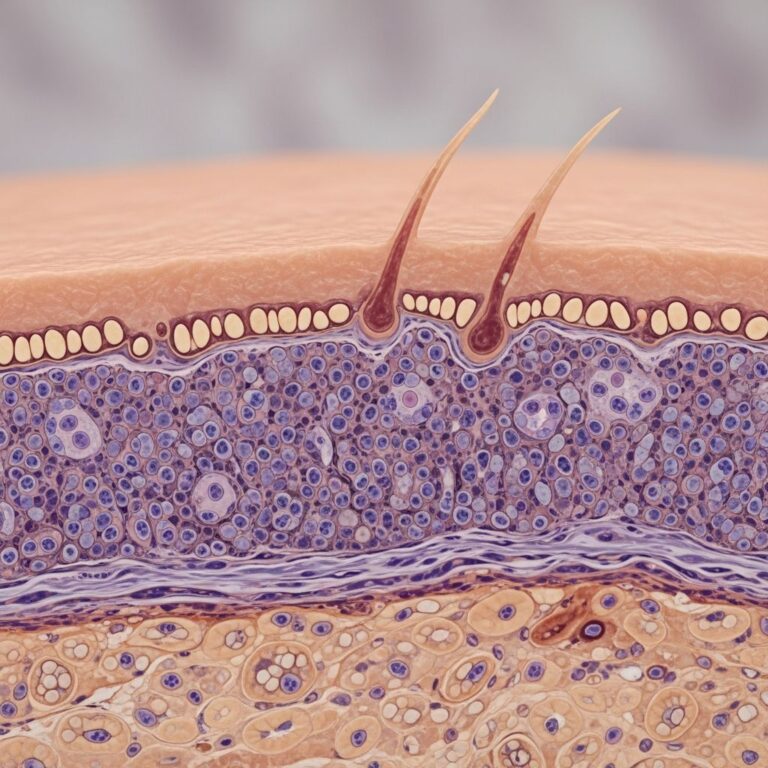
Histologically, KD shows necrotizing arteritis with neutrophils infiltrating vessel walls, followed by mononuclear cells and aneurysms in untreated cases. Genetic factors, such as polymorphisms in ITPKC and CASP3 genes, increase susceptibility in Asian cohorts. Environmental triggers like preceding respiratory infections are common, but no specific pathogen has been identified despite extensive research.
Who gets Kawasaki disease?
KD primarily affects children younger than 5 years, with 80% of cases in those under 4 years. Incidence is highest in East Asia: Japan reports 265 per 100,000 children under 5, compared to 20-25 per 100,000 in the US and Europe. Seasonal peaks occur in winter and early spring. Boys are affected 1.5 times more than girls.
- Age distribution: Peak at 1-2 years; rare over 10 years.
- Racial predisposition: Highest in Japanese, Korean, and Asian-Pacific groups; lower in Black and Hispanic children.
- Risk factors: Family history increases risk 10-fold; male sex; Asian ancestry.
Recurrence occurs in 3% of cases, often milder. Adults rarely develop KD, but coronary sequelae persist lifelong.
What causes Kawasaki disease?
The etiology is unknown, but KD is widely considered an immune-mediated disorder triggered by one or more infectious agents in genetically predisposed hosts. Evidence includes seasonal patterns, epidemics in Japan, and oligoclonal gamma globulin responses suggesting superantigen involvement.
Genetic studies identify susceptibility loci on chromosomes 19q13.3 and others linked to immune regulation. No single virus or bacterium consistently isolates, though candidates like coronaviruses and retroviruses have been proposed. Pathogenesis involves T-cell activation, cytokine storm (IL-1, IL-6, TNF-α), and endothelial damage leading to vasculitis.
What are the clinical features of Kawasaki disease?
Clinical features evolve predictably across phases. Diagnosis relies on fever plus principal criteria.
Related Stories



Principal clinical features (≥4 required for complete KD)
| Feature | Description |
|---|---|
| Bilateral conjunctival injection | Non-exudative, bulbar, limbic-sparing; appears day 3-5. |
| Oral mucosal changes | Strawberry tongue, red/cracked lips, pharyngeal erythema; no exudates. |
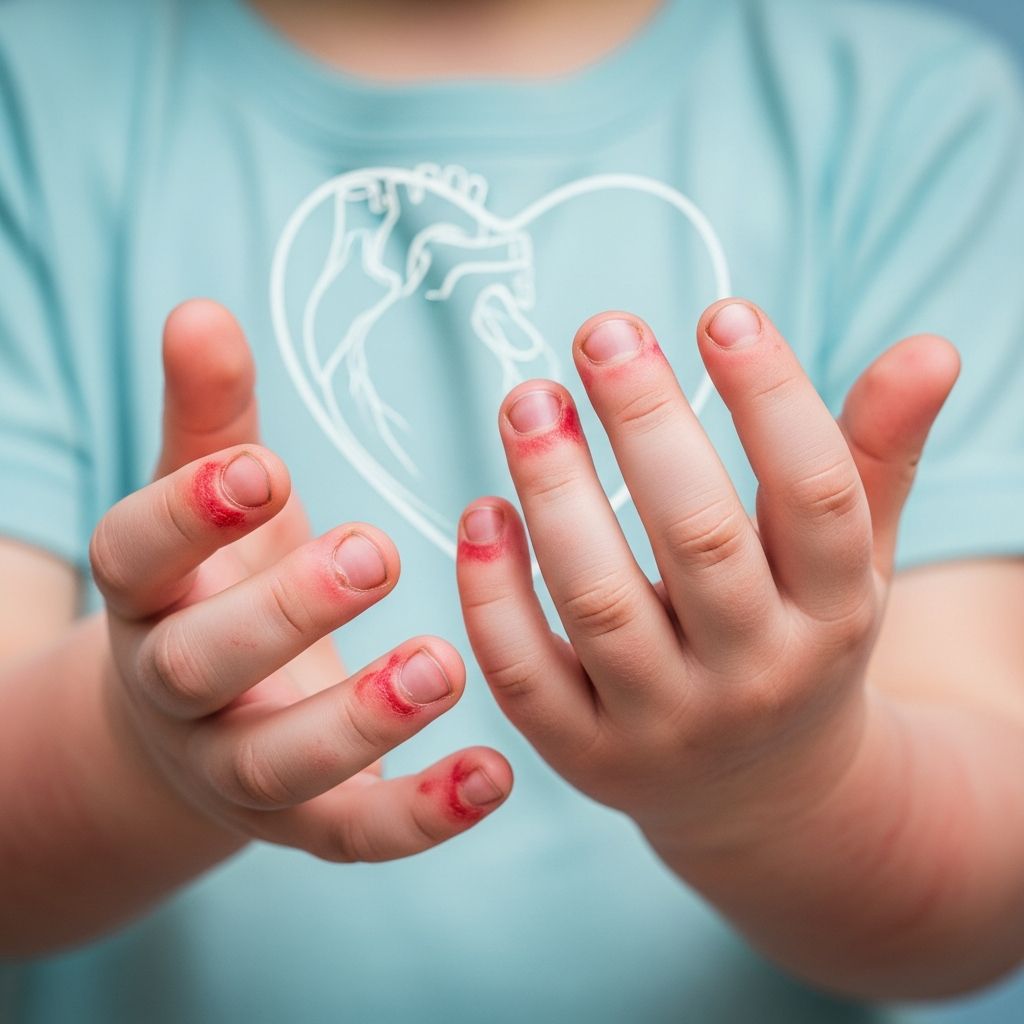
| Peripheral extremity changes | Acute: erythema/edema of hands/feet; subacute: periungual desquamation. |
| Polymorphous rash | Truncal, maculopapular, scarlatiniform, or erythema multiforme-like; perineal accentuation. |
| Cervical lymphadenopathy | ≥1.5 cm, usually unilateral; least common feature. |
Fever: ≥5 days, ≥39°C, remittent, unresponsive to antipyretics.
Acute phase (days 1-10)
Begins with extreme irritability, fever, conjunctivitis, and rash within 2 days. Lips become dry/cracked; hands/feet erythematous/edematous. Perineal desquamation early.
Subacute phase (days 11-25)
Fever resolves; desquamation peaks (palms/soles); thrombocytosis (platelets >450,000/μL); arthritis (33% of cases, large joints).
Convalescent phase (>25 days)
Clinical resolution by 6-8 weeks; labs normalize. Cardiac risks peak here if aneurysms form.
Other features
- Cardiac: Gallop, myocarditis (50%), pericarditis.
- GI: Diarrhea, vomiting, hydrops gallbladder, hepatitis.
- Neuro: Irritability, aseptic meningitis, facial palsy.
- Musculoskeletal: Arthritis/arthralgia.
- Urologic: Sterile pyuria.
Diagnosis of Kawasaki disease
No specific test exists; diagnosis is clinical. Complete KD: fever ≥5 days + ≥4 principal features. Incomplete KD (15-20%): fever + 2-3 features + lab/cardiac criteria, especially infants.
Algorithm for incomplete KD
- Fever ≥5 days + 2-3 features.
- Supplemental labs: CRP ≥3 mg/dL and/or ESR ≥40 mm/h.
- If ≥3 supplemental labs abnormal, treat as KD; else echo.
- Abnormal echo (Z-score ≥2.5) confirms.
Supplemental laboratory criteria
- Albumin ≤3 g/dL
- Anemia (age-adjusted)
- Elevation of ALT
- Platelets ≥450,000/μL after day 7
- WBC ≥15,000/μL
- Pyuria ≥10 WBC/hpf
Imaging: Echocardiogram at diagnosis, week 2, 6-8 weeks. ECG for arrhythmias.
Differential diagnosis
| Condition | Distinguishing features |
|---|---|
| Scarlet fever | Pharyngitis, sandpaper rash, responds to antibiotics; ASO titer. |
| Stevens-Johnson syndrome | Mucosal erosions, target lesions, drug history. |
| Juvenile idiopathic arthritis | Chronic arthritis, no conjunctivitis/desquamation. |
| Viral exanthems (adenovirus, measles) | Exudative conjunctivitis, cough, Koplik spots. |
| Toxic shock syndrome | Hypotension, multiorgan failure, blood cultures. |
Other: EBV, leptospirosis, drug reactions.
What is the treatment for Kawasaki disease?
Goal: Reduce inflammation, prevent coronary aneurysms (risk 25% untreated vs. 5% treated).
First-line
- IVIG: 2 g/kg single infusion within 10 days of fever onset; reduces aneurysm risk 5-fold.
- Aspirin: High-dose (80-100 mg/kg/day divided q6h) until afebrile 48h, then low-dose (3-5 mg/kg/day) for 6-8 weeks.
Refractory KD (10%)
- Second IVIG 2 g/kg.
- Corticosteroids (pulse methylprednisolone) for high-risk (e.g., Japanese criteria).
- Infliximab, cyclosporine, anakinra as third-line.
Monitor: Echo at diagnosis, 2 weeks, 6 weeks; lipids, troponin if indicated.
Complications
Cardiovascular most severe: aneurysms (25% untreated, giant >8mm worst prognosis), MI, shock (7%). Myocarditis common (50-70%) but usually resolves. Long-term: accelerated atherosclerosis; lifelong cardiology follow-up.
- Acute: Myocarditis, pericarditis, valvular regurgitation.
- Subacute: Aneurysms, thrombosis.
- Long-term: Ischemia, sudden death (1-2% with aneurysms).
Prevention and prognosis
No prevention; early treatment key. With IVIG <10 days, 95% normalize coronaries. Aneurysms regress in 50-70% but stenosis persists. High-risk patients need anticoagulation. Prognosis excellent if treated promptly; untreated mortality 1-2% from cardiac rupture.
Frequently Asked Questions
What is the most important complication of Kawasaki disease?
Coronary artery aneurysms, which can lead to thrombosis, myocardial infarction, or rupture.
How soon should IVIG be given?
Ideally within 10 days of fever onset, optimally <7 days, to minimize cardiac risks.
Can Kawasaki disease recur?
Yes, in ~3% of cases; subsequent episodes often milder but monitor closely.
Is Kawasaki disease contagious?
No, though it may follow an infection; it’s not transmitted person-to-person.
What follow-up is needed after treatment?
Serial echocardiograms (2 weeks, 6-8 weeks); low-dose aspirin 6-8 weeks; cardiology lifelong if aneurysms.
References
- Kawasaki Disease – Pediatrics — Merck Manual Professional Edition. 2023. https://www.merckmanuals.com/professional/pediatrics/rheumatologic-disorders-in-children/kawasaki-disease
- Kawasaki disease: a comprehensive review — PMC – NIH. 2019-02-28. https://pmc.ncbi.nlm.nih.gov/articles/PMC6374576/
- Kawasaki Disease Clinical Pathway — UNC School of Medicine. 2025-06-05. https://www.med.unc.edu/pediatrics/cccp/wp-content/uploads/sites/1156/2025/06/Kawasaki-Disease-Clinical-Pathway-5.8.25.pdf
- About Kawasaki Disease — Centers for Disease Control and Prevention (CDC). 2024. https://www.cdc.gov/kawasaki/about/index.html
- Kawasaki Disease Clinical Pathway — Children’s Hospital of Philadelphia (CHOP). 2025-05. https://www.chop.edu/clinical-pathway/kawasaki-disease-incomplete-kawasaki-disease-clinical-pathway
- A guide for what doctors and parents can do as Kawasaki disease kids grow up — American Heart Association. 2021-10-11. https://www.heart.org/en/news/2021/10/11/a-guide-for-what-doctors-and-parents-can-do-as-kawasaki-disease-kids-grow-up
Similar Articles








Read full bio of medha deb