Music For Brain Health: Essential Guide To Cognitive Benefits
Discover how music strengthens memory, enhances cognitive function, and promotes brain health.
Keep Your Brain Young with Music
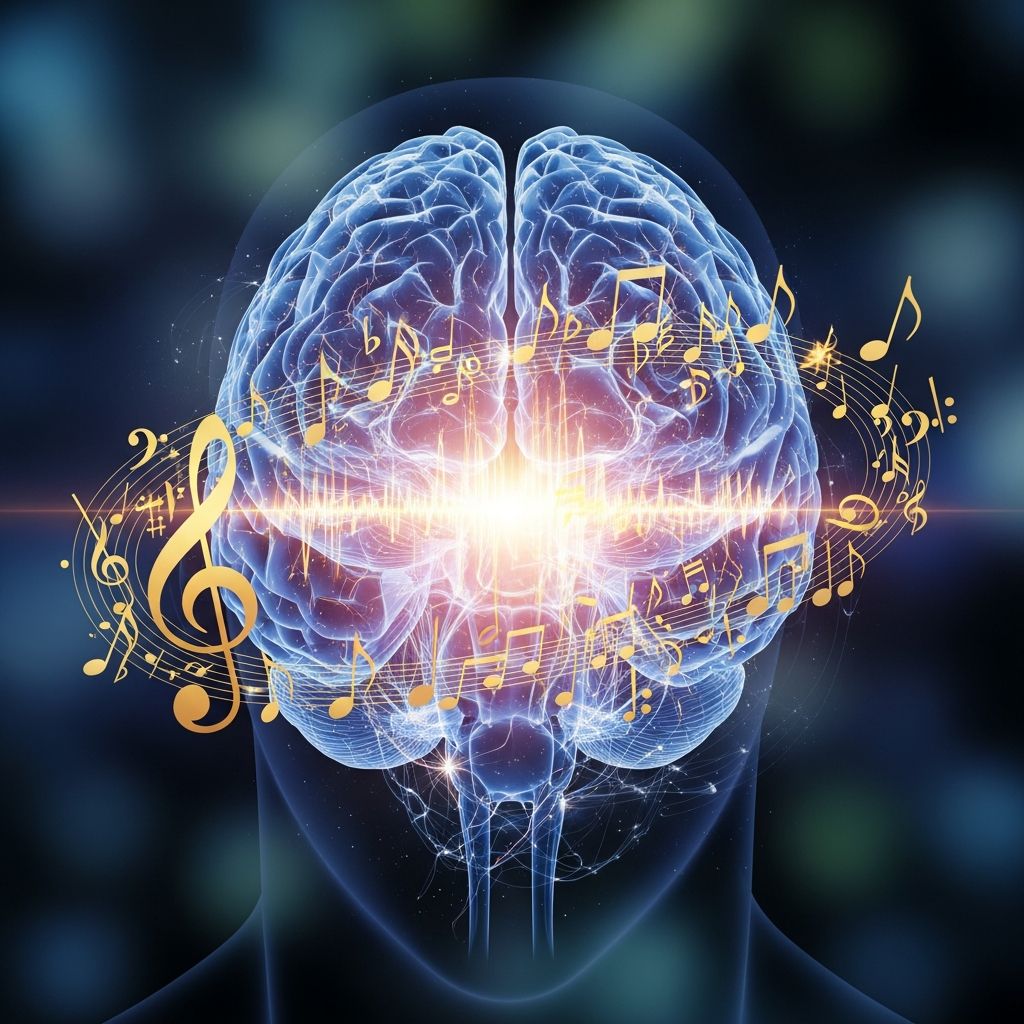
The human brain is a remarkable organ that requires continuous stimulation and engagement to maintain optimal function throughout our lives. Just as physical exercise strengthens our muscles, mental engagement through music provides a comprehensive workout for the brain. Research from Johns Hopkins Medicine demonstrates that listening to or playing music activates more brain regions simultaneously than almost any other human activity, making it one of the most effective tools for maintaining cognitive vitality and promoting healthy aging.
Music’s influence on the brain extends far beyond simple entertainment. Neuroscientific research reveals that music engages multiple brain systems, from the auditory cortex that processes sound to the limbic system that manages emotions, and the motor cortex that coordinates movement. This multi-system activation creates a powerful stimulus for brain health and cognitive preservation, offering benefits that accumulate over time with consistent engagement.
How Music Activates the Brain
When we listen to music, our brains engage in a complex series of processes that involve numerous neural pathways and regions working in concert. The experience of music listening activates the right hemisphere of the brain preferentially, particularly when processing emotional responses to music. This non-dominant hemisphere plays a crucial role in appreciating pitch, timbre, and rhythm, and studies using functional magnetic resonance imaging (fMRI) have demonstrated that even imagining music activates these same regions.
A landmark study conducted by Wake Forest Baptist Medical Center examined brain connectivity patterns in 21 participants while they listened to different music genres, including their personal favorite genres. The researchers discovered that listening to preferred music produced the highest connectivity in neural pathways associated with empathy and self-awareness. Remarkably, this effect was consistent across all participants despite their vastly different musical preferences, suggesting a universal neurological response to personally meaningful music.
The implications of these findings are significant. According to the researchers, “These findings may explain why comparable emotional and mental states can be experienced by people listening to music that differs as widely as Beethoven and Eminem.” This suggests that the brain’s response to music is not about the specific genre but rather about personal connection and engagement with the music.
Memory Enhancement and Cognitive Function
One of the most significant benefits of music for brain health is its impact on memory and cognitive function. Studies of individuals with memory disorders, including Alzheimer’s disease, have revealed that neuronal memory traces established through music are deeply ingrained and remarkably resistant to neurodegenerative influences. This finding has profound implications for aging adults seeking to maintain cognitive sharpness.
Research published in the Proceedings of the National Academy of Sciences demonstrates that music serves as a powerful motivational tool for learning new information. When individuals anticipate listening to music as a reward, they demonstrate increased motivation to acquire and retain new knowledge, suggesting that music can enhance learning capacity across various contexts.
Related Stories



For patients with Alzheimer’s disease specifically, a 2017 study uncovered remarkable connections between music engagement and a reduction in cognitive decline. Patients who participated in music listening sessions demonstrated improved memory for life events, enhanced psychomotor speed, and overall improvements in cognitive function. Johns Hopkins researchers are currently investigating whether engaging with personally meaningful music could strengthen memory-related brain connections in Alzheimer’s patients, utilizing MRI scanning to track brain structure and function changes over eight-week periods.
Playing Music: A Greater Brain Benefit
While listening to music provides substantial cognitive benefits, learning to play a musical instrument offers even more pronounced effects on brain structure and function. Many neuroscientists believe that learning to play an instrument increases gray matter volume in the brain, particularly in regions associated with motor control, memory, decision-making, and self-control. This structural change translates into functional improvements that musicians consistently demonstrate.
Professional musicians and music learners display notably increased memory capacity and problem-solving skills compared to non-musicians. The process of learning an instrument requires the brain to coordinate visual information, auditory processing, motor control, and cognitive planning simultaneously, creating a uniquely comprehensive neural workout. This multi-faceted engagement explains why musicians often excel in academic and professional domains requiring complex cognitive skills.
The benefits of playing music extend across the lifespan. Whether someone begins learning music as a young child or takes up an instrument later in life, the brain responds with increased neural connectivity and gray matter development. This suggests that it is never too late to begin musical training to support brain health and cognitive function.
Music Therapy for Mental Health and Emotional Well-being
Beyond cognitive enhancement, music provides significant therapeutic value for mental health and emotional processing. Music therapy—involving playing music, analyzing lyrics, and songwriting—is known to increase emotional expression in patients, offering substantial benefits for individuals managing anxiety, depression, and trauma. The therapeutic power of music lies partly in its cultural role in facilitating social learning and emotional well-being, creating safe spaces for emotional exploration and processing.
Findings from randomized controlled trials demonstrate that music therapy is well-accepted by individuals with depression and is associated with measurable improvements in mood disorders. The AARP and multiple scientific journals report that music therapy effectively reduces anxiety and depression symptoms across diverse populations. For stroke patients specifically, one-hour music therapy sessions resulted in reduced stress levels, according to a 2019 study published in the Rehabilitation Nursing Journal.
Interestingly, music therapy often serves as a gateway for stroke patients to regain speech function. Researchers have discovered that stroke victims can frequently sing before they can speak, and this singing ability can be leveraged therapeutically to rebuild speech capabilities. This application demonstrates music’s unique ability to access brain regions and neural pathways that might otherwise remain inaccessible through conventional rehabilitation approaches.
Physical Health Benefits
The benefits of music extend beyond brain health and mental well-being to encompass broader physical health improvements. Research indicates that listening to music reduces anxiety, blood pressure, and pain perception, while simultaneously improving sleep quality, mood, and memory. These cardiovascular and physiological benefits suggest that music engages not only cognitive centers but also the autonomic nervous system, promoting relaxation and physiological recovery.
Studies have demonstrated that music listening correlates with increased production of certain antibodies, proteins in the blood that combat foreign substances and help prevent disease. This immunological benefit suggests that regular music engagement may contribute to long-term health maintenance and disease prevention through multiple physiological pathways.
Music and Neurodegenerative Diseases
For individuals managing progressive neurological conditions, music offers particular promise. Rhythm-based musical interventions can effectively address specific symptoms associated with neurodegenerative, age-related disorders such as Parkinson’s disease and Alzheimer’s disease. According to Aleksandar Pantelyat, a Johns Hopkins neuroradiologist and accomplished violinist who treats patients with various movement disorders, “It’s becoming more and more clear that music- and rhythm-based interventions can do a lot to help specific symptoms of neurodegenerative, age-related disorders.”
Evidence suggests that music can decrease seizure frequency and electroencephalographic spike frequency in children with epilepsy during both waking and sleep states. Some patients with epilepsy exhibit electroencephalographic abnormalities that can be normalized through music intervention, opening new therapeutic possibilities for seizure disorder management. Researchers are investigating whether modulation of musical input to affect emotional state and limbic activity might provide additional seizure management benefits.
For Parkinson’s disease patients, rhythm-based musical interventions have demonstrated particular efficacy. Johns Hopkins researchers have developed a therapeutic device that uses rhythm and music to help patients improve their gait and mobility. Regardless of musical preference—whether patients favor John Philip Sousa marches or Beatles songs—the musicality appears to motivate increased physical movement. This is particularly significant because Parkinson’s disease damages the brain regions responsible for motivation, and music helps patients recover some of that lost motivational capacity.
Music for Aging and Cognitive Reserve
As populations age, maintaining cognitive function becomes increasingly important for quality of life and independence. The Johns Hopkins Human Aging Project, in partnership with researchers like Pantelyat, recognizes that music—through making it, listening to it, and moving to it—could hold a key to healthier aging and sustained cognitive function. The concept of cognitive reserve, referring to the brain’s ability to resist damage and maintain function despite pathological changes, can be substantially enhanced through musical engagement across the lifespan.
For older adults specifically, the evidence supporting music’s role in brain health is particularly compelling. Regular music engagement activates protective neural pathways and maintains the neural plasticity necessary for continued cognitive function and adaptation. This suggests that music can serve as a preventive intervention for cognitive decline, potentially delaying or reducing the severity of age-related cognitive changes.
The Therapeutic Role of Music
While music cannot cure neurological or psychiatric conditions, research indicates it definitely plays a significant therapeutic role in treatment and management. Jonathan Burdette, a neuroradiologist at Wake Forest Baptist Medical Center, emphasizes this point: “Music isn’t going to cure anything, but it definitely can play a therapeutic role. If you’re trying to restore neuroplasticity in the brain, to re-establish some of the connections that were there before the injury, music can be a big help.”
Given the extensive evidence supporting music’s therapeutic potential, many experts believe that physicians in the United States should place greater emphasis on music therapy, which is utilized more widely in other countries to address various emotional and behavioral problems. Music therapy represents a non-invasive technique for brain stimulation that has attracted significant interest but deserves greater empirical exploration and clinical application.
Frequently Asked Questions
Q: What types of music provide the most brain benefits?
A: Research indicates that personally meaningful music provides the greatest brain benefits. Individual preference appears more important than genre, as studies show that listening to favorite music produces the highest neural connectivity regardless of whether preferences run toward classical composers like Beethoven or contemporary artists like Eminem. The key is choosing music that resonates personally and emotionally.
Q: Is it ever too late to learn a musical instrument for brain health?
A: No. While learning music at younger ages may offer certain developmental advantages, research demonstrates that the brain maintains the ability to benefit from music learning throughout life. Older adults who begin musical training still experience increased gray matter development, enhanced memory, and improved cognitive function. The brain’s neuroplasticity persists across the lifespan, allowing beneficial adaptations at any age.
Q: How much music engagement is necessary for cognitive benefits?
A: While research has not established a precise minimum threshold, studies showing benefits have involved regular engagement with music—either through consistent listening or regular practice. Even one-hour music therapy sessions have demonstrated measurable benefits in stroke patients. Daily or several-times-weekly engagement with music appears to provide accumulating benefits for brain health.
Q: Can music help people with Alzheimer’s disease or dementia?
A: Yes. Research consistently demonstrates that music provides significant benefits for individuals with Alzheimer’s disease and dementia. Memory traces built through music are particularly resistant to neurodegenerative effects. Patients show improved memory recall, enhanced psychomotor function, and overall cognitive improvement with music engagement. Johns Hopkins researchers are currently developing evidence-based music therapy programs specifically designed for Alzheimer’s patients.
Q: Does music listening alone provide brain benefits, or must one play an instrument?
A: Both listening to and playing music provide brain benefits, though research suggests playing an instrument may offer slightly greater benefits due to the additional motor and coordination demands. However, music listening activates more brain regions simultaneously than almost any other human activity, making it an accessible and valuable option for individuals unable to play instruments. Both approaches should be considered valuable for brain health.
Q: How does music affect the brain in neurological conditions like Parkinson’s disease?
A: Music, particularly rhythm-based interventions, can help restore movement patterns and motivation in Parkinson’s disease patients. The rhythmic structure of music can facilitate motor function recovery, while the motivational aspects of music engage brain regions damaged by neurodegeneration. Music-based devices and therapies help patients improve gait, mobility, and overall physical function while addressing the motivation deficits characteristic of the disease.
References
- Music is shown to affect mental state of the brain — Johns Hopkins University Newsletter. 2019-02-01. https://www.jhunewsletter.com/article/2019/02/music-is-shown-to-affect-mental-state-of-the-brain
- Music and the brain: the neuroscience of music and musical therapy — National Institutes of Health, National Center for Biotechnology Information. 2017. https://pmc.ncbi.nlm.nih.gov/articles/PMC5618809/
- Using Music for Brain Function — Tennova Jefferson Health Library. 2025-10-10. https://www.tennovajefferson.com/health-library/132
- Music as Medicine for Older Adults — Johns Hopkins Center for Imaging and Media. 2022. https://www.hopkinscim.org/breakthrough/winter-2022/music-as-medicine-for-older-adults/
Similar Articles








Read full bio of medha deb