Keratinocyte Cancer Guide: Diagnosis, Treatment, And Prevention
Comprehensive guide to keratinocyte cancers: causes, diagnosis, treatment, and prevention strategies for BCC and SCC.
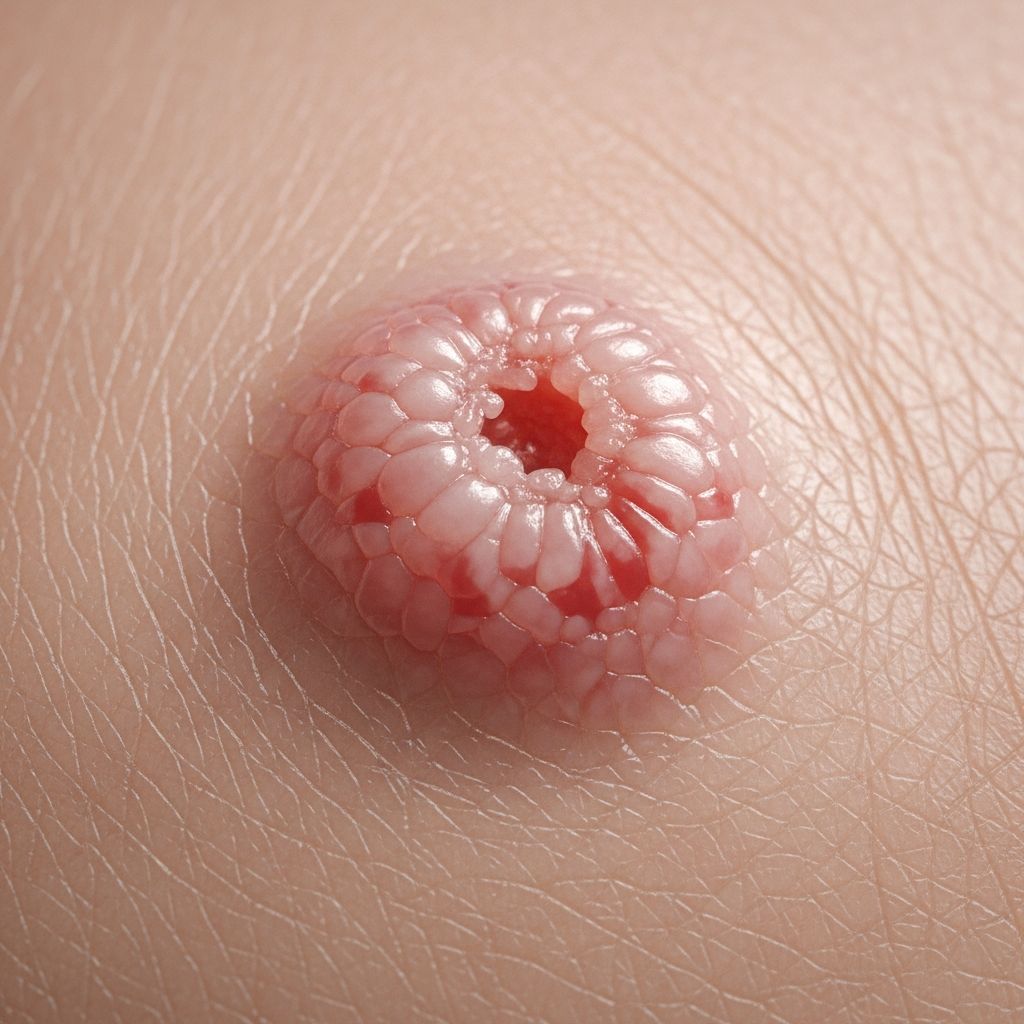
A
keratinocyte cancer
is a malignant neoplasm arising from keratinocytes, the primary cells of the epidermis, specifically basal or squamous cell keratinocytes. These cancers represent the most common form of skin cancer worldwide, predominantly affecting older individuals with fair skin and a history of sun exposure.Introduction
Keratinocyte cancers encompass
basal cell carcinoma (BCC)
andcutaneous squamous cell carcinoma (cSCC)
, previously termed non-melanoma skin cancers. Actinic keratosis serves as a precancerous lesion that can progress to cSCC. These tumours form from the epidermal building blocks and are driven primarily by ultraviolet (UV) radiation damage.Globally, keratinocyte cancers are the leading cancer diagnosis, with over 5.4 million cases annually in the US alone. They pose significant morbidity due to local tissue destruction but are rarely fatal when detected early.
Classification
Keratinocyte cancers are classified into two main types:
- Basal cell carcinoma (BCC): Originates from basal keratinocytes in the epidermis. Typically slow-growing and locally invasive but seldom metastasizes.
- Squamous cell carcinoma (SCC): Arises from squamous keratinocytes. More aggressive than BCC, with potential for metastasis if neglected.
- Actinic keratosis: Precancerous scaly patches that may evolve into SCC.
High-risk features distinguish low-risk from high-risk lesions based on tumour size, site, depth, and histological subtype.
Demographics
Keratinocyte cancers predominantly affect older white-skinned individuals, especially those with outdoor occupations or histories of sunburn. Incidence is highest in Australia and New Zealand due to intense UV exposure.
- Prevalent in people over 60 years.
- Males are affected more frequently, though incidence rises in females and younger adults.
- Rare in children and skin of colour, but cases occur, particularly BCC and SCC in darker phototypes.
Risk prediction tools estimate 3-year incidence for those over 40, factoring in age, sun exposure, and pigmentation traits.
Causes
The primary cause is
cumulative UV radiation
from sun or tanning beds, leading to DNA damage in keratinocytes.Other contributing factors include:
- Immunosuppression: Organ transplant recipients or those on immunosuppressive drugs have 65-250 times higher risk.
- Genetic predispositions: Low-risk genes linked to pigmentation and mole formation; rare high-penetrance mutations.
- Chronic wounds or scars: Marjolin ulcer in SCC.
- Arsenic exposure or radiation history.
- Human papillomavirus (HPV) in some SCC cases.
Clinical Features
Lesions present as solitary, enlarging skin growths on sun-exposed areas like face, ears, scalp, neck, and hands. Characteristics vary:
- BCC: Pearly nodule with telangiectasia, rolled edges; may ulcerate (rodent ulcer).
- SCC: Scaly, hyperkeratotic plaque; may be indurated or tender.
- General: Scaly/smooth, pigmented/skin-coloured, intact/ulcerated, painless/painful.
Dermoscopy aids identification: BCC shows arborizing vessels; SCC exhibits glomerular vessels and keratin.
Complications
These cancers are locally destructive, causing ulceration, bleeding, and scarring. Neglected SCC metastasizes to lymph nodes (up to 5%), rarely fatal. BCC seldom metastasizes (<0.1%) but invades deeply.
High-risk complications:
- Perineural invasion: In 5% of cases, risking recurrence and metastasis.
- Recurrence: 3-6% post-excision; higher after curettage (2-6%).
- Second primaries: 50% high-risk patients develop another within 5 years.
Diagnosis
Clinical diagnosis uses history, examination, and dermoscopy. Confirmation requires
skin biopsy
with histopathology.Related Stories



For high-risk or ambiguous lesions:
- Incisional/excisional biopsy.
- Staging for SCC: TNM system (T1-T4 based on size/invasion; N0-N3 nodal status).
Imaging (CT/MRI) for advanced SCC suspecting deep invasion or nodes.
Treatment
Treatment is risk-stratified. Primary approach:
excision biopsy
with 4-6mm margins for low-risk.| Risk Level | Treatment Options |
|---|---|
| Low-risk (small, trunk/limbs) | Excision, curettage & electrodessication, cryotherapy, topical 5-FU/imiquimod. |
| High-risk (face, large, recurrent) | Mohs micrographic surgery, radiotherapy. |
| Superficial | Topicals (imiquimod, 5-FU), photodynamic therapy. |
| Advanced/metastatic SCC | Surgery + RT, systemic therapy (PD-1 inhibitors), MDT management. |
Mohs surgery: Preferred for facial/ high-risk sites; examines 100% margins intraoperatively, minimizing tissue loss.
If margins inadequate post-excision: Re-excise low-risk BCC; refer high-risk SCC.
Histological Clearance and Recurrence
Surgical margins: 3-4mm clinical for low-risk BCC; wider for high-risk (e.g., morpheiform BCC, perineural invasion).
Histological clearance: <1mm margins prompt re-excision, especially SCC. Recurrence risks:
- Low-risk BCC excision: 3% at 5 years.
- Recurrent BCC: Aggressive resection + Mohs.
- SCC: 25% local recurrence risk post-first recurrence; 30% nodal mets.
Outcome
Nearly all (>95%) are cured if treated early. Mortality rare (<1%) but higher in advanced SCC (immunosuppressed patients).
Follow-up: Annual skin checks for history of skin cancer; dermoscopy/palpation of treated sites.
Prevention
Primary prevention targets UV exposure:
- Sun protection: SPF50+ sunscreen, clothing, shade (10am-4pm).
- Avoid tanning beds.
- Self-exams and professional checks for high-risk individuals.
Frequently Asked Questions (FAQs)
What is keratinocyte cancer?
Malignant skin tumours from keratinocytes, mainly BCC and SCC, caused primarily by UV damage.
Who is at highest risk?
Older fair-skinned people with sun exposure history; immunosuppressed individuals.
How are they diagnosed?
Clinically with dermoscopy; confirmed by biopsy.
What is the best treatment?
Risk-based: excision for most; Mohs for high-risk facial lesions.
Can they be prevented?
Yes, via sun protection and regular skin checks.
What if margins are not clear?
Re-excision or specialist referral; Mohs for recurrent/high-risk.
References
- Keratinocyte cancer — DermNet NZ. 2019-12 (updated). https://dermnetnz.org/topics/keratinocyte-cancer
- Histological clearance and recurrence of keratinocyte cancers — DermNet NZ. https://dermnetnz.org/topics/histological-clearance-and-recurrence-of-keratinocyte-cancers
- Clinical practice guidelines for keratinocyte cancer — Cancer Council Australia. https://www.cancer.org.au/clinical-guidelines/skin-cancer/keratinocyte-cancer
- Keratinocyte Carcinoma: A Review — PubMed/ JAMA Dermatology. 2024. https://pubmed.ncbi.nlm.nih.gov/41165676/
- Understanding Squamous Cell Carcinoma — Skin Institute NZ. https://skintel.co.nz/articles/squamous-cell-carcinoma/
- Cutaneous squamous cell carcinoma — DermNet NZ. https://dermnetnz.org/topics/cutaneous-squamous-cell-carcinoma
Similar Articles








Read full bio of Sneha Tete