Keratoacanthoma: 8 Treatment Options, Diagnosis, And Outcomes
Keratoacanthoma: Rapidly growing skin tumour that mimics squamous cell carcinoma, requiring prompt diagnosis and treatment.
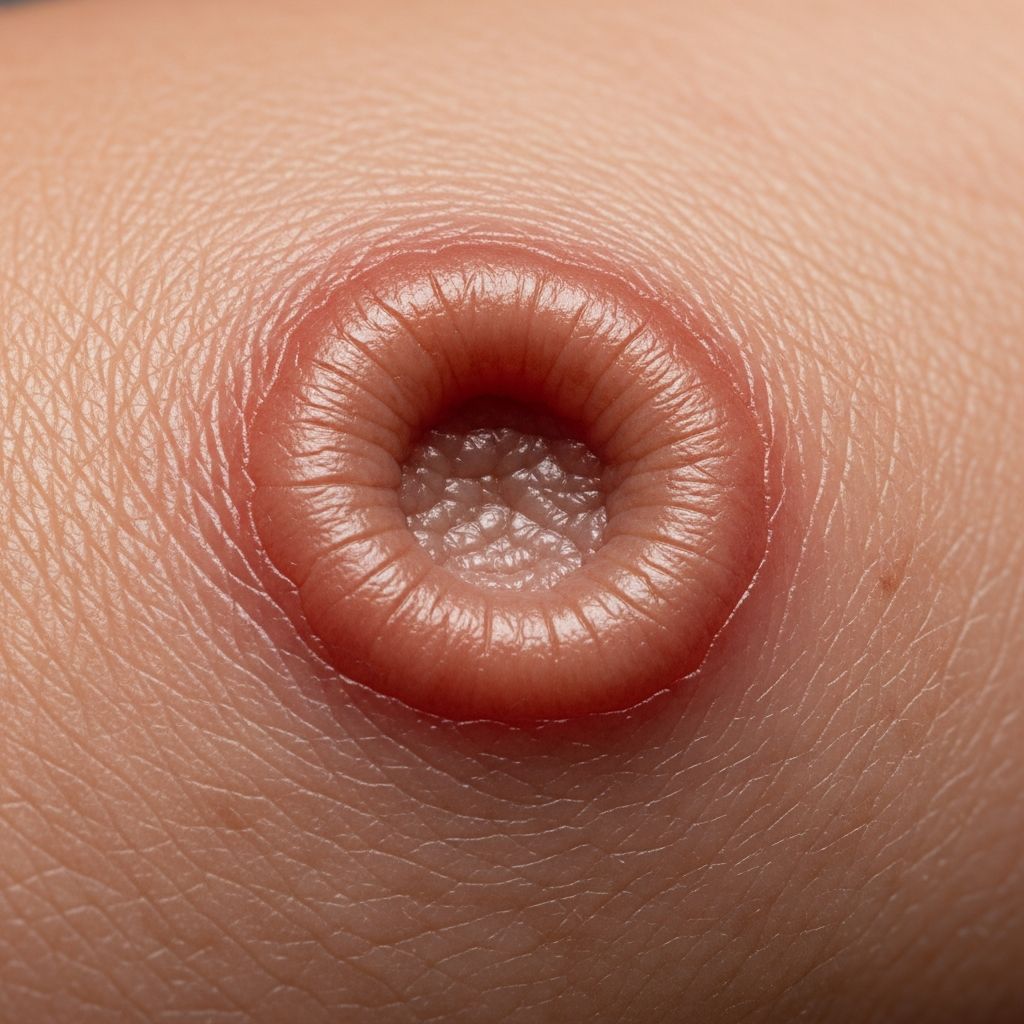
Keratoacanthoma (KA) is a common, rapidly growing, locally destructive skin tumour that may regress spontaneously with scarring, but is clinically indistinguishable from well-differentiated squamous cell carcinoma (SCC), necessitating treatment.
Introduction
Keratoacanthomas are skin tumours characterized by rapid growth over weeks to months, often reaching 1-3 cm in size before potentially involuting. Although biologically benign and capable of spontaneous regression, their histopathological similarity to SCC means they are frequently managed as SCC, KA-type, with surgical excision recommended to prevent local destruction and confirm diagnosis. KAs arise from hair follicles and predominantly affect sun-exposed areas, posing diagnostic challenges due to overlapping features with malignancy.
Demographics
Keratoacanthomas primarily affect older adults, with peak incidence between 50-70 years, though they can occur at any age. They are more common in fair-skinned individuals (Fitzpatrick skin types I-III) due to cumulative UV exposure, and much less frequent in patients with skin of colour, where clinical features remain identical. Men are affected more than women, possibly linked to outdoor occupations and sun exposure history. Multiple KAs or eruptive forms are seen in 10-20% of cases, often associated with genetic predispositions like Ferguson-Smith syndrome.
Causes
The exact aetiology of keratoacanthoma is multifactorial, with ultraviolet (UV) radiation as the primary trigger, explaining their predilection for sun-damaged skin on the face, ears, neck, hands, and forearms. Additional risk factors include:
- Chemical carcinogens: Exposure to tar, coal pitch, or mineral oils, historically noted in occupations like road workers.
- Thermal injury: Burns or chronic trauma to skin.
- Immunosuppression: Higher incidence in organ transplant recipients or those on chemotherapy.
- Genetic syndromes: Ferguson-Smith (multiple self-healing KAs), Gryzbowski (generalized eruptive), or Muir-Torre (KAs with internal malignancies).
- Viral associations: Rare links to HPV in some subungual cases.
These factors promote atypical keratinocyte proliferation within hair follicles, leading to the characteristic lesion.
Clinical features
Keratoacanthomas evolve in three phases: rapid proliferative growth (2-6 weeks), established plateau (4-8 weeks), and potential regression (3-6 months). Key clinical signs include:
- Rapid growth: Appears as a firm nodule enlarging to 1-3 cm quickly.
- Dome-shaped with central crater: Volcano-like with keratin plug filling the centre.
- Colour: Flesh-coloured, pink, red, or hyperkeratotic white centre.
- Symptoms: Often asymptomatic; may itch, tender, or painful.
- Location: Sun-exposed sites: face (lower lip, cheeks), hands, forearms; rarely mucous membranes.
Variants include subungual (nail bed destruction), giant (>2 cm), or multiple eruptive forms.
Variation in skin types
In lighter skin types, KAs present as typical pink/red dome-shaped nodules with prominent keratin horns. In skin of colour (types IV-VI), incidence is lower, but lesions are morphologically identical, though hyperpigmentation or scarring may be more pronounced post-regression. Diagnosis relies on histopathology regardless of skin type, as clinical mimicry of SCC persists across ethnicities.
Complications
While often self-resolving, complications arise from local tissue destruction or misdiagnosis:
- Scarring: Atrophic or hypertrophic scars post-involution.
- Recurrence: 5-10% after incomplete treatment.
- Progression to SCC: Rare but reported (1-2%), especially atypical or large lesions.
- Functional impairment: Eyelid, nasal, or subungual sites causing vision loss, airway obstruction, or nail dystrophy.
- Cosmetic deformity: Especially on the face.
Related Stories



Perineural invasion, though uncommon, warrants aggressive management.
Diagnosis
Diagnosis combines history (rapid growth), clinical exam (crateriform nodule), and histopathology. Incisional or excisional biopsy is essential; shave biopsies are inadequate as they miss deep architecture. Histology shows:
- Low power: Symmetrical crater with overhanging lips and keratin-filled centre.
- High power: Enlarged atypical keratinocytes with eosinophilic cytoplasm, not breaching sweat glands.
Dermoscopy may reveal white keratin vortex with telangiectasia. Radiographs for subungual KAs assess bone involvement.
Differential diagnoses
| Condition | Key Distinguishing Features |
|---|---|
| Squamous cell carcinoma (SCC) | Asymmetric growth, slower progression, deeper invasion; histologically infiltrative. |
| Pyogenic granuloma | Colloid nodule, bleeds easily, no keratin crater. |
| Intraepidermal carcinoma | Flat, scaly plaque; no central plug. |
| Basal cell carcinoma | Pearly border, rolled edges, ulceration. |
| Actinic keratosis | Small, rough, flat; precursor to SCC. |
Definitive differentiation requires full-thickness biopsy.
Treatment
Surgical excision is the gold standard, assuming KA-like lesions are SCC until proven otherwise. Options include:
- Excision: Complete removal with 4mm margins; definitive and diagnostic.
- Curettage & electrodesiccation: For small (<2cm) lesions on extremities.
- Mohs micrographic surgery: Tissue-sparing for facial/recurrent/perineural cases.
- Cryotherapy: Liquid nitrogen for small lesions; repeatable.
- Intralesional injections: Methotrexate (83-100% response), 5-FU (98%), bleomycin.
- Topical therapies: 5-FU, imiquimod, retinoids; for poor surgical candidates.
- Radiation: Reserved for large/multiple inoperable lesions.
- Oral retinoids: For multiple eruptive KAs.
Observation is controversial due to SCC risk; not recommended without biopsy confirmation of regression.
Outcome
Post-excision, healing occurs with minimal scarring if margins clear. Spontaneous regression leaves atrophic scars; recurrence rare with complete removal. Prognosis excellent (>95% cure rate), but monitor for new lesions in high-risk patients. Multidisciplinary care involving dermatologists, pathologists, and surgeons optimizes outcomes, especially for facial or syndromic cases.
Frequently Asked Questions (FAQs)
Q: What is keratoacanthoma?
A: A rapidly growing skin tumour resembling a volcano, often on sun-exposed areas, that may regress but requires biopsy to exclude cancer.
Q: Is keratoacanthoma cancerous?
A: Benign but histologically similar to SCC; treated as potential malignancy.
Q: How is it diagnosed?
A: By excisional biopsy and histopathology to differentiate from SCC.
Q: What is the best treatment?
A: Surgical excision with margins; alternatives for select cases.
Q: Can it go away on its own?
A: Yes, but observation risks scarring or misdiagnosis; treatment preferred.
Q: Who is at risk?
A: Older fair-skinned individuals with UV exposure history.
References
- Keratoacanthoma Treatment – Northridge Dermatology — Northridge Dermatology. 2023. https://northridgedermatology.com/medical-dermatology/keratoacanthoma/
- Keratoacanthoma — DermNet NZ. 2024-01-15. https://dermnetnz.org/topics/keratoacanthoma
- Keratoacanthoma – StatPearls — NCBI Bookshelf / NIH. 2023-07-17. https://www.ncbi.nlm.nih.gov/books/NBK499931/
- What is Keratoacanthoma? — GentleCure. 2024. https://www.gentlecure.com/what-is-keratoacanthoma/
- What is Keratoacanthoma? Causes, Symptoms, Prevention, Treatment — WebMD. 2023. https://www.webmd.com/melanoma-skin-cancer/keratoacanthoma-skin-tumor
- Keratoacanthomas – Skin Disorders — Merck Manuals. 2024. https://www.merckmanuals.com/home/skin-disorders/skin-cancers/keratoacanthomas
Similar Articles








Read full bio of medha deb