Keratoelastoidosis Marginalis
Understanding keratoelastoidosis marginalis: symptoms, causes, diagnosis, and management of this sun-induced hand dermatosis.
Authoritative facts about keratoelastoidosis marginalis from peer-reviewed dermatology sources.
What is keratoelastoidosis marginalis?
Keratoelastoidosis marginalis (KEM), also known as keratoelastoidosis marginalis of the hands (KEMH) or digital papular calcific elastosis, is an acquired form of marginal keratoderma characterized by small, firm, warty or pearly papules primarily on the sides of the index fingers and thumbs. It belongs to the group of solar elastotic dermatoses and affects the marginal areas of the hands, often in individuals with prolonged sun exposure and manual labor.
This condition develops due to chronic actinic damage combined with mechanical trauma, leading to epidermal hyperkeratosis and dermal elastotic changes. Unlike hereditary forms, KEM is not familial and arises later in life, typically remaining stable once established. It is more prevalent than inherited variants like acrokeratoelastoidosis of Costa.
Who gets keratoelastoidosis marginalis?
KEM predominantly affects middle-aged and elderly individuals over 50 years, with a higher incidence in males engaged in outdoor occupations such as farming. Risk factors include prolonged ultraviolet (UV) radiation exposure, heavy manual work involving repeated hand trauma, and pressure on the fingers.
Patients often present with occupational histories of chronic sun exposure without adequate protection, leading to cumulative photodamage. The dominant hand is typically more severely affected, supporting the role of mechanical stress. Associated conditions include other signs of photoaging, such as solar elastosis, cutis rhomboidalis nuchae, and Favre-Racouchot syndrome.
- Middle-aged to elderly adults (over 50 years)
- Outdoor workers (e.g., farmers, laborers)
- History of chronic UV exposure and hand trauma
- Male predominance in reported cases
What causes keratoelastoidosis marginalis?
The etiology involves a combination of chronic sun exposure and mechanical factors. UV radiation induces solar elastosis in the dermis, with fragmented and calcified elastic fibers. Repeated trauma and pressure from manual labor contribute to hyperkeratosis, possibly via papillary dermal capillary occlusion and hypoxia.
Histopathogenic theories suggest compression from accumulated elastotic material exacerbates epidermal changes. Unlike degenerative elastolysis, abnormal elastic fiber secretion in dermal fibroblasts may play a role, though not fully proven. Primary prevention focuses on UV protection, as actinic damage is central.
What are the signs and symptoms of keratoelastoidosis marginalis?
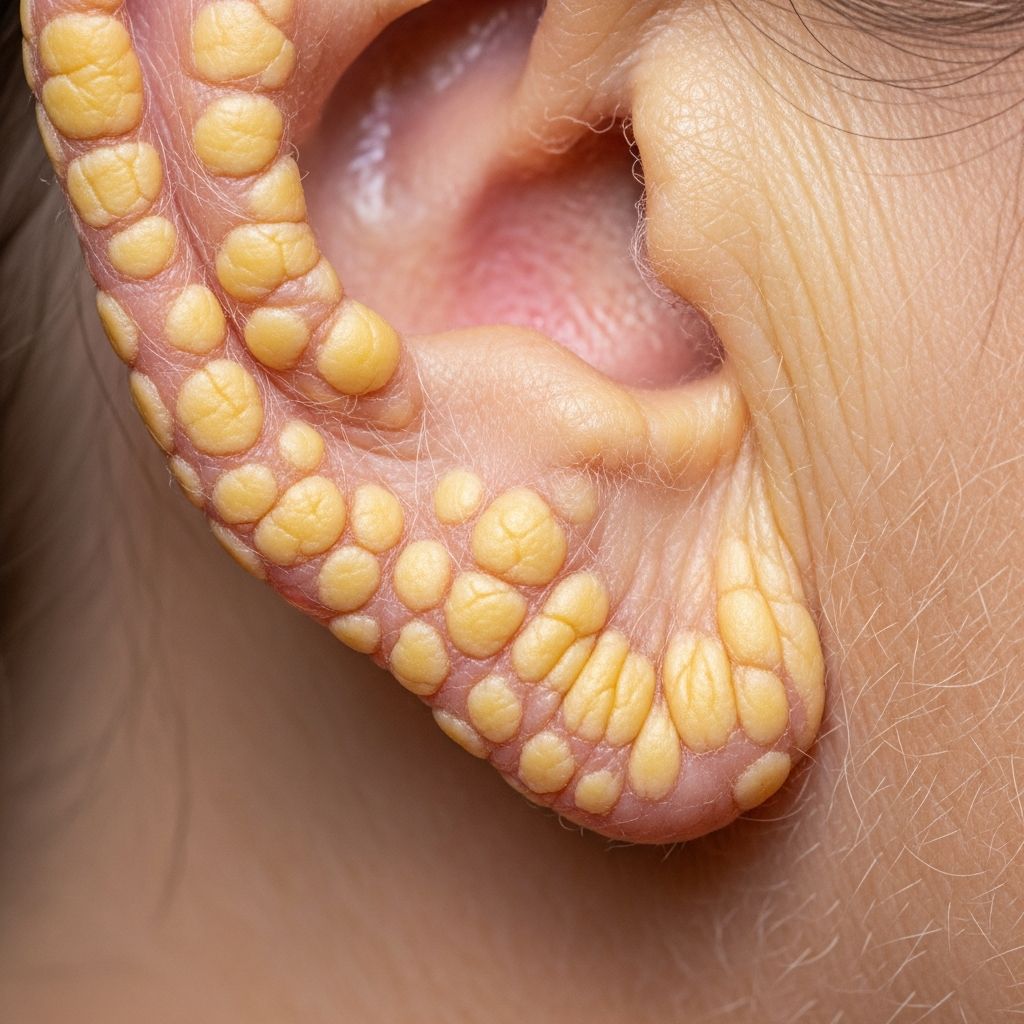
Lesions appear as irregular, keratotic, sometimes crateriform papules on the radial side of the index fingers, first web space, and ulnar side of the thumbs. Papules may coalesce into linear plaques with a yellowish hue in surrounding skin.
The condition is typically asymptomatic, persisting indefinitely without progression. Cosmetic concerns are primary, though rare irritation may occur. Associated photoaging signs include:
- Yellowish, leathery skin with deep wrinkles on face and neck
- Solar comedones and nodular elastosis (Favre-Racouchot)
- Cutis rhomboidalis nuchae (deep furrows on nape)
- Colloid milium near eyes
Figure descriptions from cases: Linear keratotic plaques on radial index finger and web space; similar on ulnar little finger in some.
How is keratoelastoidosis marginalis diagnosed?
Diagnosis is primarily clinical, based on age over 50, lesion distribution, absence of family history, and coexisting sun damage. Skin biopsy confirms if needed, revealing:
- Epidermal: Compact hyperkeratosis, acanthosis, hypergranulosis
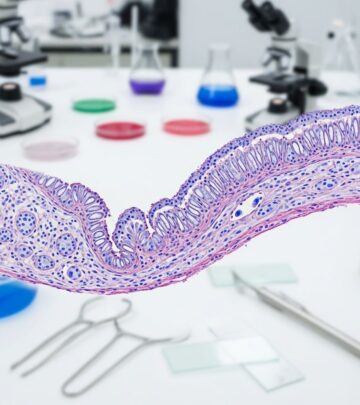
- Dermal: Solar elastosis, thickened/fragmented elastic fibers (elastorrhexis), basophilic collagen degeneration, possible calcification, dilated vessels, mild inflammation
Differential diagnoses require distinction:
| Condition | Key Features | Differentiator from KEM |
|---|---|---|
| Acrokeratoelastoidosis of Costa | Hereditary, onset in puberty, palms/soles involved | Familial, younger age, symmetric on hands/feet |
| Focal acral hyperkeratosis | No elastosis, no sun damage history | Lacks dermal changes, different distribution |
| Punctate palmoplantar keratoderma | Multiple tiny keratoses on palms/soles | Not marginal, no plaques |
What is the treatment for keratoelastoidosis marginalis?
KEM is benign and progressive but often requires no treatment beyond cosmesis. Options provide temporary relief with recurrences:
- Topical keratolytics: Salicylic acid, tazarotene, tretinoin (temporary softening)
- Topical corticosteroids: High-potency for inflammation (limited use)
- Systemic retinoids: Oral isotretinoin or acitretin (variable response, relapse on cessation)
- Procedural: Cryotherapy, laser therapy (e.g., erbium:YAG), with mixed results
Lifelong sun protection (SPF 50+, clothing, avoidance) is essential to prevent worsening. Patient education on prevention is key.
Frequently Asked Questions (FAQs)
Q: Is keratoelastoidosis marginalis painful?
A: No, it is usually asymptomatic, causing mainly cosmetic concerns.
Q: Can keratoelastoidosis marginalis be prevented?
A: Yes, through daily broad-spectrum sunscreen, protective gloves, and limiting sun/manual trauma exposure.
Q: Does keratoelastoidosis marginalis spread?
A: No, it remains localized to marginal hand areas and does not progress systemically.
Q: Is keratoelastoidosis marginalis hereditary?
A: No, it is acquired, unlike acrokeratoelastoidosis of Costa.
Q: What is the prognosis for keratoelastoidosis marginalis?
A: Benign and chronic; stable indefinitely with proper sun protection.
Related topics
- Acrokeratoelastoidosis of Costa
- Cutis rhomboidalis nuchae
- Favre-Racouchot syndrome
- Solar elastosis
- Marginal keratoderma
References
- Keratoelastoidosis marginalis of the hands: A report in two farmers — PMC/NCBI. 2016-06-01. https://pmc.ncbi.nlm.nih.gov/articles/PMC4886595/
- Keratoelastoidosis marginalis – DermNet — DermNet NZ. 2023. https://dermnetnz.org/topics/keratoelastoidosis-marginalis
- Acrokeratoelastoidosis of Costa – Wikipedia — Wikipedia (informed primary sources). 2023. https://en.wikipedia.org/wiki/Acrokeratoelastoidosis_of_Costa
- Keratoelastoidosis Marginalis of the Hands: A Distinct Form of Palmoplantar Keratoderma — Cureus. 2024. https://www.cureus.com/articles/312175-keratoelastoidosis-marginalis-of-the-hands-a-distinct-form-of-palmoplantar-keratoderma.pdf
- Keratoelastoidosis marginalis: a case report and review of literature — JPAD. 2022. https://jpad.com.pk/index.php/jpad/article/download/657/630
- Keratoelastoidosis Marginalis – DoveMed — DoveMed. 2024. https://www.dovemed.com/diseases-conditions/keratoelastoidosis-marginalis
Similar Articles



Read full bio of medha deb