Keratolytic Winter Erythema: Symptoms, Causes, Treatment Guide
Rare genetic skin disorder causing recurrent palmoplantar peeling and erythema, worsening in winter months.
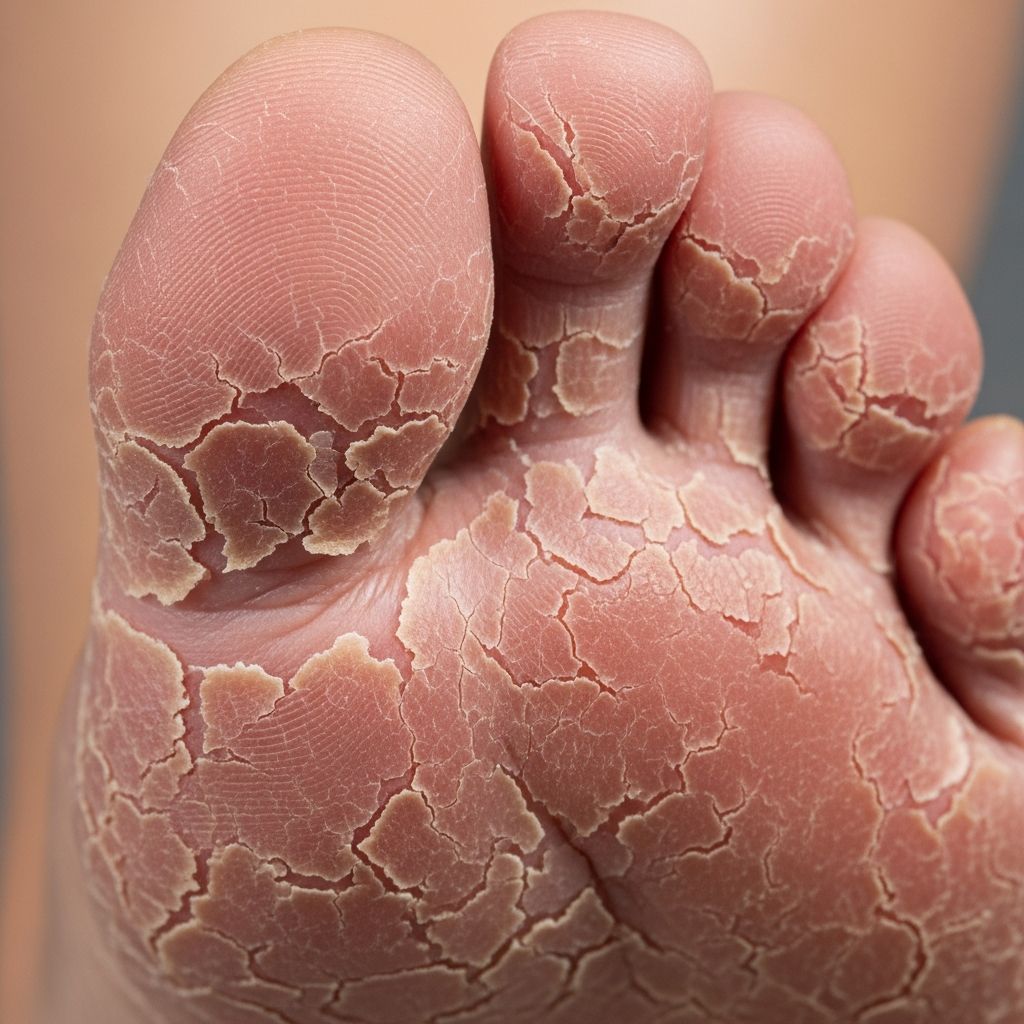
Keratolytic winter erythema (KWE), also known as Oudtshoorn disease or erythrokeratolysis hiemalis, is a rare autosomal dominant genodermatosis characterized by recurrent episodes of erythema, hyperkeratosis, and keratolytic peeling primarily affecting the palms and soles, with exacerbations during winter months.
Introduction
Keratolytic winter erythema is an uncommon epidermal disorder first described among Afrikaans-speaking families in the Oudtshoorn region of South Africa, though cases have been reported elsewhere without direct South African ancestry. The condition manifests as cyclical skin peeling preceded by redness and the formation of superficial dry blisters on the palms and soles. Peeling is often centrifugal, spreading from central areas outward, and is exacerbated by water exposure. While primarily palmoplantar, lesions can extend to the dorsum of hands and feet, interdigital spaces, lower legs, knees, thighs, buttocks, trunk, and rarely the face. Symptoms typically begin in infancy or early childhood and follow an intermittent, recurrent pattern throughout life, with variable severity.
Associated features include intense itching (pruritus), excessive sweating (hyperhidrosis) with a pungent odor, and occasional secondary bacterial infections. Triggers such as cold weather, low humidity, fever, stress, and moisture worsen episodes, while symptoms often improve in summer, during pregnancy, or with advancing age. The disease shows high penetrance but variable expressivity, even within families.
Demographics
KWE predominantly affects individuals of South African descent, particularly those with Afrikaner ancestry from the Western Cape region around Oudtshoorn. However, isolated cases have been documented in other populations, including in Europe and North America, without evident South African links. It follows an autosomal dominant inheritance pattern, meaning a 50% chance of transmission from an affected parent to offspring. Onset is usually between birth and early adulthood, with most cases presenting in infancy or childhood. Both males and females are equally affected, and prevalence is estimated to be extremely low, classified as an ultra-rare disease.
- Primary population: Afrikaner descendants in South Africa.
- Inheritance: Autosomal dominant with complete penetrance but variable expressivity.
- Age of onset: Infancy to early adulthood.
- Sex distribution: Equal.
Causes
The exact etiology of KWE remains incompletely understood, but it is firmly established as a genetic disorder linked to a specific chromosomal locus. Genetic studies have mapped the causative gene to the q12.2-q12.3 region of chromosome 8, though the precise gene and mutation have not been fully identified. Pathophysiology involves abnormal epidermal differentiation, leading to defective stratum corneum formation, spongiosis (intercellular edema in the epidermis), and clefting within the horny layer, resulting in characteristic keratolysis.
Environmental factors play a modulating role: cold, dry winter air disrupts the skin barrier, promoting hyperproliferation of basal keratinocytes and impaired desquamation. Additional triggers include hyperhidrosis-induced moisture, physical/mental stress, febrile illnesses, and low humidity, which exacerbate peeling. Unlike acquired keratolysis, KWE is hereditary and not associated with infectious agents or nutritional deficiencies.
| Trigger/Modifier | Description | Effect |
|---|---|---|
| Cold weather | Winter months, low temperatures | Worsens erythema and peeling |
| Hyperhidrosis | Excessive palmoplantar sweating | Promotes blister formation and odor |
| Water exposure | Prolonged wetting | Enhances peeling |
| Pregnancy/Age | Hormonal changes, maturity | Improves symptoms |
| Stress/Fever | Physical/mental illness | Triggers flares |
Clinical Features
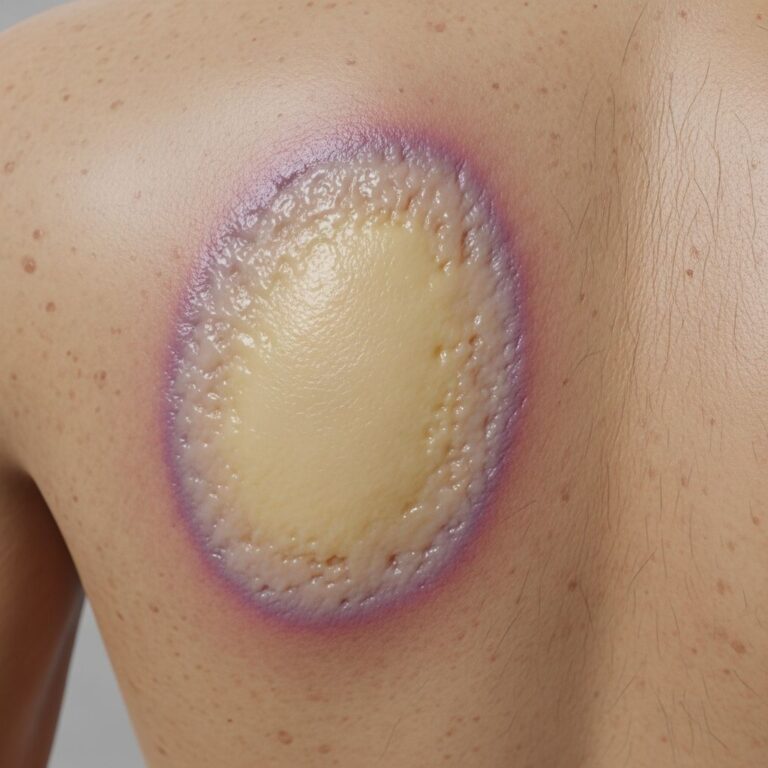
The hallmark of KWE is recurrent, seasonal palmoplantar erythema followed by keratolytic peeling. Episodes begin with redness and mild itching, progressing to the formation of dry, superficial blisters or vesicles due to cleavage in the stratum corneum. These rupture easily, leading to substantial peeling sheets that can be gripped and peeled off, often enhanced by water immersion. Skin between flares may appear normal or hyperkeratotic.
Related Stories



Extra-palmoplantar involvement occurs in some cases: slowly expanding annular erythematous plaques with trailing peeling edges on limbs, buttocks, or trunk; one report noted facial lesions. Persistent features include hyperhidrosis with a foul odor and pruritus. Severity varies; mild cases show superficial scaling, while severe ones cause painful fissuring, impaired grip, and secondary infections.
- Core symptoms: Palmoplantar erythema, peeling, hyperhidrosis, odor, itch.
- Progression: Erythema → dry blisters → peeling (centrifugal).
- Seasonal pattern: Peaks in winter, remits in summer.
Complications
While KWE is benign and not life-threatening, complications can impact quality of life. Secondary bacterial infections from fissured skin lead to pain, cellulitis, or lymphangitis. Chronic hyperhidrosis fosters odor and social embarrassment. Painful cracking impairs manual dexterity and ambulation, causing functional disability. Psychological effects include anxiety from visible lesions and odor. Rarely, persistent annular plaques mimic other dermatoses.
Diagnosis
Diagnosis is clinical, based on characteristic history of recurrent winter-exacerbated palmoplantar peeling in a genetic context. Skin biopsy confirms pathognomonic features: epidermal spongiosis, suprabasal clefting/acantholysis, parakeratosis, and absent granular layer. Direct immunofluorescence is negative, ruling out autoimmune blistering diseases. Genetic testing, though not routine, targets chromosome 8q for research confirmation.
Differential Diagnoses
Differential includes both genetic and acquired palmoplantar keratodermas/peelings.
| Condition | Key Distinguishing Features |
|---|---|
| Keratolysis exfoliativa | Superficial ring-like peeling, summer worsening, sporadic |
| Palmoplantar keratoderma | Persistent hyperkeratosis, less peeling, variable inheritance |
| Tinea manuum/pedis | Fungal infection, positive KOH prep, responds to antifungals |
| Psoriasis | Well-defined plaques, nail changes, family history |
| Contact dermatitis | History of irritant exposure, resolves with avoidance |
| Hailey-Hailey disease | Acantholysis on biopsy, intertriginous involvement |
Treatment
There is no curative or reliably effective treatment for KWE; management is symptomatic and supportive. Bland emollients (e.g., petrolatum, Epaderm) hydrate skin and reduce scaling. Topical keratolytics (urea, salicylic acid), retinoids, and corticosteroids often aggravate peeling and are contraindicated. Antiperspirants (e.g., aluminum chloride) control hyperhidrosis and odor.
Emerging options include UVB phototherapy or photodynamic therapy (PDT), with anecdotal success in reducing flares. Systemic retinoids and oral steroids have failed or worsened symptoms. Prevention focuses on moisturizing, humidifiers, avoiding triggers, and gentle skincare. Regular dermatologist follow-up is essential for infection monitoring and psychosocial support.
- First-line: Emollients, antiperspirants.
- Avoid: Keratolytics, steroids, retinoids.
- Experimental: PDT, phototherapy.
Outcome
KWE is chronic with lifelong recurrences, but episodes often lessen in frequency and severity with age. Pregnancy may induce remission. Functional impairment is minimal in mild cases; severe cases require ongoing management to prevent complications. Genetic counseling is recommended for families due to 50% inheritance risk. Prognosis is excellent for life expectancy, with focus on quality-of-life optimization.
Frequently Asked Questions (FAQs)
What is keratolytic winter erythema?
KWE is a rare genetic skin disorder causing recurrent redness and peeling on palms and soles, worse in winter.
Is there a cure for KWE?
No cure exists; treatment is symptomatic with emollients and trigger avoidance.
Does KWE affect only South Africans?
Primarily Afrikaner descendants, but cases occur worldwide.
Can KWE be prevented?
Not preventable due to genetic basis, but symptoms managed by moisturizing and avoiding cold/dry conditions.
Is KWE contagious?
No, it is hereditary, not infectious.
References
- Keratolytic Winter Erythema: Symptoms, Causes and Treatments — Medicover Hospitals. 2023. https://www.medicoverhospitals.in/diseases/keratolytic-winter-erythema/
- Keratolytic winter erythema – DermNet — DermNet NZ. 2024-01-15. https://dermnetnz.org/topics/keratolytic-winter-erythema
- Keratolytic Winter Erythema – Symptoms, Causes, Treatment | NORD — National Organization for Rare Disorders (rarediseases.org). 2023-05-10. https://rarediseases.org/rare-diseases/ichthyosis-erythrokeratolysis-hiemalis/
- Keratolytic winter erythema – Orphanet — Orphanet. 2024. https://www.orpha.net/en/disease/detail/50943
- Erythrokeratolysis heimalis (keratolytic winter erythema, Oudtshoorn disease) — Dermatology Advisor. 2023-11-20. https://www.dermatologyadvisor.com/home/decision-support-in-medicine/dermatology/erythrokeratolysis-heimalis-keratolytic-winter-erythema-oudtshoorn-disease/
- Keratolytic winter erythema — GARD (Genetic and Rare Diseases Information Center). 2024. https://rarediseases.info.nih.gov/diseases/8275/keratolytic-winter-erythema
- Keratolytic Winter Erythema (KWE) – MalaCards — MalaCards. 2024-02-01. https://www.malacards.org/card/keratolytic_winter_erythema
Similar Articles








Read full bio of medha deb