Keratosis Circumscripta: Diagnosis, Treatment And Patient Guide
Rare childhood skin disorder with circumscribed hyperkeratotic plaques on elbows, knees, and other sites.
What is keratosis circumscripta?
Keratosis circumscripta is a rare, benign dermatological condition primarily affecting children. It manifests as well-circumscribed, circular patches composed of aggregated small papules, each topped with a rough keratin plug protruding from the follicular orifice. These lesions are hyperkeratotic, violaceous plaques that are strikingly symmetric and stable, often showing resistance to conventional therapies.
The disorder was first described in the literature as a distinct entity, separate from other hyperkeratotic conditions like psoriasis or pityriasis rubra pilaris (PRP). Clinically, it presents with grouped folliculocentric papules forming sharply demarcated clusters, typically on extensor surfaces. Histologically, it features moderate hyperkeratosis, follicular plugging, and absence of inflammatory changes in the lower epidermis or dermis, distinguishing it from inflammatory dermatoses.
Unlike progressive conditions, keratosis circumscripta tends to remain nonprogressive after initial development, enlarging slowly over years but persisting long-term without spontaneous resolution in most cases. Its etiology remains unknown, with no identified genetic or infectious triggers, positioning it as an idiopathic keratoderma.
Who gets keratosis circumscripta?
This condition predominantly occurs in pediatric populations, with onset typically in early childhood. Lesions usually appear and evolve over 2-3 weeks, affecting otherwise healthy children without systemic symptoms. It is exceedingly rare, with only sporadic case reports in medical literature, suggesting an incidence far below 1 in 100,000.
There is no strong evidence of familial predisposition, though isolated reports hint at possible genetic factors. It affects both genders equally and has been documented across ethnicities, with no racial predilection noted. Adults are rarely affected, and when reported, it is often a continuation from childhood.
What causes keratosis circumscripta?
The precise cause of keratosis circumscripta is unknown. It does not appear linked to infections, autoimmunity, or metabolic disorders. Hypotheses include a localized keratinization defect confined to hair follicles, leading to excessive keratin production and plugging without dermal inflammation.
Some researchers propose it as a forme fruste or variant of other keratodermas, but its stable, nonprogressive course and specific morphology argue for uniqueness. No viral, bacterial, or fungal associations have been confirmed via biopsies or cultures. Environmental triggers are not implicated, as lesions persist regardless of climate or exposure.
What are the clinical features of keratosis circumscripta?
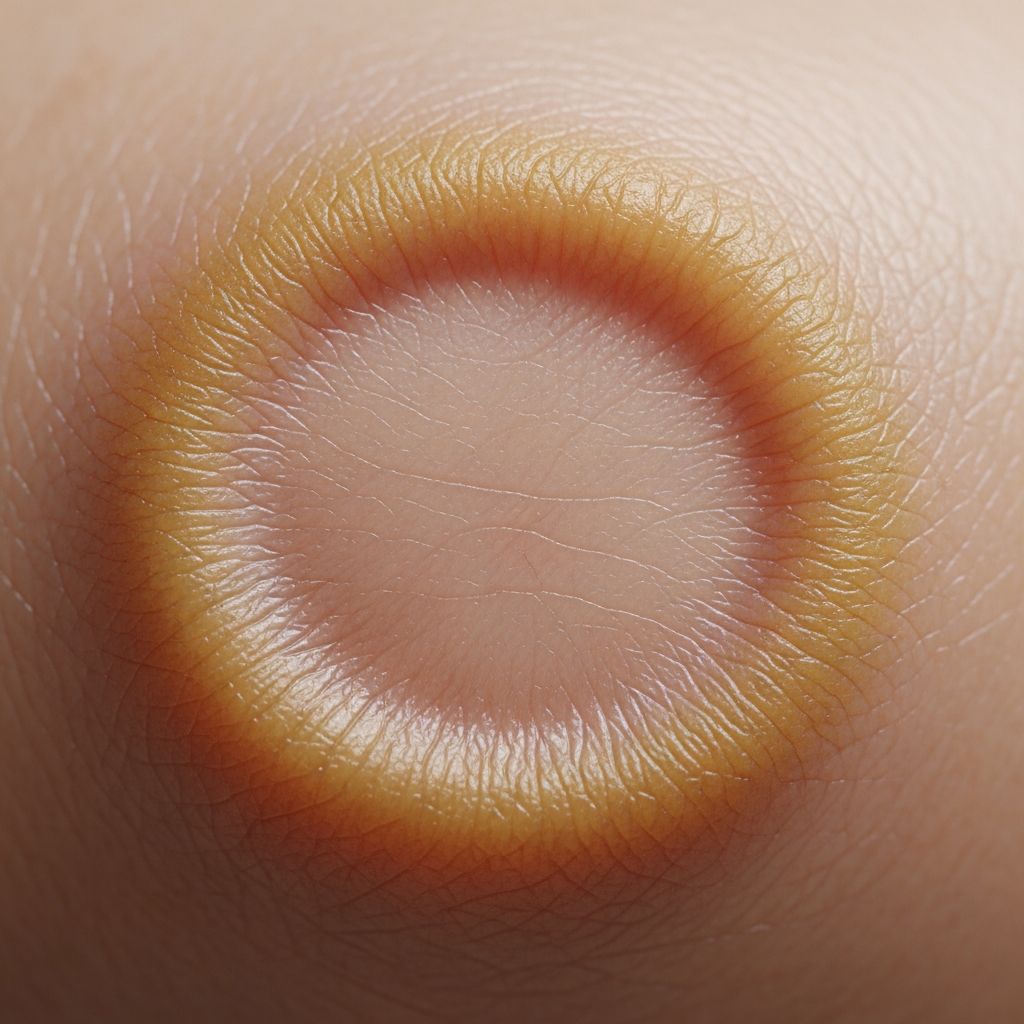
Keratosis circumscripta is characterized by symmetric, sharply demarcated violaceous plaques composed of innumerable small (1-2 mm) folliculocentric papules. Each papule has a central horny plug, giving a rough, ‘stuck-on’ appearance. Plaques are annular or geographic, measuring 3-10 cm in diameter, with a hyperkeratotic surface and minimal scaling.
Common sites include:
- Elbows and knees (most frequent, often bilateral extensor surfaces)
- Neck and posterior axillary folds
- Sacrum and base of the spine
- Hips and shoulders
- Occasionally, dorsal hands, feet, or trunk
Lesions are asymptomatic, lacking pruritus, pain, or tenderness. They develop rapidly over weeks, stabilize, and may slowly enlarge over years. No nail, mucosal, or systemic involvement occurs. In some cases, perifollicular accentuation resolves with treatment, but plaque color and demarcation persist.
Related Stories



Diagnosis
Diagnosis is primarily clinical, based on characteristic morphology: symmetric, circumscribed hyperkeratotic plaques with folliculocentric papules on predilection sites in a child. Dermoscopy may reveal central keratin plugs and perifollicular pigmentation.
Histopathology confirms the diagnosis, showing:
- Marked orthokeratotic hyperkeratosis
- Follicular plugging/keratin casts
- Acanthosis without parakeratosis
- Absent neutrophilic microabscesses or spongiosis
- No dermal inflammation
Differential diagnosis includes:
| Condition | Key Distinguishing Features |
|---|---|
| Circumscribed juvenile pityriasis rubra pilaris (Type IV PRP) | More widespread, orange-red hue, palmoplantar involvement, responds to retinoids |
| Lichen spinulosus | Spiny projections, trunk predominant, self-resolving |
| Psoriasis | Auspitz sign, micaceous scale, nail changes, responds to topicals/systemics |
| Palmoplantar keratodermas | Confined to palms/soles, genetic, often painful |
Biopsy is recommended if atypical features or treatment resistance to rule out mimics.
Treatment of keratosis circumscripta
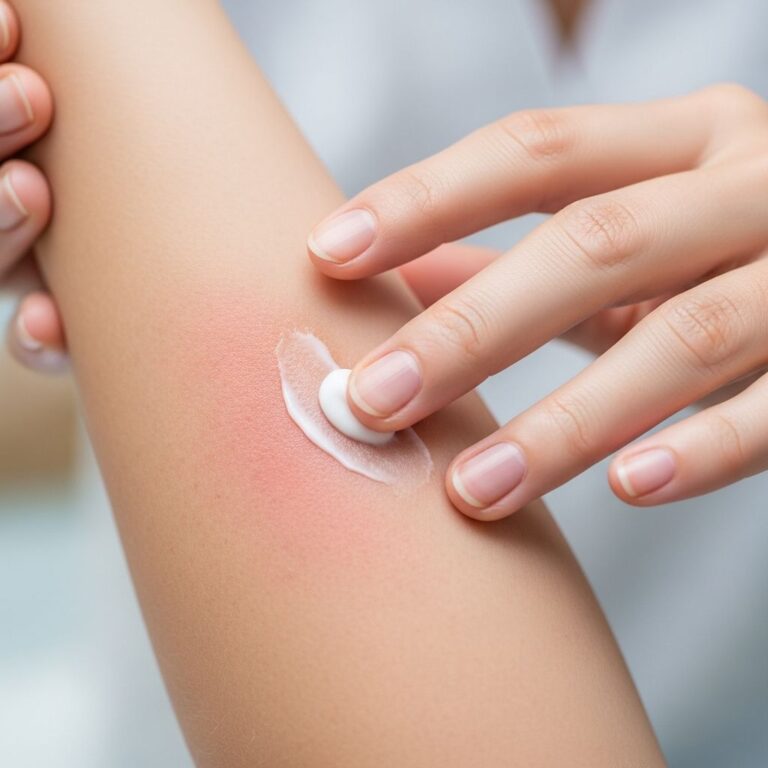
Treatment is challenging, as lesions are notoriously resistant to therapies effective for similar conditions like PRP or psoriasis. Emollients and keratolytics offer symptomatic relief by softening hyperkeratosis and extruding plugs.
Recommended approaches:
- Topical keratolytics: Urea 20-40% cream twice daily (softens lesions in 4 weeks, resolves perifollicular papules).
- Salicylic acid 2-6% in urea or emollient base.
- Alpha-hydroxy acids (lactic/glycolic acid 6-12%).
- Salicylic acid peels or chemical peels for thicker plaques.
- Laser therapy (e.g., CO2 or erbium:YAG) for refractory cases.
Systemic retinoids (acitretin) have limited success and are reserved for severe cases due to side effects. Topical steroids, calcipotriol, and methotrexate typically fail. Maintenance with urea cream sustains improvements.
Patient education emphasizes gentle debridement, moisturization, and avoidance of irritants. Prognosis is good cosmetically with consistent therapy, though complete resolution is rare.
Clinical images
Images typically depict symmetric violaceous plaques on elbows/knees with hyperkeratotic, plugged papules. (Descriptions based on case reports: sharply demarcated clusters, rough texture).
Frequently Asked Questions
Q: Is keratosis circumscripta contagious?
A: No, it is not infectious or contagious; the cause is unknown but non-communicable.
Q: Does keratosis circumscripta go away on its own?
A: It persists long-term but may slowly improve with age; spontaneous resolution is uncommon.
Q: Can adults get keratosis circumscripta?
A: Rare; usually starts in childhood and may continue.
Q: Is it related to psoriasis?
A: Mimics clinically but histologically distinct and treatment-resistant.
Q: What is the best treatment?
A: Topical urea 40% cream twice daily for softening and maintenance.
References
- Keratosis Circumscripta Revisited: A Case Report and Review of the Literature — MDedge Dermatology. 2007. https://live.mdedge.com/content/keratosis-circumscripta-revisited-case-report-and-review-literature
- Keratosis circumscripta — DermNet NZ. Accessed 2026. https://dermnetnz.org/topics/keratosis-circumscripta
- Keratosis circumscripta revisited: a case report and review of the literature — PubMed (Cutis). 2007-06. https://pubmed.ncbi.nlm.nih.gov/17569397/
- Palmoplantar Keratodermas — Foundation for Ichthyosis & Related Skin Types (FIRST). Accessed 2026. https://www.firstskinfoundation.org/types-of-ichthyosis/palmoplantar-keratodermas
Similar Articles








Read full bio of Sneha Tete