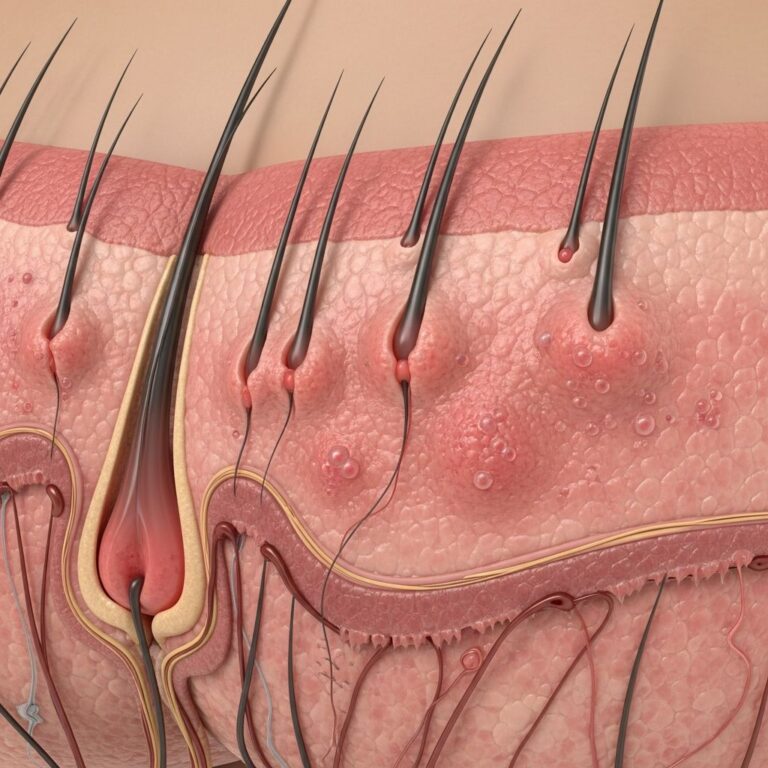
Keratosis Lichenoides Chronica: Diagnosis, Treatment, Outcomes
Rare chronic skin disorder with linear violaceous papules on limbs and seborrhoeic-like facial eruption.
Introduction
Keratosis lichenoides chronica (KLC), also known as Nekam’s disease, is a rare, chronic dermatological condition characterized by distinctive violaceous, keratotic papules and nodules arranged in linear or reticulate patterns on the trunk and extremities, often accompanied by a seborrhoeic dermatitis-like eruption on the face. This disorder typically follows a progressive course, though it may improve with age or sun exposure in some cases. First described in the mid-20th century, KLC remains poorly understood, with diagnosis often delayed by an average of 9 years due to its rarity and mimicry of other skin diseases. The condition affects both sexes equally, with a slight male predominance reported in some series, and is more common in individuals of Northern European descent, though cases occur across ethnicities.
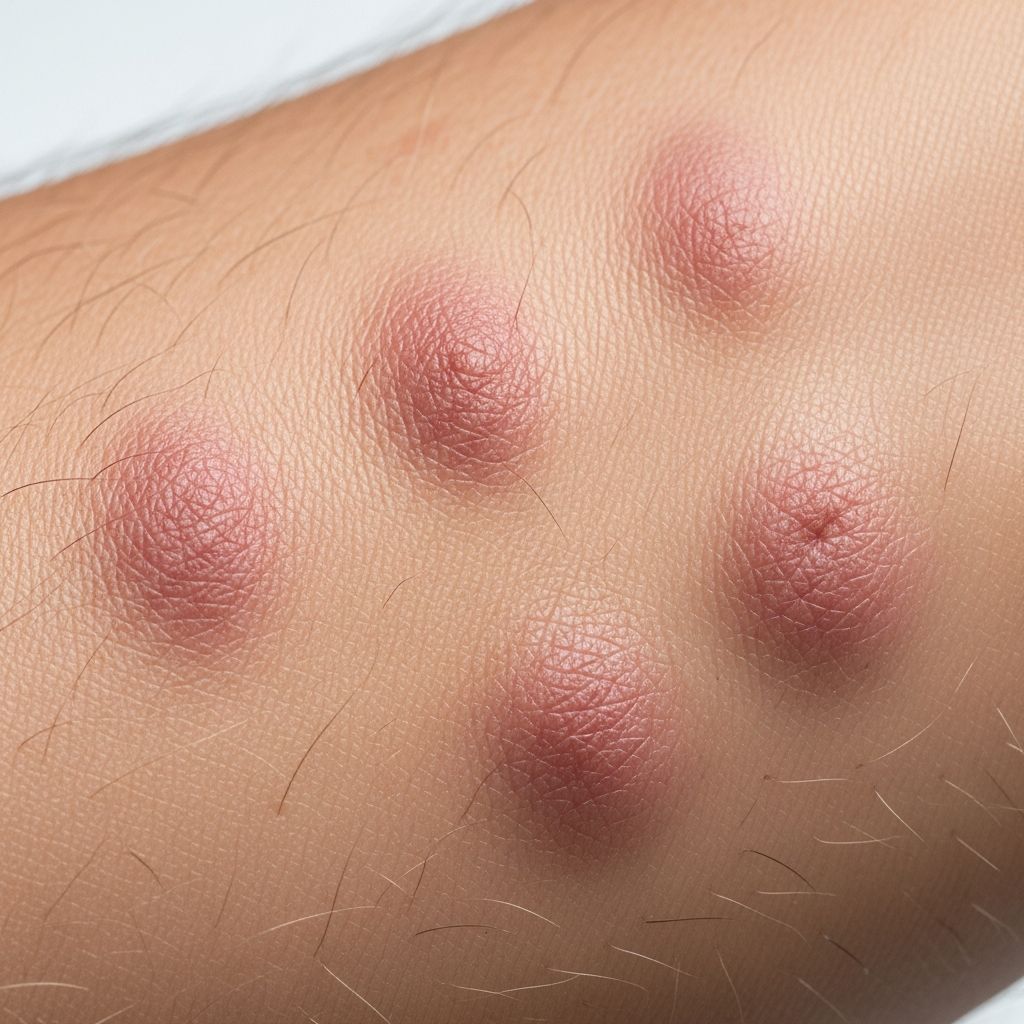
Clinically, KLC manifests as brownish-purple, thickly scaled papules or small nodules symmetrically distributed on the limbs and trunk. These lesions are usually asymptomatic, but pruritus occurs in about 20% of patients. Facial involvement, seen in 70% of cases, presents as erythematous plaques with greasy hyperkeratotic scaling on convex areas like the forehead, cheeks, nose, and periorificial regions, sparing the nasolabial folds. Additional mucocutaneous features include oral erosions, nail dystrophy, and ocular inflammation, contributing to its complex presentation.
Demographics
KLC can onset at any age but is more frequently reported in adults, with childhood cases being rarer. It shows no strong gender bias, though some reviews note a mild male preponderance. The disease predominates in fair-skinned populations of Northern European origin, but documented cases span diverse ethnic backgrounds, including Asian and Middle Eastern patients. Familial clustering has been observed, suggesting a genetic component, particularly linked to mutations in the NLRP1 gene. Incidence is unknown due to underreporting, but its rarity is underscored by fewer than 100 well-documented cases in medical literature.
Causes
The precise etiology of KLC remains elusive, but recent genetic insights point to aberrant inflammasome activation. Gain-of-function mutations in the NLRP1 gene, an inflammasome sensor, have been identified in familial cases. This leads to overproduction of proinflammatory cytokines like interleukin-1 (IL-1), tumor necrosis factor-alpha (TNF-α), and keratinocyte growth factors, driving epidermal hyperplasia, hyperkeratosis, and the characteristic papular morphology. Environmental triggers such as mechanical trauma, infections (e.g., hepatitis, tuberculosis), drugs, and autoimmunity have been postulated but not consistently proven.
Associations with systemic conditions include renal disease, diabetes, hypothyroidism, lymphoma, and hepatitis, though causality is unclear. Unlike classic lichen planus, KLC lacks a strong autoimmune lichenoid mechanism, instead showing a mixed inflammatory profile. No infectious agent has been definitively isolated, and histopathological findings do not support a microbial cause.
Clinical Features
The hallmark of KLC is multiple discrete, erythematous to violaceous or brownish-purple papules (2-5 mm) with adherent thick scales, arranged in striking linear or reticulated patterns, often symmetrically on the extensor limbs, trunk, and flexures. Lesions may coalesce into plaques (up to 3 cm) with central erosions or greasy yellow-brown scale. Facial eruption, resembling seborrhoeic dermatitis or rosacea, features hyperkeratotic plaques on seborrhoeic areas, with photosensitivity in some.
Other features include:
- Oral mucosa: Persistent erosions, ulcers, or white plaques on tongue, palate, and buccal mucosa (common in adults).
- Nails: Onychodystrophy, longitudinal ridging, discoloration, or subungual hyperkeratosis.
- Palms/soles: Keratotic papules or hyperkeratosis.
- Genitalia: Violaceous papules or erosions (occasional).
- Ocular: Blepharitis, conjunctivitis, or keratitis leading to visual issues.
- Alopecia: Scalp involvement in pediatric cases.
Related Stories



Symptoms are typically absent, but mild itch (20%) or pain from fissures may occur. Progression is slow over years, with summer improvement noted.
Complications
While primarily cosmetic, KLC can lead to significant morbidity. Ocular complications like chronic blepharoconjunctivitis may cause visual impairment. Secondary bacterial infections arise from fissured or eroded lesions. Nail dystrophy impacts function, and oral ulcers hinder eating. Rare systemic links include lymphoma or metabolic disorders, warranting screening. Chronicity affects quality of life, with psychological distress from disfigurement.
Diagnosis
Diagnosis relies on clinical pattern recognition and histopathology, as no standardized criteria exist. Skin biopsy is essential, revealing:
- Compact hyperkeratosis, parakeratosis, follicular plugging.
- Alternating acanthosis and atrophy.
- Lichenoid infiltrate (lymphocytes, histiocytes, plasma cells) with basal vacuolization and necrotic keratinocytes.
- Deep perieccrine extension, vascular dilatation.
Direct immunofluorescence is negative, unlike some lichenoid diseases. Routine labs screen for associations (e.g., renal function, thyroid).
Differential Diagnoses
| Condition | Key Distinguishing Features |
|---|---|
| Lichen Planus | Pruritic, polygonal papules; Wickham striae; responds to steroids; no parakeratosis or plasma cells. |
| Seborrhoeic Dermatitis | No linear body papules; responds to antifungals; lacks lichenoid histology. |
| Lichen Planus-Psoriasis Overlap | More psoriasiform scaling; pustules possible. |
| Parapsoriasis | Digitate pattern; less violaceous; premalignant potential. |
| Lichen Nitidus | Tiny papules; no scaling or facial involvement. |
Treatment
KLC is notoriously treatment-resistant. First-line options include:
- Topical: High-potency corticosteroids, calcineurin inhibitors (limited efficacy).
- Phototherapy: NBUVB or PUVA (most effective, especially with retinoids).
- Systemic retinoids: Acitretin or isotretinoin (partial response in many; 0.5-1 mg/kg).
- Immunosuppressants: Methotrexate, cyclosporine (for refractory cases).
Sun exposure aids improvement. Combinations like acitretin-PUVA yield best results. Monitor for side effects, especially in children.
Outcome
KLC follows a chronic, persistent course, often progressing over decades but potentially regressing spontaneously or with age. Complete remission is rare; most achieve partial control. Early intervention with phototherapy/retinoids improves cosmesis and prevents complications. Long-term follow-up is needed for malignancy risk and systemic associations.
Frequently Asked Questions (FAQs)
Q: Is keratosis lichenoides chronica contagious?
A: No, KLC is not infectious; it’s likely genetic/inflammatory.
Q: Does KLC go away on its own?
A: It may improve with age or sun, but usually persists chronically.
Q: What is the best treatment for KLC?
A: PUVA or retinoids like acitretin offer the most consistent improvement.
Q: Can KLC affect children?
A: Yes, though rarer; presents with alopecia/pruritus more often.
Q: Is biopsy always needed for diagnosis?
A: Yes, to confirm lichenoid histology and rule out mimics.
References
- Keratosis lichenoides chronica: overview, causes, features… — YouTube (Dermatology Channel). 2023. https://www.youtube.com/watch?v=dKRMJSL2nTI
- Keratosis lichenoides chronica — DermNet NZ. 2024. https://dermnetnz.org/topics/keratosis-lichenoides-chronica
- Keratosis lichenoides chronica — PubMed (J Am Acad Dermatol). 1998-02. https://pubmed.ncbi.nlm.nih.gov/9486703/
- Nekam’s disease — PMC/NCBI (Indian Dermatol Online J). 2016. https://pmc.ncbi.nlm.nih.gov/articles/PMC5134169/
- Keratosis lichenoides chronica — VisualDx. 2025. https://www.visualdx.com/visualdx/diagnosis/keratosis+lichenoides+chronica?diagnosisId=52213&moduleId=101
- Keratosis lichenoides chronica showing significant response to acitretin — Indian J Dermatol Venereol Leprol. 2018. https://ijdvl.com/keratosis-lichenoides-chronica-showing-significant-response-to-acitretin/
Similar Articles








Read full bio of Sneha Tete