Keratosis Pilaris Atrophicans Faciei: Diagnosis & Treatment
Rare follicular disorder causing facial papules, erythema, and eyebrow hair loss with progressive atrophy.
Introduction
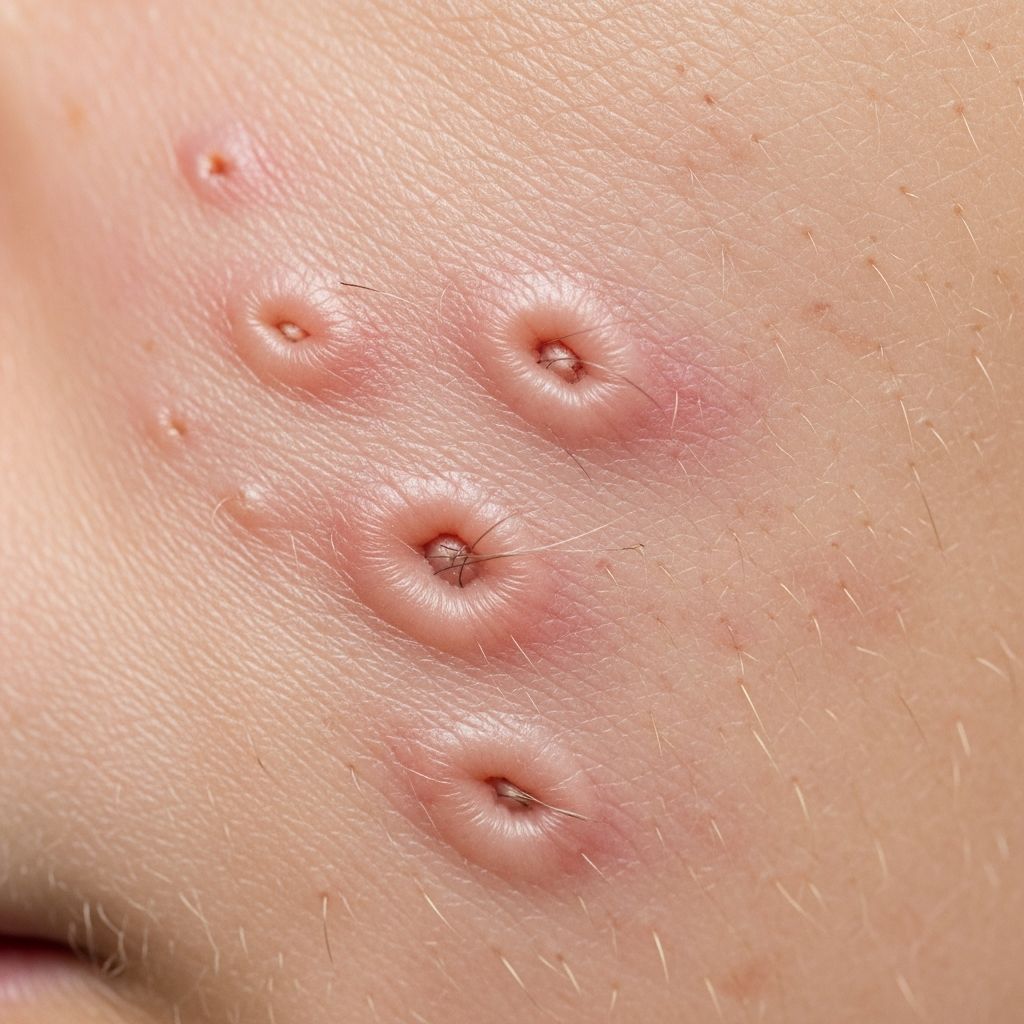
Keratosis pilaris atrophicans faciei (KPAF), also known as ulerythema ophryogenes, is a rare subtype of keratosis pilaris characterized by abnormal keratinization of hair follicles leading to inflammation, atrophy, and permanent hair loss, particularly in the eyebrows and facial areas. This condition manifests as follicular horny papules surrounded by erythema on the cheeks, forehead, chin, and eyebrows, progressing to scar-like depressions and alopecia. KPAF belongs to the atrophicans spectrum of keratosis pilaris, which includes more severe variants like atrophoderma vermiculatum and keratosis follicularis spinulosa decalvans.
The disorder typically begins in early childhood, with symptoms evolving sequentially over years, often leading to delayed diagnosis. While benign, its cosmetic impact can be significant, affecting self-esteem, especially in adolescents. Understanding KPAF is crucial for dermatologists to differentiate it from similar conditions and provide appropriate management.
Demographics
KPAF primarily affects children and adolescents, with onset as early as a few months after birth. A retrospective study of 14 patients reported a mean age of symptom onset at 4.85 years and diagnosis at 17.04 years, highlighting a diagnostic delay of about 9.21 years. It shows no strong gender predilection, though some reports note familial clustering suggesting autosomal dominant inheritance.
Prevalence is unknown due to underdiagnosis, but it is considered uncommon even among keratosis pilaris variants. Associations with congenital syndromes like Noonan syndrome, Rubinstein-Taybi syndrome, Cornelia de Lange syndrome, cardiofaciocutaneous syndrome, and woolly hair syndrome have been documented, often requiring genetic evaluation. In one cohort, 64.28% of cases had a sequential progression starting with limb keratosis pilaris.
Causes
KPAF arises from abnormal keratinization of the follicular infundibulum, where scale plugs the follicle, obstructs the hair shaft, and triggers chronic inflammation leading to atrophy and alopecia. This follicular hyperkeratosis is a hallmark of keratosis pilaris disorders.
Genetic factors play a key role; some keratosis pilaris cases involve autosomal recessive mutations in the desmoglein 4 (DSG4) gene, which encodes a desmosomal protein essential for epidermal differentiation. Chromosomal abnormalities, particularly on 18p, may contribute, as suggested by syndromic associations. Hereditary patterns indicate altered follicular keratinization, with inflammation causing scarring.
Environmental triggers are not well-defined, but xerosis cutis (dry skin) often coexists, exacerbating symptoms. Unlike common keratosis pilaris, KPAF’s atrophic progression distinguishes it pathophysiologically.
Clinical Features
The condition presents sequentially: initial keratosis pilaris on limbs (mean age 4.85 years), followed by facial erythema (7.21 years), keratotic papules (8.35 years), and lateral eyebrow hair loss (14 years). Key features include:
- Follicular horny papules with erythematous halo on cheeks, forehead, chin, and eyebrows.
- Progressive atrophy forming scar-like follicular depressions.
- Thinning or permanent loss of lateral eyebrow hair (ulerythema ophryogenes).
- Occasional involvement of arms, legs, and trunk with classic keratosis pilaris.
- Associated findings: xerosis cutis, acne, contact dermatitis, multiple moles, or Laugier-Hunziker syndrome.
Symptoms stabilize post-puberty, but sequelae like alopecia persist. Inflammation causes perifollicular erythema, evolving to fibrosis and hair follicle destruction.
Diagnosis
Diagnosis is primarily clinical, based on characteristic facial papules, erythema, atrophy, and eyebrow alopecia. History of early onset and family history supports it.
Skin biopsy, if needed, reveals nonspecific findings: widened infundibulum, follicular plugging, hair loss, perivascular lymphocytic infiltrate, and dermal fibrosis. No pathognomonic test exists; genetic testing may be pursued in syndromic cases.
Related Stories



Differential Diagnoses
KPAF overlaps with other follicular disorders. Key differentials include:
| Condition | Key Features | Distinguishing from KPAF |
|---|---|---|
| Keratosis pilaris rubra faciei | Perifollicular erythema on face/neck without atrophy or alopecia. | Lacks scarring and hair loss. |
| Erythromelanosis follicularis faciei et colli | Erythema, hyperpigmentation, papules on cheeks/neck; common in Asian men. | Hyperpigmentation prominent; no atrophy. |
| Atrophoderma vermiculatum | Honeycombed atrophy on cheeks from childhood. | More pronounced cheek atrophy; less eyebrow focus. |
| Keratosis follicularis spinulosa decalvans | Widespread papules, scarring alopecia, keratoderma, keratitis. | Severe, systemic involvement. |
| Frontal fibrosing alopecia | Facial papules, lateral eyebrow loss, receding hairline; postmenopausal women. | Lichen planopilaris pattern; older onset. |
Treatment
No cure exists; management is symptomatic to reduce inflammation, keratoses, and improve cosmesis. Recommendations include:
- Emollients: Daily moisturizers to combat xerosis.
- Keratolytics: Lactic acid, salicylic acid, urea creams to unplug follicles.
- Topicals: Benzoyl peroxide for inflammation; mild corticosteroids short-term.
- Laser therapy: Pulsed dye laser (PDL) or intense pulsed light for erythema and atrophy, showing promising results.
- Other: Retinoids (topical/systemic) in refractory cases; avoid irritants.
Response is often mild and temporary; early intervention may halt progression. Cosmetic camouflage for alopecia.
Outcome
Progression typically halts at puberty, leaving permanent follicular atrophy and hair loss. Most patients achieve stable cosmesis with maintenance therapy. Long-term follow-up is advised for syndromic associations or complications like scarring. Prognosis is good, being benign, though psychological impact warrants support.
Frequently Asked Questions (FAQs)
What is keratosis pilaris atrophicans faciei?
KPAF is a rare keratosis pilaris variant causing facial keratotic papules, redness, atrophy, and eyebrow hair loss due to follicular keratinization defects.
Who gets KPAF and when does it start?
It affects children from infancy (mean onset ~5 years), with diagnosis often delayed to adolescence.
Is KPAF hereditary?
Yes, likely autosomal dominant or recessive (DSG4 mutations); familial cases reported.
Can KPAF be cured?
No, but symptoms improve with keratolytics, emollients, and lasers; alopecia may be permanent.
Is KPAF associated with other conditions?
Yes, including Noonan, Rubinstein-Taybi, and Cornelia de Lange syndromes.
References
- Keratosis pilaris atrophicans faciei: An observational, descriptive study — Stefanaki C, et al. Clin Cosmet Investig Dermatol. 2021-09-29. https://pmc.ncbi.nlm.nih.gov/articles/PMC8495552/
- Keratosis pilaris atrophicans faciei — DermNet NZ. Accessed 2026. https://dermnetnz.org/topics/keratosis-pilaris-atrophicans-faciei
- Keratosis pilaris atrophicans faciei — VisualDx. Accessed 2026. https://www.visualdx.com/visualdx/diagnosis/keratosis+pilaris+atrophicans+faciei?diagnosisId=51802&moduleId=101
- [Keratosis pilaris and keratosis pilaris atrophicans faciei] — PubMed. 2006-05-01. https://pubmed.ncbi.nlm.nih.gov/16638061/
- Keratosis Pilaris — DynaMed. Accessed 2026. https://www.dynamed.com/condition/keratosis-pilaris
- Keratosis Pilaris Atrophicans: One Heterogeneous Disease — JAMA Dermatology. Accessed 2026. https://jamanetwork.com/journals/jamadermatology/fullarticle/555717
Similar Articles








Read full bio of Sneha Tete