Keratosis Pilaris: 6-Step Treatment And Care Guide
Common skin condition causing rough, bumpy patches due to keratin plugs in hair follicles, often improving with age.
What is keratosis pilaris?
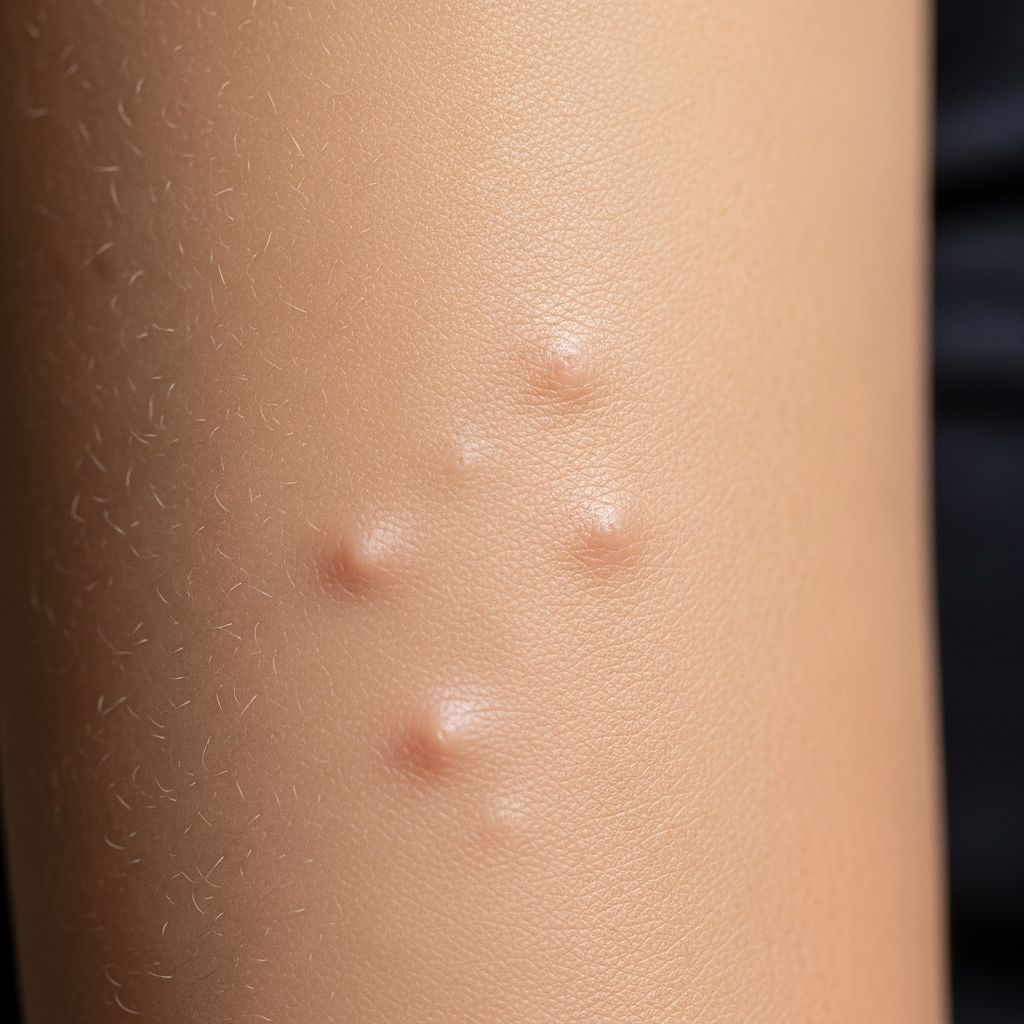
Keratosis pilaris is a common and harmless skin condition that features rough, tiny bumps resembling chicken skin or permanent goosebumps. These occur due to a buildup of keratin, a hard protein that protects the skin, plugging the hair follicles. Also known as follicular keratosis, xerosis (dry skin), or chicken skin, it affects 50–70% of teenagers and 40% of adults, often running in families.
The condition arises when keratin surrounds and blocks the hair follicle opening, forming a conical plug that creates small papules. This leads to a sandpaper-like texture on affected areas. While usually asymptomatic, it can cause cosmetic concerns or mild itchiness. KP typically worsens in winter due to dry air and improves in summer humidity. It is chronic but tends to fade after age 30, though some persist lifelong.
Who gets keratosis pilaris?
Keratosis pilaris most commonly affects children and adolescents, with peak prevalence around puberty. Girls may notice it more due to closer skin inspection. It impacts up to 80% of adolescents at some point, decreasing to 40% in adults. Genetic predisposition is strong; if a parent has KP, children have a higher chance.
- Associated conditions: Atopic dermatitis (eczema), ichthyosis vulgaris, dry skin conditions, obesity, diabetes, malnutrition, Down syndrome, Noonan syndrome.
- Risk factors: Family history, fair skin, cold/dry climates.
KP is more noticeable on lighter skin tones but occurs across all ethnicities. Those with atopic tendencies experience redder, itchier variants.
What causes keratosis pilaris?
The exact cause is multifactorial, involving abnormal keratinization where excess keratin forms hard plugs in follicles. Hair gets coiled or embedded within these plugs, distorting follicles. Abnormal filaggrin gene mutations (as in ichthyosis vulgaris and atopic dermatitis) reduce skin hydration, exacerbating plugging.
Dry skin worsens symptoms by promoting keratin buildup. No infectious or allergic triggers exist; it’s a structural skin disorder. Seasonal flares link to low humidity impairing skin barrier function.
What are the clinical features of keratosis pilaris?
Classic lesions are 1–2 mm erythematous or skin-colored follicular papules with surrounding erythema, giving a perifollicular halo. They feel rough like sandpaper or gooseflesh.
| KP Variant | Features | Common Sites |
|---|---|---|
| Classic KP | Skin-coloured follicular papules ± mild erythema | Outer upper arms, thighs |
| KP Alba | White-capped red papules | Face (children) |
| KP Rubra | Red sore papules, often itch | Any site |
| KP Atrophicans | Blanching → ivory papules → atrophy | Cheeks, arms (rare) |
| KP Profunda | Deep red-brown follicular papules ± scarring | Buttocks, thighs, solid organs |
| Ulerythema ophryogenes | KP atrophicans on eyebrows ± scarring/cicatricial alopecia | Eyebrows |
Symptoms are usually cosmetic, but rubra variant may itch or feel sore. No pain unless manipulated.
Related Stories



Diagnosis
This is a clinical diagnosis based on history and typical appearance—no biopsy needed. Dermoscopy shows coiled hairs, scaling, and erythema within follicles. Rule out lookalikes via exam.
Differential diagnosis
- Folliculitis: Pus-filled, painful.
- Atopic dermatitis: Poorly demarcated erythema/pruritus.
- Acne: Comedones, blackheads.
- Milia: Smooth white cysts.
- Lichen nitidus: 1–2 mm shiny flat-topped papules.
- Phrynoderma: Vitamin A deficiency (poor diet).
- Scurvy: Vitamin C deficiency (corkscrew hairs).
- Pityriasis alba: Hypopigmented macules with fine scale.
- Trichostasis spinulosa: Multiple vellus hairs in one follicle.
What is the treatment for keratosis pilaris?
No cure exists; treatments manage symptoms and improve cosmesis. Most cases improve spontaneously with age. Daily regimen is key: soak, lather with keratolytic cleanser, rinse, dry, apply lotion.
Stepwise approach
- Emollients: Thick, fragrance-free twice daily (e.g., CeraVe SA, Eucerin).
- Keratolytics (twice daily):
- Urea 10–25%
- Lactic acid 6–12%
- Salicylic acid 2–6%
- Alpha-hydroxy acids
- Topical retinoids: Adapalene 0.1% gel (less irritating) nightly.
- Anti-inflammatories: Topical corticosteroids (short-term for redness).
- Other: Vitamin D analogues, tacrolimus.
- Procedures: Lasers (pulsed dye, Nd:YAG), chemical peels.
Avoid scrubbing/manipulation to prevent inflammation. Patience required; results take weeks.
Clinical variants of keratosis pilaris
(Detailed in table above; each has unique features but shares core pathology.)
Prevention
- Daily moisturizing with humectants/occlusives.
- Mild soap-free cleansers.
- Humidifier in dry environments.
- Avoid hot showers.
Outlook
KP is benign and often self-resolves post-puberty. Persistent cases manageable long-term. Psychological impact from appearance can be significant—reassure patients.
Frequently asked questions
Q: Is keratosis pilaris permanent?
A: No, it often improves or resolves by adulthood, though some have mild lifelong symptoms.
Q: Does keratosis pilaris itch?
A: Usually not, but red variants (KP rubra) may itch or feel sore.
Q: Can I exfoliate keratosis pilaris?
A: Gentle chemical exfoliants yes; harsh scrubbing worsens it.
Q: Is keratosis pilaris contagious?
A: No, it’s genetic/structural, not infectious.
Q: Can laser treat keratosis pilaris?
A: Yes, pulsed dye or other lasers reduce redness/texture for recalcitrant cases.
References
- Keratosis Pilaris — Miriam Lieberman MD FAAD. Accessed 2026. https://www.miriamliebermanmd.com/keratosis-pilaris.php
- Keratosis Pilaris (KP) — UMass Memorial Health. Accessed 2026. https://www.ummhealth.org/health-library/keratosis-pilaris-kp
- Keratosis Pilaris – StatPearls — NCBI Bookshelf. 2023-07-17. https://www.ncbi.nlm.nih.gov/books/NBK546708/
- Keratosis pilaris: Diagnosis and treatment — American Academy of Dermatology (AAD). Accessed 2026. https://www.aad.org/public/diseases/a-z/keratosis-pilaris-treatment
- Keratosis pilaris – treatment, causes and symptoms — healthdirect.gov.au. Accessed 2026. https://www.healthdirect.gov.au/keratosis-pilaris
- Keratosis pilaris — NHS.uk. Accessed 2026. https://www.nhs.uk/conditions/keratosis-pilaris/
- Keratosis pilaris – Diagnosis and treatment — Mayo Clinic. Accessed 2026. https://www.mayoclinic.org/diseases-conditions/keratosis-pilaris/diagnosis-treatment/drc-20351152
Similar Articles








Read full bio of Sneha Tete