Kerion Images: 5 High-Res Clinical Photos For Diagnosis
Comprehensive visual guide to kerion: inflammatory fungal scalp abscesses with clinical images and diagnostic insights.
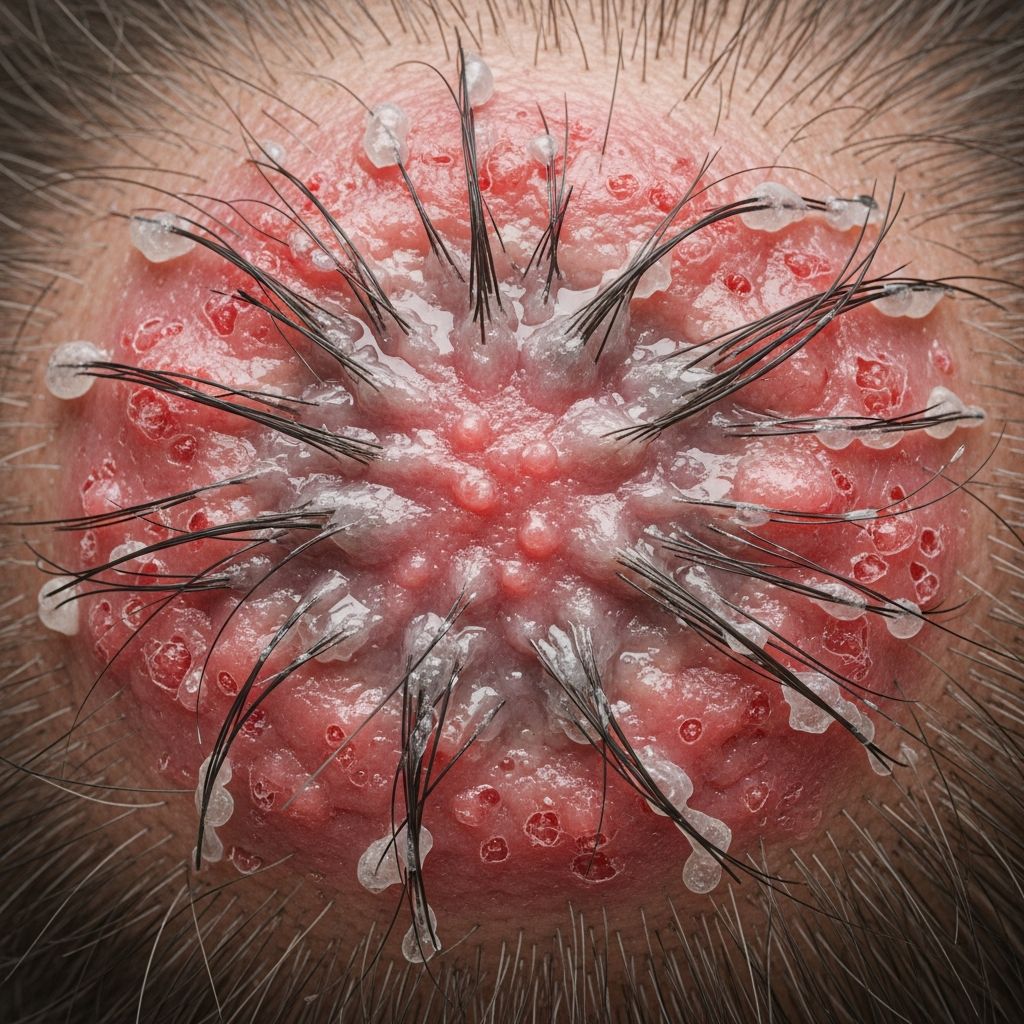
A kerion represents a severe, inflammatory response to a dermatophyte fungal infection, most commonly manifesting on the scalp as part of tinea capitis. This page presents a curated collection of clinical images illustrating various presentations of kerion, aiding in recognition, diagnosis, and management. Kerions appear as boggy, pus-filled swellings with overlying crusting, hair loss, and significant inflammation, often mistaken for bacterial abscesses.
What is a Kerion?
A kerion is an abscess-like lesion resulting from an exaggerated immune reaction to fungal invasion of hair follicles. It typically develops in the context of tinea capitis, a scalp ringworm infection prevalent in children aged 3-7 years, though it can occur on the face (tinea faciei) or body (tinea corporis). The lesion presents as a tender, fluctuant mass several centimeters in diameter, with loose hairs that pluck easily, leading to localized alopecia. Associated features include regional lymphadenopathy, fever, malaise, and occasionally a secondary id reaction (dermatophytide)—an itchy, eczematous rash elsewhere on the body.
Without prompt treatment, kerions can lead to scarring and permanent hair loss, emphasizing the need for early recognition. The images below capture the classic morphology across different stages and severities.
Clinical Features Illustrated in Images
- Boggy Swelling: Soft, elevated plaques with a doughy consistency due to pus accumulation beneath the skin.
- Pustules and Crusting: Follicular pustules rupture, forming yellow crusts and oozing seropurulent discharge.
- Hair Loss: Alopecia within the lesion, with broken or absent hairs surrounded by inflammation.
- Erythema and Tenderness: Surrounding red, inflamed skin that is painful to touch.
- Lymphadenopathy: Enlarged posterior cervical nodes in severe cases.
These features distinguish kerion from impetigo, cellulitis, or abscesses, though secondary bacterial infection is common, necessitating swabs.
Images of Kerion
The following high-resolution clinical photographs depict kerion in various presentations. Each image includes a brief caption highlighting key diagnostic features. These visuals are sourced from dermatological archives and are intended for educational purposes.
Image 1: Classic Scalp Kerion
A large, boggy swelling on the occipital scalp with central crusting and peripheral pustules. Note the patchy alopecia and surrounding erythema. This presentation is typical of Microsporum canis infection in children exposed to infected pets.

Caption: Boggy kerion on scalp with purulent discharge and loose hairs.
Image 2: Inflammatory Kerion with Pustules
Close-up view revealing multiple follicular pustules atop an erythematous base. The lesion measures approximately 5 cm, with hairs easily epilated. Secondary bacterial superinfection is evident from the honey-colored crusts.

Caption: Pustular kerion mimicking bacterial folliculitis.
Image 3: Kerion with Surrounding Id Reaction
Widespread eczematous rash on the trunk accompanying the scalp kerion, characteristic of dermatophytide. The primary lesion shows fluctuance and tenderness.

Caption: Systemic reaction with id-like eruption distant from the kerion.
Image 4: Facial Kerion (Tinea Faciei)
Rare extrascapular presentation on the cheek, presenting as an inflamed, boggy plaque with central clearing. This highlights that kerions are not exclusive to the scalp.
Related Stories




Caption: Kerion on face due to Trichophyton mentagrophytes.
Image 5: Healed Kerion with Scarring
Post-treatment image showing residual scarring alopecia after 8 weeks of oral antifungals. Early intervention minimizes such outcomes.

Caption: Potential sequela of untreated or delayed kerion.
Cause of Kerion
Kerions arise from dermatophyte fungi invading keratin-rich structures like hair shafts. Common culprits include:
| Fungus | Prevalence in Kerion | Source |
|---|---|---|
| Trichophyton tonsurans | Most common in urban settings | Endothrix pattern |
| Microsporum canis | Common in rural/pet-exposed cases | Ectothrix, zoophilic |
| Trichophyton verrucosum | Livestock contact | Zoophilic |
| Trichophyton mentagrophytes | Rodent/small animal | Zoophilic |
Trichophyton rubrum rarely causes kerion. Transmission occurs via direct contact with infected humans, animals (cats, dogs, cattle), or fomites like combs.
Diagnosis
Suspicion arises from clinical appearance. Confirm with:
- Microscopy: KOH prep of hair/scrapings showing hyphae or arthroconidia (results in 24 hours).
- Culture: Sabouraud agar for speciation (2-4 weeks).
- Wood’s Lamp: Yellow-green fluorescence if M. canis (negative in T. tonsurans).
- Biopsy: Rarely needed; shows abscess with granulomatous inflammation.
Bacterial swabs rule out superinfection.
Treatment
Oral antifungals are essential for 6-8 weeks:
| Agent | Dose (Child) | Duration |
|---|---|---|
| Griseofulvin (microsize) | 20-25 mg/kg/day | 6-8 weeks |
| Terbinafine | <25kg: 62.5mg OD; 25-35kg: 125mg OD | 4-6 weeks |
| Itraconazole | 5 mg/kg/day | 2-4 weeks |
Adjuncts: Oral steroids (prednisone 1mg/kg x2 weeks) for severe inflammation; antibiotics (e.g., cephalexin 40mg/kg/day) if bacterial overlay; antifungal shampoos (ketoconazole 2% twice weekly). Topical agents ineffective alone.
Prevention and Spread
- Screen household/pets; treat carriers.
- Disinfect fomites; isolate towels/combs.
- Shampoos reduce spores.
Contagious until 2-3 weeks into systemic therapy.
Frequently Asked Questions (FAQs)
Is kerion contagious?
Yes, via direct contact or fomites. Treat until non-infectious (6-8 weeks).
Will hair grow back?
Usually yes, if treated early; scarring possible in delays.
Can adults get kerion?
Rare; mostly children due to immune response differences.
How long does treatment take?
6-8 weeks minimum; complete course to prevent relapse.
Is it bacterial or fungal?
Fungal (dermatophyte); often secondarily bacterial—swab both.
References
- Kerion – DermNet — DermNet NZ. 2012 (updated). https://dermnetnz.org/topics/kerion
- Kerion: Symptoms, Causes & Treatment — Cleveland Clinic. 2023-10-27. https://my.clevelandclinic.org/health/diseases/22863-kerion
- Tinea – WikEM — WikEM. 2024. https://wikem.org/wiki/Tinea
- FSH Dermatology Tinea Capitis Guidelines — Fiona Stanley Hospital. 2023. https://fsfhg.health.wa.gov.au/~/media/HSPs/SMHS/Hospitals/FSFHG/Files/PDF/FSH-Derma-Tinea-Capitis-guidelines.pdf
Similar Articles








Read full bio of medha deb