Ketoconazole Cream (Daktarin Gold, Nizoral 2%)
Effective antifungal cream for treating athlete's foot, ringworm, and candidal infections on the skin.
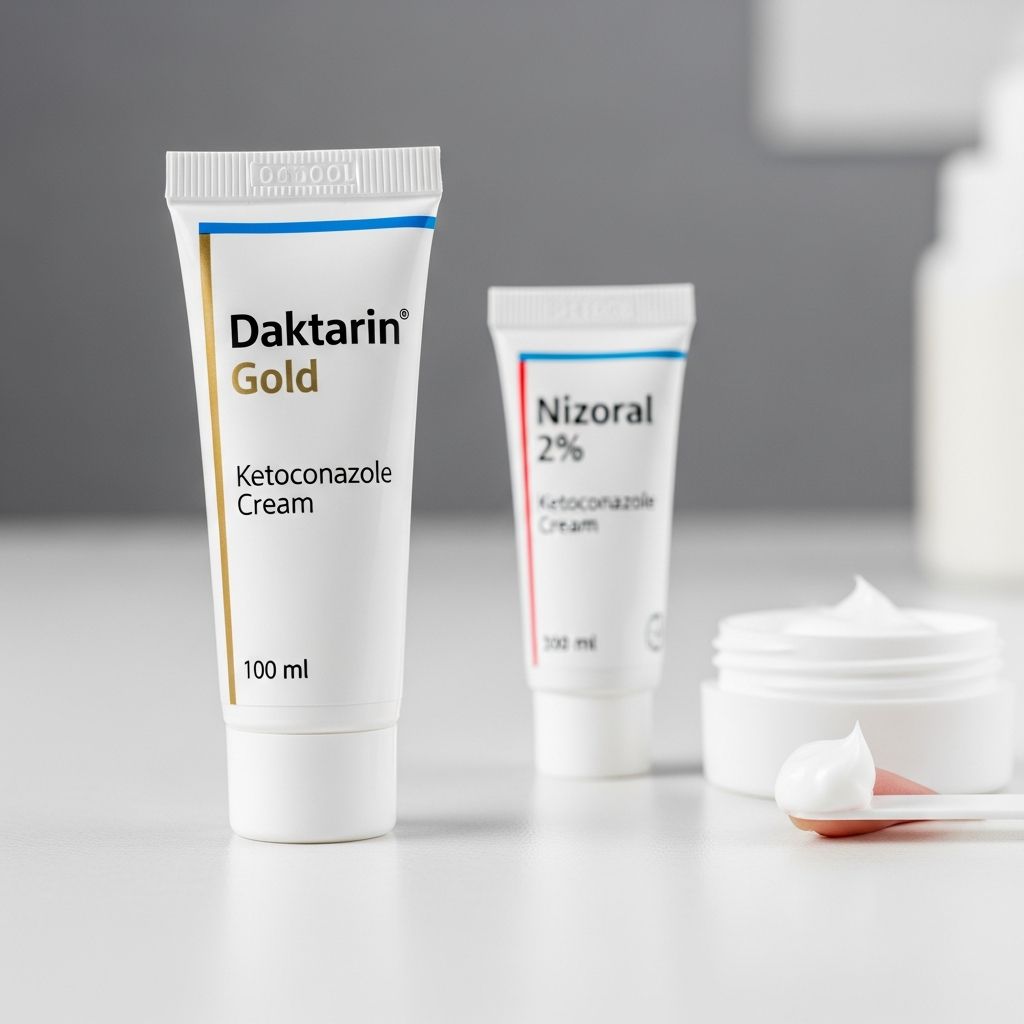
Ketoconazole cream is a widely used antifungal medication available over-the-counter under brand names like Daktarin Gold 2%, Daktarin Intensiv, and Nizoral 2%. It contains 2% ketoconazole, which works by stopping the growth of fungi that cause infections on the skin, such as athlete’s foot (tinea pedis), ringworm (tinea corporis), and candidal infections (caused by Candida yeast).
This topical cream is applied directly to the affected area and is effective for most people when used as directed. It is particularly useful for infections that produce itchy, scaly rashes between the toes, on the groin, or other moist skin folds. Unlike oral antifungals, topical ketoconazole has minimal systemic absorption, making it safer for self-treatment of mild cases.
About ketoconazole cream
Ketoconazole belongs to a group of medicines called azole antifungals. It disrupts the fungal cell membrane by inhibiting the synthesis of ergosterol, a key component needed for fungal growth. This action kills the fungus or prevents its spread, allowing the skin to heal.
The cream is a white, opaque formulation packaged in tubes (typically 15g or 30g). It is suitable for adults and children over 16 years for self-treatment, but medical advice is recommended for younger children or persistent infections. Common conditions treated include:
- Athlete’s foot: Itchy, peeling skin between toes or on soles.
- Ringworm: Circular, red, itchy patches on the body.
- Candidal intertrigo: Infection in skin folds, like under breasts or in groin.
- Pityriasis versicolor: Discolored patches on the upper body (though some brands specify limited use).
Daktarin Gold and Nizoral are pharmacy-only medicines in many regions, meaning they require pharmacist advice before purchase. Always check the label for specific indications, as formulations may vary slightly.
Before using ketoconazole cream
Who can and cannot use it
Most adults and teenagers aged 16+ can use ketoconazole cream safely. Do not use it if you are allergic to ketoconazole or any ingredients in the cream (check the leaflet for excipients like propylene glycol, which may irritate sensitive skin).
Consult a doctor or pharmacist before use if:
- You are pregnant or breastfeeding.
- You have very dry or damaged skin.
- The infection covers a large area or affects the face/scalp (use shampoo form instead).
- You have diabetes, a weakened immune system, or recurring infections.
- It’s a nail or scalp infection (cream is not suitable).
Children under 16 should only use it under medical supervision.
Other medicines and ketoconazole cream
Topical ketoconazole rarely interacts with other medicines due to low absorption. However, avoid using it at the same time as other topical steroids or antifungals unless advised. If using steroid creams (e.g., hydrocortisone), apply ketoconazole first, wait 30 minutes, then apply the steroid.
Related Stories



Common questions about ketoconazole cream
- Can I use it on broken skin? No, avoid open wounds or very inflamed areas to prevent stinging.
- Does it stain clothes? It may leave a yellow tint on fabrics; use old clothes or dressings.
- Is it safe for genital areas? Use cautiously; avoid internal application.
How and when to use ketoconazole cream
Key facts
- Apply once or twice daily for 2-6 weeks, depending on the infection.
- Continue for 2-3 days after symptoms clear to prevent recurrence.
- Improvement usually seen in 3-5 days; full resolution in 2-4 weeks.
Dosage
Wash and dry the affected area gently. Apply a thin layer of cream, rubbing in well. For athlete’s foot, use once daily; for ringworm or candida, twice daily. Wash hands after application unless treating hands.
| Condition | Frequency | Duration |
|---|---|---|
| Athlete’s foot | Once daily | 4-6 weeks |
| Ringworm | Twice daily | 2-4 weeks |
| Candidal infection | Twice daily | 2-4 weeks |
If no improvement after 5 days for athlete’s foot or 2-4 weeks for others, see a doctor.
How to use it more effectively
- Keep skin clean and dry; dry thoroughly after washing, especially between toes.
- Wear loose cotton clothing/socks; change daily.
- For feet, use antifungal powder alongside cream.
- Avoid occlusive dressings unless directed.
Side effects of ketoconazole cream
Side effects are usually mild and local, affecting the application site. They occur in more than 1 in 100 people and include itching, burning, stinging, or redness. These are less noticeable on darker skin tones. Try using less cream or looser clothing if they occur.
Common side effects
- Burning or stinging sensation.
- Redness or irritation.
- Dry, flaky, or oily skin.
- Rash or swelling at site.
These often improve with continued use or by applying sparingly. Stop if worsening after a few days and consult a pharmacist.
Serious side effects
Rare but require immediate attention:
- Allergic reaction (anaphylaxis): Swollen lips/mouth/throat, breathing difficulty, blue skin, tight throat. Call 999.
- Severe rash, hives, blistering, or peeling skin.
- Fast heartbeat, joint pain, shortness of breath.
Shampoo-specific (if relevant)
For Nizoral shampoo variant: Hair discoloration, loss of curl, abnormal texture, increased hair loss.
Reporting side effects
In the UK, report to Yellow Card scheme (mhra.gov.uk/yellowcard). In the US, FDA MedWatch.
How to cope with side effects of ketoconazole cream
- Burning/irritation: Apply thinly, once daily; use moisturizer if dry.
- Redness: Loose clothing, cool compress.
- Worsening rash: Stop use and seek advice.
If side effects persist or spread, discontinue and see a healthcare professional.
Pregnancy and breastfeeding with ketoconazole cream
Limited data exists, but topical use is generally considered low risk due to minimal absorption. Use only if clearly needed and advised by a doctor. Avoid large amounts or prolonged use. No evidence of harm in breastfeeding when used on non-breast areas.
Other information about ketoconazole cream
Precautions and warnings
- Avoid eyes, mouth, nose; rinse if contact occurs.
- Do not use with occlusive dressings unless prescribed.
- Store below 25°C; discard after expiry.
- If infection returns frequently, see a doctor for oral antifungals.
When not to use
Viral infections (e.g., herpes), bacterial infections, or acne. Confirm diagnosis if unsure.
Further reading and references
For more on fungal infections, consult NHS or Mayo Clinic resources.
Frequently Asked Questions (FAQs)
Q: How long does ketoconazole cream take to work?
A: Symptoms improve in 3-5 days, but complete treatment for 2-6 weeks to prevent recurrence.
Q: Can I use ketoconazole cream on my face?
A: Avoid face unless directed; use shampoo for dandruff/pityriasis.
Q: What if I forget a dose?
A: Apply next dose as soon as remembered; do not double up.
Q: Is ketoconazole cream the same as clotrimazole?
A: Both antifungals, but ketoconazole effective for specific yeasts; choice depends on infection.
Q: Can children use it?
A: Over 16 for OTC; younger under medical advice.
References
- Side effects of ketoconazole — NHS. 2023-10-01. https://www.nhs.uk/medicines/ketoconazole/side-effects-of-ketoconazole/
- Ketoconazole: MedlinePlus Drug Information — MedlinePlus (NIH). 2024-05-15. https://medlineplus.gov/druginfo/meds/a682816.html
- Ketoconazole (topical route) — Mayo Clinic. 2024-08-20. https://www.mayoclinic.org/drugs-supplements/ketoconazole-topical-route/description/drg-20067739
- Ketoconazole (topical): uses, dosing, warnings, adverse events — MedCentral. 2023-11-12. https://www.medcentral.com/drugs/monograph/75147-386019/ketoconazole-topical
- Ketoconazole Topical — PeaceHealth. 2023-07-05. https://www.peacehealth.org/medical-topics/id/a605014
- Ketoconazole Cream: Uses, Side Effects, Dosage & More — GoodRx. 2024-02-28. https://www.goodrx.com/ketoconazole/what-is
- Ketoconazole Cream: Uses & Side Effects — Cleveland Clinic. 2024-01-10. https://my.clevelandclinic.org/health/drugs/18899-ketoconazole-cream
Similar Articles








Read full bio of Sneha Tete