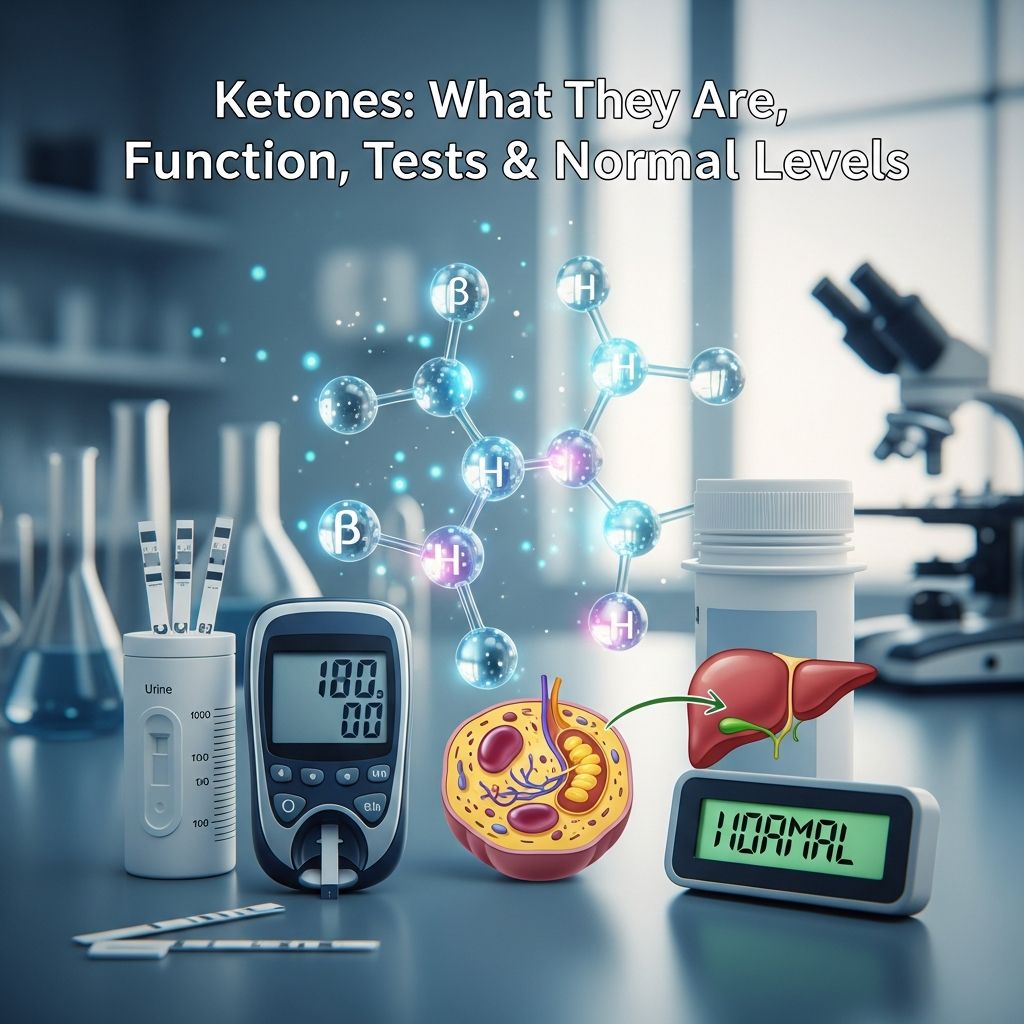
Ketones: What They Are, Function, Tests & Normal Levels
Understanding ketones: Your body's backup energy source and what normal levels mean.
What Are Ketones?
Ketones, also known as ketone bodies, are organic compounds produced by your liver when your body shifts to burning fat instead of glucose for energy. These acids serve as an alternative fuel source that powers both your brain and body when glucose—your primary energy source—is depleted, insufficient, or unavailable. Think of ketones as your body’s backup energy reserve, similar to tapping into savings when your primary income isn’t enough.
Your body naturally produces small amounts of ketones all the time as part of normal metabolism. However, ketone levels increase significantly when your body enters a metabolic state called ketosis. This occurs when carbohydrate intake is drastically reduced, forcing your liver to convert fatty acids into ketones for energy production.
How Your Body Produces Ketones
The process of ketone production begins in your liver when glucose levels drop. Your body maintains glucose as the primary fuel source under normal circumstances, but when glucose becomes limited or your body cannot use it effectively, hormonal changes trigger ketone production.
When carbohydrate intake decreases, your insulin levels also drop. This hormonal shift signals your liver to increase ketone production substantially, ensuring adequate energy supply for vital organs like your brain. Your liver produces three primary types of ketone bodies: acetoacetate, beta-hydroxybutyrate, and acetone. Beta-hydroxybutyrate is the most abundant and serves as the primary marker measured in ketone tests.
The fat your body uses to create ketones can come from two sources: dietary fat consumed through food (referred to as nutritional ketosis) or stored fat from your body’s fat reserves. This is why ketogenic diets—which are high in fat, moderate in protein, and low in carbohydrates—prompt your body to enter ketosis and produce elevated ketone levels.
The Function of Ketones in Your Body
Ketones fuel your brain and body efficiently in the absence of adequate glucose. Your brain is particularly metabolically active and typically consumes approximately 20% of your body’s energy supply. Research suggests your brain may work more efficiently on ketones than on glucose, potentially enhancing focus and cognitive function.
Beyond brain function, ketones provide energy for:
- Heart and cardiovascular system function
- Muscle tissue and physical performance
- Organ systems requiring consistent energy
- Physical endurance and exercise capacity
It’s completely normal and safe to have some ketones in your blood, as your body regularly uses fat as an energy source when glucose is insufficient. This natural process is part of healthy metabolic function.
Normal Ketone Levels
Ketone values vary significantly depending on the specific test you’re taking and individual factors. What’s considered normal or elevated can differ from person to person based on metabolism, diet, physical activity, and overall health status.
Related Stories



Generally speaking, normal fasting blood ketone levels range from 0 to 0.6 millimoles per liter (mmol/L). During nutritional ketosis—the metabolic state induced by a ketogenic diet or prolonged fasting—blood ketone levels typically range from 0.5 to 3.0 mmol/L, with the optimal range being 1.5 to 3.0 mmol/L.
Blood Ketone Level Categories
| Ketone Level Range (mmol/L) | Classification | What It Means |
|---|---|---|
| 0 to 0.6 | Normal/Negative | Your body is primarily using glucose for energy |
| 0.6 to 1.0 | Trace | Minimal ketosis beginning to occur |
| 1.0 to 3.0 | Nutritional Ketosis | Therapeutic range for ketogenic diet |
| Above 3.0 | High/Concerning | Risk of ketoacidosis; medical attention may be needed |
Methods for Testing Ketone Levels
Several methods exist for measuring ketone levels, each with different advantages and accuracy profiles:
Blood Ketone Testing
Blood ketone tests are considered the most accurate method for measuring ketone levels. A healthcare provider takes a small blood sample, typically through a fingerstick or venipuncture. This test directly measures beta-hydroxybutyrate concentration in your bloodstream. Results are available relatively quickly, making this method practical for clinical settings and patient monitoring. However, blood tests require special strips and meters, which can be more expensive than other options.
Urine Ketone Testing
Urine ketone tests involve using test strips that change color based on ketone presence in your urine. These tests are less expensive, non-invasive, and simple to perform at home. However, they’re less accurate than blood tests and may not detect ketones effectively once your body becomes adapted to ketosis. Urine tests measure acetoacetate and acetone but not beta-hydroxybutyrate, potentially missing significant ketone production.
Breath Ketone Testing
Breath ketone meters measure acetone in your breath, providing a non-invasive testing option. These devices can be convenient for at-home monitoring, though they’re generally less precise than blood tests. Results can be influenced by factors like hydration status and respiratory function.
When Ketones Become Dangerous
While some ketones in your blood are normal and safe, excessive ketone accumulation can make your blood dangerously acidic—a condition called ketoacidosis. When ketone levels become too high, your blood pH drops, creating a potentially life-threatening situation.
Diabetes-Related Ketoacidosis (DKA)
For individuals with diabetes, particularly Type 1 diabetes, elevated ketones pose a specific risk: diabetes-related ketoacidosis or DKA. DKA occurs when your body produces ketones faster than they can be used, typically due to insufficient insulin. This life-threatening complication requires immediate medical attention.
Symptoms of DKA include:
- Nausea and vomiting
- Difficulty breathing or shortness of breath
- Fruity-smelling breath
- Confusion or difficulty concentrating
- Abdominal pain
- Rapid or irregular heartbeat
- Extreme fatigue or weakness
DKA Risk Factors
Certain situations increase DKA risk, particularly for people with Type 1 diabetes:
- Missing insulin doses or inadequate insulin
- Severe illness or infection
- Physical or emotional stress
- Pregnancy complications
- Certain medications
- Following very low-carbohydrate diets without medical supervision
Managing Ketone Levels
Knowing your ketone levels can alert you to health risks and help you take appropriate action. If your healthcare provider has recommended monitoring ketone levels, understanding what different results mean enables you to respond quickly to concerning values.
At-Home Management
Your healthcare provider may guide you on steps to lower ketone levels at home before they become dangerously elevated. These may include:
- Increasing carbohydrate intake to reduce ketone production
- Ensuring adequate hydration
- Monitoring blood glucose closely if you have diabetes
- Taking insulin as prescribed
- Avoiding triggering foods or situations
- Rest and stress management
Hospital-Based Treatment
If ketone levels become dangerously high or DKA develops, hospital treatment is essential. Medical interventions typically include:
- Intravenous (IV) fluid administration to restore hydration and dilute blood ketones
- Insulin therapy to reduce ketone production and restore glucose metabolism
- Electrolyte replacement to correct imbalances caused by acidosis
- Continuous monitoring of blood pH, glucose, and electrolytes
- Oxygen therapy if breathing difficulties occur
Preventing High Ketone Levels
If you’re considered high-risk for DKA or elevated ketones, work closely with your healthcare provider to implement preventive strategies. This may involve:
- Regular ketone level monitoring
- Consistent medication adherence, particularly insulin
- Maintaining adequate carbohydrate intake
- Staying well-hydrated
- Managing stress and illness appropriately
- Regular medical follow-up appointments
- Understanding DKA warning signs and when to seek immediate care
Ketones and the Ketogenic Diet
The ketogenic diet is specifically designed to raise ketone levels by drastically reducing carbohydrate intake. This diet is high in fat (70-80%), moderate in protein (10-20%), and very low in carbohydrates (5-10%). By limiting carbohydrates, the ketogenic diet shifts your body’s fuel source from glucose to fat, producing elevated ketone levels—a state called nutritional ketosis.
Many individuals following ketogenic diets report benefits including weight loss, improved mental clarity, and stable energy levels. However, those with diabetes or metabolic conditions should approach ketogenic diets cautiously and only under medical supervision, as elevated ketone levels can pose health risks in certain populations.
Frequently Asked Questions
Q: Can ketones be present without following a ketogenic diet?
A: Yes, ketones can be present naturally during fasting, illness, intense exercise, or when carbohydrate intake is very low. Any situation causing your body to rely more heavily on fat for energy can produce ketones, even without deliberately following a keto diet.
Q: Are all ketone levels dangerous?
A: No, some ketones are normal and safe. Your body produces small amounts of ketones regularly. It’s only when levels become excessively high (typically above 3.0 mmol/L in blood tests) that they become concerning and potentially dangerous.
Q: How often should I test my ketone levels?
A: Testing frequency depends on your individual health situation. Those with Type 1 diabetes may need more frequent monitoring, while others might test periodically. Your healthcare provider will recommend an appropriate testing schedule based on your specific circumstances and health status.
Q: What should I do if my ketone levels are high?
A: If your ketone levels are elevated, contact your healthcare provider immediately. They can assess whether your levels warrant immediate medical attention or if at-home management strategies are appropriate. Never ignore persistently high ketone levels, especially if accompanied by symptoms like nausea, difficulty breathing, or confusion.
Q: Can exercise increase ketone levels dangerously?
A: While exercise can increase ketone production, dangerous levels are unlikely from exercise alone in healthy individuals. However, people with diabetes or metabolic conditions should discuss exercise safety with their healthcare provider, as intense activity combined with other factors could theoretically contribute to elevated ketones.
Q: Is ketosis the same as ketoacidosis?
A: No. Ketosis is a normal metabolic state where ketone levels are mildly elevated but within safe ranges. Ketoacidosis is a dangerous condition where excessive ketones make your blood too acidic. Nutritional ketosis (1.5-3.0 mmol/L) is distinct from the ketoacidosis (typically above 10 mmol/L in DKA).
References
- Ketones: What They Are, Function, Tests & Normal Levels — Cleveland Clinic. 2024. https://my.clevelandclinic.org/health/body/25177-ketones
- Ketogenic Diets in the Management of Type 1 Diabetes: Safe or Safety Concerns? — Cleveland Clinic Journal of Medicine. 2019. https://www.ccjm.org/content/88/10/547
- Ketosis: Definition, Benefits & Side Effects — Cleveland Clinic. 2024. https://my.clevelandclinic.org/health/articles/24003-ketosis
- Diabetes-Related Ketoacidosis (DKA): Symptoms & Treatment — Cleveland Clinic. 2024. https://my.clevelandclinic.org/health/diseases/21945-diabetic-ketoacidosis-dka
- Hyperglycemic Crises in Adults: The 2024 Consensus Report — Endocrine Society. 2024. https://consultqd.clevelandclinic.org/hyperglycemic-crises-in-adults-the-2024-consensus-report
- What Is the Keto Diet and Should You Try It? — Cleveland Clinic. 2024. https://health.clevelandclinic.org/what-is-the-keto-diet-and-should-you-try-it
Similar Articles








Read full bio of medha deb