Ketorolac Eye Drops (Acular): 4 Uses, Dosage & Side Effects
Comprehensive guide to using ketorolac eye drops for post-surgery relief and allergy symptoms.
About ketorolac eye drops
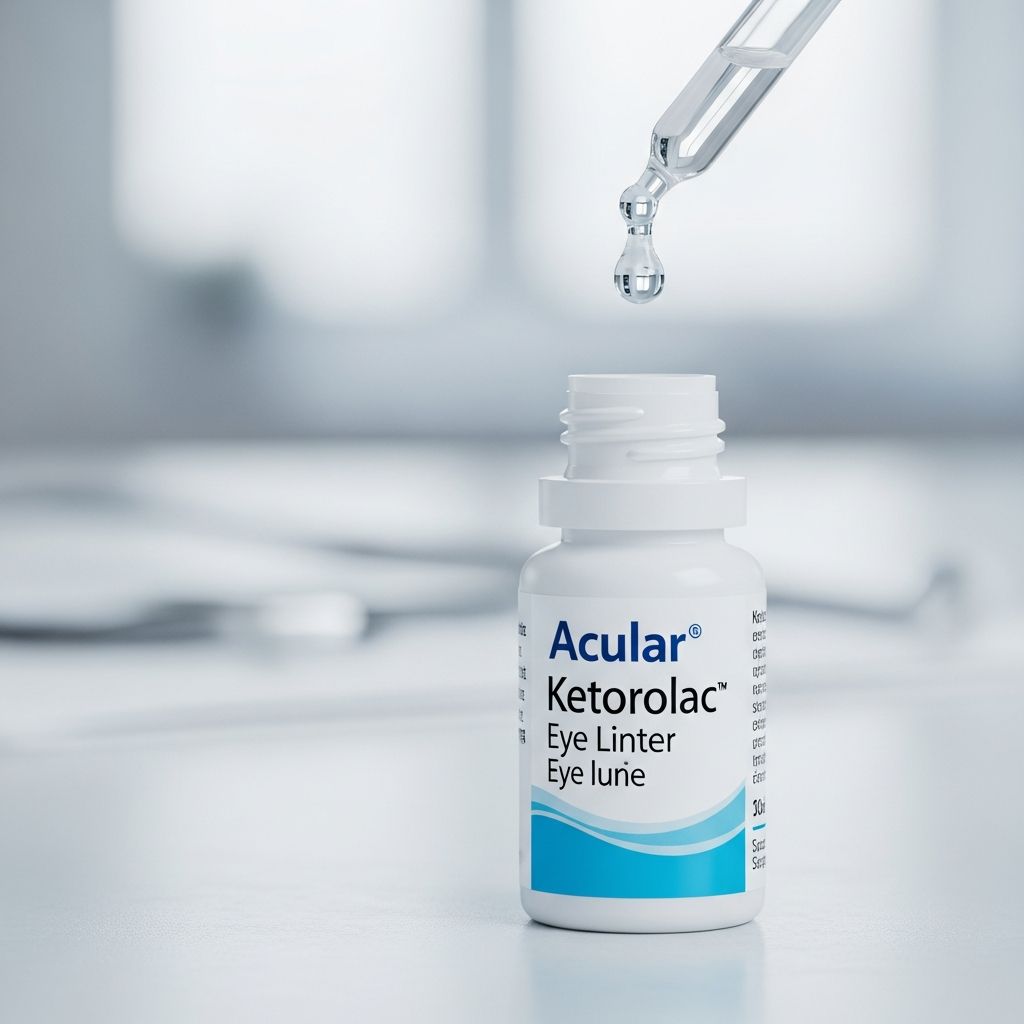
Ketorolac eye drops, commonly known by the brand name Acular, belong to a class of medications called non-steroidal anti-inflammatory drugs (NSAIDs). These drops are designed for topical application directly into the eye to reduce inflammation, pain, and discomfort. Unlike oral NSAIDs, ketorolac ophthalmic solution targets eye-specific issues without significant systemic absorption, making it suitable for short-term use following ocular procedures or for managing allergic responses.
The primary indications for ketorolac eye drops include relieving
ocular itching due to seasonal allergic conjunctivitis
and treatingpostoperative inflammation and pain after cataract surgery or corneal refractive surgery
. For allergies, it alleviates symptoms like itching triggered by seasonal allergens. Post-surgery, it helps control swelling, redness, burning, and pain that commonly occur after procedures such as cataract extraction.| Type of medicine | Details |
|---|---|
| Non-steroidal anti-inflammatory eye drop | Used short-term for pain and swelling after eye surgery; also for allergic eye itching |
| Brand name | Acular® (0.5% solution) |
| Available as | Eye drops solution |
Ketorolac works by inhibiting the enzyme cyclooxygenase (COX), which reduces the production of prostaglandins—chemicals responsible for inflammation and pain in the eye. This mechanism provides rapid relief, often within hours of application. Available only by prescription, it comes in sterile single-use vials or multi-dose bottles preserved with benzalkonium chloride, which necessitates caution with contact lens wearers.
Clinical studies have demonstrated its efficacy: for postoperative inflammation after cataract surgery, one drop four times daily starting 24 hours post-op significantly reduces symptoms over two weeks. For seasonal allergies, the same regimen effectively controls itching. However, use is strictly short-term to minimize risks like corneal complications.
Before using ketorolac eye drops
Before starting ketorolac eye drops, consult your doctor to ensure suitability. Disclose any history of allergic reactions, especially to aspirin or other NSAIDs like ibuprofen, diclofenac, or naproxen, as cross-sensitivity can occur. Inform your healthcare provider if you have bleeding tendencies, eye infections, diabetes, or rheumatoid arthritis, as these conditions may affect safety.
Pregnancy, breastfeeding, or plans for either require discussion; while ophthalmic use has low systemic exposure, caution is advised. Soft contact lens wearers should avoid use during treatment due to the preservative, which can accumulate and cause irritation—switch to glasses. Recent or planned eye surgery details must be shared, and all concurrent medications, including over-the-counter or herbal remedies, should be listed to prevent interactions.
- Allergies: Particularly to NSAIDs or aspirin.
- Bleeding disorders: Increased risk of hemorrhage.
- Eye infections: May worsen with NSAIDs.
- Systemic conditions: Diabetes or rheumatoid arthritis.
- Other eye products: Potential for additive effects.
Patients with heart, kidney, or liver disease should use caution, as even topical NSAIDs can have minor systemic effects. Driving or operating machinery may be impaired temporarily due to blurred vision post-instillation.
Related Stories



How to use ketorolac eye drops
Follow your doctor’s instructions precisely. Wash hands thoroughly before handling. Tilt head back, pull down lower eyelid to form a pocket, and instill
one drop
into the affected eye(s). Close the eye for 1-2 minutes, gently pressing the inner corner of the eye (nasolacrimal sac) to prevent drainage into the tear duct, enhancing retention.Avoid touching the dropper tip to any surface, including the eye, to prevent contamination. If using other eye drops, wait at least 5 minutes between applications. Blink gently after instillation to distribute the medication.
Standard regimens vary by indication:
| Condition | Dosage | Duration |
|---|---|---|
| Seasonal allergic conjunctivitis (itching) | 1 drop 4 times daily | As needed, short-term |
| Post-cataract inflammation | 1 drop 4 times daily, start 24 hours post-op | Up to 2 weeks |
| Post-corneal refractive surgery pain | 1 drop 4 times daily | Up to 4 days |
| Pre- and post-cataract pain/swelling | 1 drop 2 times daily, start 1 day pre-op | 2 weeks post-op |
For children: Ages 2+ follow adult dosing for allergies/inflammation; under 2 or 3 years (per indication), dose per doctor’s discretion. Do not exceed prescribed frequency to avoid corneal risks.
Getting the most from your treatment
Use exactly as prescribed—typically one drop three to four times daily, starting the day before surgery if directed, for up to three weeks. Complete the full course post-surgery to optimize healing, but do not prolong beyond recommendations.
Attend all follow-up eye clinic appointments for progress checks. Initial application may cause watering or blurred vision; wait until clear before driving or using machinery. Refrain from contact lenses during treatment and recovery period.
- Store at room temperature, away from light; discard after expiration or 4 weeks post-opening for multi-dose bottles.
- Do not share drops to avoid infection spread.
- If a dose is missed, apply as soon as remembered unless near next dose.
Combining with other ophthalmics? Apply ketorolac last or per doctor’s sequence. Hydrate well and report persistent issues promptly.
Side effects
Most side effects are mild and transient. Common ones include eye irritation like
burning, stinging, or pain
upon instillation, which resolves quickly. Other frequent issues: eyelid swelling, itching, discharge, redness, or conjunctivitis.| Side Effect | Management |
|---|---|
| Eye irritation (burning/stinging, pain) | Occurs soon after drops; passes quickly |
| Eyelid puffiness, itching, discharge, redness | Contact doctor if troublesome |
| Headache | Hydrate; use pharmacist-recommended painkiller; see doctor if persistent |
Serious risks (rare): Corneal thinning (keratitis), inflammation, or melting—especially with prolonged use >14 days post-surgery or pre-op beyond 1 day. Symptoms: severe pain, vision changes, light sensitivity—seek immediate care. Allergic reactions: rash, swelling around eyes—stop use and contact a professional.
Long-term preserved drop use may cause dry eye symptoms or inflammation; monitor closely. Systemic effects are minimal but report unusual bleeding or worsening chronic conditions.
Frequently Asked Questions (FAQs)
Q: How soon after cataract surgery can I start ketorolac drops?
A: Typically 24 hours post-surgery, one drop four times daily for two weeks.
Q: Can I wear contact lenses with Acular?
A: No, due to preservatives; use glasses during treatment and recovery.
Q: Is ketorolac safe for children?
A: For ages 2+ in allergies/inflammation, 3+ post-refractive surgery; younger per doctor’s dosing.
Q: What if I experience burning after drops?
A: Common and short-lived; if persistent or severe, consult your doctor.
Q: How long can I use ketorolac for allergies?
A: Short-term; follow prescription to avoid complications.
Q: Does ketorolac interact with oral NSAIDs?
A: Possible additive effects; inform your doctor of all medications.
References
- Ketorolac Ophthalmic: MedlinePlus Drug Information — U.S. National Library of Medicine. 2023. https://medlineplus.gov/druginfo/meds/a601241.html
- Ketorolac (ophthalmic route) – Mayo Clinic — Mayo Foundation for Medical Education and Research. 2024-05-01. https://www.mayoclinic.org/drugs-supplements/ketorolac-ophthalmic-route/description/drg-20064486
- Ketorolac eye drops (Acular) – Patient.info — Egton Medical Information Systems Ltd. 2023. https://patient.info/medicine/ketorolac-eye-drops-acular
- ACULAR® (ketorolac tromethamine ophthalmic solution) 0.5% Label — U.S. Food and Drug Administration. 2025. https://www.accessdata.fda.gov/drugsatfda_docs/label/2025/019700s033lbl.pdf
- Ketorolac ophthalmic (eye) – WebMD — WebMD LLC. 2024. https://www.webmd.com/drugs/2/drug-75036-9186/ketorolac-ophthalmic-eye/ketorolac-0-5-solution-ophthalmic/details
Similar Articles








Read full bio of Sneha Tete