Ketosis: Definition, Benefits & Side Effects
Understanding ketosis: metabolic state, health benefits, risks, and what you need to know.
What Is Ketosis?
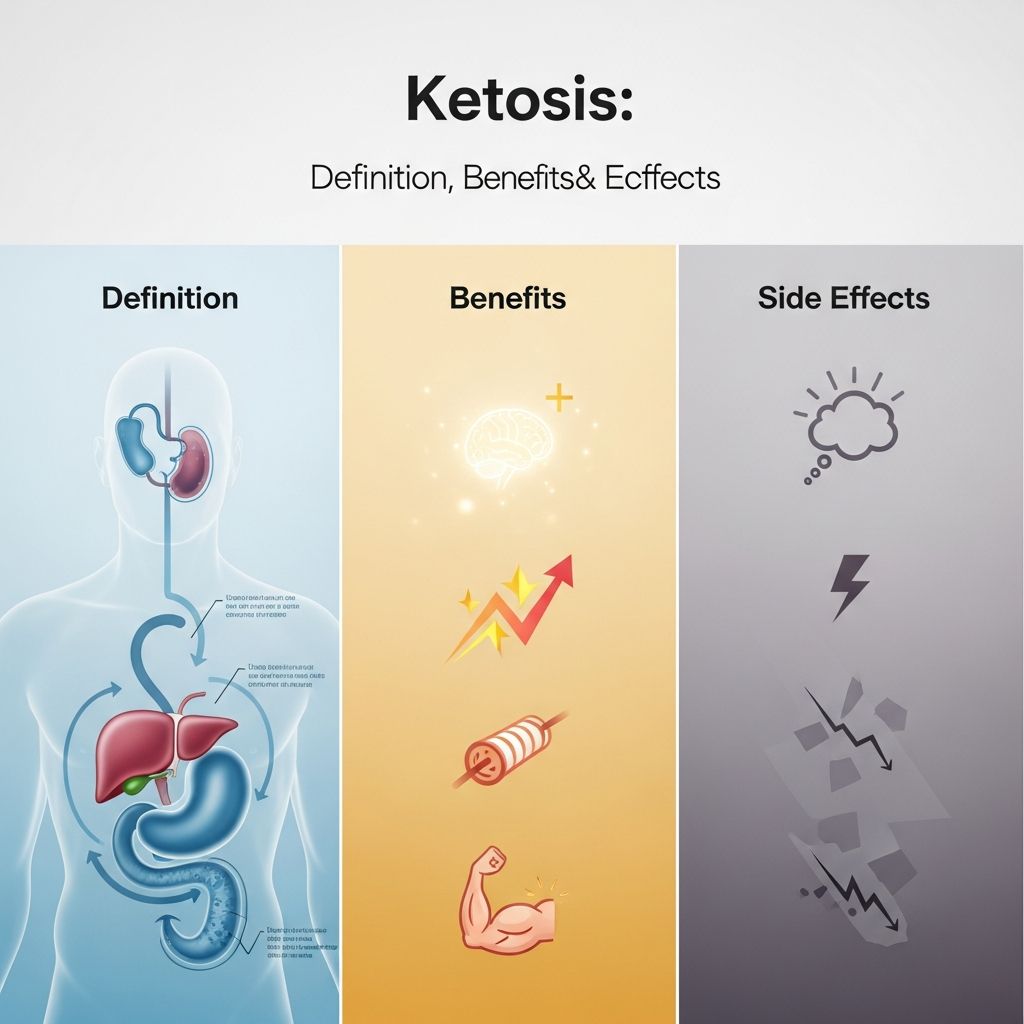
Ketosis is a metabolic state in which your body burns fat for energy instead of carbohydrates. This process occurs when carbohydrate intake is significantly reduced, forcing your body to seek an alternative fuel source. During ketosis, your liver breaks down fatty acids into ketone bodies, which then circulate through your bloodstream and travel to various tissues, including the brain and muscles, where they serve as an efficient energy source.
Ketosis typically occurs during fasting or when following a low-carbohydrate diet, such as the ketogenic diet. This metabolic shift is a natural process that has been part of human physiology for thousands of years, though modern interest in ketosis has grown significantly due to potential health applications and weight loss benefits.
How Ketosis Works
Understanding the mechanism of ketosis requires knowledge of how your body normally processes energy. Under typical circumstances, your body prefers to use glucose from carbohydrates as its primary fuel source. However, when carbohydrate availability becomes limited—usually after 48 to 72 hours of reduced intake—your liver glycogen stores become depleted.
Without sufficient glucose available for ATP production, your body initiates an alternative metabolic pathway. The liver breaks down triglycerides into ketone bodies, which are then released into the bloodstream. These ketone bodies travel to target tissues and provide energy through a process that is highly efficient and sustainable.
The regulation of ketogenesis is controlled by insulin levels. When carbohydrate intake is low, insulin levels decrease, which promotes ketone body production and the onset of ketosis. In nutritional ketosis, blood ketone levels typically range from 0.5 to 3.0 mmol/L, with the upper end of this range (1.5–3.0 mmol/L) considered optimal.
The Ketogenic Diet
The ketogenic diet, commonly referred to as the “keto diet,” is a high-fat, low-carbohydrate eating plan specifically designed to induce and maintain ketosis. The macronutrient composition of a typical ketogenic diet consists of approximately 60–80% fat, 15–30% protein, and 5–10% carbohydrates. This dramatic shift in macronutrient ratios fundamentally changes how your body processes and utilizes energy.
The ketogenic diet comes in several variations, each with different distributions of fat, protein, and carbohydrates. These include the classical ketogenic diet, modified Atkins diet, medium-chain-triglyceride ketogenic diet, and low-glycemic-index treatment approaches. Despite these variations, all share the common goal of maintaining a state of nutritional ketosis to achieve metabolic benefits.
Potential Benefits of Ketosis
Research and clinical observations have identified several potential benefits associated with ketosis and ketogenic diets:
Weight Loss and Metabolic Improvements
Very-low-carbohydrate diets that induce ketosis may promote weight loss through appetite suppression and increased metabolic rate. The ketogenic diet’s high fat and protein content tends to increase satiety, reducing overall caloric intake. Additionally, some research suggests that ketogenic diets may improve lipid profiles, glycemic control, and blood pressure—factors critical for overall metabolic health.
Related Stories



Heart Health Considerations
The failing heart increases oxidation of ketone bodies to meet its energy demands, suggesting that ketogenic diets could potentially benefit individuals with heart failure by boosting ketone body supply. Furthermore, certain heart failure medications like Sodium-glucose cotransporter 2 (SGLT2) inhibitors increase liver ketone production, and some researchers believe this may partly explain their cardioprotective effects. However, more rigorous research is needed in this area.
Blood Sugar Control
For individuals with type 2 diabetes, ketogenic diets may improve glycemic control and reduce insulin requirements. The reduction in carbohydrate intake directly decreases glucose production, potentially leading to better blood sugar management over time.
Fertility and Reproductive Health
Emerging research suggests that ketogenic diets may improve fertility in certain populations, particularly in patients with polycystic ovary syndrome (PCOS), where regular menstrual cycles and fertility may be restored through dietary intervention.
Side Effects and Safety Concerns
While ketosis itself is not inherently harmful, there are important side effects and safety considerations to understand:
Short-Term Side Effects
Many people experience temporary side effects when first entering ketosis, including:
- Fatigue and weakness
- Headaches
- Brain fog or difficulty concentrating
- Nausea
- Muscle cramps
- Bad breath (due to acetone production)
These symptoms typically subside within one to two weeks as your body adapts to using ketone bodies as fuel.
Long-Term Health Concerns
Potential long-term side effects and concerns include dyslipidemia (abnormal cholesterol levels), digestive issues, nutrient deficiencies, and impacts on bone health. Additionally, some research has raised questions about the ketogenic diet’s effects on the microbiome and potential tumor-promoting activity in certain cancer models.
Dehydration and Electrolyte Imbalances
A significant concern with ketogenic diets is the potential for dehydration and electrolyte imbalances, particularly involving sodium, potassium, and magnesium. These imbalances can lead to muscle cramps, weakness, and potentially serious cardiac arrhythmias.
Ketosis Versus Diabetic Ketoacidosis (DKA)
It is crucial to understand the difference between nutritional ketosis and diabetes-related ketoacidosis, as these are fundamentally different conditions with vastly different implications.
Nutritional Ketosis
During nutritional ketosis, ketone levels in your blood are elevated, but not sufficiently to make your blood acidic. This metabolic state is generally safe and occurs naturally during fasting or low-carbohydrate dieting. Ketosis itself is not harmful and represents a normal adaptation of human metabolism.
Diabetic Ketoacidosis (DKA)
DKA is a life-threatening medical emergency that typically affects individuals with type 1 diabetes or people with undiagnosed diabetes. Unlike nutritional ketosis, DKA occurs when blood ketone levels become dangerously high due to insufficient insulin, causing the blood to become acidic. This dangerous condition can develop rapidly and requires immediate medical intervention.
Warning signs of DKA include nausea, vomiting, difficulty breathing, fruity-smelling breath, and confusion. Individuals with diabetes following a ketogenic diet face an elevated risk of DKA, particularly if insulin doses are not properly adjusted or if SGLT2 inhibitor medications are not discontinued.
Special Populations and Ketosis
Individuals with Type 1 Diabetes
While ketogenic diets may improve glycemic control in people with type 1 diabetes, this population faces significant safety risks including increased risk of diabetic ketoacidosis, hypoglycemia, and dyslipidemia. Insulin therapy typically requires adjustment when initiating a ketogenic diet, and SGLT2 inhibitors should be discontinued. Close monitoring through frequent blood glucose checks and continuous glucose monitors (CGMs) is essential. Metformin is generally considered safe to continue, while glucagon-like peptide 1 receptor agonists require careful monitoring.
Individuals with Heart Failure
For patients with heart failure, ketogenic diets remain largely experimental. While modified ketogenic diets might represent a reasonable short-term weight loss strategy for overweight patients without contraindications, they are not currently recommended for individuals with normal or low body weight due to concerns about adverse effects of rapid weight loss.
Individuals with Cancer
Recent research from Cleveland Clinic has raised new questions about ketogenic diets for cancer patients, with preclinical studies linking keto diets to microbiome shifts and potential tumor-promoting activity in ovarian cancer models. More research is needed before recommending ketogenic diets as a cancer treatment strategy.
Medical Supervision and Monitoring
For individuals with existing medical conditions, ketogenic diets require careful medical oversight. Clinical supervision should include:
- Regular appointments (such as monthly check-ins) to monitor health and progress
- Patient education regarding hydration maintenance and recognition of ketoacidosis symptoms
- Blood ketone monitoring using at-home meters at consistent times daily
- Medication dosage adjustments for glucose-lowering and antihypertensive drugs
- Gradual reintroduction of carbohydrates when discontinuing the diet
Who Should Avoid Ketosis?
Certain individuals should avoid ketogenic diets or pursue them only under strict medical supervision:
- People with type 1 diabetes (without specialized medical oversight)
- Individuals with a history of diabetic ketoacidosis
- People taking SGLT2 inhibitors without medical modification
- Those with severe kidney or liver disease
- Pregnant or breastfeeding women
- Individuals with a history of eating disorders
Frequently Asked Questions
Q: How long does it take to enter ketosis?
A: Typically, ketosis begins after 48 to 72 hours of carbohydrate restriction, though this timeline varies based on individual factors such as metabolism, activity level, and prior carbohydrate intake.
Q: Can you maintain ketosis indefinitely?
A: While some people maintain ketosis long-term, the safety and benefits of prolonged ketosis, particularly in individuals with underlying health conditions, require ongoing research and medical supervision.
Q: Is ketosis the same as ketoacidosis?
A: No. Nutritional ketosis is a safe, natural metabolic state with normal blood pH. Ketoacidosis is a dangerous medical emergency where blood becomes dangerously acidic due to excessive ketones, primarily occurring in people with diabetes.
Q: What foods can you eat on a ketogenic diet?
A: Typical ketogenic diet foods include fatty fish, eggs, full-fat dairy, nuts, seeds, avocados, healthy oils, low-carbohydrate vegetables, and moderate amounts of meat and poultry.
Q: Should I consult a doctor before starting a ketogenic diet?
A: Yes, especially if you have existing medical conditions, take medications, or have a family history of diabetes. Medical consultation ensures the diet is appropriate for your individual health status.
Conclusion
Ketosis is a natural metabolic state with potential benefits for weight loss, metabolic health, and certain medical conditions. However, it is not appropriate for everyone, and the difference between safe nutritional ketosis and dangerous diabetic ketoacidosis cannot be overstated. For individuals considering a ketogenic diet, especially those with existing health conditions, medical supervision and ongoing monitoring are essential to ensure safety and optimize outcomes. As research continues to evolve, our understanding of ketosis and its applications in various patient populations will become increasingly refined.
References
- Keto Diet for Heart Failure: What Clinicians and Patients Need to Know — TCTMD (Cardiovascular News from the Interventional Council for Cardiovascular Medicine). 2024. https://www.tctmd.com/news/keto-diet-heart-failure-what-clinicians-patients-need-know
- Ketogenic Diets in the Management of Type 1 Diabetes: Safe or Safety Concerns? — Cleveland Clinic Journal of Medicine. 2019. https://www.ccjm.org/content/88/10/547
- Ketosis: Definition, Benefits & Side Effects — Cleveland Clinic. 2024. https://my.clevelandclinic.org/health/articles/24003-ketosis
- What Is the Keto Diet and Should You Try It? — Cleveland Clinic Health. 2024. https://health.clevelandclinic.org/what-is-the-keto-diet-and-should-you-try-it
- Microbiome Research Raises New Questions About the Ketogenic Diet for Cancer Patients — Cleveland Clinic Lerner Research Institute. 2024. https://www.lerner.ccf.org/news/article/?title=Microbiome+research+raises+new+questions+about+the+ketogenic+diet+for+cancer+patients
- Very-Low-Carbohydrate Weight-Loss Diets Revisited — Cleveland Clinic Journal of Medicine. 2002. https://www.ccjm.org/content/ccjom/69/11/849.full.pdf
- Ketogenic Diet Improves Fertility in Patients with Polycystic Ovary Syndrome — Frontiers in Nutrition. 2024. https://www.frontiersin.org/journals/nutrition/articles/10.3389/fnut.2024.1395977/epub
Similar Articles








Read full bio of medha deb