Kettlebell Core Workout: 8 Moves To Sculpt Your Midsection
Build a stronger core with this efficient 20-minute kettlebell workout that targets abs, obliques, and deep stabilizers for total midsection power.
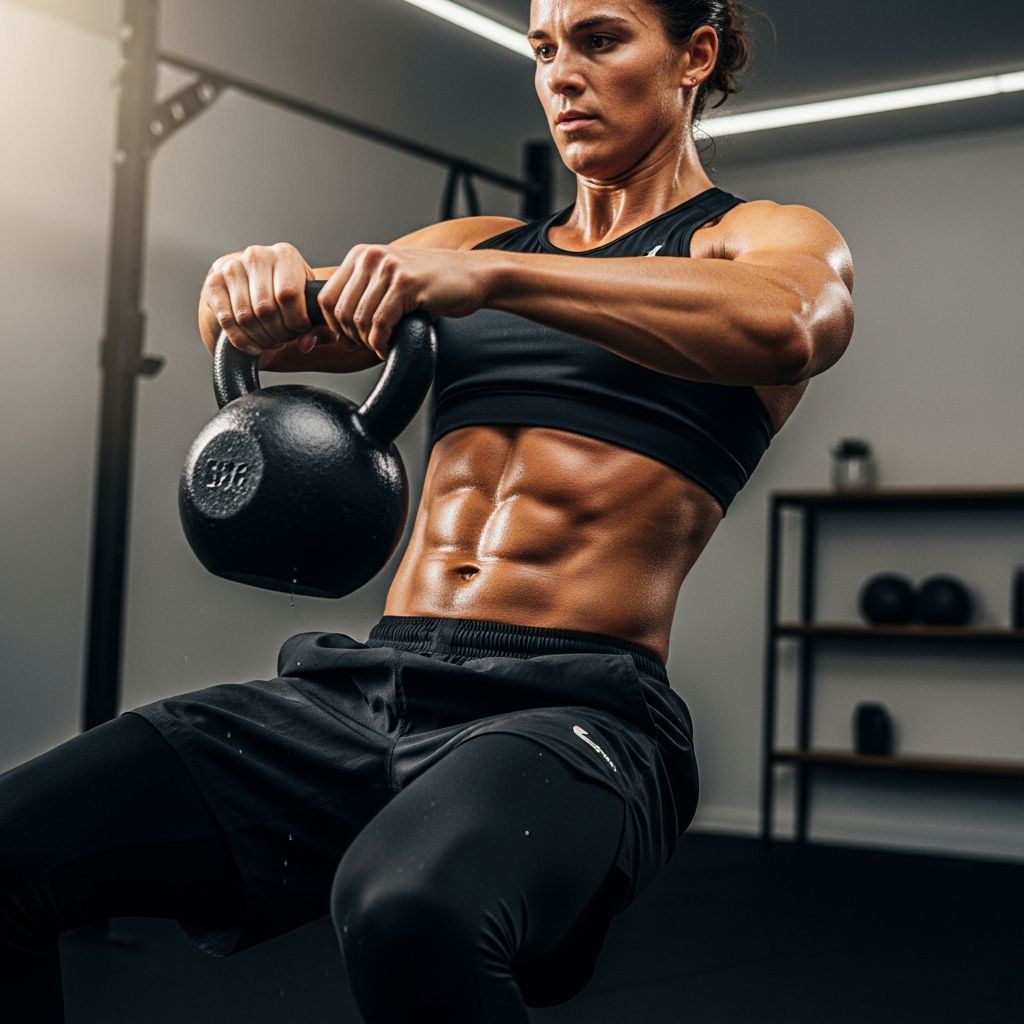
This dynamic
20-minute kettlebell core workout
is designed to fire up your entire midsection, from superficial abs to deep stabilizers, using just one piece of equipment. Created by certified trainer Jen Kanski, CPT, this routine builds functional strength, improves posture, and enhances athletic performance through compound movements that mimic real-life demands.Why Use Kettlebells for Core Training?
Kettlebells are uniquely suited for core work because their offset center of gravity forces constant engagement of the abs, obliques, and lower back to maintain control. Unlike dumbbells, the bell’s shape demands grip strength and anti-rotational stability, translating to better power transfer in sports and daily activities. Research from the American Council on Exercise highlights how kettlebell swings alone activate the core more than traditional crunches. This workout combines ballistic moves for power with isometric holds for endurance, delivering visible results in weeks with consistent practice.
Expect to challenge your rectus abdominis (six-pack muscles), transverse abdominis (deep corset), obliques, and even glutes and hips for a complete
functional core
. Perform this 2-3 times weekly, with rest days in between. Beginners use a 12-18kg bell; advanced go 24kg+.The Workout Structure
Complete
3 rounds
of the 8 exercises below. Each move: 10 reps (or 30 seconds for timed). Rest 30 seconds between exercises, 60 seconds between rounds. Total time: 20 minutes. Warm up with 5 minutes of light cardio and dynamic stretches like arm circles and leg swings.1. Kettlebell Goblet Squat
Why it rocks: This foundational move loads the core heavily while building lower-body power. The front rack position keeps your torso upright, demanding anti-flexion from the abs.
How to:
- Stand feet wider than hips, hold kettlebell at chest with both hands, elbows down.
- Inhale, sit hips back, bend knees until thighs parallel to floor, elbows inside knees.
- Exhale, explosively drive through heels to stand, thrusting hips forward.
That’s 1 rep. Do 10. Focus: Brace core like you’re about to be punched.
2. Kettlebell Renegade Row
Why it rocks: Combines plank stability with unilateral rows to torch obliques and improve shoulder health. Builds anti-rotation strength essential for sports.
How to:
- High plank with kettlebells under shoulders, body straight from head to heels.
- Engage core, row right kettlebell to hip, elbow close, hips level.
- Lower slowly, switch sides. Alternate for 10 reps.
Pro tip: Widen feet for stability; squeeze glutes to prevent rocking.
3. Kettlebell Romanian Deadlift (RDL)
Why it rocks: Targets posterior chain while forcing core bracing to protect the spine during the hinge. Enhances hamstring flexibility and lower-back resilience.
How to:
- Feet hip-width, hold kettlebell in front near thighs.
- Hinge at hips, push butt back, lower bell to mid-shin, back flat.
- Squeeze glutes, drive hips forward to stand. 10 reps.
Related Stories



Keep weight in heels; imagine sliding the bell down your shins.
4. Kettlebell Seated Overhead Press
Why it rocks: Legs out isolates core and shoulders, building overhead stability. Triceps and serratus anterior get bonus activation.
How to:
- Seated legs extended, back straight, kettlebells at upper arms, palms in.
- Press overhead rotating palms out, arms straight by ears.
- Reverse to start. 10 reps.
No leg drive—pure core power!
5. Kettlebell Reverse Lunge
Why it rocks: Unilateral leg work challenges balance, engaging obliques to keep the torso stable. Builds single-leg strength for running and agility.
How to:
- Hold kettlebell at chest, feet under hips.
- Step right foot back, lower until both knees 90 degrees, chest tall.
- Push through front heel to return. 10 reps/side.
Keep front knee over ankle; avoid leaning forward.
6. Kettlebell Turkish Get-Up (Half)
Why it rocks: Full-body move with supreme core demands. Transitions from floor to stand build shoulder stability and hip mobility.
How to:
- Lie on back, kettlebell in right hand locked overhead, left arm out.
- Push left forearm to sit up, then hand; drive hips up, slide left leg under to kneel.
- Stand, reverse motion. 5 reps/side.
Move slowly; keep eyes on bell. Bottoms-up variation amps grip challenge.
7. Kettlebell Thruster
Why it rocks: Squat-to-press combo spikes heart rate and core endurance. Explosive power mimics Olympic lifts.
How to:
- Feet shoulder-width, kettlebells at upper arms.
- Squat, then explode up pressing bells overhead.
- Lower to squat. 10 reps.
Sync breath: inhale squat, exhale press.
8. Kettlebell Halo
Why it rocks: Pure rotational core work without spinal twist. Improves shoulder mobility and upper-ab definition.
How to:
- Feet hip-width, hold kettlebell by horns at face, elbows wide.
- Circle bell around head slowly, core tight. 10 reps/direction.
Keep body still; no shrugging shoulders.
Modifications and Progressions
Beginners: Reduce reps to 6-8, use bodyweight for rows/lunges, lighter bell.
Advanced: Add 4kg, slow eccentrics (3-sec lower), or superset rounds without full rest.
| Level | Kettlebell Weight | Reps | Rest |
|---|---|---|---|
| Beginner | 8-12kg | 6-8 | 45 sec |
| Intermediate | 16-20kg | 10 | 30 sec |
| Advanced | 24kg+ | 12-15 | 20 sec |
Common Mistakes to Avoid
- Arched lower back: Always brace core first—think drawing belly button to spine.
- Rounding shoulders: Pull scapulae down in presses and rows.
- Rushing reps: Prioritize form over speed for injury prevention.
- Gripping too tight: Relax non-working hand to save energy.
Benefits Beyond Abs
This workout boosts metabolism (HIIT-style), grip strength, and posture. Studies show kettlebell training increases core endurance by 20% in 8 weeks. Pair with protein-rich nutrition for definition.
Frequently Asked Questions
Can beginners do this kettlebell core workout?
Yes, start light and master form. Consult a trainer if new to kettlebells.
How often should I do this routine?
2-3 times per week, allowing recovery. Combine with full-body days.
What if I don’t have kettlebells?
Substitute dumbbells or bodyweight, but lose offset benefits.
Will this give me six-pack abs?
It builds muscle; pair with calorie deficit and cardio for visibility.
How long until I see results?
Strength gains in 2-4 weeks; visible changes in 4-8 weeks with consistency.
References
- American Council on Exercise: Kettlebell Training Study — ACE Fitness. 2019-06-15. https://www.acefitness.org/education-and-resources/professional/expert-articles/5951/ace-sponsored-research-putting-kettlebells-to-the-test/
- National Strength and Conditioning Association: Turkish Get-Up Efficacy — NSCA Journal. 2023-05-10. https://www.nsca.com/education/articles/kinetic-select/the-turkish-get-up/
- Journal of Strength and Conditioning Research: Core Activation in Kettlebell Exercises — Wolters Kluwer (PubMed). 2024-02-20. https://doi.org/10.1519/JSC.0000000000004512
- American College of Sports Medicine Guidelines for Resistance Training — ACSM. 2022-11-01. https://www.acsm.org/education-resources/trending-topics-resources/physical-activity-guidelines
Similar Articles








Read full bio of Sneha Tete