Kidney Cysts: Causes, Symptoms, Treatment & Prevention
Understanding kidney cysts: Learn about types, diagnosis, treatment options, and when to seek care.
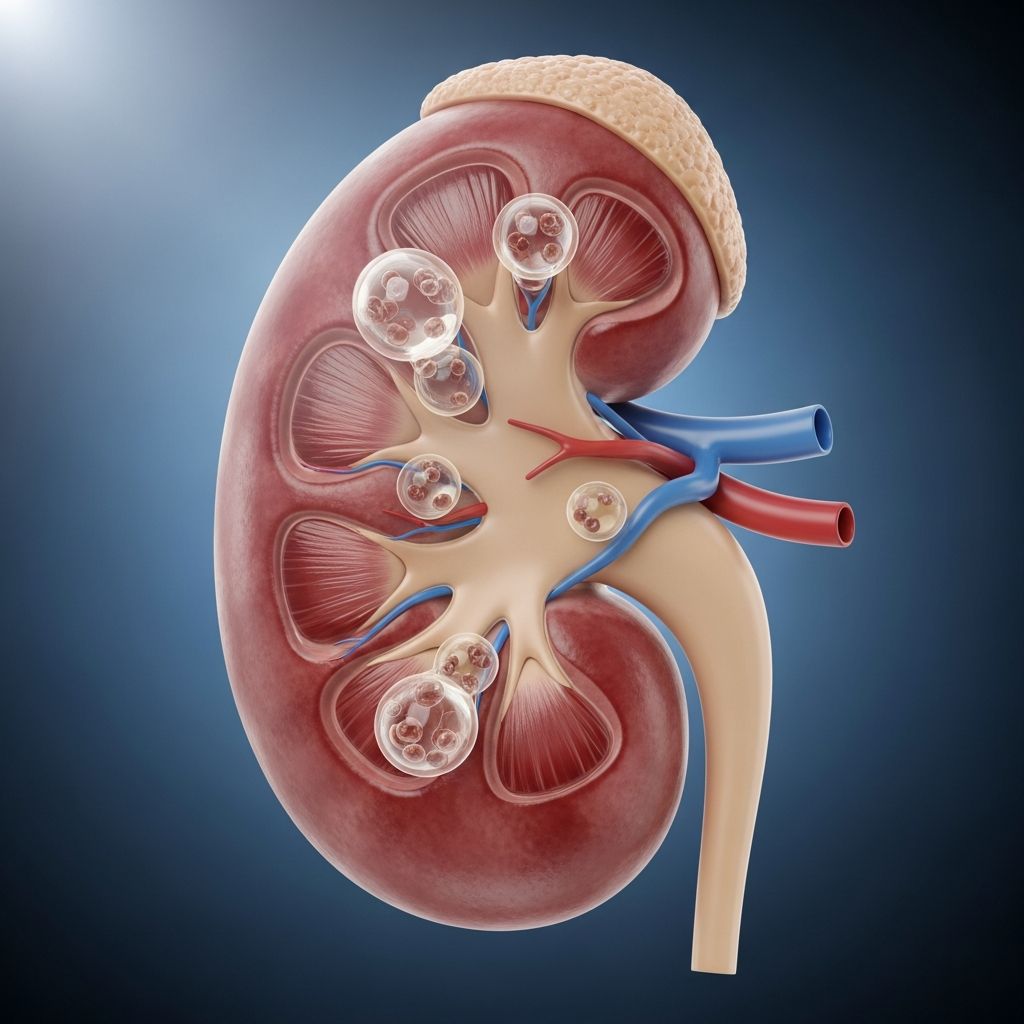
Understanding Kidney Cysts
A kidney cyst is a fluid-filled sac that develops on or within your kidney. These cysts are remarkably common and, in most cases, are completely harmless and not cancerous. You may have one cyst or multiple cysts, and they can range significantly in size. Many people never even realize they have kidney cysts because they often produce no symptoms and are discovered incidentally during imaging tests performed for other reasons.
While hearing that you have a cyst on your kidney might initially sound concerning, it’s important to understand that kidney cysts are a frequent finding in medical practice. Your healthcare provider may recommend additional testing to determine the specific type of cyst and whether any treatment or monitoring is necessary. Understanding the differences between simple and complex cysts, along with how they’re classified and managed, can help you make informed decisions about your health.
Types of Kidney Cysts
Kidney cysts are generally divided into two main categories: simple cysts and complex cysts. This classification system helps healthcare providers determine the appropriate management strategy and assess any potential health risks.
Simple Kidney Cysts
Simple kidney cysts are the most common type encountered in clinical practice. These cysts are almost always noncancerous (benign) and harmless, presenting an excellent long-term outlook for patients. Simple cysts are characterized by their fluid-filled composition and round shape with thin walls. They typically do not cause symptoms unless they become unusually large, and many people remain unaware they have a simple cyst throughout their lifetime.
Simple kidney cysts are classified as category I on the Bosniak classification scale, which is the system healthcare providers use to categorize kidney cysts. Because simple cysts carry virtually no cancer risk and rarely cause problems, they do not require any follow-up care or treatment. Your healthcare provider may simply monitor the cyst over time with periodic ultrasounds to ensure it remains stable.
Complex Kidney Cysts
Complex kidney cysts require more careful evaluation and management because they carry a variable risk of being cancerous. Healthcare providers classify complex cysts into categories II, II-F, III, and IV based on specific imaging characteristics and features that suggest potential malignancy.
A category II complex cyst typically does not require follow-up care, as these cysts have minimal cancer risk. However, a category II-F cyst (where F stands for follow-up) does require ongoing surveillance because it carries approximately a 5% risk of being cancerous. A category III complex cyst has a significantly higher cancer risk, ranging from 50% to 80%, making removal by your healthcare provider the recommended course of action. Finally, a category IV cyst carries the highest cancer risk at approximately 90%, and removal is strongly recommended to prevent potential complications.
The Bosniak Classification System
The Bosniak classification system, named after the physician who developed it, provides a standardized framework for categorizing kidney cysts based on imaging findings. This five-level classification system helps healthcare providers make consistent decisions about patient management and communicate clearly about cyst characteristics.
Related Stories



| Bosniak Category | Characteristics | Cancer Risk | Management |
|---|---|---|---|
| Category I | Simple fluid-filled cyst with thin walls | None | No follow-up needed |
| Category II | Minimal complexity features | Minimal | No follow-up needed |
| Category II-F | Features requiring follow-up | ~5% | Regular imaging surveillance |
| Category III | Indeterminate complexity | 50-80% | Surgical removal recommended |
| Category IV | Clearly malignant features | ~90% | Surgical removal recommended |
Causes and Risk Factors
Most simple kidney cysts develop as people age and are considered a normal part of the aging process. The exact cause of simple cyst formation is not entirely understood, but they become increasingly common with advancing age. By age 70, studies suggest that more than half of the population may have at least one kidney cyst.
Complex cysts and other types of cystic kidney disease may have different etiologies. Some cystic kidney conditions are inherited genetic disorders, such as polycystic kidney disease (PKD), which causes multiple cysts to develop throughout the kidneys. Other risk factors for developing cystic kidney disease include having a family history of kidney disease, being of a certain age or ethnic background, or having chronic kidney disease from other causes.
Symptoms of Kidney Cysts
Most people with simple kidney cysts experience no symptoms whatsoever. The cysts are often discovered incidentally when imaging is performed for unrelated reasons, such as evaluating abdominal pain or assessing kidney function. However, when cysts do cause symptoms, they may include:
Common Symptoms When Present:
- Dull flank or back pain on the side with the cyst
- Blood in the urine (hematuria)
- Fever if the cyst becomes infected
- Reduced kidney function
- High blood pressure
Large cysts are more likely to cause symptoms than small ones. If a cyst ruptures, becomes infected, or causes a blockage in the urinary tract, you may experience more acute symptoms that require medical attention.
Diagnosis of Kidney Cysts
Healthcare providers use several methods to diagnose kidney cysts and determine their characteristics. The diagnostic process typically begins with a thorough evaluation of your medical history and symptoms.
Medical Evaluation
Your healthcare provider will perform a comprehensive physical examination and take a detailed medical history, including family history and any symptoms you’ve experienced. This initial assessment helps establish whether further testing is warranted and guides the selection of appropriate diagnostic tools.
Laboratory Tests
Blood and urine tests are commonly ordered to assess kidney function and overall health. These tests help determine how well your kidneys are filtering waste from your blood and can reveal any abnormalities that might suggest kidney disease or infection. Urinalysis may show blood or signs of infection, while blood tests measure creatinine levels and glomerular filtration rate (GFR).
Imaging Tests
Imaging is the primary method for visualizing kidney cysts and determining their characteristics. Common imaging modalities include:
- Ultrasound: Often the first-line imaging test, using sound waves to create pictures of the kidneys and detect cysts. This non-invasive procedure is safe, painless, and can show if a cyst has changed size.
- Computed Tomography (CT) Scan: Provides detailed three-dimensional images of the kidneys using powerful X-rays. CT scans are particularly useful for characterizing complex cysts and assessing their internal features.
- Magnetic Resonance Imaging (MRI): Uses magnets and radio waves to produce detailed images of the kidneys. MRI is an excellent alternative for patients who cannot receive CT contrast or for those with kidney function concerns.
Treatment Options for Kidney Cysts
Treatment approaches vary significantly based on the type of cyst, its size, and whether it’s causing symptoms or affecting kidney function.
Simple Kidney Cysts
Because simple kidney cysts are almost always harmless, most do not require any treatment. Your healthcare provider may recommend watchful waiting with periodic monitoring through annual or biannual ultrasounds to ensure the cyst remains stable and doesn’t grow. As long as the cyst causes no symptoms and shows no signs of change, no intervention is necessary.
Treatment for Symptomatic or Complex Cysts
When a cyst causes symptoms, affects kidney function, or is determined to be complex with cancer risk, treatment may be necessary. Healthcare providers use two primary procedures most often:
Sclerotherapy
Sclerotherapy is a minimally invasive procedure used to drain problematic cysts. During this procedure, you receive local anesthesia to ensure comfort. Under ultrasound guidance, your physician inserts a thin needle through your skin directly into the cyst and drains all the fluid. In some cases, an alcohol solution is instilled into the cyst cavity afterward to prevent recurrence and reduce the likelihood of the cyst reforming. This outpatient procedure allows most patients to return home the same day without requiring hospitalization.
Surgical Removal
Larger cysts that significantly affect kidney function or are determined to be cancerous may require surgical removal. Surgeons typically employ laparoscopic techniques, which are less invasive than traditional open surgery. Using a camera and specialized miniature instruments inserted through several small incisions, the surgeon can visualize and remove the cyst tissue. The cyst is first drained, and then the cyst walls are either cut or cauterized to prevent regrowth. Most patients require a brief hospital stay of one to two days following surgical cyst removal.
Prevention and Lifestyle Considerations
While most kidney cysts cannot be prevented, maintaining overall kidney health is important. This includes managing blood pressure, staying well-hydrated, limiting salt intake, maintaining a healthy weight, and avoiding excessive use of nonsteroidal anti-inflammatory drugs (NSAIDs). Regular check-ups with your healthcare provider allow for ongoing monitoring of kidney function and any cysts that have been identified.
When to Seek Medical Care
You should contact your healthcare provider immediately if you experience:
- Sudden, severe back or flank pain
- Blood in your urine
- Fever with flank pain (suggesting possible cyst infection)
- Signs of urinary tract infection (dysuria, frequency, urgency)
- Changes in kidney function or blood pressure
Prognosis and Outlook
The outlook for individuals with simple kidney cysts is excellent. Since these cysts are benign and non-progressive, the vast majority of people with simple cysts experience no complications and require no treatment. Treatment of cysts that do cause symptoms—whether due to infection, rupture, or blockage—is typically very effective, with most patients making a full recovery without long-term consequences.
For complex kidney cysts, the prognosis depends on the Bosniak category and whether surgical removal is performed. Removing a complex cyst before it becomes cancerous is usually highly effective with minimal complications. Regular monitoring of complex cysts allows for early detection of any changes and timely intervention when necessary.
Frequently Asked Questions (FAQs)
Q: Are kidney cysts always a sign of kidney disease?
A: No. Most simple kidney cysts are not associated with kidney disease and are completely harmless. They are a common, age-related finding. However, some types of cystic kidney disease, such as polycystic kidney disease, are hereditary conditions that do require management and monitoring.
Q: Can a simple kidney cyst turn into cancer?
A: Simple kidney cysts are almost never cancerous. Only complex cysts carry any cancer risk, and even then, the risk depends on their Bosniak classification. Simple cysts (Category I) have essentially zero cancer risk.
Q: How often should I have imaging if I have a kidney cyst?
A: This depends on your cyst type. Simple cysts typically require annual ultrasound imaging or may not require any follow-up if they’re small and asymptomatic. Complex cysts, particularly Category II-F cysts, may require more frequent imaging surveillance. Your healthcare provider will establish an appropriate monitoring schedule based on your specific cyst characteristics.
Q: Can kidney cysts affect my blood pressure?
A: Most simple kidney cysts do not affect blood pressure. However, very large cysts or certain types of cystic kidney disease can influence blood pressure regulation. If you have concerns about your blood pressure in relation to a kidney cyst, discuss this with your healthcare provider.
Q: Is there any way to prevent kidney cysts from developing?
A: Simple kidney cysts cannot be prevented, as they are a natural age-related occurrence. However, maintaining overall kidney health through proper hydration, blood pressure control, and regular medical check-ups supports optimal kidney function.
Q: What should I do if my kidney cyst causes pain?
A: Contact your healthcare provider if your cyst causes persistent pain. Depending on the cause and severity, your provider may recommend imaging to assess the cyst, sclerotherapy to drain it, or surgical removal if necessary.
References
- Kidney Cysts: Causes, Symptoms, Treatment & Prevention — Cleveland Clinic. 2024. https://my.clevelandclinic.org/health/diseases/14884-kidney-cysts
- Cystic Kidney Disease: Causes, Symptoms & Treatment — Cleveland Clinic. 2024. https://my.clevelandclinic.org/health/diseases/21846-cystic-kidney-disease
- A practical guide and decision-making protocol for the management of complex renal cystic masses — National Center for Biotechnology Information. 2017. https://pmc.ncbi.nlm.nih.gov/articles/PMC5653609/
- Polycystic Kidney Disease (PKD): Symptoms & Treatment — Cleveland Clinic. 2024. https://my.clevelandclinic.org/health/diseases/5791-polycystic-kidney-disease
- Medullary Sponge Kidney: Causes, Symptoms & Treatment — Cleveland Clinic. 2024. https://my.clevelandclinic.org/health/diseases/23169-medullary-sponge-kidney
Similar Articles








Read full bio of Sneha Tete