Kidney Stones: Common Causes and Risk Factors
Understanding the dietary, medical, and lifestyle factors that lead to kidney stone formation.
What Are Kidney Stones and Why Do They Form?
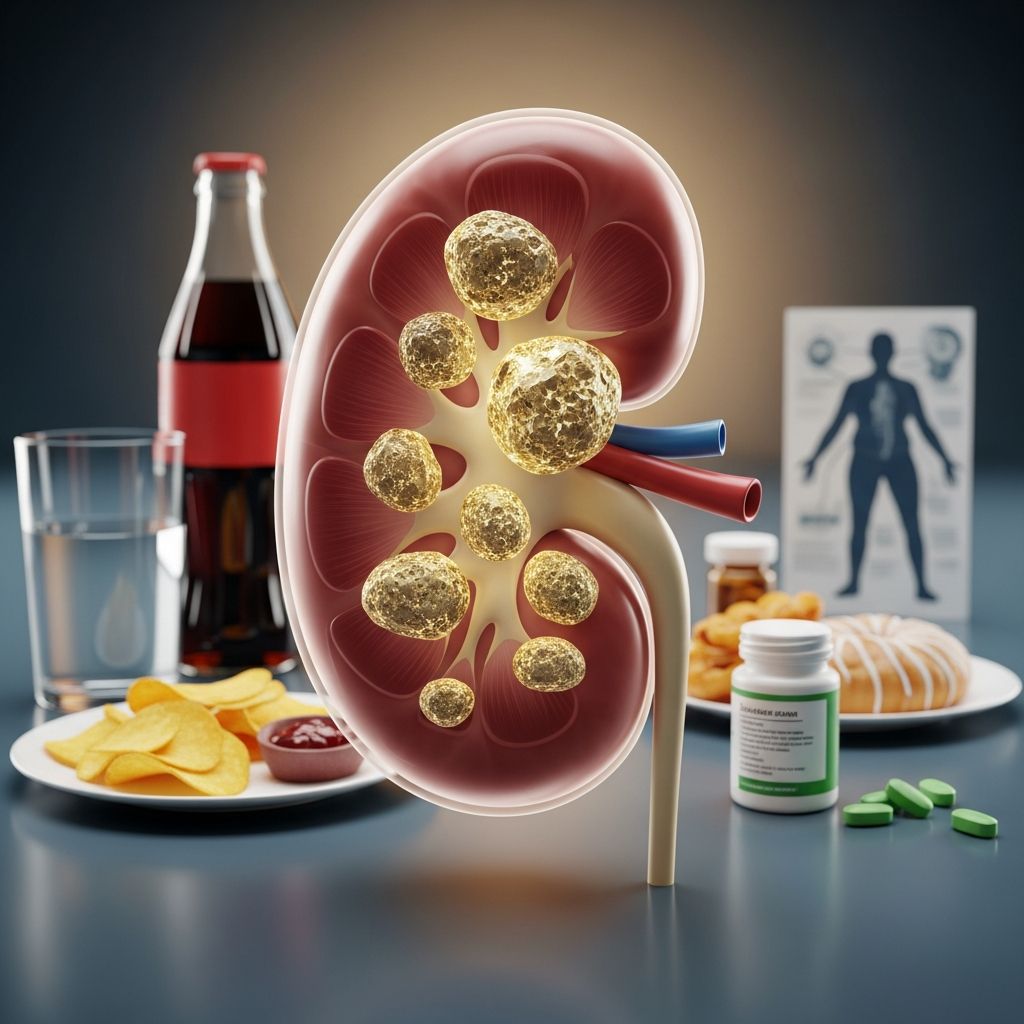
Kidney stones are hard deposits composed of minerals and salts that crystallize in the urine and form inside the kidneys. These deposits, also known as renal calculi or nephrolithiasis, affect approximately 1 in 11 people at some point in their lives. Understanding what causes kidney stones is essential for prevention and management, as they can cause significant pain and complications if left untreated. Kidney stones develop when urine becomes supersaturated with crystal-forming substances, allowing minerals to crystallize and accumulate over time.
The formation of kidney stones is rarely due to a single cause. Instead, they typically develop through a combination of dietary choices, lifestyle factors, genetic predisposition, and underlying medical conditions. Most kidney stones form when the urine contains more crystal-forming substances than the fluid can dilute, and simultaneously lacks protective substances that would normally prevent crystals from adhering together.
Dietary Factors Contributing to Kidney Stones
Diet plays a crucial role in kidney stone formation. Consuming excessive amounts of sodium, added sugars, and protein from animal sources significantly increases the risk of developing stones. A high-sodium diet is particularly problematic because excess sodium raises the amount of calcium that the kidneys must filter, dramatically increasing the likelihood of stone formation.
Beyond sodium, several other dietary components influence stone risk:
- Protein from meat, poultry, and fish: High protein consumption, especially from animal sources, elevates uric acid levels and increases the concentration of stone-forming substances in urine.
- Oxalate-rich foods: Fruits, vegetables, nuts, and chocolate contain high amounts of oxalate, which can combine with calcium to form calcium oxalate stones, the most common type of kidney stone.
- Calcium intake: While adequate calcium is necessary for health, excessive amounts—particularly from supplements—can increase kidney stone risk. Interestingly, insufficient dietary calcium can also contribute to calcium oxalate stone formation by allowing more oxalate to be absorbed by the body.
- Added sugars: Diets high in added sugars have been associated with increased kidney stone risk, though the exact mechanism continues to be studied.
- Vitamin C supplements: Excessive vitamin C intake, exceeding 1,000 mg per day, can increase urinary oxalate levels and raise the risk of stone formation.
The Critical Role of Hydration
One of the most significant modifiable risk factors for kidney stone formation is inadequate hydration and low urine volume. When urine is concentrated due to insufficient water intake, minerals are more likely to crystallize and form stones. This is why dehydration ranks among the primary causes of kidney stone disease.
Individuals at particularly high risk for dehydration-related stones include those living in warm, dry climates, people who sweat excessively during physical activity, and those who do not consume adequate daily water. Maintaining proper hydration dilutes urine and helps prevent mineral crystallization, making it one of the most effective preventive measures against kidney stone formation.
Types of Kidney Stones and Their Specific Causes
Different types of kidney stones form through distinct mechanisms, and understanding these differences is important for targeted prevention strategies.
Calcium Stones
Calcium stones account for the majority of all kidney stones, with calcium oxalate being the most prevalent subtype. These stones form when there is excessive calcium or oxalate in the urine, often due to dietary factors, high doses of vitamin D, genetic conditions affecting calcium metabolism, or intestinal bypass surgery. People with hyperparathyroidism—a condition causing overactive parathyroid glands—have elevated blood calcium levels that increase kidney stone risk.
Uric Acid Stones
Uric acid kidney stones develop through different mechanisms than calcium stones. They are often associated with gout, consumption of high-protein diets rich in organ meats and shellfish, and conditions like diabetes mellitus. Individuals with metabolic syndrome and those experiencing chronic diarrhea or nutrient absorption problems are also at elevated risk. Importantly, overly acidic urine is the primary factor driving uric acid stone formation.
Related Stories



Struvite Stones
These relatively uncommon stones form specifically in response to urinary tract infections caused by urease-producing bacteria. Struvite stones, comprising 7-8% of all urinary calculi worldwide, can grow rapidly and become quite large, sometimes with minimal warning symptoms. They are more prevalent in women due to higher rates of chronic urinary tract infections in this population.
Cystine Stones
Cystine stones develop in individuals with cystinuria, a rare genetic condition where the kidneys fail to properly reabsorb the amino acid cystine. These stones are visually distinctive, appearing opaque and amber-colored.
Medical Conditions Increasing Kidney Stone Risk
Certain health conditions significantly elevate the probability of kidney stone formation. These conditions either alter urinary composition or affect how the body processes minerals and metabolic byproducts.
- Diabetes and obesity: Both conditions are associated with increased kidney stone risk, particularly in women. Obesity raises the risk through multiple mechanisms, while diabetes increases the likelihood of uric acid stones.
- Hyperparathyroidism: This condition causes excessive calcium in the blood, leading to elevated urinary calcium and increased stone formation risk.
- Renal tubular acidosis: This metabolic disorder causes excessive acidity in the blood and urine, promoting stone formation.
- Inflammatory bowel disease and chronic diarrhea: These digestive conditions interfere with calcium and water absorption, increasing the concentration of stone-forming substances in urine.
- Gout: This inflammatory arthritis condition elevates uric acid levels, increasing the risk of uric acid stone formation.
- Bone disorders: Various skeletal conditions can alter calcium and phosphate metabolism, affecting kidney stone risk.
- Sarcoidosis: This inflammatory condition can increase blood calcium and vitamin D levels, promoting calcium stone formation.
Genetic and Family History Factors
Kidney stone formation has a significant genetic component. If someone in your family has experienced kidney stones, your personal risk is substantially elevated. Genetic factors can influence how the kidneys handle calcium, oxalate, uric acid, and citrate—all substances involved in stone formation.
Certain hereditary conditions directly cause kidney stones. Primary hyperoxaluria, a rare genetic disorder, substantially increases the risk of calcium oxalate stones by causing the liver to produce excessive oxalate. Cystinuria, another inherited metabolic disorder, directly causes cystine stone formation through defective renal tubular handling of cystine and related amino acids.
Medications and Supplements Contributing to Stone Formation
Several medications and supplements can increase kidney stone risk by altering urinary composition or increasing the concentration of stone-forming substances. Medications known to contribute to stone formation include:
- Atazanavir (an HIV protease inhibitor)
- Indinavir (another antiretroviral medication)
- Guaifenesin (an expectorant)
- Sulfonamides (a class of antibiotics)
- Topiramate (used for migraines and seizures)
Additionally, overuse of laxatives, calcium-based antacids, and excessive vitamin C or vitamin D supplementation can increase stone-forming mineral concentrations in the urine.
Lifestyle and Body Weight Considerations
Body weight significantly influences kidney stone risk. Obesity, defined as having excessive body fat, has been linked to higher kidney stone development rates. This relationship appears to be mediated through multiple mechanisms, including changes in urinary pH and increased excretion of stone-forming substances.
Similarly, surgical interventions such as gastric bypass surgery, particularly Roux-en-Y procedures, alter the digestive process and increase the risk of kidney stone formation by affecting how the body absorbs calcium and water.
Recurrence Risk and Prevention Implications
Understanding that kidney stones frequently recur is critical for implementing preventive strategies. Research demonstrates that first-time stone formers have a 26% median recurrence rate within five years. Several factors increase the likelihood of stone recurrence, including diabetes, family history of nephrolithiasis, hypertension, obesity, prior kidney stones, and specific stone types like uric acid stones.
This high recurrence rate emphasizes the importance of addressing underlying causes and adopting lifestyle modifications following an initial stone episode.
Frequently Asked Questions About Kidney Stones
Q: What is the most common cause of kidney stones?
A: Inadequate hydration and low urine volume are the most common causes of kidney stone formation. When urine is concentrated due to insufficient water intake, minerals crystallize more readily and form stones. Dietary factors, particularly high sodium and protein consumption, also play major roles in stone development.
Q: Can I prevent kidney stones through diet alone?
A: While diet plays an important role in prevention, kidney stones typically result from multiple factors. To effectively prevent stones, you should maintain adequate hydration, limit sodium and animal protein, manage underlying medical conditions, maintain a healthy weight, and follow your healthcare provider’s recommendations for supplements and medications.
Q: Are kidney stones hereditary?
A: Yes, kidney stones have a significant genetic component. If family members have had kidney stones, you’re at higher risk. Additionally, certain rare hereditary conditions like cystinuria and primary hyperoxaluria directly cause stone formation. However, genetic predisposition doesn’t guarantee you’ll develop stones—lifestyle and dietary factors also play crucial roles.
Q: Which type of kidney stone is most common?
A: Calcium oxalate stones are the most common type, accounting for the majority of kidney stone cases. These form when there is excessive calcium or oxalate in the urine, influenced by diet, vitamin D levels, and genetic factors affecting calcium metabolism.
Q: How does dehydration lead to kidney stones?
A: When you don’t drink enough water, urine becomes more concentrated, meaning minerals are present in higher concentrations. This allows minerals like calcium and oxalate to crystallize more easily and form stones. Adequate hydration dilutes urine and is one of the most effective prevention strategies.
References
- Common Causes of Kidney Stones — National Kidney Foundation. Accessed January 13, 2026. https://www.kidney.org/kidney-topics/kidney-stones
- Renal Calculi, Nephrolithiasis – StatPearls — National Center for Biotechnology Information (NCBI), National Institutes of Health. Updated 2024. https://www.ncbi.nlm.nih.gov/books/NBK442014/
- Kidney Stones: Symptoms and Causes — Mayo Clinic. Accessed January 13, 2026. https://www.mayoclinic.org/diseases-conditions/kidney-stones/symptoms-causes/syc-20355755
- Kidney Stones and Chronic Kidney Disease — DaVita. Accessed January 13, 2026. https://davita.com/education/articles/kidney-stones-and-chronic-kidney-disease/
Similar Articles








Read full bio of medha deb