Kidney Ultrasound: Purpose, Procedure & Results
Complete guide to kidney ultrasound: why it's done, how it works, and what to expect.
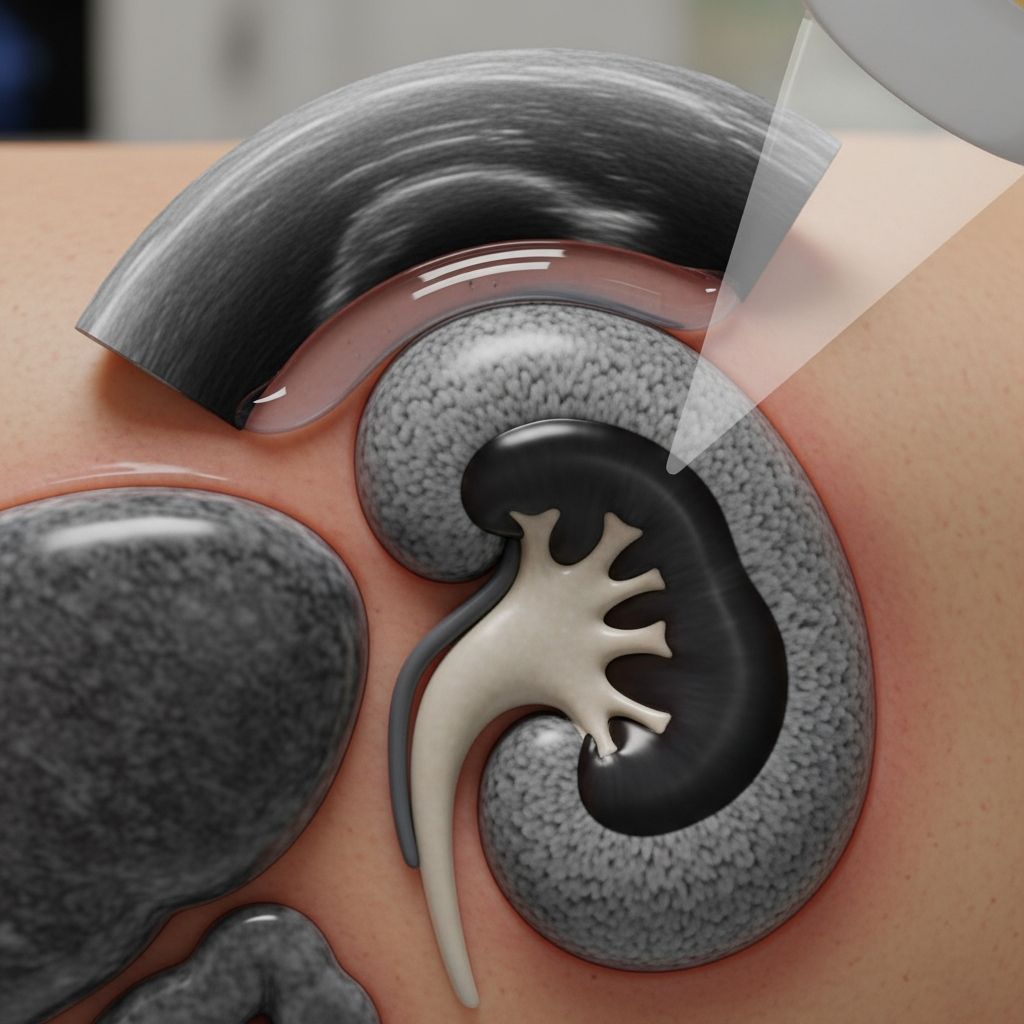
What is a Kidney Ultrasound?
A kidney ultrasound, also known as a renal ultrasound, is a safe and painless diagnostic imaging test that uses sound waves to create detailed images of your kidneys and surrounding structures. This noninvasive procedure allows healthcare providers to visualize the size, shape, and internal structure of your kidneys without using radiation or inserting any instruments into your body. During the examination, a transducer (a handheld device) is moved across your skin, emitting sound waves that bounce off your kidneys and other internal organs to generate real-time images displayed on a monitor.
Why Might You Need a Kidney Ultrasound?
Your healthcare provider may recommend a kidney ultrasound for several reasons related to kidney health evaluation and diagnosis. Understanding these indications helps you prepare mentally for the procedure and know what your doctor is investigating.
Diagnosing Kidney Conditions
A kidney ultrasound can detect and evaluate various kidney-related problems, including:
- Kidney stones (nephrolithiasis)
- Kidney cysts (fluid-filled sacs)
- Kidney tumors or masses
- Kidney infections or abscesses
- Urinary tract blockages
- Abnormal kidney size or shape
- Fluid collections around the kidneys
- Blood flow abnormalities to the kidneys
- Signs of kidney injury or damage
Additional Clinical Uses
Beyond diagnostic purposes, your healthcare provider may use kidney ultrasound to:
- Guide needles during kidney biopsy procedures
- Monitor transplanted kidneys after surgery
- Evaluate chronic kidney disease progression
- Assess kidney function in patients with abnormal lab results
- Visualize your bladder and assess post-void residual volume
How Does the Kidney Ultrasound Procedure Work?
Understanding the technical aspects of how ultrasound imaging works can help you feel more comfortable during the procedure. The kidney ultrasound uses fundamental principles of sound wave physics to create detailed organ images.
The Transducer and Sound Waves
The transducer is the primary tool used during kidney ultrasound. This handheld device emits high-frequency sound waves, typically in the range of 2 to 18 megahertz, which travel through your skin and body tissues. These sound waves are inaudible to the human ear. When the sound waves encounter your kidneys and other internal structures, they bounce back toward the transducer as echoes. The transducer captures these returning echoes and transmits them to a computer for analysis.
Image Generation and Processing
The ultrasound machine’s computer analyzes the echoes returning from your kidneys and calculates the distance and intensity of each echo. This information is converted into electrical signals that generate real-time images on the monitor. The images appear in grayscale, with different shades representing different tissue densities. Your healthcare provider watches these images develop in real-time during the procedure, allowing them to capture multiple views and measurements of your kidneys from different angles.
Bladder Assessment
A kidney ultrasound typically includes evaluation of your bladder as well, since the kidneys and bladder work closely together in the urinary system. Your sonographer will usually take images of your bladder when it’s full and then ask you to urinate. After you empty your bladder, additional images are taken to measure the post-void residual volume (the amount of urine remaining after urination). This information helps your healthcare provider assess how efficiently your bladder is functioning.
Related Stories



What to Expect During the Procedure
Knowing what happens during your kidney ultrasound can help reduce anxiety and ensure you’re properly prepared for the examination.
Before Your Appointment
Your healthcare provider may give you specific preparation instructions before your kidney ultrasound. In many cases, you’ll be asked to drink water and avoid urinating for 1-2 hours before the procedure to fill your bladder. A full bladder helps create clearer ultrasound images and allows your sonographer to assess bladder function properly. However, preparation requirements can vary depending on your specific situation, so always follow your healthcare provider’s instructions.
During the Examination
When you arrive for your appointment, you’ll be taken to the ultrasound room and asked to lie on an examination table. A technician called a sonographer will apply a clear, water-based gel to the skin over your kidneys. This gel serves an important purpose: it helps sound waves travel from the transducer into your body by eliminating air gaps between the device and your skin. The sonographer then moves the transducer slowly across your skin, using gentle pressure to visualize different parts of your kidneys from various angles. The entire procedure typically takes 20 to 30 minutes, though this can vary depending on what your doctor needs to evaluate.
During Bladder Assessment
As part of the standard kidney ultrasound, your sonographer will take detailed images of your full bladder before asking you to urinate in a designated bathroom. After emptying your bladder, you’ll return to the examination table for additional images to be taken. These comparative images help your healthcare provider determine how well your bladder is functioning and whether there are any concerns with urine retention.
Is a Kidney Ultrasound Safe?
One of the significant advantages of kidney ultrasound is its excellent safety profile. Unlike some other imaging procedures, ultrasound offers substantial benefits with minimal to no risks.
Lack of Radiation
A kidney ultrasound uses sound waves rather than ionizing radiation to create images. This makes it fundamentally different from X-rays and CT scans, which involve exposure to radioactive radiation that can accumulate in your body over time. Because ultrasound doesn’t use radiation, it’s particularly safe for pregnant women and pediatric patients who are especially vulnerable to radiation exposure risks.
Noninvasive Nature
Kidney ultrasound is completely noninvasive, meaning it doesn’t require any incisions, injections, or instruments to be inserted into your body. The transducer simply glides across your skin with gel, creating no physical trauma or risk of infection. This noninvasive approach makes ultrasound ideal for patients who cannot tolerate more invasive diagnostic procedures.
No Contrast Dye Required
Unlike some imaging procedures such as CT scans or angiography, kidney ultrasound doesn’t require injection of contrast dye. This eliminates the risk of allergic reactions to contrast material, making it safe for patients with known dye allergies or contrast sensitivity. The elimination of contrast dye also means there’s no risk of contrast-induced kidney injury, which can be a concern in patients with preexisting kidney disease.
Minimal Discomfort
Most patients experience no discomfort during a kidney ultrasound. The transducer moving across your skin may feel slightly cool due to the gel, and you might experience mild pressure as the sonographer positions the device to capture different views. However, these sensations are minimal and typically well-tolerated by patients of all ages.
Potential Limitations and Risk Factors
While kidney ultrasound is remarkably safe, certain clinical conditions can affect the quality and accuracy of the images obtained.
Factors That May Reduce Image Quality
Several factors can limit the effectiveness of kidney ultrasound imaging:
- Severe obesity: Excess abdominal fat can attenuate (weaken) sound waves, making it difficult for the transducer to visualize deep structures like the kidneys
- Intestinal gas: Air in the bowels scatters ultrasound waves, creating acoustic shadows that obscure kidney visualization
- Barium from recent procedures: If you’ve had a barium X-ray test recently, residual barium in your intestines can interfere with ultrasound imaging
- Bone or calcification: Sound waves don’t penetrate bone or heavily calcified tissues effectively
When Additional Imaging May Be Needed
If your healthcare provider cannot obtain adequate images or if ultrasound findings require further clarification, additional imaging tests may be recommended. These might include CT scans, MRI scans, or nuclear medicine studies, depending on what specific information your doctor needs to make a diagnosis or guide treatment decisions.
Understanding Your Results
After your kidney ultrasound is complete, your healthcare provider will analyze the images and provide you with results.
What Your Results May Show
Normal kidney ultrasound results typically show kidneys of appropriate size and shape with normal internal architecture and no evidence of stones, cysts, tumors, or other abnormalities. Your results will be unique to your situation and depend on the specific reason your doctor ordered the test. Your provider will review findings with you and explain what any abnormalities mean in the context of your symptoms and medical history.
Follow-up Testing
Depending on your ultrasound findings, your healthcare provider may recommend additional tests. These could include kidney function blood tests, urinalysis, 24-hour urine collection, or other imaging studies. In some cases, if an abnormal mass is detected, your doctor might recommend further evaluation with biopsy or advanced imaging. Your provider will discuss any additional testing needs and help you understand what to expect next.
Advantages of Kidney Ultrasound as a Diagnostic Tool
Kidney ultrasound has become a cornerstone of kidney disease evaluation for several compelling reasons. It enables assessment of both structural characteristics (kidney size, shape, and internal architecture) and functional aspects (blood flow and perfusion patterns) of your kidneys. The real-time nature of ultrasound imaging allows your healthcare provider to visualize dynamic processes and make immediate observations. Additionally, ultrasound technology is increasingly accessible, with advanced handheld ultrasound systems now available that allow for bedside examinations when needed. The combination of safety, effectiveness, and accessibility makes kidney ultrasound an ideal initial radiographic test for patients with abnormal kidney function or suspected kidney disease.
Frequently Asked Questions
Q: How long does a kidney ultrasound take?
A: A typical kidney ultrasound examination takes approximately 20 to 30 minutes, depending on what needs to be evaluated and whether your healthcare provider requires additional views or measurements.
Q: Will I feel any pain during the procedure?
A: No, kidney ultrasound is a painless procedure. You may feel slight coolness from the gel and mild pressure from the transducer, but these sensations should not be uncomfortable.
Q: Can I eat or drink before my kidney ultrasound?
A: Usually, you can eat normally before your appointment. However, you’ll typically be asked to drink water and avoid urinating for 1-2 hours before the procedure to ensure your bladder is full for optimal imaging.
Q: Is kidney ultrasound safe during pregnancy?
A: Yes, kidney ultrasound is completely safe during pregnancy because it doesn’t use radiation or contrast dye, both of which could potentially harm a developing fetus.
Q: What if my doctor can’t see my kidneys well on ultrasound?
A: If image quality is limited due to obesity, intestinal gas, or other factors, your healthcare provider may recommend alternative imaging such as CT or MRI scans to obtain the necessary diagnostic information.
Q: Can ultrasound detect kidney cancer?
A: Yes, kidney ultrasound can detect tumors and masses on your kidneys. If a suspicious lesion is found, your healthcare provider may recommend additional imaging or biopsy to determine whether it’s cancerous.
Q: How soon will I get my results?
A: Your healthcare provider will typically review your ultrasound results within a few days and contact you with findings. In urgent situations, results may be available more quickly.
References
- Kidney Ultrasound — University of Rochester Medical Center. 2024. https://www.urmc.rochester.edu/encyclopedia/content?ContentTypeID=92&ContentID=P07709
- Kidney Ultrasound: Purpose, Procedure & Results — Cleveland Clinic. 2024. https://my.clevelandclinic.org/health/diagnostics/15764-kidney-ultrasound
- Kidney Ultrasound for Nephrologists: A Review — National Institutes of Health. 2022. https://pmc.ncbi.nlm.nih.gov/articles/PMC9098467/
- Kidney Ultrasound — American Kidney Fund. 2024. https://www.kidneyfund.org/all-about-kidneys/tests/kidney-ultrasound
- Ultrasound — Mayo Clinic. 2024. https://www.mayoclinic.org/tests-procedures/ultrasound/about/pac-20395177
- Kidney (Renal) Ultrasound and Sonogram — Baptist Health. 2024. https://www.baptisthealth.com/care-services/services/imaging-diagnostics/screening-and-radiology-services/kidney-ultrasound
- Kidney Ultrasound — Cedars-Sinai. 2024. https://www.cedars-sinai.org/health-library/tests-and-procedures/k/kidney-ultrasound.html
Similar Articles








Read full bio of Sneha Tete